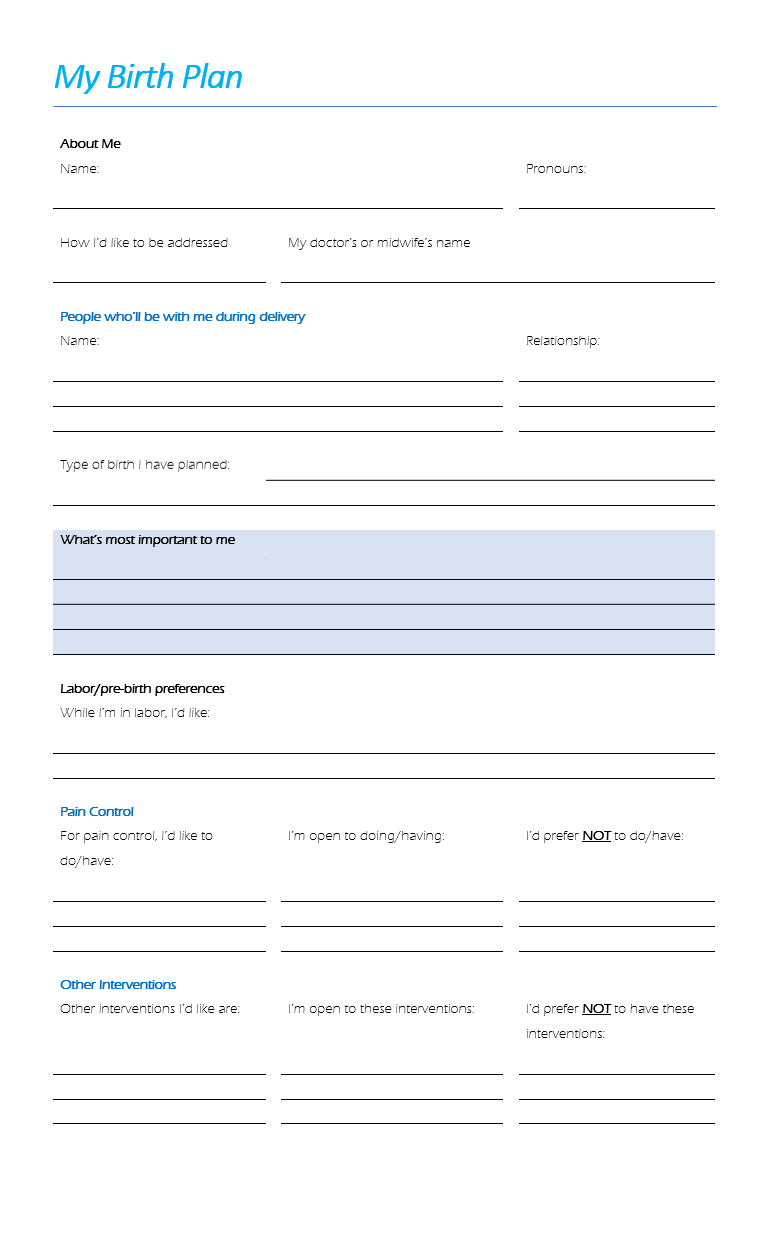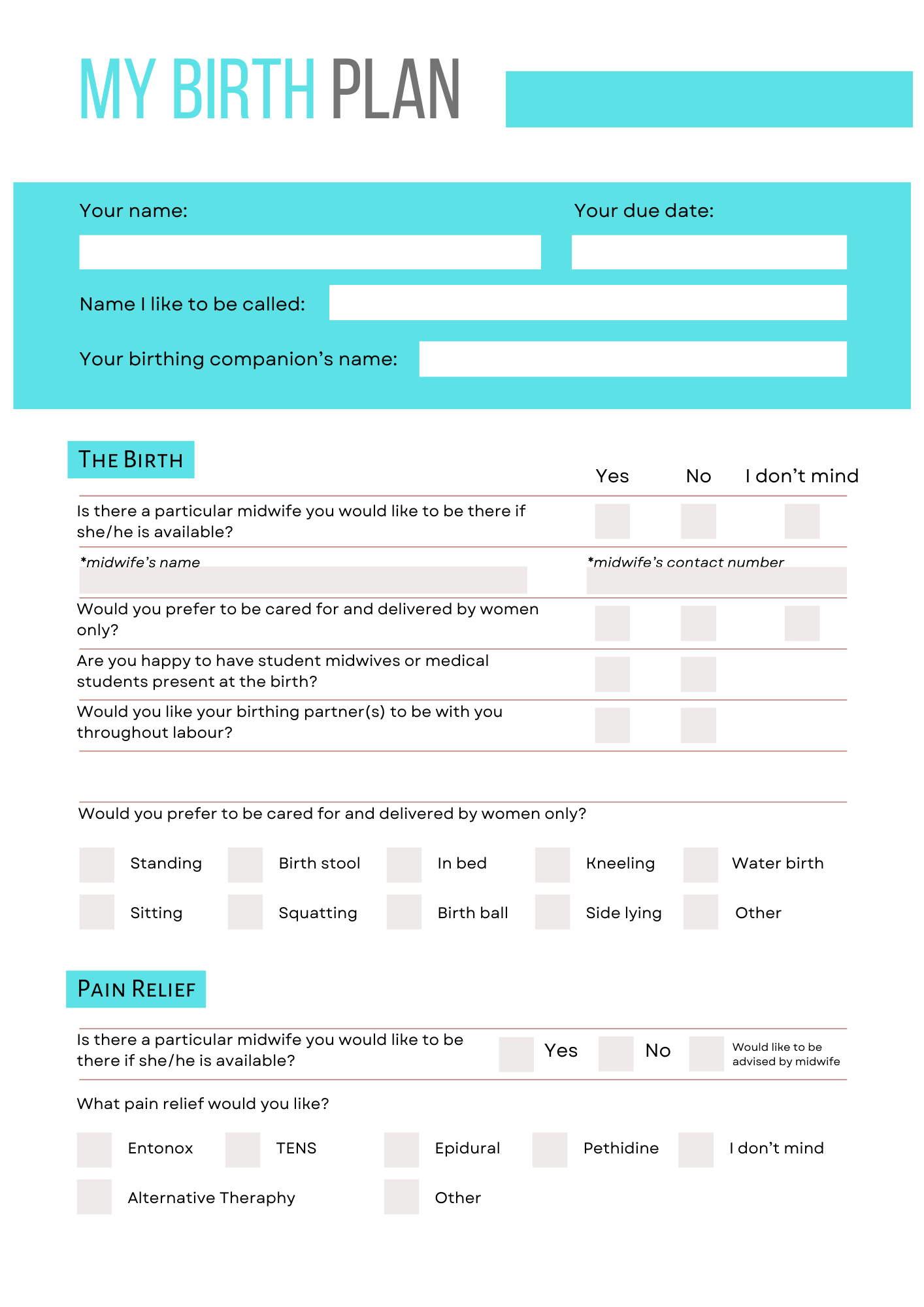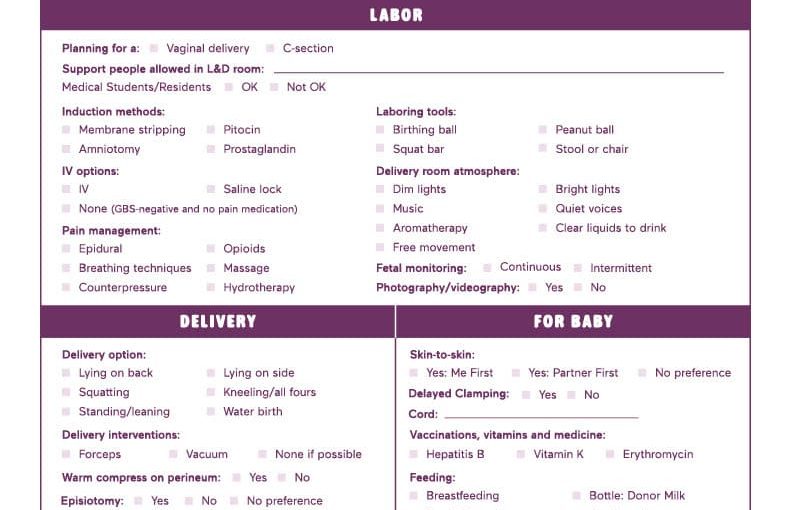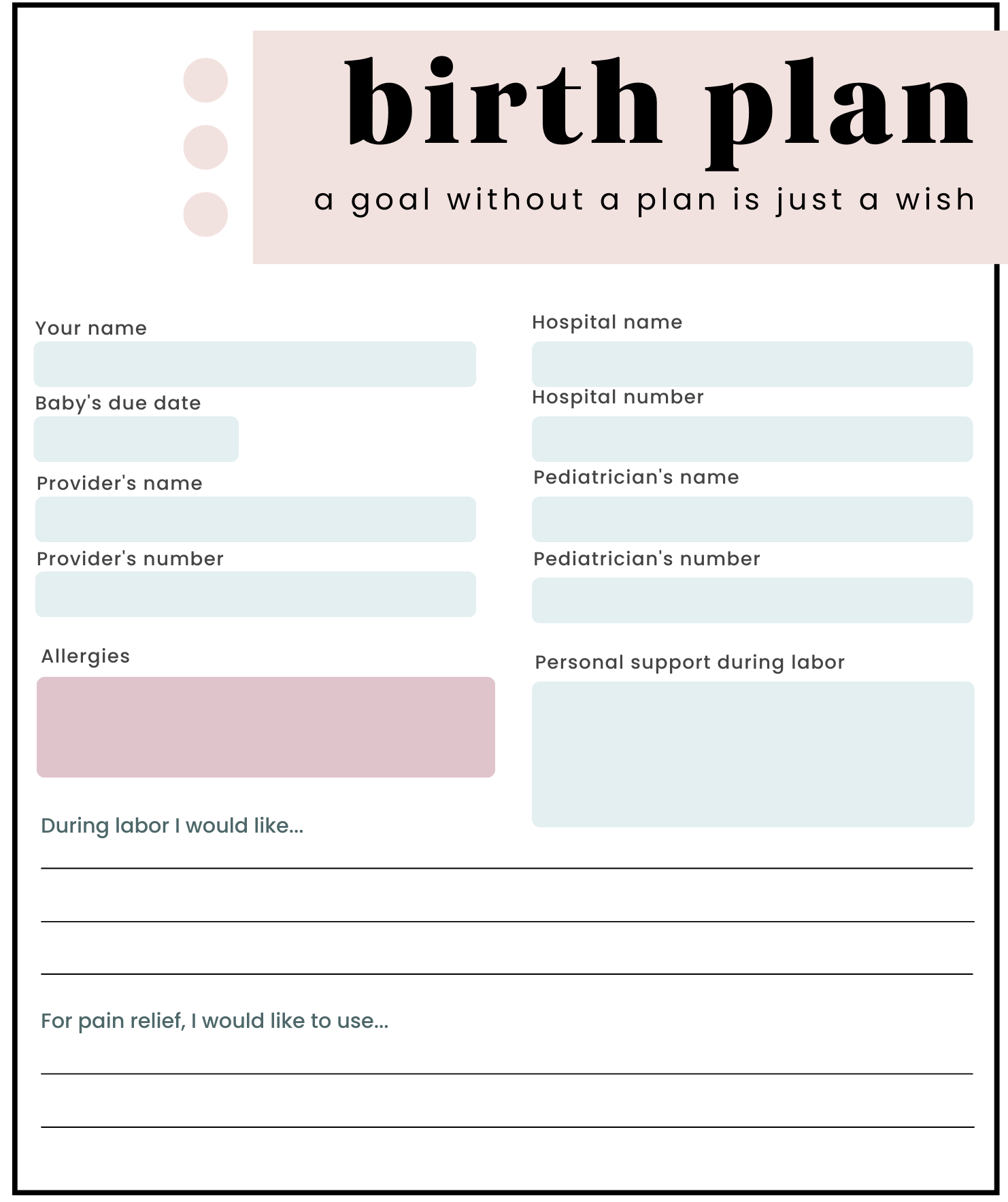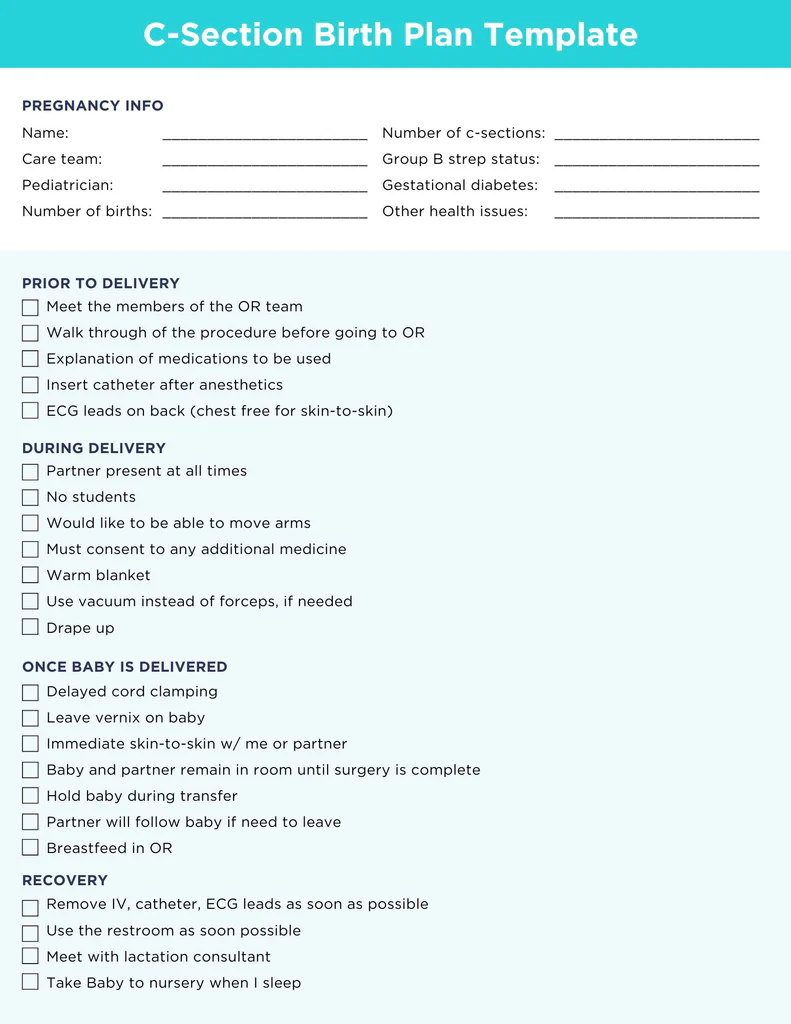
C Section Birth Plan Template (8+ Free Editable Word Format)

Preparing for a cesarean birth does not mean giving up control over your experience. With a well-structured C Section Birth Plan Template, you can clearly communicate your preferences, expectations, and comfort choices to your healthcare team.

If you are designing your own template in Microsoft Word, this guide will help you structure it professionally while naturally incorporating related formats like Caesarean Birth Plan Template Word, Cesarean Section Birth Plan Template, and Gentle C-Section Birth Plan Template variations.

This article will guide you through:

  • What to include in a C-section birth plan
  • How to structure your MS Word template professionally
  • Differences between standard and gentle approaches
  • How to design a printable version for a blog or digital product use
  • Tips for making your template more valuable and downloadable

Why You Need a C-Section Birth Plan Template

A cesarean birth — whether planned or emergency — can still be personalized. A structured C Section Birth Plan Template allows expecting parents to:

  • Clarify medical preferences
  • Communicate comfort requests
  • Reduce anxiety
  • Plan newborn bonding moments
  • Prepare for recovery

Even though surgical procedures follow hospital protocols, many hospitals allow flexibility in areas like music, lighting, skin-to-skin contact, delayed cord clamping, and breastfeeding timing.

When created in Microsoft Word, your template becomes:

  • Easy to edit
  • Printable in A4 or Letter size
  • Shareable as a PDF
  • Suitable for digital downloads

Core Structure of a C Section Birth Plan Template

Since you design your birth plan templates in MS Word, structure matters. Instead of cluttered paragraphs, use clear sections with headings and fillable fields.

Here’s the ideal layout:

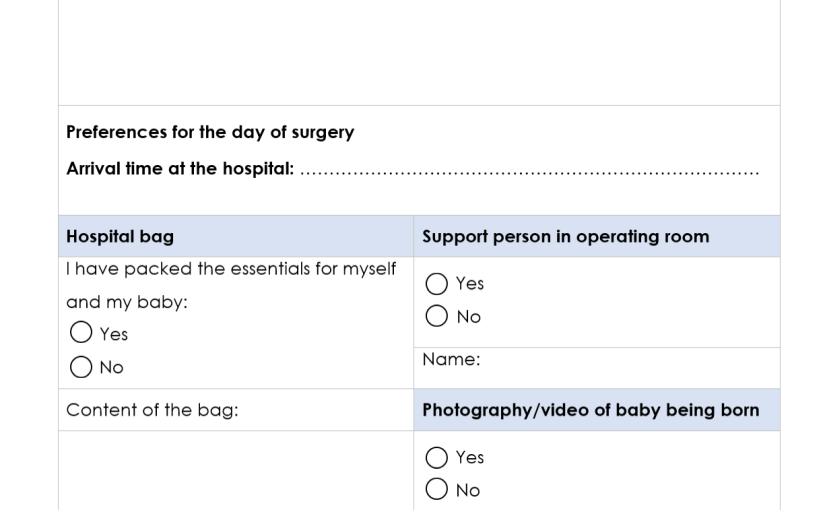
1. Patient & Provider Information

Include:

  • Full Name
  • Partner/Support Person
  • Due Date
  • Scheduled Surgery Date (if applicable)
  • OB/Midwife Name
  • Hospital/Facility

Use clean lines or form-style placeholders in Word.

2. Type of Cesarean

Clarify whether it is:

  • Planned cesarean
  • Emergency cesarean
  • Repeat cesarean
  • VBAC backup plan

This makes your Cesarean Section Birth Plan Template medically clear and practical.

3. Operating Room Preferences

This is where personalization happens.

In your C Section Birth Plan, you can include options such as:

  • Clear or lowered drape
  • Music preference
  • Minimal conversation
  • Partner present at all times
  • Video or photography allowed
  • Real-time explanation of procedure

If you are creating a Gentle C-Section Birth Plan, this section becomes more detailed.

Gentle C-Section Birth Plan Template: What Makes It Different?

A Gentle C-Section Birth Plan focuses on creating a more natural, family-centered experience during surgery.

Features often include:

  • Clear surgical drape so the mother can see the baby emerge
  • Slower delivery to mimic vaginal birth
  • Immediate skin-to-skin in the operating room
  • Delayed cord clamping is safe
  • Soft lighting or calm music
  • Minimal separation of the baby

When designing this version in Word, consider:

  • Softer fonts
  • Spacious layout
  • Calming headings
  • Simple checkbox formatting

This version typically appeals to modern hospitals that support patient-centered care.

Caesarean Birth Plan Template Word: How to Design It Professionally

If you are offering a Caesarean Birth Plan Template Word file, keep formatting clean and structured.

Layout Recommendations for MS Word:

  • Use Heading 1 and Heading 2 styles for easy editing
  • Keep margins standard (1 inch)
  • Use subtle borders or section dividers
  • Avoid excessive graphics (Word users prefer simplicity)
  • Use tables for checklists (1-column checkbox style works best)

You may also include:

  • Fillable lines
  • Bullet lists
  • Checkboxes
  • Signature section

Professional structure increases perceived value — especially if you later sell this template.

Get also: My Birth Plan Template Free Printable

After Delivery Section (Essential Component)

A strong C Section Birth Plan Template always includes postpartum preferences.

This section may include:

  • Immediate skin-to-skin
  • The partner holds the baby if the mother is unavailable
  • Breastfeeding initiation
  • Formula supplementation preference
  • Delayed newborn procedures
  • Rooming-in request

For Word templates, space this section clearly with enough blank lines for handwritten additions.

Infant Care Decisions

Your Cesarean Section Birth Plan Template should also allow parents to indicate preferences regarding:

  • Vitamin K injection
  • Eye ointment
  • First bath timing
  • Circumcision decision
  • Newborn screening

Hospitals often provide standard procedures, but listing preferences shows preparation.

Postoperative Recovery Planning

Many birth plans forget this part. A comprehensive C Section Birth Planner includes recovery preferences such as:

  • Pain management discussion before medication
  • Early mobility support
  • Lactation consultant request
  • Partner overnight stay
  • Visitors allowed or restricted

Adding this section makes your template feel complete and professional.

How to Make Your MS Word Template Look Premium

Since all your templates are built in Microsoft Word, here are professional upgrades you can implement:

Use Structured Sections

Insert page breaks between major sections if the document exceeds two pages.

Add a Signature Area

Include:

  • Patient Signature
  • Date
  • Provider Acknowledgment

Include Instructions Page (Optional)

A short first page explaining how to use the template increases value.

Offer Two Versions

  • Clean printable version
  • Soft design version (for personal use)

This works especially well if you later decide to monetize.

Standard vs Gentle: Which Version Should You Offer?

If you are building content or digital downloads, offering both:

  • Standard C Section Birth Plan Template
  • Gentle C-section version

… allows you to target broader audiences.

Some users search specifically for:

  • “Caesarean Birth Plan”
  • “Gentle C-Section Birth Plan”
  • “Cesarean Section Birth Plan”

Common Mistakes to Avoid

When designing your template in Word, avoid:

  • Overcrowded layout
  • Tiny font size
  • Medical jargon overload
  • No spacing for additional notes
  • Too many decorative elements

Keep it clean. Hospitals appreciate readability.

How to Optimize It for Blog Traffic

If you publish this template on your blog:

  • Add high-quality mockup images
  • Show sample sections
  • Explain each section clearly
  • Offer a downloadable Word version
  • Add a printable PDF option

Search intent often includes:

  • Editable template
  • Printable version
  • Word format

Your content should address all three.

Should You Create Multiple Versions?

Yes. Consider these variations:

  1. Basic one-page summary
  2. Detailed multi-page template
  3. Gentle cesarean edition
  4. Minimalist black-and-white version
  5. Soft pastel printable

This expands keyword reach without repeating content excessively.

Final Thoughts

A well-designed C Section Birth Plan Template empowers parents and clarifies expectations with medical teams. When created in Microsoft Word, it becomes:

  • Easy to edit
  • Flexible
  • Printable
  • Shareable
  • Monetizable

By incorporating variations like Caesarean Birth Plan Template Word, Cesarean Section Birth Plan Template, and Gentle C-Section Birth Plan Template, you strengthen both usability and search visibility.
Kindergarten Lesson Plan Templates for 2026 Effective Early Childhood Teaching

A Kindergarten Lesson Plan Template is more than just a printable form — it is the foundation of structured, engaging, and developmentally appropriate instruction in early childhood education. Kindergarten classrooms are fast-paced, energetic, and filled with diverse learning needs. Without a clear planning system, even experienced teachers can feel overwhelmed.

Whether you’re a new educator, a student teacher, or a seasoned professional refining your workflow, using a structured template can dramatically improve classroom organization, student engagement, and measurable outcomes.

In this comprehensive guide, you’ll learn how to design, customize, and effectively implement a kindergarten lesson planning system — including subject-specific variations like math and reading.

Why a Kindergarten Lesson Plan Template Is Essential

Kindergarten students are at a critical developmental stage. They are:

  • Learning foundational literacy and numeracy skills
  • Developing social-emotional awareness
  • Building fine and gross motor coordination
  • Adjusting to classroom routines
  • Strengthening communication abilities

Because attention spans are short and transitions matter, lesson flow must be intentional. A well-structured Kindergarten Lesson Plan Template ensures that:

  • Objectives are clear and measurable
  • Activities are age-appropriate
  • Materials are prepared in advance
  • Differentiation is built into instruction
  • Assessment is documented

Planning reduces stress and increases teaching confidence.

Core Components of a Kindergarten Teaching Lesson Plan Template

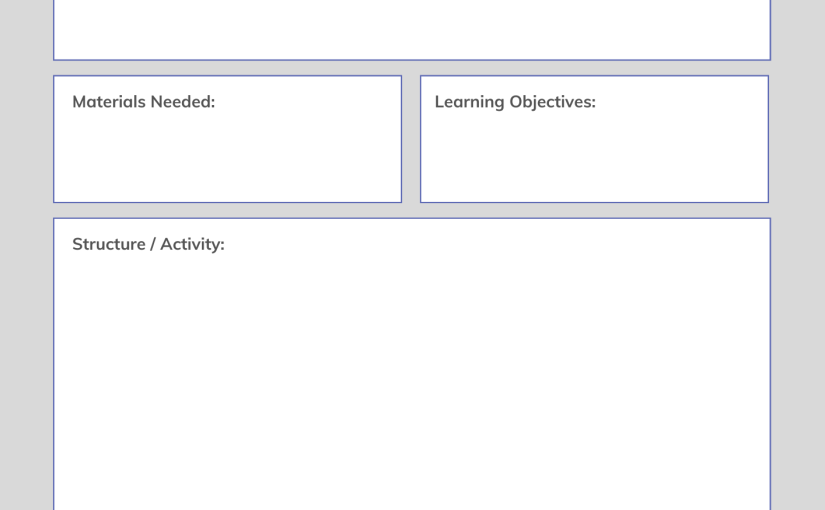
A professional Kindergarten Teaching Lesson Plan Template should include the following structured sections:

1. Lesson Overview

Start with basic information:

  • Date
  • Subject
  • Duration
  • Theme or Unit
  • Standards Alignment
  • Learning Objective

Objectives should be clear and measurable.

Example:

Students will identify uppercase and lowercase letters A–F with 80% accuracy.

Clear objectives guide instruction and assessment.

2. Materials and Preparation

Preparation prevents classroom disruption. Include space to list:

  • Worksheets
  • Flashcards
  • Storybooks
  • Manipulatives
  • Art supplies
  • Technology tools

Teachers who prepare materials in advance reduce transition chaos.

3. Engaging Introduction (Hook)

Kindergarten learners need strong engagement from the start.

Examples:

  • A short song
  • A puppet introduction
  • A quick movement activity
  • A picture book preview
  • A mystery object related to the lesson

The introduction sets the tone and captures attention.

4. Direct Instruction

Keep explanations simple and interactive.

Use:

  • Modeling
  • Visual demonstrations
  • Think-aloud strategies
  • Repetition
  • Question prompts

At this stage, direct instruction should be short — typically no more than 5–10 minutes.

5. Guided Practice

Guided practice allows students to apply skills with teacher support.

Examples:

  • Small group instruction
  • Partner activities
  • Learning centers
  • Teacher-assisted worksheets

This section is essential for formative assessment.

6. Independent Practice

Students demonstrate understanding independently.

Examples:

  • Drawing and labeling
  • Sorting activities
  • Simple worksheets
  • Writing practice

Independent tasks should reinforce the learning objective without overwhelming students.

7. Assessment

Assessment in kindergarten is often observational.

Include space for:

  • Checklist tracking
  • Anecdotal notes
  • Work sample review
  • Oral response evaluation

Assessment ensures accountability and documentation.

8. Differentiation Strategies

No kindergarten classroom is homogeneous. Your Kindergarten Lesson Plan Template should include space for:

  • Support for struggling learners
  • Extension activities for advanced learners
  • Visual supports
  • Movement breaks
  • Behavioral accommodations

Differentiation promotes inclusive teaching.

Get also: Free Customizable Teacher Lesson Plan Template

17 Powerful Strategies for Using a Kindergarten Lesson Plan Template Effectively

1. Keep Objectives Simple and Skill-Focused

Avoid overly complex goals. Focus on one measurable skill per lesson.

2. Build in Movement Breaks

Kindergarten students need physical activity every 15–20 minutes.

3. Use Visual Structure

Add icons or symbols in your template for easy scanning during instruction.

4. Plan Transitions

Transitions should be written into the Lesson Plan Template to avoid downtime.

5. Rotate Learning Centers

Include center rotation planning in your template.

6. Incorporate Multisensory Learning

Touch, movement, sound, and visuals enhance retention.

7. Allocate Time Blocks

Write the estimated time for each section.

8. Include Reflection Space

Add a teacher reflection section to improve future planning.

9. Plan Behavior Expectations

Include reminders of classroom rules and cues.

10. Prepare Backup Activities

Young learners sometimes finish early.

11. Include Technology Integration

If using tablets or interactive boards, plan intentional usage.

12. Use a consistent format daily

Routine improves efficiency and reduces teacher stress.

13. Color-Code Subjects

Math, reading, and science can be color-coded for quick organization.

14. Track Student Progress

Include progress monitoring notes.

15. Adapt for Thematic Units

Templates should allow integration across subjects.

16. Share With Colleagues

Collaborative planning improves lesson quality.

17. Keep It Flexible

Kindergarten instruction requires adaptability.

Kindergarten Math Lesson Plan Template Structure

A Kindergarten Math Lesson Plan Template focuses on foundational numeracy skills.

Key content areas:

  • Counting to 20
  • Number recognition
  • Basic addition and subtraction
  • Shape identification
  • Pattern creation
  • Measurement comparisons

Sample Math Objective

Students will count objects to 20 using one-to-one correspondence.

Math-Specific Additions

  • Manipulative list (counters, cubes, beads)
  • Hands-on center rotation
  • Quick exit assessment
  • Math vocabulary section

Kindergarten math must be tactile and interactive.

Get also: Free Preschool Lesson Plan Template

Kindergarten Reading Lesson Plan Template Structure

Early literacy instruction requires structured repetition.

A Kindergarten Reading Lesson Plan Template should include:

  • Phonemic awareness activity
  • Letter-sound practice
  • Sight word review
  • Shared reading
  • Comprehension questions
  • Vocabulary focus

Sample Reading Objective

Students will identify beginning sounds in five common words.

Literacy-Specific Sections

  • Book title and focus skill
  • Vocabulary preview
  • Reading strategy
  • Post-reading activity

Repetition and engagement are essential in literacy development.

Daily vs Weekly Kindergarten Lesson Planning

Daily Template

Best for:

  • New teachers
  • Detailed instruction tracking
  • Observations and evaluations

Daily templates provide a step-by-step structure.

Weekly Template

Best for:

  • Thematic units
  • Experienced educators
  • Flexible block scheduling

Weekly formats provide a broader overview for planning.

Common Mistakes to Avoid

Even with a structured Kindergarten Lesson Plan Template, teachers sometimes:

  • Overload the lesson with too many activities
  • Forget transition planning
  • Skip differentiation notes
  • Plan activities beyond the developmental level
  • Underestimate the time needed for cleanup

A well-designed template prevents these issues.

Printable vs Digital Planning

Teachers typically prefer one of two formats.

Printable Templates

  • Easy to annotate
  • Portable
  • Ideal for quick reference

Digital Templates

  • Editable and reusable
  • Easy to duplicate weekly
  • Organized by subject or theme
  • Shareable across teams

Many educators use hybrid systems.

How to Design an Effective Template Layout

When designing your own Kindergarten Lesson Plan Template, keep these design principles in mind:

  • Use clear headings
  • Avoid clutter
  • Include checkboxes
  • Provide adequate writing space
  • Maintain consistent formatting

Simplicity increases usability.

Who Benefits Most From a Structured Template?

A well-designed Kindergarten Lesson Plan Template benefits:

  • Kindergarten teachers
  • Student teachers
  • Early childhood educators
  • Homeschool parents
  • Substitute teachers
  • Special education instructors

It is especially useful during:

  • Teacher evaluations
  • Curriculum alignment reviews
  • Accreditation documentation
  • Parent-teacher conferences

Final Thoughts

A structured Kindergarten Lesson Plan Template transforms classroom planning from chaotic to confident. With clearly defined objectives, engaging activities, measurable assessment, and built-in differentiation, teachers can focus on what truly matters — student learning and growth.

Whether you’re using a general planning format, a detailed Kindergarten Teaching Lesson Plan Template, a subject-specific Kindergarten Math Lesson Plan Template, or a literacy-focused Kindergarten Reading Lesson Plan Template, the goal remains consistent:

  • Clear instruction.
  • Intentional engagement.
  • Measurable progress.
  • Flexible implementation.

When planning becomes systematic, teaching becomes smoother — and learning becomes more powerful.

Mental Health Nursing Care Plan Template: 7+ Best Psychiatric Designs

Mental Health Nursing Care Plan Template: Complete Clinical Guide for Psychiatric & Behavioral Health Documentation | A Mental Health Nursing Care Plan is a structured clinical tool used to assess, diagnose, plan, implement, and evaluate care for patients experiencing psychological, emotional, or behavioral health conditions.

In psychiatric and mental health settings, documentation is not optional — it is critical. Unlike many physical conditions, mental health care relies heavily on behavioral observation, therapeutic communication, and risk assessment. Without a structured care plan, important clinical data can easily be missed.

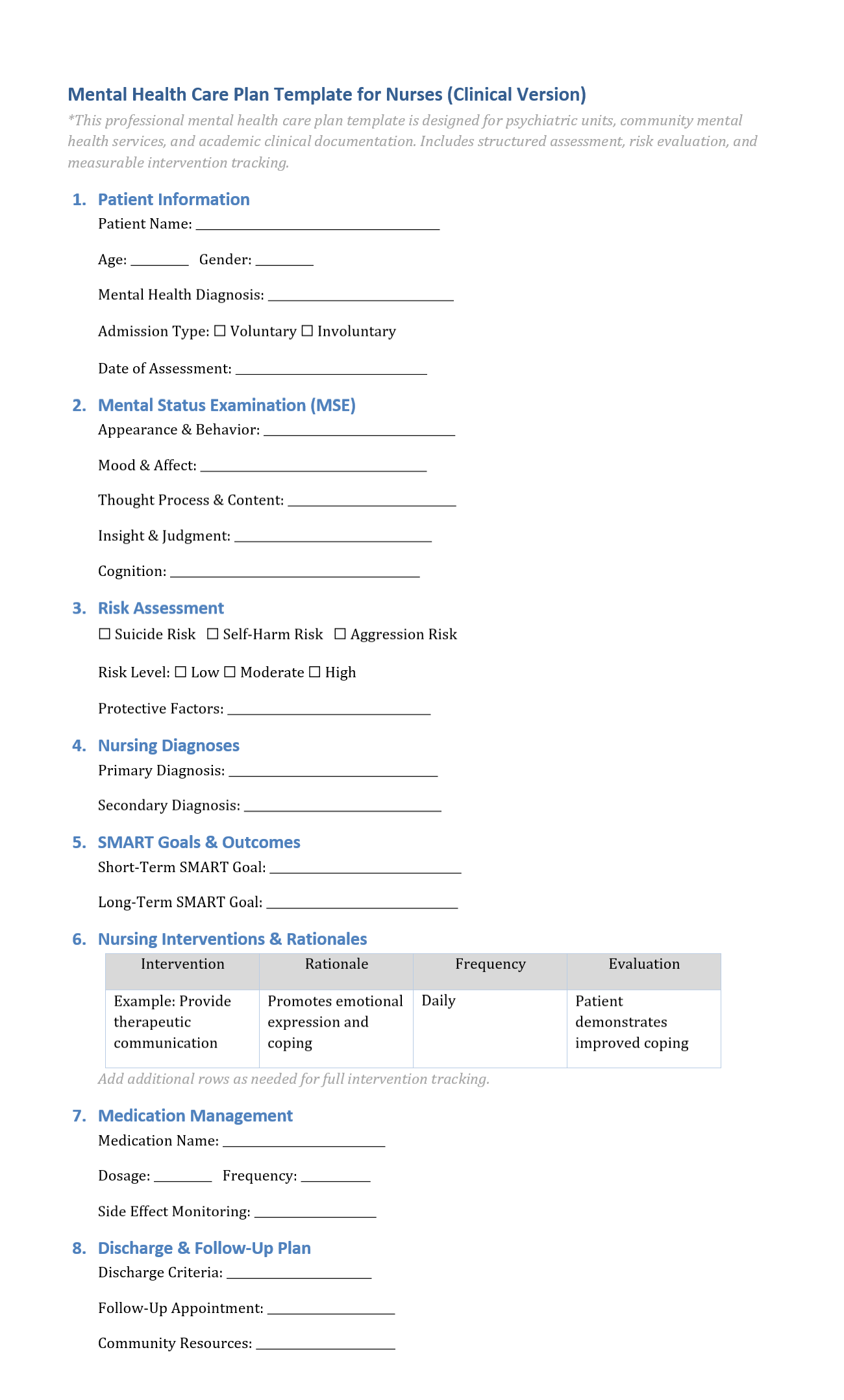
This guide explains how to build and use a professional mental health nursing care plan template, including its application in psychiatric settings and identity-related disorders.

Why a Mental Health Nursing Care Plan Template Is Essential

Mental health patients often present with:

  • Mood instability
  • Anxiety disorders
  • Psychotic symptoms
  • Behavioral disturbances
  • Trauma-related responses
  • Identity disturbances

Because symptoms fluctuate and risk levels can change quickly, nurses must document consistently and systematically.

A well-designed nursing care plan template helps:

  • Standardize assessment
  • Identify measurable goals
  • Track behavioral progress
  • Document risk levels
  • Support multidisciplinary collaboration

It ensures both clinical accuracy and legal protection.

Core Components of a Mental Health Nursing Care Plan Template

A complete template should follow the nursing process framework: Assessment, Diagnosis, Planning, Intervention, and Evaluation.

1. Patient Information & Background

Include:

  • Mental health diagnosis
  • Admission type (voluntary/involuntary)
  • Previous psychiatric history
  • Current medications
  • Social support system

This provides context before planning interventions.

2. Comprehensive Mental Health Assessment

Assessment in mental health care goes beyond physical symptoms.

Key elements include:

  • Mood and affect
  • Thought process and content
  • Insight and judgment
  • Cognitive functioning
  • Behavioral observations
  • Suicide or self-harm risk

Documentation must be detailed and objective.

3. Nursing Diagnoses

Common nursing diagnoses in psychiatric care may include:

  • Anxiety
  • Impaired social interaction
  • Risk for self-directed violence
  • Disturbed thought processes
  • Disturbed personal identity
  • Ineffective coping

The selected diagnosis determines the direction of care planning.

4. SMART Goals & Expected Outcomes

Goals must be:

  • Specific
  • Measurable
  • Achievable
  • Relevant
  • Time-bound

Examples:

  • Patient will verbalize two coping strategies within 48 hours.
  • Patient will demonstrate a reduced anxiety score from 8/10 to 4/10 in one week.
  • The patient will participate in at least one group therapy session daily.

Clear goals improve measurable outcomes.

5. Nursing Interventions

Interventions may include:

  • Therapeutic communication
  • Active listening
  • Behavior monitoring
  • Medication administration
  • Crisis intervention
  • Psychoeducation
  • Family involvement

Each intervention should include a scientific rationale.

6. Evaluation & Reassessment

Evaluation determines:

  • Whether goals were met
  • Whether the risk level changed
  • Whether interventions need adjustment

Mental health care requires frequent reassessment due to dynamic symptom patterns.

Mental Health Care Plan Template for Nurses

A Mental Health Care Plan Template for Nurses is often broader than condition-specific templates. It is suitable for:

  • Psychiatric inpatient units
  • Community mental health clinics
  • Outpatient therapy settings
  • School counseling services
  • Crisis intervention centers

This type of template usually includes:

  • Mental Status Examination (MSE) section
  • Risk assessment checklist
  • Medication tracking
  • Crisis response planning
  • Follow-up documentation

It allows nurses to manage diverse diagnoses within one structured framework.

Psychiatric Nursing Care Plan Template

A Psychiatric Nursing Care Plan Template is typically more specialized and detailed.

It focuses on:

  • Severe mental illness
  • Acute psychiatric episodes
  • Behavioral stabilization
  • Structured therapeutic environment

In psychiatric units, documentation must cover:

  • Aggression risk
  • Suicide precautions
  • Seclusion/restraint documentation (if applicable)
  • Medication side effects
  • Compliance with treatment

Because psychiatric patients may present with complex symptom patterns, this template often includes multidisciplinary coordination notes.

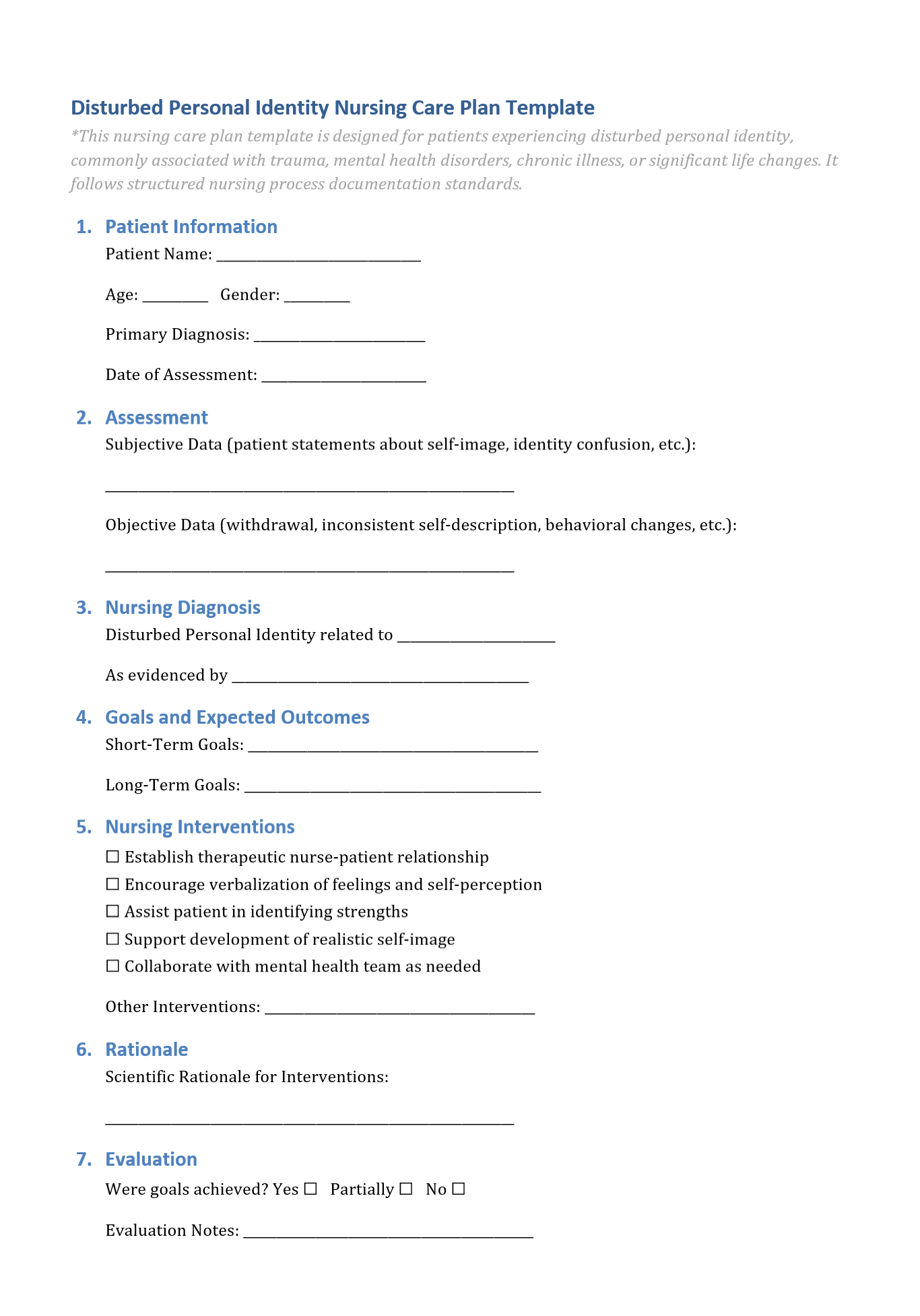
Disturbed Personal Identity Nursing Care Plan Template

A Disturbed Personal Identity Nursing Care Plan Template addresses patients experiencing identity confusion, altered self-perception, or role instability.

This condition may be associated with:

  • Trauma
  • Chronic illness
  • Personality disorders
  • Major life transitions
  • Dissociative disorders

Assessment focuses on:

  • Self-description inconsistencies
  • Emotional instability
  • Withdrawal
  • Confusion about life roles

Nursing priorities may include:

  • Establishing therapeutic trust
  • Encouraging expression of feelings
  • Strength identification
  • Role clarification
  • Self-esteem building

Because identity disturbance affects long-term functioning, goals should focus on self-awareness and stability.

Get also: Family Nursing Care Plan Template

Differences Between General Mental Health & Psychiatric Templates

Although related, these templates serve slightly different purposes.

FeatureMental Health Nursing Care Plan TemplatePsychiatric Nursing Care Plan Template
ScopeBroad mental health conditionsSevere or acute psychiatric disorders
Risk FocusModerate risk managementIntensive risk monitoring
SettingCommunity or outpatientInpatient psychiatric units
StructureFlexibleHighly structured

Understanding this difference helps you design appropriate documentation.

Get also: Free Cuztomizable Self Care Plan Template

Key Risk Management in Mental Health Care Planning

One of the most important components in any mental health nursing care plan template is risk assessment.

Nurses must evaluate:

  • Suicide risk
  • Self-harm behaviors
  • Aggression toward others
  • Medication non-compliance
  • Substance use

Risk level must be categorized as:

  • Low
  • Moderate
  • High

Documentation should include protective factors such as:

  • Family support
  • Religious beliefs
  • Treatment adherence
  • Coping skills

Risk documentation protects both patient and clinician.

Get also: My Self-Care Planner Template

Common Mistakes in Mental Health Care Planning

Without a structured template, nurses may:

  • Write vague goals
  • Omit measurable outcomes
  • Skip risk assessment details
  • Fail to document therapeutic communication
  • Ignore medication side effect monitoring

A structured mental health nursing care plan template prevents incomplete documentation.

Who Should Use This Template?

This template is suitable for:

  • Nursing students
  • Psychiatric nurses
  • Community health nurses
  • Clinical instructors
  • Mental health educators
  • Behavioral health professionals

It is ideal for:

  • Academic assignments
  • Clinical rotations
  • Hospital documentation
  • Case study development

Why Word-Based Templates Work Well

If your template is built in Microsoft Word, it offers several advantages:

  • Easy to customize
  • Compatible with academic submission formats
  • Printable for hospital use
  • Editable for different diagnoses
  • Simple to convert to PDF

For digital product selling, Word format increases usability and buyer satisfaction.

Final Thoughts

A professional Mental Health Nursing Care Plan Template is an essential clinical tool for structured psychiatric and behavioral health documentation.

Whether using:

  • A Mental Health Care Plan Template for Nurses
  • A Psychiatric Nursing Care Plan Template
  • Or a Disturbed Personal Identity Nursing Care Plan Template

The goal remains the same: systematic assessment, measurable planning, targeted interventions, and continuous evaluation.

With a clear and organized format, nurses can provide safe, evidence-based mental health care while maintaining professional documentation standards.

Diabetes Nursing Care Plan Template: 7+ Complete Clinical Purpose

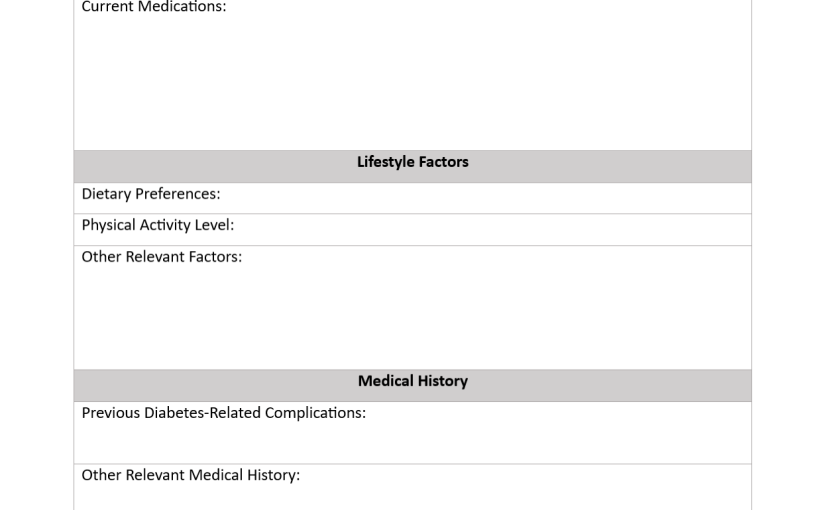
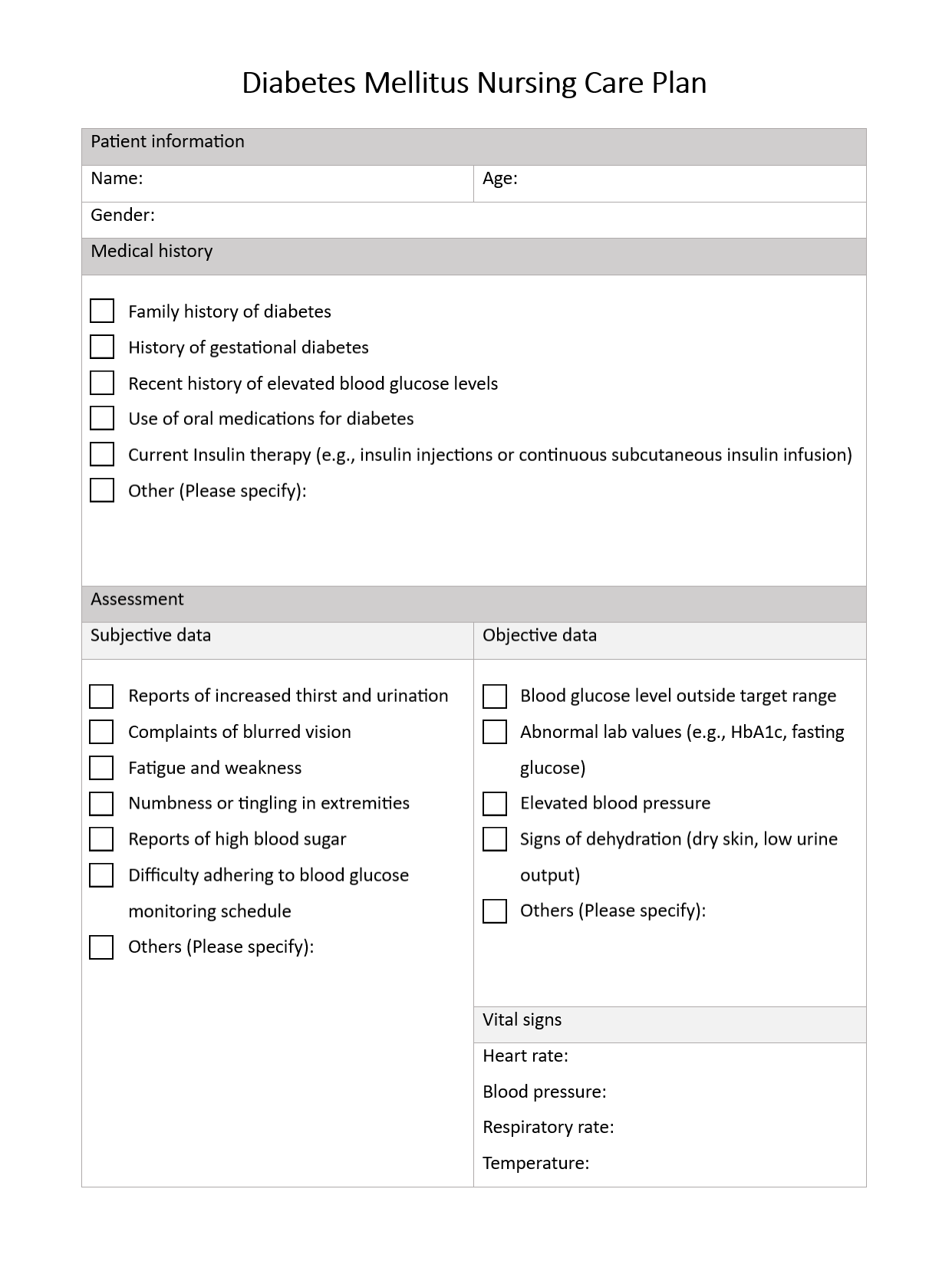
Diabetes Nursing Care Plan Template: Complete Clinical Guide for Type 1, Type 2 & Hyperglycemia Management | A Diabetes Nursing Care Plan Template is a structured clinical document used to assess, diagnose, plan, implement, and evaluate care for patients with diabetes mellitus. Because diabetes affects multiple body systems and requires long-term management, a well-organized care plan is essential in both hospital and community settings.

Whether dealing with insulin-dependent patients, lifestyle-managed cases, or acute hyperglycemia episodes, nurses need a format that is:

  • Clear
  • Measurable
  • Evidence-based
  • Easy to document
  • Adaptable for different diabetes types

This guide explains how a professional diabetes nursing care plan template should be structured and how it differs when applied to Type 1, Type 2, and hyperglycemia-specific situations.

Why a Structured Diabetes Nursing Care Plan Template Is Essential

Diabetes is not a single-event condition. It is a chronic metabolic disorder requiring:

  • Continuous glucose monitoring
  • Medication management
  • Dietary regulation
  • Exercise planning
  • Complication prevention
  • Patient education

Without a structured template, documentation can become inconsistent and incomplete.

A professional diabetes nursing care plan template ensures:

  • Standardized assessment
  • Clear nursing diagnoses
  • Measurable goals
  • Evidence-based interventions
  • Ongoing evaluation

In clinical audits and academic grading, structure matters.

Core Components of a High-Quality Diabetes Nursing Care Plan Template

A complete Nursing Care Plan Template (like the one you created in Word) typically includes the following structured sections:

1. Patient Identification & Background

This section includes:

  • Age
  • Gender
  • Diagnosis
  • Duration of diabetes
  • Current medications
  • Allergies
  • Comorbidities

This ensures clarity before moving into assessment.

2. Assessment Data

Assessment should include both subjective and objective findings.

Subjective examples:

  • Excessive thirst
  • Frequent urination
  • Fatigue
  • Blurred vision

Objective findings:

  • Blood glucose levels
  • HbA1c
  • BMI
  • Blood pressure
  • Lipid profile

Accurate assessment drives correct nursing diagnosis.

3. Nursing Diagnoses

Common diagnoses in diabetes care include:

  • Risk for unstable blood glucose level
  • Imbalanced nutrition
  • Risk for impaired skin integrity
  • Risk for infection
  • Ineffective health management

Diagnosis selection may differ between Type 1 and Type 2.

4. Goals & Expected Outcomes

Goals must be measurable. For example:

  • Blood glucose maintained within target range
  • Patient demonstrates correct insulin administration
  • HbA1c reduced within 3 months
  • Patient verbalizes understanding of diet plan

Clear goals make evaluation meaningful.

5. Nursing Interventions

Interventions may include:

  • Blood glucose monitoring
  • Insulin administration
  • Oral hypoglycemic medication management
  • Dietary counseling
  • Exercise guidance
  • Foot care education
  • Hypoglycemia management education

Interventions should always connect directly to diagnoses.

6. Evaluation

Evaluation determines whether goals were:

  • Met
  • Partially met
  • Not met

Follow-up adjustments are based on this section.

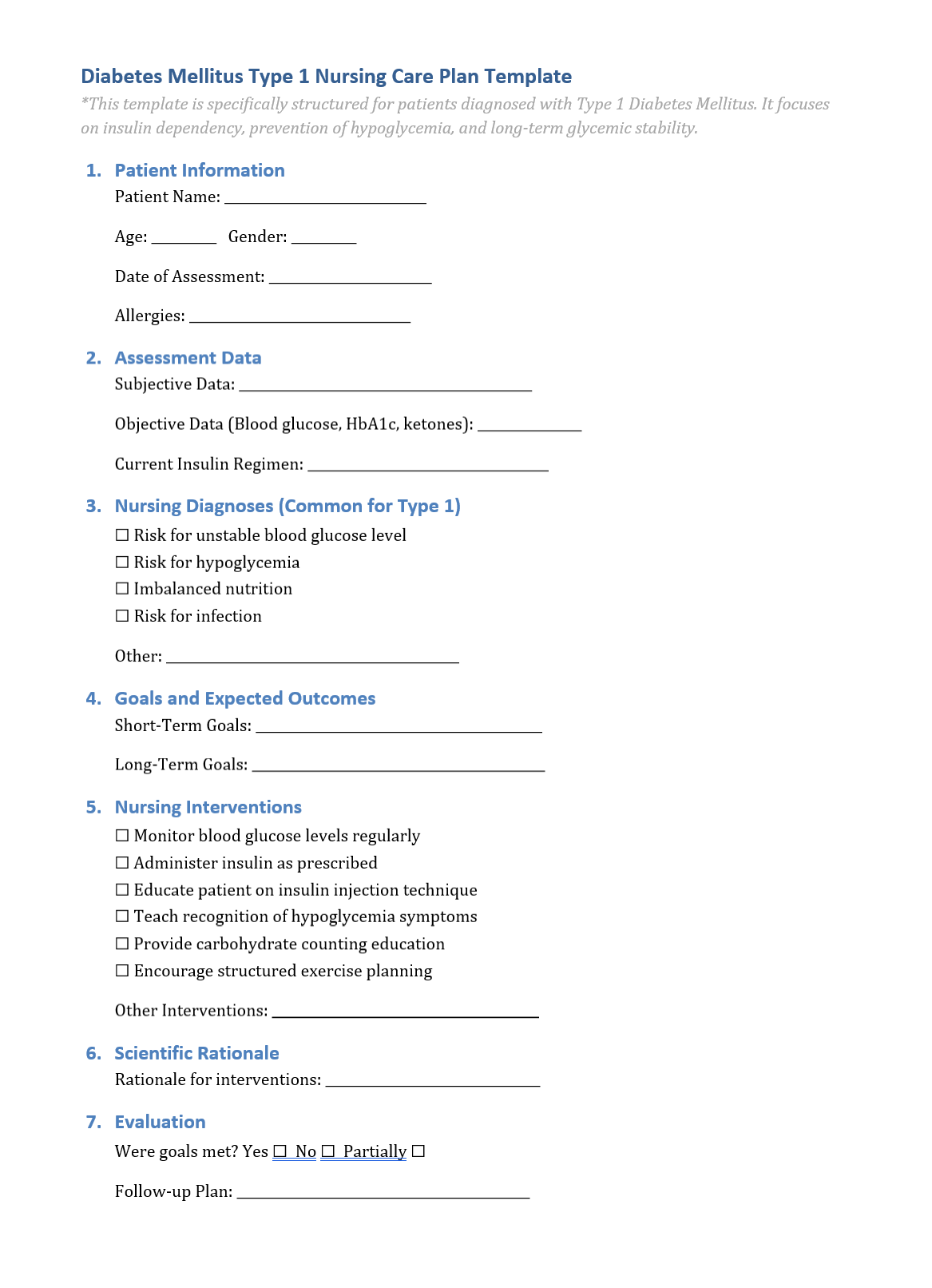
Diabetes Mellitus Type 1 Nursing Care Plan Template

A Diabetes Mellitus Type 1 Nursing Care Plan Template focuses primarily on insulin dependency and risk of hypoglycemia.

Type 1 diabetes is characterized by:

  • Absolute insulin deficiency
  • Autoimmune destruction of pancreatic beta cells
  • Early onset (often childhood or adolescence)
  • Higher risk of diabetic ketoacidosis (DKA)

Key Nursing Priorities in Type 1:

  1. Insulin administration accuracy
  2. Hypoglycemia prevention
  3. Carbohydrate counting education
  4. Ketone monitoring during illness
  5. Injection site rotation education

Because insulin is mandatory in Type 1, the template should emphasize:

  • Insulin regimen documentation
  • Blood glucose frequency tracking
  • Hypoglycemia symptom recognition

Structured documentation reduces emergency complications.

Get also: Family Nursing Care Plan Template

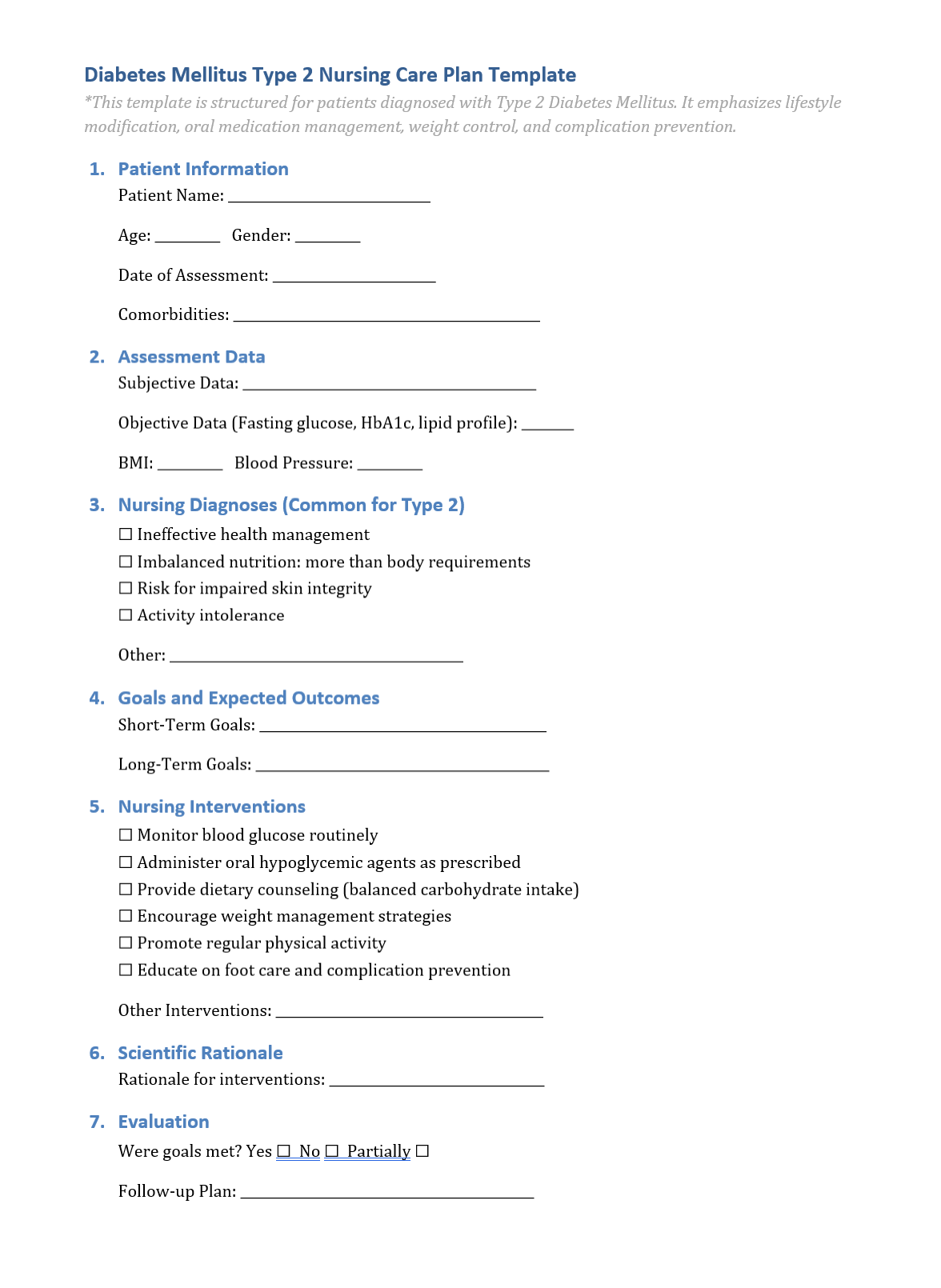
Diabetes Mellitus Type 2 Nursing Care Plan Template

A Diabetes Mellitus Type 2 Nursing Care Plan Template emphasizes lifestyle modification and insulin resistance management.

Type 2 diabetes typically involves:

  • Insulin resistance
  • Relative insulin deficiency
  • Strong link to obesity
  • Gradual onset
  • Multiple comorbidities

Key Nursing Priorities in Type 2:

  1. Weight management
  2. Dietary control
  3. Physical activity promotion
  4. Oral hypoglycemic compliance
  5. Complication prevention

Unlike Type 1, many Type 2 patients initially manage diabetes without insulin.

Therefore, the care plan structure should include:

  • Lifestyle counseling documentation
  • Weight monitoring
  • Cardiovascular risk management
  • Hypertension coordination

Long-term complication prevention becomes central.

Diabetes Nursing Care Plan for Hyperglycemia

A Diabetes Nursing Care Plan for Hyperglycemia focuses on acute elevation of blood glucose levels.

Hyperglycemia may present with:

  • Polyuria
  • Polydipsia
  • Dry skin
  • Fatigue
  • Blurred vision
  • Fruity breath (in severe cases)

In more severe cases, it may lead to:

  • Diabetic ketoacidosis (Type 1)
  • Hyperosmolar hyperglycemic state (Type 2)

Nursing Priorities in Hyperglycemia:

  1. Frequent glucose monitoring
  2. Insulin correction dosing
  3. Hydration management
  4. Monitoring for electrolyte imbalance
  5. Patient education on early warning signs

In this situation, the care plan template should clearly document:

  • Initial glucose reading
  • Intervention timing
  • Response to treatment
  • Reassessment results

Hyperglycemia documentation must be precise, especially in hospital settings.

Differences Between Type 1, Type 2 & Hyperglycemia Focus

Although they share a common disease process, the nursing priorities differ significantly.

Focus AreaType 1Type 2Hyperglycemia
InsulinMandatorySometimes requiredOften corrective
Primary RiskHypoglycemiaCardiovascular complicationsAcute metabolic crisis
Education FocusInjection techniqueLifestyle modificationEmergency symptom recognition
MonitoringFrequentRoutineIntensive

A strong diabetes nursing care plan template allows nurses to adapt quickly depending on clinical presentation.

Why Word-Based Templates Work Best

Since your template is created in Microsoft Word, it offers practical advantages:

  • Easy editing for academic or clinical use
  • Structured tables
  • Professional formatting
  • Printable for hospital charts
  • Simple conversion to PDF

Nurses often prefer Word because it mirrors real documentation formats used in healthcare facilities.

Common Mistakes in Diabetes Care Planning

Without structure, nurses may:

  • Write vague goals
  • Skip measurable outcomes
  • Overlook comorbidities
  • Ignore patient education documentation
  • Forget follow-up scheduling

A structured template prevents incomplete planning.

Who Should Use This Template?

This format is ideal for:

  • Nursing students
  • Clinical instructors
  • Hospital nurses
  • Community health nurses
  • Home health providers
  • Diabetes educators

It can be used in:

  • Academic assignments
  • Clinical documentation
  • Case studies
  • Community outreach programs

Final Thoughts

A professional Diabetes Nursing Care Plan Template is more than a worksheet—it is a structured clinical framework for safe, measurable, and effective diabetes management.

Whether you are applying:

  • A Diabetes Mellitus Type 1 Nursing Care Plan Template
  • A Diabetes Mellitus Type 2 Nursing Care Plan Template
  • Or building a Diabetes Nursing Care Plan for Hyperglycemia

The foundation remains the same: systematic assessment, measurable goals, targeted interventions, and structured evaluation.

With a well-designed Word template, nurses can deliver consistent, evidence-based care while maintaining professional documentation standards.

Family Nursing Care Plan Template (8+ Free Editable Design)

A Family Nursing Care Plan Template is a structured document used by nurses to assess, plan, implement, and evaluate care at the family level rather than focusing only on individual patients.

Unlike hospital-centered care plans, family-focused planning considers:

  • Household dynamics
  • Shared health risks
  • Chronic disease patterns
  • Social and environmental factors
  • Long-term behavioral support

This type of care plan is especially relevant in:

  • Community health nursing
  • Home health services
  • Public health programs
  • Chronic disease management
  • Nursing education programs

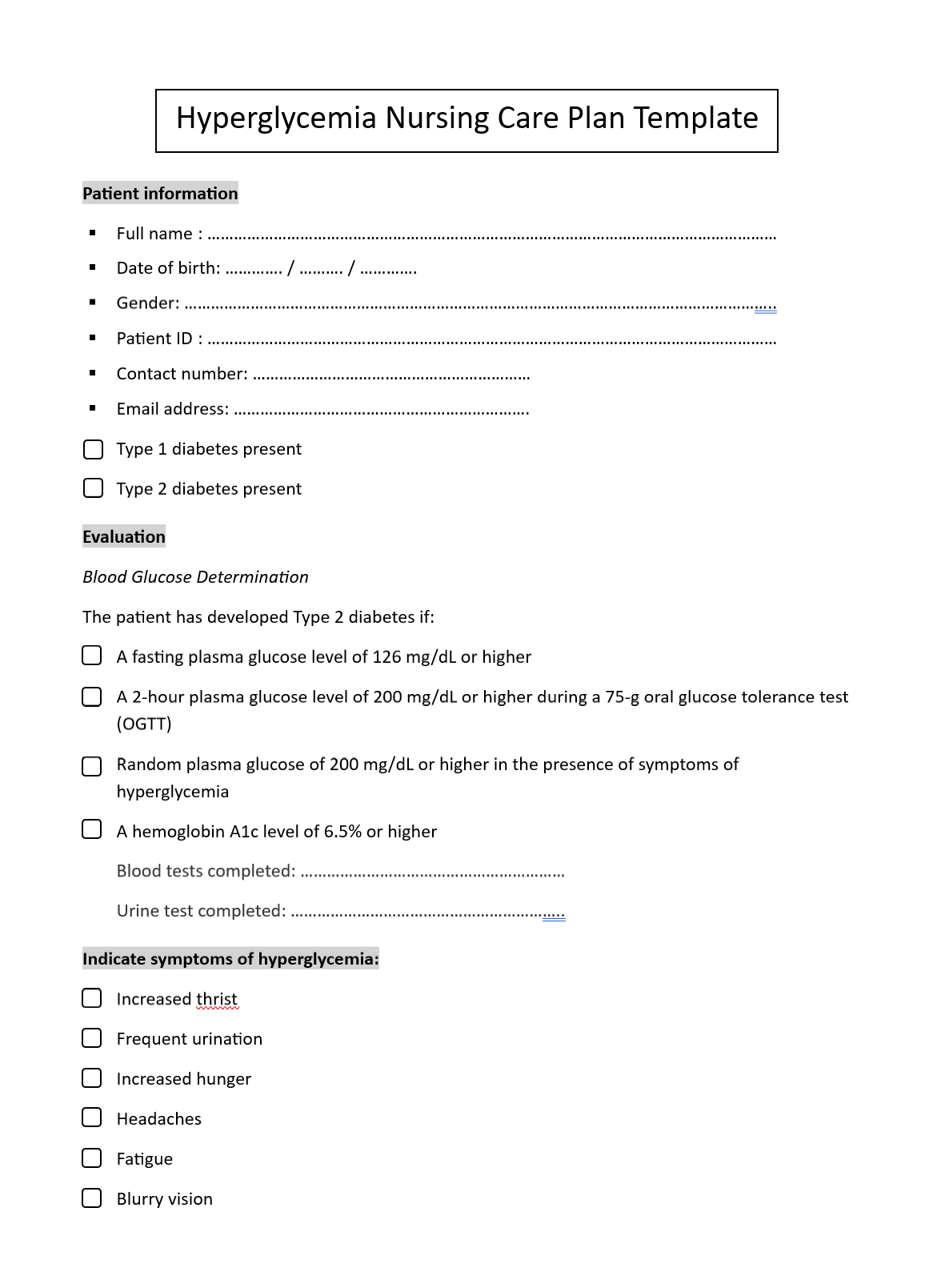
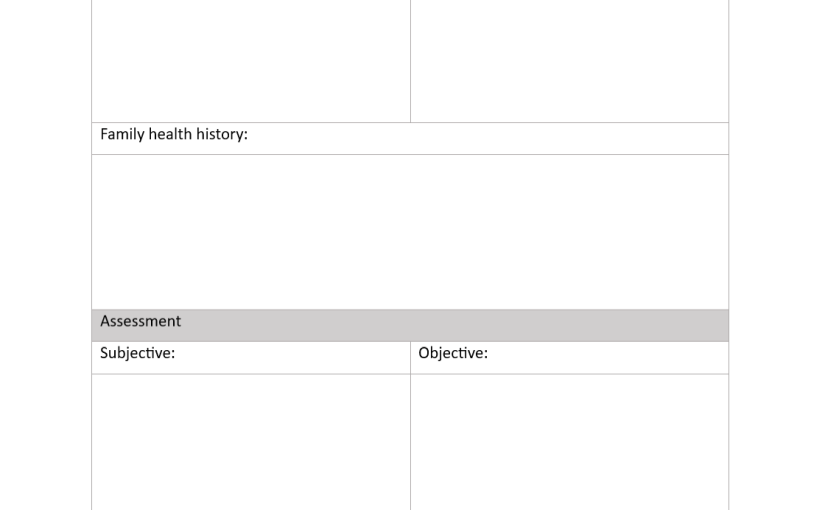
If you review the design previews included in this article, you’ll see how the layout supports structured documentation while remaining clean and professional in Microsoft Word format.

Why a Family-Level Care Plan Matters

Traditional care plans focus on one patient. However, many conditions are influenced by family behavior and environment.

For example:

  • Hypertension management depends on the household diet
  • Diabetes control often requires shared meal planning
  • Pediatric asthma may relate to home conditions
  • Elderly care depends on caregiver support

A well-designed Family Nursing Care Plan Template helps nurses assess not just symptoms—but lifestyle patterns, shared risks, and long-term sustainability.

Key Components of a Professional Family Nursing Care Plan Template

Instead of providing a raw copy layout, here’s how the structured design (as shown in the preview images) is organized.

1. Family Assessment Section

This section documents:

  • Family structure
  • Living environment
  • Socioeconomic factors
  • Health history
  • Cultural considerations
  • Support systems

The structured format ensures nurses capture a complete household picture rather than isolated medical data.

2. Identified Health Problems

A strong Family Nursing Care Plan Template highlights:

  • Actual health problems
  • Risk factors
  • Potential complications
  • Behavioral concerns
  • Environmental risks

This section allows prioritization at the family level.

3. Nursing Diagnoses (Family-Focused)

Unlike individual nursing diagnoses, family-focused diagnoses may include:

  • Ineffective family health management
  • Risk for caregiver role strain
  • Imbalanced nutrition patterns
  • Knowledge deficit regarding chronic illness

The layout supports clear documentation without overcrowding the page.

4. Goals and Expected Outcomes

Goals should be:

  • Measurable
  • Realistic
  • Time-bound
  • Family-oriented

Examples may include:

  • Improved adherence to medication schedules
  • Adoption of a heart-healthy diet by all members
  • Improved blood glucose monitoring compliance
  • Reduced household sodium intake

The Word-based structure allows easy editing for different case scenarios.

5. Nursing Interventions

Interventions in a family setting often include:

  • Health education sessions
  • Lifestyle counseling
  • Diet planning guidance
  • Monitoring and follow-up scheduling
  • Coordination with community resources

This section in the nursing care plan template is designed to allow clear documentation of teaching and support strategies.

6. Evaluation and Follow-Up

Evaluation at the family level measures:

  • Behavioral change
  • Clinical improvement
  • Compliance patterns
  • Caregiver capability
  • Environmental adjustments

Structured evaluation ensures continuity of care across visits.

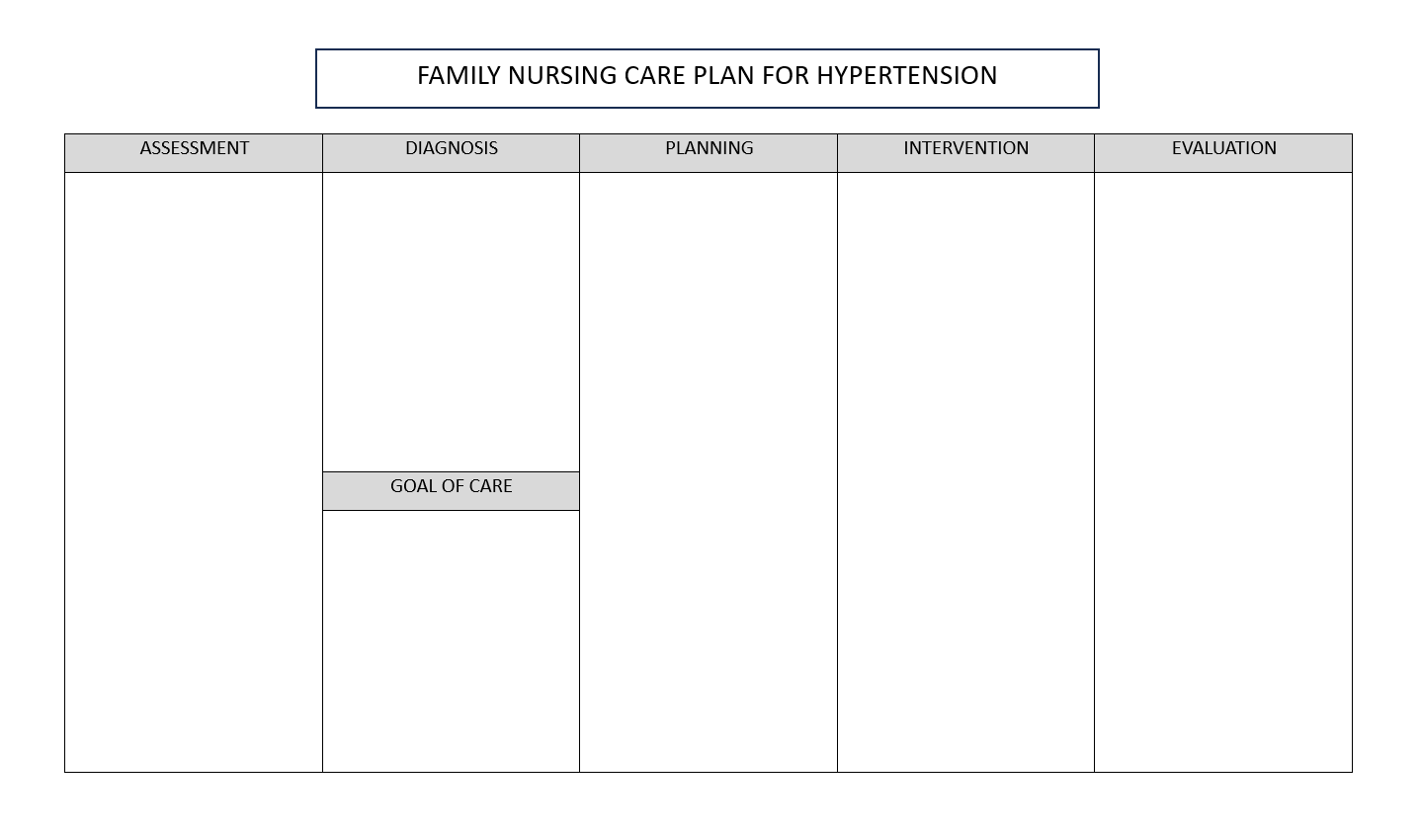
Family Nursing Care Plan for Hypertension

A Family Nursing Care Plan for Hypertension is one of the most common applications of this template.

Hypertension is rarely managed successfully in isolation. Family behaviors directly influence:

  • Dietary habits
  • Exercise routines
  • Stress levels
  • Medication compliance

When applied to hypertension management, the care plan may focus on:

  • Family education about sodium reduction
  • Shared meal planning
  • Home blood pressure monitoring routines
  • Stress management techniques

The structured template shown in the design preview supports documentation of these interventions in a clear, professional manner.

Diabetes Nursing Care Plan Template Adaptation

The same framework can easily be adapted into a Diabetes Nursing Care Plan Template with a family-centered approach.

Diabetes management often requires:

  • Meal coordination
  • Carbohydrate awareness
  • Medication timing
  • Blood glucose monitoring
  • Physical activity planning

In family-based diabetes care, nurses may:

  • Educate all household members
  • Identify barriers to dietary compliance
  • Develop grocery planning strategies
  • Reinforce hypoglycemia awareness

Because the template is built in Microsoft Word, it allows quick adjustments between hypertension, diabetes, or other chronic conditions.

Free Printable Nursing Home Care Plan Template Adaptation

For long-term care settings, the format also works as a Free Printable Nursing Home Care Plan Template with minor structural adjustments.

In nursing home environments, family involvement often includes:

  • Decision-making participation
  • Care planning meetings
  • Discharge coordination
  • Emotional support systems

The structured design supports:

  • Documentation of interdisciplinary coordination
  • Family communication notes
  • Caregiver education
  • Ongoing evaluation

Printable versions are especially useful in long-term care facilities where physical documentation remains common.

Get also: Mental Health Nursing Care Plan Template

Why Microsoft Word Format Is Ideal for Family Care Planning

Since your template is created in Word, it offers several practical advantages:

✔ Easy modification for different diagnoses
✔ Compatible with institutional documentation
✔ Structured tables and section headers
✔ Professional print layout
✔ Simple conversion to PDF

Healthcare professionals often prefer Word over design-based software because it aligns with clinical documentation systems.

Community Health Applications

A Family Nursing Care Plan Template is widely used in:

  • Community outreach programs
  • Public health initiatives
  • Maternal-child health services
  • Home visit documentation
  • Chronic disease monitoring

Community nurses must consider environmental and socioeconomic influences. A structured template ensures these factors are not overlooked.

Educational Use in Nursing Schools

Nursing students also benefit from learning how to use a Family Nursing Care Plan Template.

It teaches:

  • Holistic assessment
  • Critical thinking
  • Family systems theory application
  • Chronic disease management planning
  • Documentation skills

Instructors may use the template during:

  • Community health rotations
  • Case study assignments
  • Simulation exercises
  • Public health training

Because it is editable in Word, students can practice modifying care plans based on evolving scenarios.

Get also: Free Student Nursing Care Plan Templates

Common Mistakes in Family Care Planning

Without structured guidance, nurses may:

❌ Focus only on the primary patient
❌ Ignore household dietary patterns
❌ Overlook caregiver burden
❌ Fail to assess environmental risk factors
❌ Skip measurable outcome documentation

A well-designed Family Nursing Care Plan Template reduces these risks by guiding systematic documentation.

Benefits of Structured Family-Level Documentation

When properly implemented, this approach improves:

  • Chronic disease management
  • Medication adherence
  • Lifestyle modification success
  • Preventive health outcomes
  • Care continuity

Family-level planning shifts healthcare from reactive to preventive.

Who Should Use This Template?

This format is ideal for:

  • Community health nurses
  • Public health practitioners
  • Home health nurses
  • Long-term care staff
  • Nursing educators
  • Nursing students

Its flexibility makes it suitable for chronic disease management, preventive health education, and interdisciplinary coordination.

Final Thoughts

A professional Family Nursing Care Plan Template supports holistic, structured, and measurable care planning at the household level.

Whether applied as:

  • A Family Nursing Care Plan for Hypertension
  • An adaptation of a Diabetes Nursing Care Plan Template
  • Or a Free Printable Nursing Home Care Plan Template

The structured Microsoft Word format ensures clarity, usability, and professional documentation standards.

Family-centered care planning is no longer optional in community and chronic care settings—it is essential for sustainable health outcomes.

Nursing Teaching Plan Template: 6+ Free Editable & Printable Designs

A nursing teaching plan template is a structured planning tool used by nurse educators, clinical instructors, hospital training coordinators, and academic faculty to organize educational sessions in a clear, measurable, and professional way.

In healthcare settings, teaching cannot be random. It must be:

  • Outcome-oriented
  • Clinically relevant
  • Properly documented
  • Time-efficient
  • Measurable

That is why a well-designed nursing teaching plan template becomes an essential document—not just a worksheet.

In this guide, we will cover:

  • What makes a high-quality teaching plan in nursing
  • How it differs from a Nursing Education Plan Template Free Printable
  • How can it function as a Nursing Lesson Plan Template Free Printable
  • How nursing students can adapt it into a Nursing School Study Plan Template
  • Why Microsoft Word format is often the smartest choice

The layout discussed here corresponds to the design previews shown in this article.

Why a Structured Nursing Teaching Plan Template Is Critical in Healthcare

Teaching in nursing is fundamentally different from general classroom education.

In nursing, education impacts:

  • Patient safety
  • Clinical outcomes
  • Medication accuracy
  • Infection control compliance
  • Documentation standards

A structured nursing teaching planner template ensures that every educational session is aligned with clinical competency and regulatory expectations.

Without structure, teaching can lead to:

  • Missed objectives
  • Poor retention
  • Inconsistent delivery
  • Documentation gaps
  • Inefficient time usage

In hospitals, especially, documentation of education is often required for accreditation and internal audits.

Why Microsoft Word Is Ideal for a Teaching Plan Template

Since your template is created in Microsoft Word, that already positions it as practical and professional.

Here’s why Word works exceptionally well:

✔ Compatible with hospital documentation systems
✔ Easy to format tables and structured sections
✔ Printable without design distortion
✔ Editable for institutional standards
✔ Simple to convert into fillable format

Unlike graphic-based tools, Word allows:

  • Structured tables
  • Controlled spacing
  • Institutional branding adjustments
  • Header/footer customization
  • Version tracking

For nurse educators, functionality is more important than decorative design.

Core Components of a High-Quality Nurse Teaching Plan Template

Instead of showing raw copy content, here’s what a professional layout includes structurally.

1. Session Overview Section

A properly designed nursing teaching plan template begins with a clear session identity area that includes:

  • Session title
  • Instructor name
  • Target learners
  • Setting (clinical, classroom, community)
  • Duration
  • Date

This section creates clarity and allows quick referencing during documentation review.

2. Learning Needs Assessment Area

This section answers one critical question:

Why is this session necessary?

It may address:

  • Knowledge deficit
  • Skill gap
  • Policy updates
  • New clinical protocols
  • Patient education requirements

In hospital settings, this section supports quality improvement documentation.

3. Measurable Learning Objectives

Strong learning objectives must be observable and measurable.

Instead of vague statements like “understand wound care,” objectives should reflect:

  • Identify
  • Demonstrate
  • Apply
  • Evaluate
  • Explain

Measurable objectives ensure that assessment later is meaningful and defensible.

4. Teaching Strategies & Methods Section

A complete nursing teaching planner should allow flexibility in delivery methods.

Depending on context, instructors may use:

  • Lecture
  • Demonstration
  • Simulation
  • Case-based learning
  • Role play
  • Clinical practice

The template design should make it easy to indicate chosen strategies clearly without cluttering the layout.

5. Time Allocation and Content Breakdown

Time management is critical in nursing education.

Sessions must balance:

  • Theory
  • Demonstration
  • Practice
  • Discussion
  • Evaluation

The Word-based structured layout ensures instructors can allocate time logically, preventing overload or rushed assessments.

6. Evaluation & Competency Validation Section

No nursing teaching planner is complete without an evaluation strategy.

Assessment may include:

  • Return demonstration
  • Skills checklist
  • Written quiz
  • Oral questioning
  • Observation notes

This section is especially important for clinical skills validation.

Get also: Free Editable Lesson Plan Template

Nursing Education Plan Template Free Printable: Program-Level Planning

A Nursing Education Plan Template Free Printable usually focuses on broader educational programs rather than single sessions.

While the Student Nursing Care Plan Template addresses one session, a nursing education plan covers:

  • Program goals
  • Multi-session objectives
  • Timeline
  • Resource allocation
  • Evaluation framework

In Word format, educators can easily duplicate structured pages to create multi-module programs.

Printable versions should prioritize:

  • Clean black-and-white formatting
  • Clear section headings
  • Adequate spacing for writing
  • Minimal graphics

Hospitals and training institutions prefer practicality over decorative designs.

Get also: Parenting Plan Template

Nursing Lesson Plan Template Free Printable: Academic Adaptation

When adapted for classroom or lab use, the structure naturally fits a Nursing Lesson Plan Template Free Printable format.

This version is typically:

  • Topic-specific
  • Shorter in scope
  • Focused on one learning outcome
  • Used for academic sessions

Nursing faculty benefit from structured layouts because they simplify:

  • Lesson delivery
  • Student engagement
  • Evaluation consistency
  • Instructor reflection

The Word format also makes it easier to align with institutional syllabi.

Nursing School Study Plan Template: Student-Focused Adaptation

Although primarily instructor-centered, the same structural logic can support a Nursing School Study Plan Template.

Students can adapt the structure to:

  • Define weekly goals
  • Identify weak subject areas
  • Schedule skills practice
  • Track exam preparation
  • Plan clinical review

For nursing students preparing for licensure exams, structured planning reduces stress and improves retention.

Word format allows students to customize timelines and subject priorities easily.

Clinical vs Academic Use: How the Template Adapts

One strength of a nurse teaching plan template is flexibility.

In clinical settings, it focuses on:

  • Patient education
  • Staff competency updates
  • Infection control training
  • Medication safety

In academic settings, it supports:

  • Skills lab instruction
  • Case study analysis
  • Simulation planning
  • Theoretical lectures

The core structure remains consistent, but the emphasis shifts.

Documentation & Compliance Advantages

Healthcare institutions often require proof of education.

A structured template supports:

  • Audit readiness
  • Accreditation documentation
  • Internal quality improvement
  • Competency validation

Without documentation, even excellent teaching may not be recognized institutionally.

A Word-based template simplifies archiving and version control.

Design Principles Behind a Professional Layout

The design previews in this article reflect three key principles:

  1. Clarity over decoration
  2. Structured spacing
  3. Practical usability

Healthcare professionals prioritize readability and function.

A professional nursing teaching plan template should:

  • Avoid excessive graphics
  • Maintain consistent headings
  • Use readable fonts
  • Provide logical flow

Clean design increases usability in real clinical environments.

Who Should Use This Template?

This format is ideal for:

  • Nurse educators
  • Clinical instructors
  • Hospital nurse managers
  • Continuing education coordinators
  • Nursing faculty
  • Community health trainers

Because it is created in Microsoft Word, it remains accessible and easy to modify.

Why Structured Teaching Improves Outcomes

Structured teaching leads to:

  • Better knowledge retention
  • Improved clinical reasoning
  • Increased patient safety
  • Reduced training variability
  • Stronger documentation compliance

When sessions are planned using a nursing teaching plan template, outcomes become measurable instead of subjective.

Final Thoughts

A well-designed nursing teaching plan template is not just a document—it is a strategic educational framework.

It can function as:

  • A structured session plan
  • A Nursing Education Plan Template Free Printable
  • A Nursing Lesson Plan Template Free Printable
  • A framework adaptable into a Nursing School Study Plan Template

Its strength lies in clarity, structure, and usability.
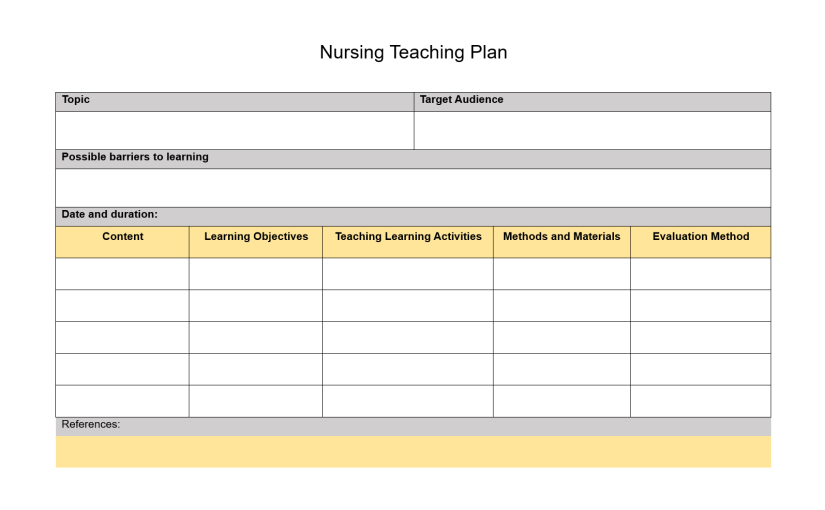
Because it is created in Microsoft Word, it provides flexibility, professional formatting control, and institutional compatibility.

For educators who value organization, compliance, and measurable outcomes, a structured nursing teaching plan template is not optional—it is essential.

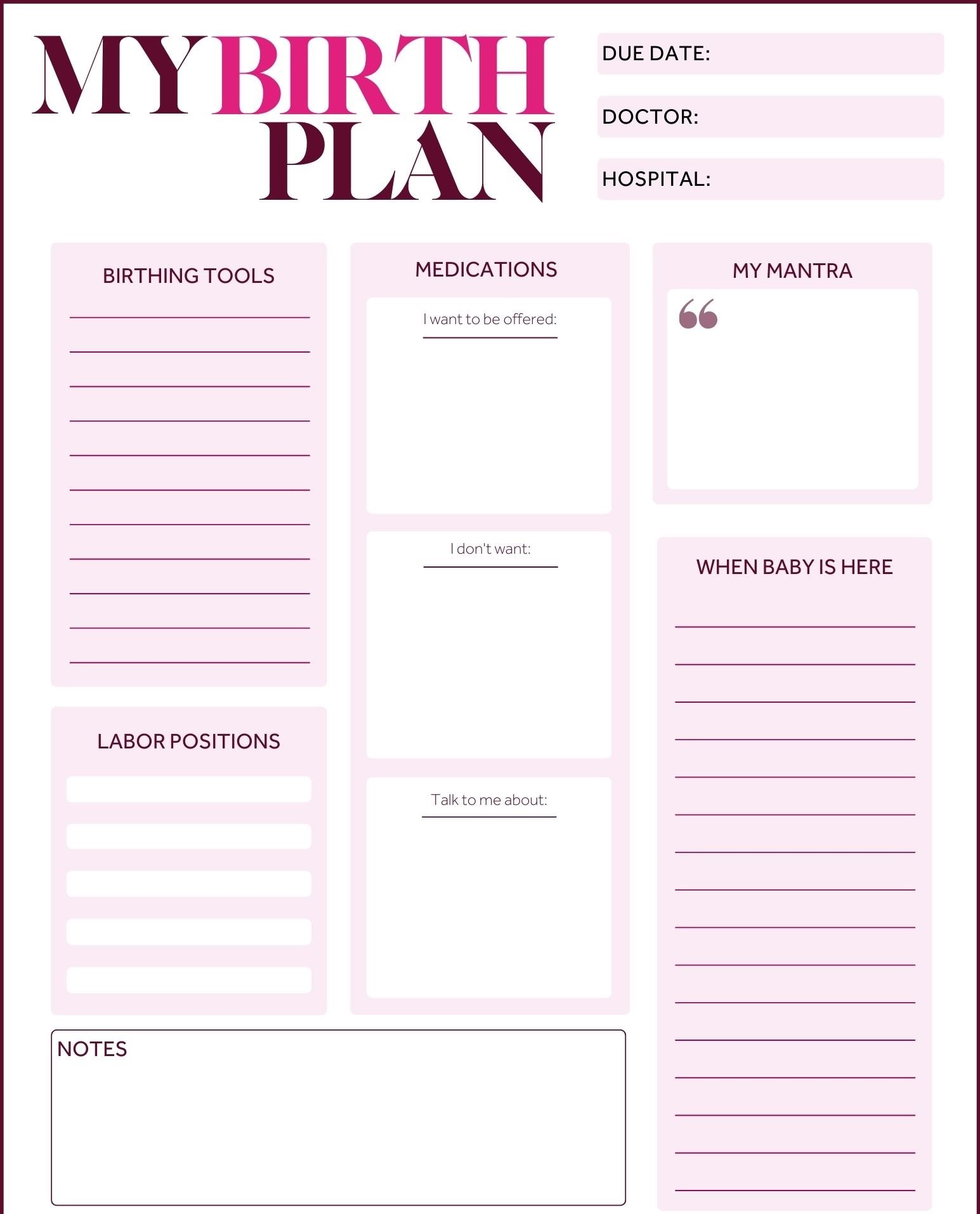
My Birth Plan Template (7+ Free Printable & Editable Designs)

Preparing for childbirth can feel overwhelming, especially with so many decisions to consider. One of the most empowering tools you can create during pregnancy is My Birth Plan Template — a personalized, structured document that clearly communicates your preferences for labor, delivery, and postpartum care.

Whether you are planning a hospital birth, birth center experience, or home birth, building My Birth Plan Template helps you feel organized, informed, and confident. For mothers aiming for minimal intervention, creating the My Natural Birth Plan Template can provide even more clarity around comfort measures and non-medical pain management.

This complete guide walks you through how to design, personalize, and use your plan effectively — without overcomplicating it.

What Is My Birth Plan Template?

My Birth Plan Template is a customizable document outlining your wishes for labor, delivery, and newborn care. It serves as a communication tool between you, your partner, and your medical team.

Instead of relying on memory during labor, your written plan provides a calm reference point. It helps ensure your voice is heard even in high-pressure moments.

Your My Birth Plan Template typically includes:

  • Labor preferences
  • Pain management choices
  • Delivery positioning
  • Emergency preferences
  • Immediate newborn care
  • Feeding plans

The key is balance: clarity without rigidity.

Why Creating My Birth Plan Template Matters

Even if you consider yourself flexible, having a plan offers emotional reassurance. Labor can be unpredictable, but preparation reduces uncertainty.

Here are several benefits:

  • Encourages informed decision-making
  • Helps partners advocate effectively
  • Prevents misunderstandings with staff
  • Clarifies boundaries and comfort needs
  • Builds mental readiness

For mothers who desire a low-intervention birth, My Natural Birth Plan Template provides a focused structure to outline specific preferences regarding movement, monitoring, and pain relief alternatives.

Keep It Simple and Realistic

One common mistake is turning the document into a lengthy manifesto. Medical teams appreciate concise, respectful language.

Your My Birth Plan Template should:

  • Fit on one page if possible
  • Use bullet points instead of long paragraphs
  • Avoid a demanding tone
  • Include flexibility statements

For example:

I understand that circumstances may require adjustments, and I am open to medical recommendations if necessary.

That one sentence keeps communication collaborative.

Get also: Birth Plan Template Free Printable

Essential Sections to Include

Below is a structured breakdown to help you design a thoughtful and complete plan.

1. Basic Information

Start with simple identifying details:

  • Your name
  • Due date
  • Provider’s name
  • Birth location
  • Support persons

This section keeps everything clear for hospital staff reviewing your document.

2. Labor Environment Preferences

This section reflects how you want the room to feel and function.

Examples:

  • Dim lighting preferred
  • Quiet environment
  • Soft music allowed
  • Limited room traffic
  • Freedom to move

If you are building My Natural Birth Plan Template, you may emphasize mobility, intermittent monitoring, and access to birthing tools like:

  • Birth ball
  • Shower or tub
  • Peanut ball
  • Upright labor positions

3. Monitoring and Interventions

Clarify your preferences regarding:

  • Continuous fetal monitoring vs intermittent
  • IV fluids (only if medically necessary)
  • Cervical checks (minimal unless required)
  • Labor augmentation

This section does not reject medical care — it simply outlines your starting preferences.

4. Pain Management Preferences

Every birth experience is unique. Clearly outline your intentions while remaining flexible.

Options may include:

  • Unmedicated labor
  • Epidural
  • Nitrous oxide
  • IV pain medication
  • Hypnobirthing techniques
  • Breathing exercises

If you are designing My Natural Birth Plan Template, you may state:

I prefer to avoid pharmacological pain relief unless medically necessary.

You can also specify that you want to request medication yourself rather than being routinely offered it.

5. Delivery Preferences

Indicate your preferences for the pushing and delivery stage.

Examples:

  • Preferred pushing positions
  • Mirror for viewing birth
  • Warm compresses
  • Perineal massage
  • Delayed cord clamping
  • Partner cutting the cord

Some parents also include preferences about coached pushing versus spontaneous pushing.

6. Unexpected Situations and Cesarean Birth

Even if your goal is vaginal delivery, it is wise to include backup preferences.

You might note:

  • Partner present during surgery
  • Clear drape if available
  • Immediate skin-to-skin if possible
  • Breastfeeding in the recovery room

Planning for multiple possibilities helps reduce fear of the unknown.

Get also: Free Editable C Section Birth Plan Template

Designing My Natural Birth Plan Template

For mothers focused on minimal intervention, this variation emphasizes physiological birth.

Important elements to include:

  • Freedom of movement
  • Intermittent monitoring
  • No routine episiotomy
  • Delayed cord clamping
  • Immediate skin-to-skin contact
  • Breastfeeding within the first hour

You may also mention comfort strategies such as:

  • Water immersion
  • Counter-pressure
  • Massage
  • Aromatherapy
  • Affirmations

However, always include a flexibility statement acknowledging that medical safety remains the priority.

Postpartum and Newborn Care

Your plan should extend beyond delivery.

Consider including preferences for:

  • Immediate skin-to-skin
  • Rooming-in
  • Vitamin K injection
  • Eye ointment
  • Newborn procedures timing
  • Delayed bathing

If breastfeeding is your goal, state that clearly. You may request:

  • Lactation consultant support
  • No pacifiers unless requested
  • Formula only if medically necessary

Clear communication reduces confusion during the busy postpartum window.

Tone Matters More Than You Think

A respectful, collaborative tone encourages cooperation.

Instead of writing:

No IV fluids under any circumstances.

Try:

I prefer to avoid IV fluids unless medically necessary.

This subtle difference maintains autonomy while showing openness to clinical judgment.

Formatting Tips for Clarity

Keep the document:

  • Bullet-pointed
  • Organized by clear headings
  • Easy to scan
  • Free from emotional language
  • Limited to one page

Medical teams may review your plan quickly during active labor. Clarity ensures your key points stand out.

When to Share Your Plan

Do not wait until labor begins.

Best timing:

  • Review with your provider around 32–36 weeks
  • Bring printed copies to the hospital
  • Share with your partner in advance
  • Upload to the hospital portal if available

Early discussion prevents surprises.

Emotional Benefits of Writing Your Plan

Beyond logistics, writing My Birth Plan Template offers emotional preparation.

The process encourages you to:

  • Research procedures
  • Reflect on fears
  • Identify comfort needs
  • Clarify boundaries
  • Strengthen communication with your partner

Many parents report that simply organizing their thoughts reduces anxiety significantly.

What to Avoid

While personalization is important, avoid:

  • Excessive medical jargon
  • Overly long explanations
  • Aggressive tone
  • Unrealistic guarantees
  • Ignoring emergency possibilities

Birth is dynamic. Preparation improves experience, but flexibility ensures safety.

Should You Use a Digital or Printable Version?

You can create your plan using:

  • Microsoft Word
  • Google Docs
  • Canva
  • Editable PDF templates

A printable version works well for hospital use, while digital copies make updates easy.

Choose whichever format allows you to edit comfortably and keep the layout clean.

Frequently Asked Questions

Do hospitals always follow birth plans?

Healthcare teams aim to respect patient preferences whenever safe. Clear communication improves the likelihood that your wishes are honored.

What if my plan changes during labor?

That’s completely normal. A birth plan is a guide — not a contract. Adaptability is a strength, not a failure.

Is it necessary if I trust my doctor?

Yes. Even with full trust, written preferences prevent misunderstandings and ensure everyone is aligned.

Final Thoughts

Creating My Birth Plan Template is less about control and more about clarity. It empowers you to approach labor feeling prepared, informed, and supported.

If your goal is a low-intervention experience, designing My Natural Birth Plan Template can help outline specific comfort measures and reduce unnecessary interventions. At the same time, staying open to medical guidance ensures safety remains central.

Birth may not unfold exactly as written — and that’s okay. The value lies in preparation, communication, and confidence.

Start early, keep it simple, discuss openly, and allow room for flexibility. That balance creates the strongest foundation for a positive birth experience.

Birth Plan Template: 8+ Best Designs for Your Big Day!

Preparing for childbirth is exciting, emotional, and sometimes overwhelming. One of the most empowering steps you can take before delivery is creating a clear and practical Birth Plan Template. A well-structured Birth Plan Template helps you communicate your preferences, reduce anxiety, and feel more in control — whether you’re planning a natural birth or using a C Section Birth Plan Template.

In this complete guide, you’ll learn how to create, customize, and use a Birth Plan Template effectively. We’ll also cover how to adapt it into My Birth Plan Template, so it reflects your personal wishes and medical needs.

What Is a Birth Plan?

A Birth Plan is a structured document that outlines your preferences for labor, delivery, and immediate postpartum care. It serves as a communication tool between you and your healthcare team.

Your Birth Plan typically includes:

  • Labor preferences
  • Pain management choices
  • Delivery options
  • Support person details
  • Newborn care decisions
  • Emergency scenarios

While no birth goes exactly as planned, a Birth Plan Template ensures your voice is heard.

Why You Need a Birth Planner

Even if you’re flexible, having a Birth Planner provides clarity.

Here’s why it matters:

  • ✅ Encourages informed decision-making
  • ✅ Reduces miscommunication during labor
  • ✅ Helps your partner advocate for you
  • ✅ Organizes your preferences in one place
  • ✅ Builds confidence before delivery

Many parents create My Birth Plan versions that feel personal and intentional rather than clinical.

What to Include in Your Birth Planner

A complete Birth Planner should be simple, clear, and easy to read. Medical teams prefer concise documents — ideally one page.

1. Basic Information

  • Name
  • Due date
  • Healthcare provider
  • Hospital or birth center
  • Support persons

2. Labor Preferences

Your Birth Plan Template should clearly state:

  • Preferred labor positions
  • Movement freedom
  • Use of a birthing ball
  • Monitoring preferences
  • IV fluids (yes/no unless medically necessary)

This is where many people personalize My Birth Planner with notes like:

I prefer minimal vaginal exams unless medically required.

3. Pain Management Preferences

Options may include:

  • Unmedicated labor
  • Epidural
  • Nitrous oxide
  • IV medications
  • Hypnobirthing techniques

Your Birth Plan Template should state whether you want medication immediately or only if requested.

Example:

I plan to attempt unmedicated birth but am open to an epidural if labor becomes prolonged.

Creating a C Section Birth Plan Template

Even if you’re planning vaginal delivery, it’s smart to prepare a C Section Birth Plan Template in case circumstances change.

A C Section Birth Planner should include:

  • Partner presence during surgery
  • Clear drape vs standard drape
  • Immediate skin-to-skin if possible
  • Delayed cord clamping
  • Music preferences
  • Breastfeeding in recovery

Preparing a C Section Birth Planner helps you feel prepared instead of surprised if surgery becomes necessary.

Making It Personal: My Birth Plan Template

While generic templates are helpful, many parents prefer creating their own My Birth Plan Template to reflect their values.

To personalize your Planner Template:

  • Use supportive language instead of rigid demands
  • Include emotional preferences (calm lighting, quiet room)
  • Add affirmations
  • Specify cultural or religious considerations
  • Mention comfort items (playlist, aromatherapy, photos)

For example:

My Birth Planner reflects my preference for a calm, low-intervention birth experience with dim lighting and soft music.

Personal touches make the document feel empowering rather than procedural.

Immediate Postpartum Preferences

Your Birth Planner should also cover the first hour after birth.

Include:

  • Immediate skin-to-skin
  • Delayed cord clamping
  • Vitamin K injection preferences
  • Eye ointment preferences
  • Newborn procedures timing
  • Rooming-in vs nursery

If a C Section Birth Plan is in place, specify recovery room bonding preferences.

Breastfeeding and Feeding Plans

Add a short section in your template regarding feeding:

  • Breastfeeding immediately
  • Formula if medically necessary
  • Lactation consultant support
  • No pacifiers unless requested

This ensures clarity for nursing staff.

What a Birth Plan Template Should NOT Be

A Birth Planning Template is not:

  • A rigid contract
  • A guarantee
  • A replacement for medical advice

Birth is unpredictable. The goal of a Birth Planning Template is communication — not control.

Format Tips for an Effective Birth Plan Template

Medical teams appreciate:

  • Bullet points
  • Clear headings
  • One-page layout
  • Respectful tone
  • Flexible wording

Avoid long paragraphs. Your plan should be quick to scan during active labor.

Digital vs Printable Plan Template

You can create a Birth Planning Template in:

Microsoft Word

  • Fully editable
  • Easy to update
  • Ideal for sharing digitally

PDF

  • Clean, printable format
  • Easy to bring to the hospital

Canva

  • Visually appealing
  • Personalized design
  • Good for My Birth Planner Template customization

Choose a format that’s simple and professional.

When to Share Your Birth Planner

You should:

  • Discuss it with your provider around 32–36 weeks
  • Bring copies to the hospital
  • Share it with your partner
  • Upload it to your hospital portal if possible

Communication ahead of time reduces confusion.

Common Mistakes to Avoid

Even a well-designed plan template can fail if:

❌ It’s too long
❌ It sounds demanding
❌ It ignores medical realities
❌ It lacks backup plans
❌ It isn’t discussed beforehand

Always include flexibility statements like:

I understand that medical needs may require adjustments to this template.

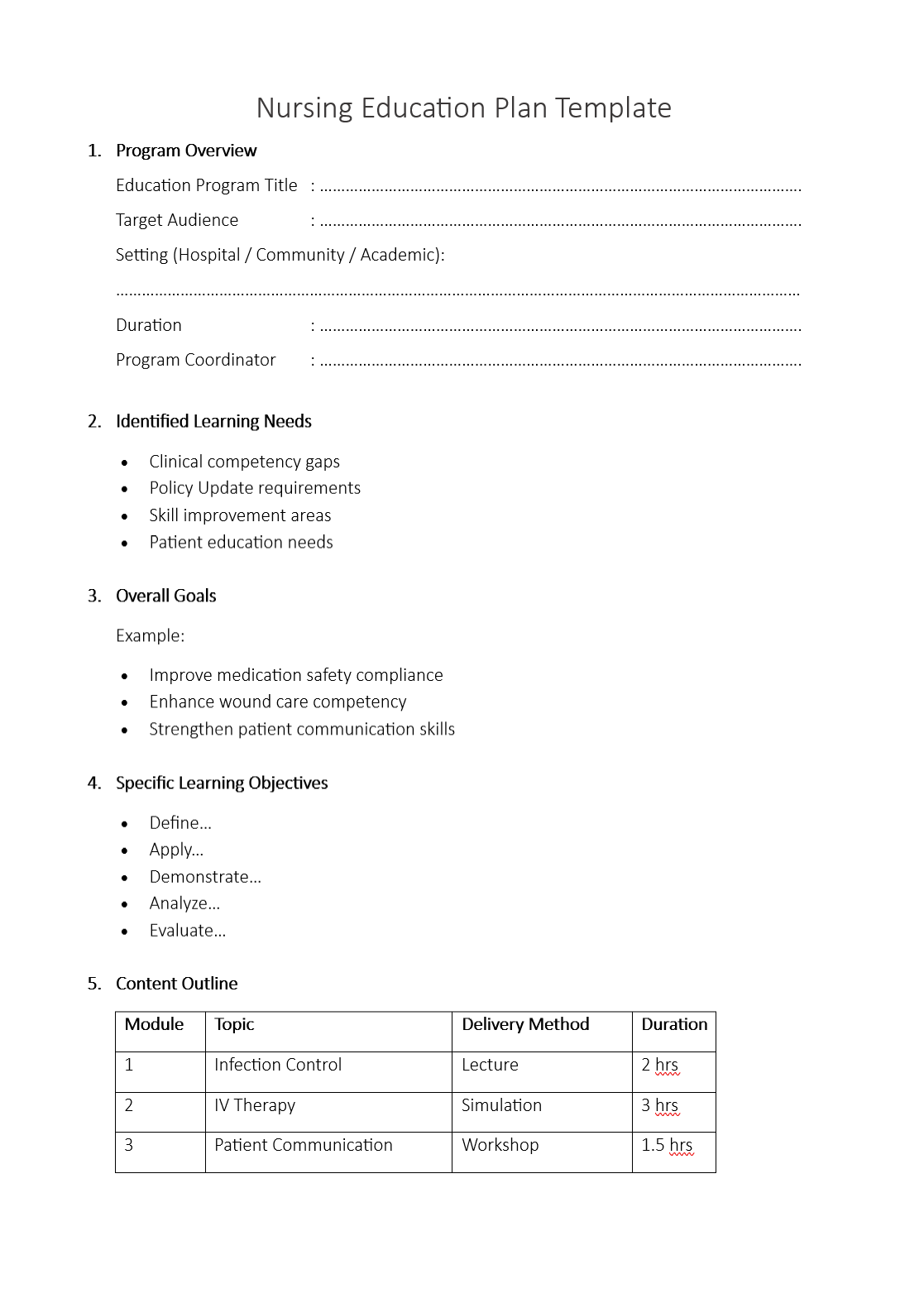
Sample Structure for a Simple Template

Here’s a clean structure you can follow:

  • Basic Information
  • Labor Preferences
  • Pain Management
  • Delivery Preferences
  • C Section Birth Plan Template Backup Section
  • Postpartum & Newborn Care
  • Feeding Plan
  • Special Notes

This structure works well whether you’re creating a hospital-ready document or designing a birth plan format for personal clarity.
Why a Birth Planner Reduces Anxiety

One of the biggest benefits of a planner is emotional preparedness.

When you’ve thought through:

  • Pain options
  • Surgical possibilities
  • Baby care decisions

You enter labor feeling informed — not reactive.

Even if plans change, your preparation builds confidence.

Final Thoughts

A thoughtfully prepared Birth Plan Template empowers you to communicate clearly and confidently. Whether you’re designing My Birth Planner to reflect your personal birth vision or preparing a detailed C Section Birth Planner as backup, structure and clarity make all the difference.

Remember:

Birth is unpredictable — but preparation is powerful.

Start your Birth Plan Template early, keep it simple, discuss it openly, and allow flexibility. That balance creates the most positive and supported birth experience possible.

8+ Student Nursing Care Plan Templates (Free Editable & Printable for Clinical Success)

If you’re a nursing student preparing for clinical rotations, assignments, or skills check-offs, having a well-structured Student Nursing Care Plan Template can save hours of stress. Instead of scrambling to format everything from scratch, you can focus on what truly matters: patient assessment, nursing diagnosis, and clinical reasoning.

In this guide, you’ll discover how to use a Student Nursing Care Plan Template effectively, what sections must be included, how it differs from a professional nurse’s plan, and how to integrate formats like a Nursing Student Care Plan Template, an ATI Nursing Care Plan Template, and even a Nursing Teaching Plan Template into your workflow.

Why Every Student Needs a Student Nursing Care Plan

A Student Nursing Care Plan is not just paperwork. It’s a learning tool designed to train your clinical thinking.

In nursing school, instructors don’t just want correct answers. They want to see:

  • Logical connections between assessment and diagnosis
  • Clear, measurable goals
  • Evidence-based interventions
  • Evaluation with clinical justification

Without a structured template, it’s easy to miss required components.

Using a template helps you:

  • Stay organized
  • Follow the nursing process correctly
  • Avoid losing points for formatting
  • Submit professional-looking assignments
  • Prepare for real-world documentation

What Should a Student Nursing Care Plan Template Include?

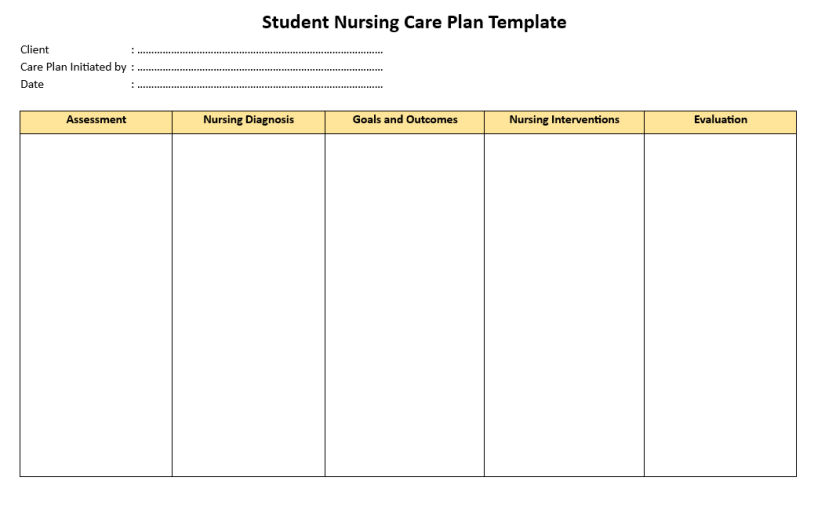
A strong Student Nursing Care Plan Template should follow the nursing process (ADPIE):

1. Assessment

  • Subjective data (what the patient says)
  • Objective data (vitals, labs, physical findings)
  • Relevant medical history

2. Nursing Diagnosis

  • NANDA-based format
  • Problem + related to + as evidenced by

Example:

Impaired gas exchange related to alveolar-capillary membrane changes as evidenced by SpO2 88% on room air.

3. Goals and Outcomes

  • Short-term and long-term goals
  • SMART format (Specific, Measurable, Achievable, Relevant, Time-bound)

4. Nursing Interventions

  • Independent
  • Dependent
  • Collaborative

Each intervention should include a rationale.

5. Evaluation

  • Was the goal met?
  • Partially met?
  • Not met?
  • Supporting evidence

A complete Student Nursing Care Planner Template ensures nothing is skipped.

Student vs Professional Care Plans: What’s Different?

A Student Nursing Care Planner is more detailed than what practicing nurses usually document in hospitals.

Why?

Because instructors want to see your reasoning process.

Student templates often require:

  • Full rationales
  • Citations (sometimes)
  • Detailed pathophysiology
  • Concept mapping

This is why many students search for a Nursing Student Care Plan Template specifically tailored to academic requirements rather than hospital charting systems.

Using a Nursing Student Care Plan Template for Clinical Rotations

During clinical rotations, time is limited.

A structured Nursing Student Care Planner Template allows you to:

  • Fill in assessment findings during pre-conference
  • Organize priorities before patient interaction
  • Plan teaching interventions ahead of time

Pro tip:
Always draft your template before post-conference discussions. Instructors notice preparation.

How an ATI Nursing Care Plan Template Fits In

Many nursing programs use ATI resources for testing and remediation.

An ATI Nursing Care Plan Template often aligns with:

  • ATI clinical judgment model
  • Standardized test expectations
  • NCLEX-style thinking

If your program requires ATI documentation, your Nursing Care Plan Template should:

  • Align with NANDA diagnoses
  • Reflect on evidence-based interventions
  • Connect to expected outcomes clearly

Using an ATI Nursing Care Planner format trains you to think in exam language, which directly benefits NCLEX preparation.

Don’t Forget the Nursing Teaching Plan Template

Patient education is often overlooked in student care plans.

However, many instructors require a separate or integrated Nursing Teaching Plan Template that includes:

  • Learning needs assessment
  • Readiness to learn
  • Teaching methods
  • Educational materials
  • Evaluation of learning

You can either:

  1. Include a teaching section inside your Student Nursing Care Planner
    OR
  2. Attach a standalone Nursing Teaching Planner Template

Both approaches work depending on school requirements.

Common Mistakes Nursing Students Make

Even with a Student Nursing Care Planner, students often:

❌ Write vague goals
❌ Skip rationales
❌ Use medical diagnoses instead of nursing diagnoses
❌ Forget measurable outcomes
❌ Fail to connect the evaluation back to the goal

Your template should force clarity.

For example:

Weak goal:

Patient will improve breathing.

Strong goal:

Patient will maintain SpO2 ≥ 94% on room air within 24 hours.

A well-designed Planner Template prevents weak documentation.

Should You Use Word, PDF, or Canva?

If you’re creating or downloading a Plan Template, consider:

Microsoft Word

✔ Fully editable
✔ Easy to customize
✔ Preferred by instructors

PDF (Printable)

✔ Clean and structured
✔ Good for handwritten clinical notes

Canva

✔ Visually clean
✔ Easy branding
✔ Good for digital portfolios

For nursing school submissions, Word is usually safest.

Sections You Can Add to Make Your Template Better

If you want your Plan Template to stand out academically, consider adding:

  • Pathophysiology summary
  • Lab interpretation table
  • Medication analysis section
  • Priority ranking (Maslow or ABC)
  • Clinical reflection notes

These additions show a deeper understanding.

Example Structure Layout

Here’s a simple outline you can follow:

Patient Information

  • Age
  • Gender
  • Diagnosis
  • Allergies

Assessment

  • Subjective data
  • Objective data

Nursing Diagnosis

Goals & Outcomes

Interventions

  • With rationales

Evaluation

Teaching Plan
(Integrated Nursing Teaching Plan Template section)

This structure works for a Nursing Student Plan Template and aligns well with ATI expectations.

When to Use a Student Nursing Care Plan Template

You should use this template for:

  • Medical-surgical clinicals
  • Pediatric rotations
  • OB rotations
  • Mental health nursing
  • Community health assignments
  • Simulation labs

It becomes your academic blueprint.

Why a Structured Template Reduces Stress

Nursing school is overwhelming.

A reliable Student Nursing Care Planner Template:

  • Reduces last-minute formatting
  • Prevents missing required sections
  • Builds clinical confidence
  • Saves hours weekly

Instead of redesigning a document every week, you fill in the framework.

That consistency builds mastery.

Final Thoughts

A well-designed Student Nursing Care Plan Template is more than an assignment tool — it’s a clinical thinking trainer. Whether you’re using a Nursing Student Care Planner for rotations, aligning with an ATI Nursing Care Plan for exam prep, or integrating a Nursing Teaching Plan for patient education, structure is everything.

The right template helps you:

  • Think clearly
  • Document professionally
  • Impress instructors
  • Prepare for real-world nursing practice

If you’re serious about succeeding in nursing school, start with a solid Student Nursing Care Plan Template — and let the structure guide your clinical growth.

7+ Free Teacher Lesson Plan Template Designs to Organize Your Classroom Like a Pro

A well-structured Teacher Lesson Plan Template is the backbone of effective instruction. Behind every engaging classroom session lies thoughtful preparation — clear objectives, organized activities, assessment strategies, and structured timing. Whether you’re a new educator or a seasoned professional, having a reliable planning framework saves time and improves learning outcomes.

In today’s fast-paced education environment, teachers juggle curriculum standards, differentiated instruction, classroom management, and assessment requirements. Without a structured system, lesson planning can quickly become overwhelming. That’s where a carefully designed template becomes invaluable.

This comprehensive guide will walk you through everything you need to know about choosing, customizing, and maximizing a lesson planning framework that truly works.

Why Every Educator Needs a Structured Teacher Lesson Planner

Teaching isn’t just about delivering information — it’s about designing learning experiences. A strong Teacher Lesson Plan helps you:

  • Clarify learning objectives
  • Align instruction with curriculum standards
  • Organize materials and resources
  • Manage time effectively
  • Track assessment strategies
  • Reflect and improve future lessons

Planning ahead reduces stress and increases classroom confidence.

Core Components of an Effective Lesson Plan

A high-quality template should include structured sections that guide your thinking.

1. Lesson Objectives

Clear objectives define what students should know or be able to do by the end of the lesson. Objectives should be:

  • Specific
  • Measurable
  • Achievable
  • Relevant
  • Time-bound

Every Teacher Lesson Plan Template should prioritize this section at the top.

2. Materials and Resources

Listing materials in advance prevents classroom disruptions. This may include:

  • Worksheets
  • Presentation slides
  • Textbooks
  • Videos
  • Manipulatives
  • Digital tools

Being prepared improves lesson flow.

3. Instructional Procedures

This section outlines step-by-step teaching strategies, including:

  • Introduction or hook
  • Direct instruction
  • Guided practice
  • Independent practice
  • Closure

A structured Teacher Lesson Plan Template ensures you never skip essential instructional stages.

4. Assessment and Evaluation

Assessment measures whether objectives were achieved. It may include:

  • Quizzes
  • Observations
  • Class discussions
  • Exit tickets
  • Homework

Including assessment planning strengthens instructional clarity.

Free Printable Teacher Lesson Plan for Quick Classroom Use

Sometimes teachers need ready-to-use formats that can be printed instantly. A Free Printable Teacher Lesson Plan is ideal for:

  • Substitute teachers
  • Emergency planning
  • Student teaching rotations
  • Paper-based classroom systems

Printable versions are especially helpful when digital access is limited. They allow educators to quickly jot down ideas and adjust during the lesson.

A simple printable layout typically includes:

  • Date
  • Subject
  • Grade level
  • Objectives
  • Activities
  • Assessment
  • Reflection

Even a basic printable version can dramatically improve classroom organization.

Get also: PE Lesson Plan Template

Teacher Lesson Planner Template for Weekly Organization

While daily plans are essential, weekly planning offers a broader perspective. A Teacher Lesson Planner Template designed for weekly use helps educators:

  • Map out curriculum pacing
  • Coordinate projects
  • Balance subject integration
  • Prepare materials in advance

Weekly planning reduces last-minute stress and improves instructional consistency.

A strong weekly planner often includes:

  • Days of the week columns
  • Subject breakdown
  • Key standards
  • Major assignments
  • Notes section

Combining daily and weekly planning systems provides the best results.

Get also: Free Customizable Weekly Lesson Plan Template

Teaching Lesson Plan Template for Different Grade Levels

Not all classrooms function the same way. A flexible Teaching Lesson Plan Template can be customized for:

Elementary Classrooms

  • Detailed activity breakdown
  • Hands-on learning steps
  • Transition planning
  • Behavior management notes

Middle School

  • Time allocation for segments
  • Group work coordination
  • Skill-based objectives

High School

  • Advanced learning targets
  • Assessment rubrics
  • Critical thinking tasks

A versatile Teacher Lesson Plan Template allows teachers to adapt the structure based on grade-level needs.

Get also: Kindergarten Lesson Plan Template

Digital vs Printable Lesson Planning Systems

Modern educators often choose between digital and paper systems.

Digital Templates

Advantages include:

  • Easy editing
  • Cloud storage
  • Shareable collaboration
  • Reusable layouts

Digital versions of a teacher’s lesson plan are perfect for tech-savvy classrooms.

Printable Templates

Benefits include:

  • Simplicity
  • Quick reference during instruction
  • No reliance on devices
  • Easy annotation

Many educators combine both methods for maximum flexibility.

Customizing Your Template for Efficiency

The best planning system is one you will actually use. When customizing your Lesson Plan Template, consider:

  • Adding a reflection section
  • Including differentiation notes
  • Leaving space for accommodations
  • Creating a timing guide
  • Incorporating classroom management reminders

Small adjustments can dramatically improve usability.

How Structured Planning Improves Student Outcomes

Organized lesson planning directly impacts student success.

When teachers use a consistent Teacher Lesson Plan Template, they:

  • Maintain instructional clarity
  • Avoid rushed explanations
  • Allocate time efficiently
  • Integrate assessment naturally
  • Reflect and refine instruction

Students benefit from structured pacing and clear expectations.

Get also: Training Plan Template Free Printable

Common Mistakes Teachers Make in Lesson Planning

Even experienced educators can fall into planning pitfalls.

Overloading the Lesson

Trying to cover too much in one session leads to rushed instruction.

Skipping Assessment

Without assessment planning, teachers can’t measure progress accurately.

Ignoring Reflection

Reflection improves future instruction. A strong template includes space to evaluate what worked and what didn’t.

Using a structured Teaching Lesson Planner helps minimize these errors.

Lesson Planning for New Teachers

For new educators, the organization builds confidence. A detailed Teacher Lesson Planner Template provides structure during the learning curve.

New teachers should:

  • Plan extra time for transitions
  • Over-prepare materials
  • Script key explanations
  • Include backup activities

With repetition, planning becomes faster and more intuitive.

Integrating Standards into Your Lesson Plan

Curriculum standards must align with daily instruction. A well-designed Teacher Lesson Plan Template includes a section for:

  • State standards
  • National benchmarks
  • Learning competencies

This alignment ensures lessons remain academically focused.

Differentiation and Inclusive Planning

Classrooms include diverse learners. Effective planning requires:

  • Modifications for special education
  • English language learner strategies
  • Enrichment activities for advanced students

A thoughtful Teacher Lesson Plan Template includes differentiation notes to support all learners.

Time Management Through Structured Planning

Time is one of the biggest classroom challenges. A good template includes estimated timing for:

  • Introduction
  • Instruction
  • Practice
  • Assessment
  • Closure

This prevents lessons from running too long or ending abruptly.

Reflection: The Most Overlooked Section

Reflection improves teaching quality over time. Include prompts such as:

  • What worked well?
  • What needs improvement?
  • Did students meet objectives?
  • How can I adjust next time?

Adding reflection to your Free Printable Lesson Plan Template strengthens professional growth.

Creating a Reusable Master Template

Instead of rewriting plans daily, create a master format you can duplicate and adjust. A reusable Teacher Lesson Plan Template saves hours every month.

Consider:

  • Color-coding subjects
  • Standardizing fonts and layout
  • Keeping sections consistent
  • Saving editable versions

Efficiency grows with consistency.

Final Thoughts

An organized classroom begins with intentional preparation. A reliable Teacher Lesson Plan Template provides structure, clarity, and confidence for educators at every level. Whether you prefer a Free Printable Teacher Lesson Plan for quick access, a detailed Teacher Lesson Planner Template for weekly mapping, or a customizable Teaching Lesson Plan Template for flexible instruction, structured planning transforms teaching effectiveness.

By investing time in building or selecting the right template, teachers reduce stress, improve time management, and enhance student engagement. In the end, thoughtful planning isn’t just about paperwork — it’s about creating meaningful learning experiences that help students succeed.

Exit mobile version