
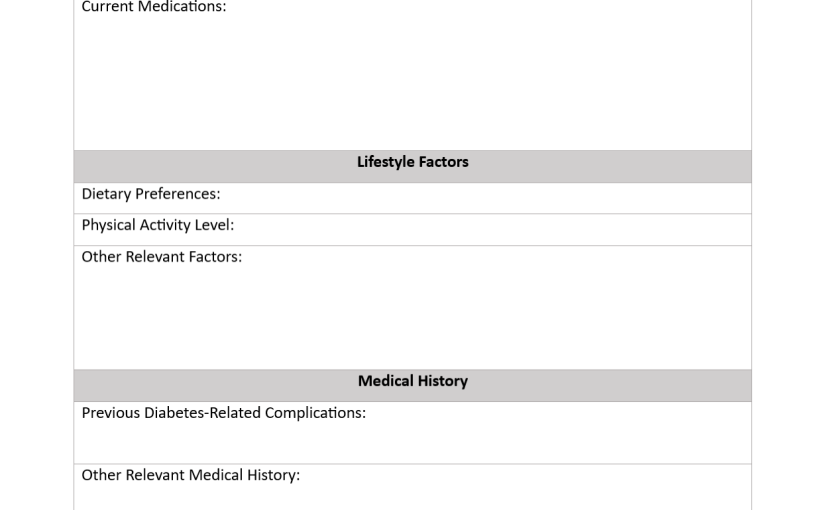
Diabetes Nursing Care Plan Template: Complete Clinical Guide for Type 1, Type 2 & Hyperglycemia Management | A Diabetes Nursing Care Plan Template is a structured clinical document used to assess, diagnose, plan, implement, and evaluate care for patients with diabetes mellitus. Because diabetes affects multiple body systems and requires long-term management, a well-organized care plan is essential in both hospital and community settings.
Whether dealing with insulin-dependent patients, lifestyle-managed cases, or acute hyperglycemia episodes, nurses need a format that is:
- Clear
- Measurable
- Evidence-based
- Easy to document
- Adaptable for different diabetes types
This guide explains how a professional diabetes nursing care plan template should be structured and how it differs when applied to Type 1, Type 2, and hyperglycemia-specific situations.
Why a Structured Diabetes Nursing Care Plan Template Is Essential
Diabetes is not a single-event condition. It is a chronic metabolic disorder requiring:
- Continuous glucose monitoring
- Medication management
- Dietary regulation
- Exercise planning
- Complication prevention
- Patient education
Without a structured template, documentation can become inconsistent and incomplete.
A professional diabetes nursing care plan template ensures:
- Standardized assessment
- Clear nursing diagnoses
- Measurable goals
- Evidence-based interventions
- Ongoing evaluation
In clinical audits and academic grading, structure matters.
Core Components of a High-Quality Diabetes Nursing Care Plan Template

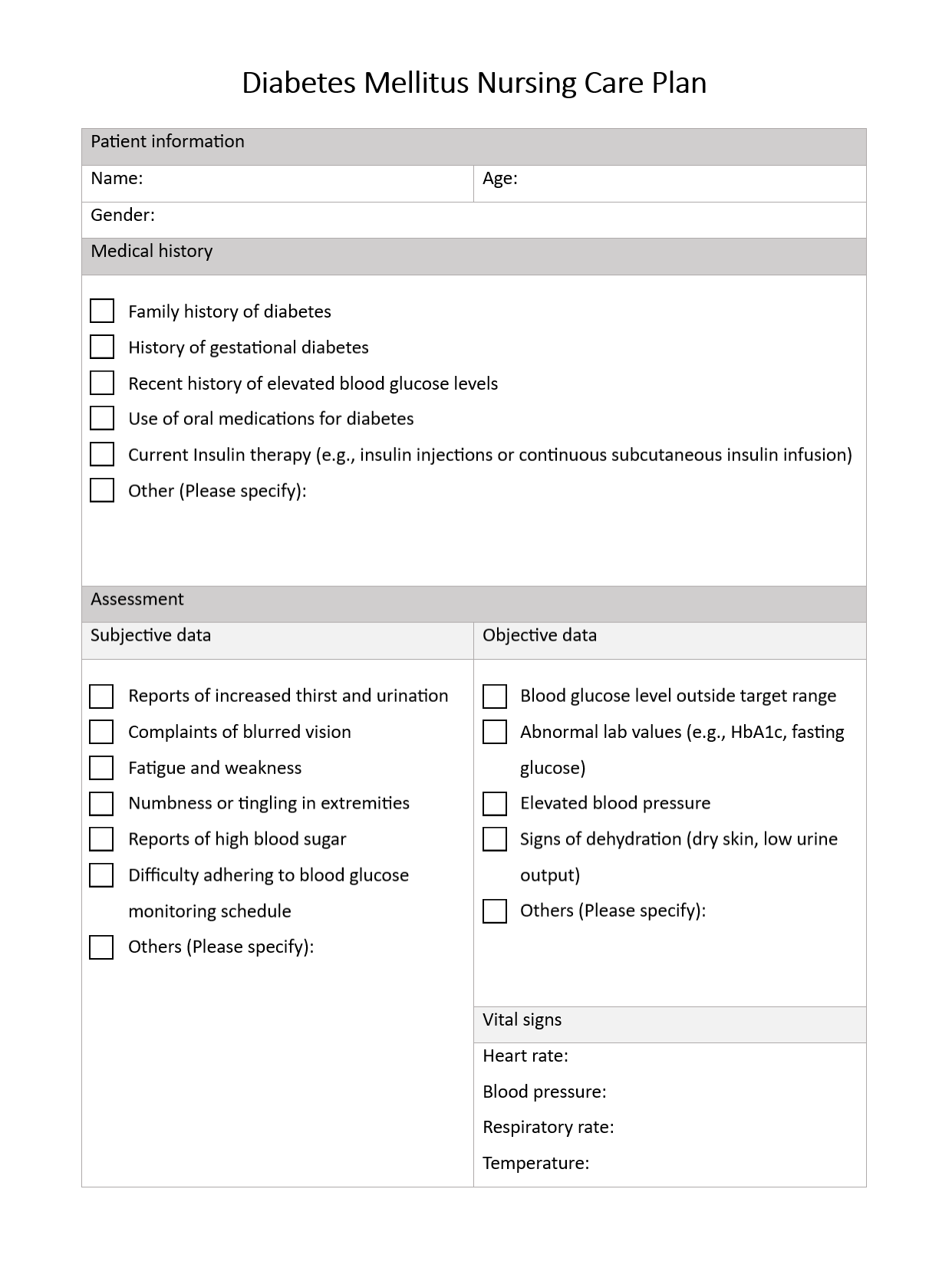
A complete Nursing Care Plan Template (like the one you created in Word) typically includes the following structured sections:
1. Patient Identification & Background
This section includes:
- Age
- Gender
- Diagnosis
- Duration of diabetes
- Current medications
- Allergies
- Comorbidities
This ensures clarity before moving into assessment.
2. Assessment Data
Assessment should include both subjective and objective findings.
Subjective examples:
- Excessive thirst
- Frequent urination
- Fatigue
- Blurred vision
Objective findings:
- Blood glucose levels
- HbA1c
- BMI
- Blood pressure
- Lipid profile
Accurate assessment drives correct nursing diagnosis.
3. Nursing Diagnoses
Common diagnoses in diabetes care include:
- Risk for unstable blood glucose level
- Imbalanced nutrition
- Risk for impaired skin integrity
- Risk for infection
- Ineffective health management
Diagnosis selection may differ between Type 1 and Type 2.
4. Goals & Expected Outcomes
Goals must be measurable. For example:
- Blood glucose maintained within target range
- Patient demonstrates correct insulin administration
- HbA1c reduced within 3 months
- Patient verbalizes understanding of diet plan
Clear goals make evaluation meaningful.
5. Nursing Interventions
Interventions may include:
- Blood glucose monitoring
- Insulin administration
- Oral hypoglycemic medication management
- Dietary counseling
- Exercise guidance
- Foot care education
- Hypoglycemia management education
Interventions should always connect directly to diagnoses.
6. Evaluation
Evaluation determines whether goals were:
- Met
- Partially met
- Not met
Follow-up adjustments are based on this section.
Diabetes Mellitus Type 1 Nursing Care Plan Template

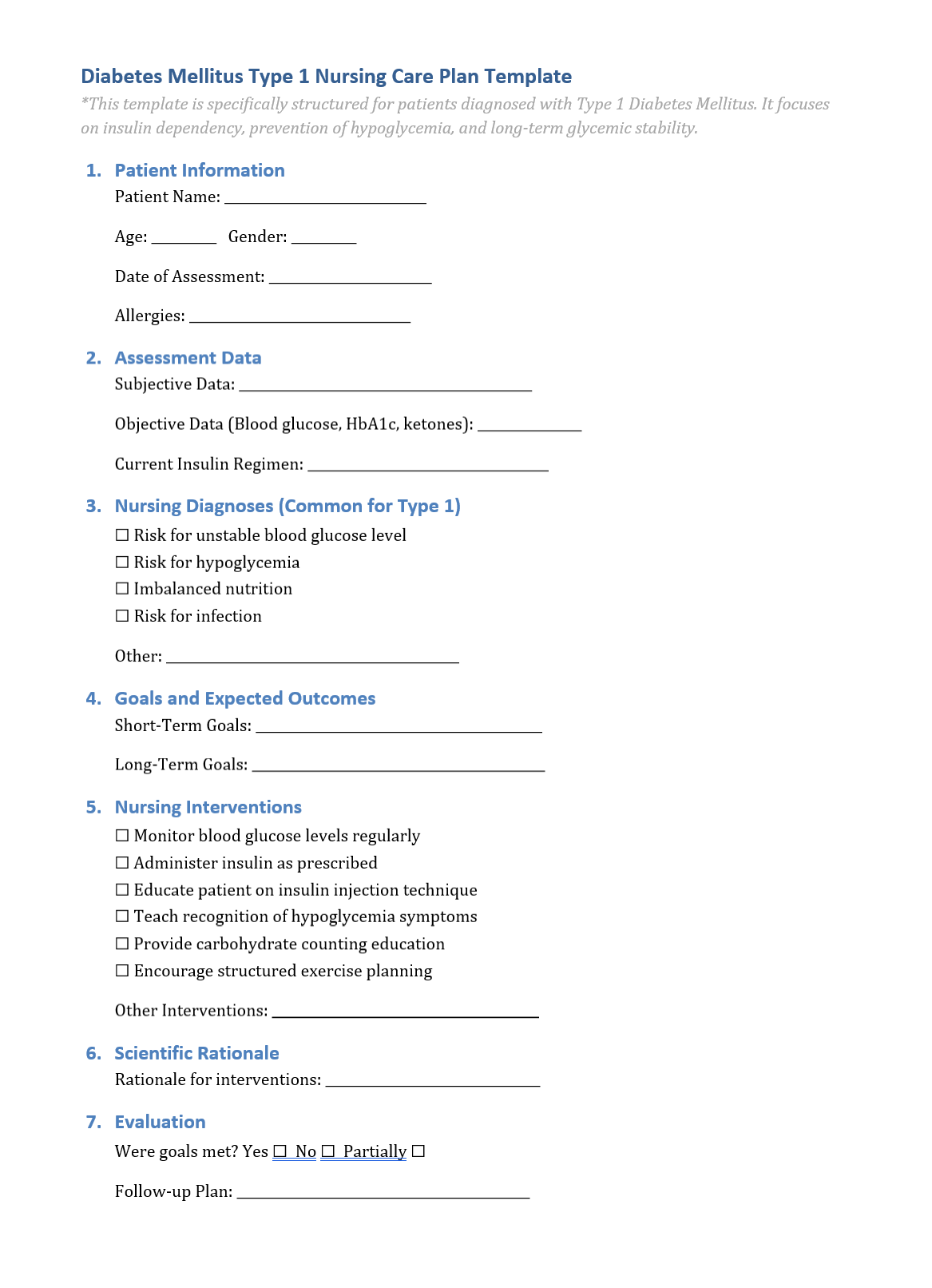
A Diabetes Mellitus Type 1 Nursing Care Plan Template focuses primarily on insulin dependency and risk of hypoglycemia.
Type 1 diabetes is characterized by:
- Absolute insulin deficiency
- Autoimmune destruction of pancreatic beta cells
- Early onset (often childhood or adolescence)
- Higher risk of diabetic ketoacidosis (DKA)
Key Nursing Priorities in Type 1:
- Insulin administration accuracy
- Hypoglycemia prevention
- Carbohydrate counting education
- Ketone monitoring during illness
- Injection site rotation education
Because insulin is mandatory in Type 1, the template should emphasize:
- Insulin regimen documentation
- Blood glucose frequency tracking
- Hypoglycemia symptom recognition
Structured documentation reduces emergency complications.
Get also: Family Nursing Care Plan Template
Diabetes Mellitus Type 2 Nursing Care Plan Template

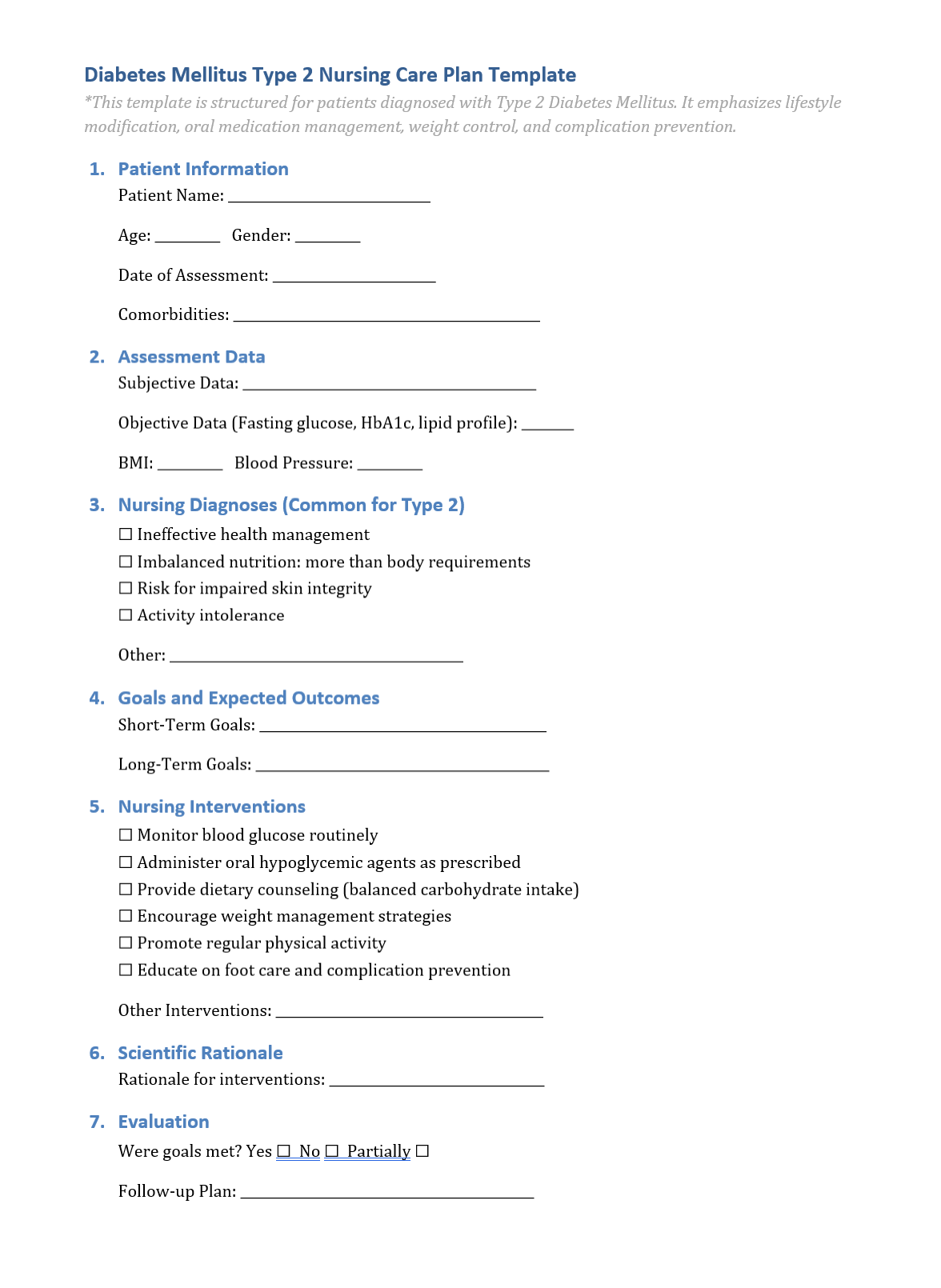
A Diabetes Mellitus Type 2 Nursing Care Plan Template emphasizes lifestyle modification and insulin resistance management.
Type 2 diabetes typically involves:
- Insulin resistance
- Relative insulin deficiency
- Strong link to obesity
- Gradual onset
- Multiple comorbidities
Key Nursing Priorities in Type 2:
- Weight management
- Dietary control
- Physical activity promotion
- Oral hypoglycemic compliance
- Complication prevention
Unlike Type 1, many Type 2 patients initially manage diabetes without insulin.
Therefore, the care plan structure should include:
- Lifestyle counseling documentation
- Weight monitoring
- Cardiovascular risk management
- Hypertension coordination
Long-term complication prevention becomes central.
Diabetes Nursing Care Plan for Hyperglycemia

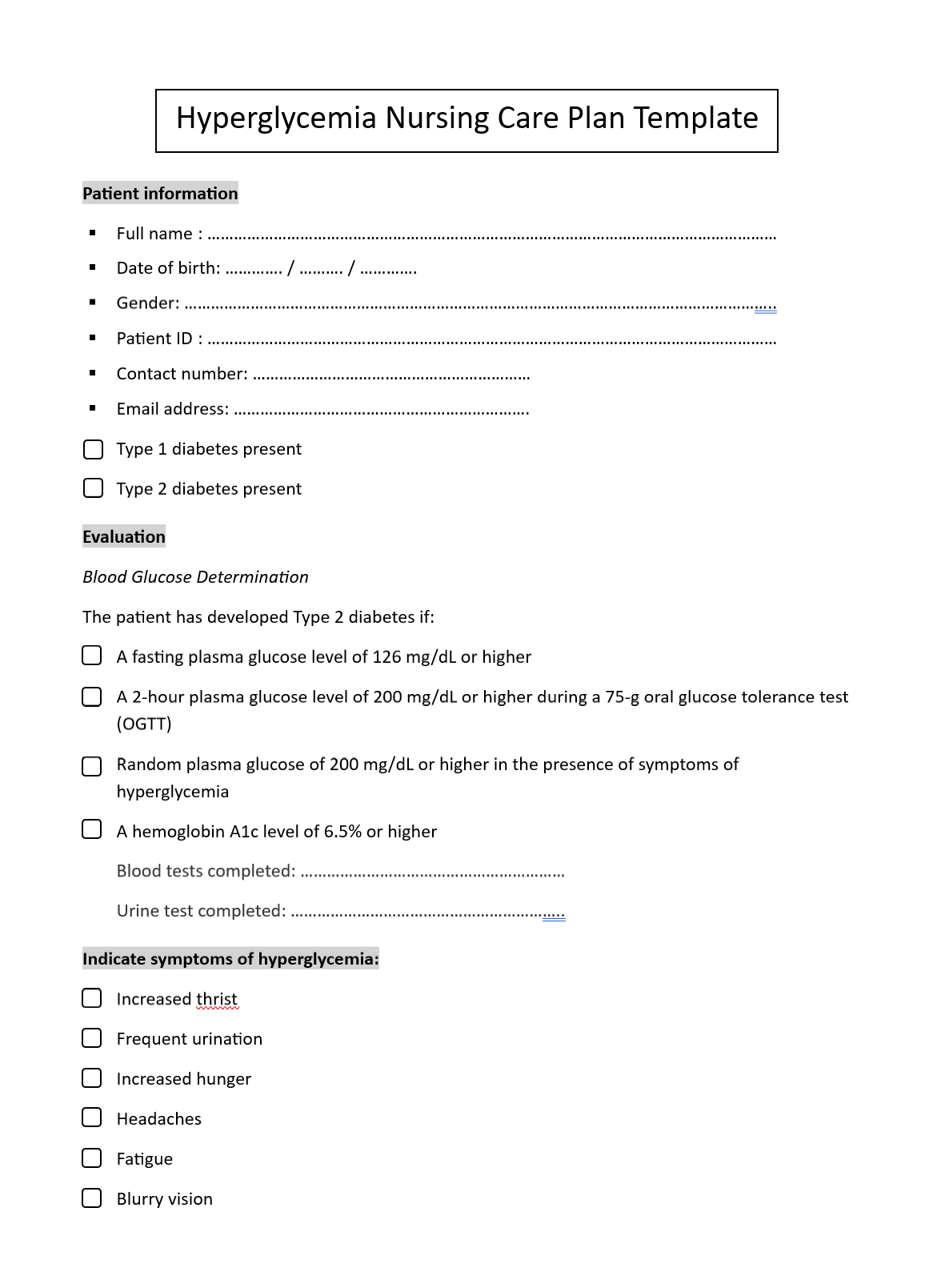
A Diabetes Nursing Care Plan for Hyperglycemia focuses on acute elevation of blood glucose levels.
Hyperglycemia may present with:
- Polyuria
- Polydipsia
- Dry skin
- Fatigue
- Blurred vision
- Fruity breath (in severe cases)
In more severe cases, it may lead to:
- Diabetic ketoacidosis (Type 1)
- Hyperosmolar hyperglycemic state (Type 2)
Nursing Priorities in Hyperglycemia:
- Frequent glucose monitoring
- Insulin correction dosing
- Hydration management
- Monitoring for electrolyte imbalance
- Patient education on early warning signs
In this situation, the care plan template should clearly document:
- Initial glucose reading
- Intervention timing
- Response to treatment
- Reassessment results
Hyperglycemia documentation must be precise, especially in hospital settings.
Differences Between Type 1, Type 2 & Hyperglycemia Focus
Although they share a common disease process, the nursing priorities differ significantly.
| Focus Area | Type 1 | Type 2 | Hyperglycemia |
|---|---|---|---|
| Insulin | Mandatory | Sometimes required | Often corrective |
| Primary Risk | Hypoglycemia | Cardiovascular complications | Acute metabolic crisis |
| Education Focus | Injection technique | Lifestyle modification | Emergency symptom recognition |
| Monitoring | Frequent | Routine | Intensive |
A strong diabetes nursing care plan template allows nurses to adapt quickly depending on clinical presentation.
Why Word-Based Templates Work Best
Since your template is created in Microsoft Word, it offers practical advantages:
- Easy editing for academic or clinical use
- Structured tables
- Professional formatting
- Printable for hospital charts
- Simple conversion to PDF
Nurses often prefer Word because it mirrors real documentation formats used in healthcare facilities.
Common Mistakes in Diabetes Care Planning
Without structure, nurses may:
- Write vague goals
- Skip measurable outcomes
- Overlook comorbidities
- Ignore patient education documentation
- Forget follow-up scheduling
A structured template prevents incomplete planning.
Who Should Use This Template?
This format is ideal for:
- Nursing students
- Clinical instructors
- Hospital nurses
- Community health nurses
- Home health providers
- Diabetes educators
It can be used in:
- Academic assignments
- Clinical documentation
- Case studies
- Community outreach programs
Final Thoughts
A professional Diabetes Nursing Care Plan Template is more than a worksheet—it is a structured clinical framework for safe, measurable, and effective diabetes management.
Whether you are applying:
- A Diabetes Mellitus Type 1 Nursing Care Plan Template
- A Diabetes Mellitus Type 2 Nursing Care Plan Template
- Or building a Diabetes Nursing Care Plan for Hyperglycemia
The foundation remains the same: systematic assessment, measurable goals, targeted interventions, and structured evaluation.
With a well-designed Word template, nurses can deliver consistent, evidence-based care while maintaining professional documentation standards.