6+ SMART Monthly Meal Plan Templates Free Download to Simplify Your Routine

A well-designed Monthly Meal Plan Template can completely transform the way you manage your meals. Instead of making daily decisions about what to cook, you can plan, stay organized, and reduce stress throughout the month.

Whether you’re managing meals for yourself or using a monthly family meal planner to organize food for your household, having a clear system makes everything easier. And if you want to streamline your shopping as well, a monthly meal planner and grocery list help you combine planning and budgeting in one place.

In this guide, you’ll learn how to use a monthly meal plan effectively, explore different template styles, and build a system that fits your lifestyle.

What Is a Monthly Meal Plan?

A Monthly Meal Planner is a structured layout that helps you organize meals for an entire month. Instead of planning week by week, you get a big-picture view of your meals, which allows for better preparation and consistency.

A typical template includes:

  • Daily or weekly meal breakdown
  • Space for notes and planning
  • Grocery list sections
  • Optional budget or nutrition tracking

Using a monthly meal planner and grocery list helps ensure that your meal planning and shopping are aligned, saving both time and money.

Why You Should Use a Monthly Meal Planner

Planning your meals monthly offers several advantages compared to daily or weekly planning.

1. Saves Time in the Long Run

Planning once for the entire month reduces the need for daily decision-making.

2. Improves Organization

A monthly meal plan gives you a clear overview of your meals, making it easier to stay on track.

3. Supports Healthy Eating Habits

With a structured meal plan template, you’re more likely to maintain balanced meals and avoid unhealthy choices.

4. Reduces Grocery Trips

A monthly meal planner and grocery list help you shop efficiently and avoid unnecessary store visits.

5. Ideal for Families

A monthly family meal plan helps coordinate meals for multiple people with different preferences.

Key Features of an Effective Monthly Meal Plan

To get the most out of your monthly meal plan, it should include the following elements.

1. Monthly or Weekly Layout

You can organize meals by week within the month for better clarity. Get also: Weekly Meal Planner Template

2. Meal Categories

Include sections for:

  • Breakfast
  • Lunch
  • Dinner
  • Snacks

3. Grocery List Integration

A built-in monthly meal planner and grocery list ensures you always have what you need.

4. Notes Section

Use this for meal prep ideas, substitutions, or reminders.

5. Flexibility

Your plan should be easy to adjust based on your schedule.

Types of Monthly Meal Plan Templates

Different templates serve different needs.

1. Basic Monthly Meal Plan Template

A simple layout focusing on meal organization.

2. Monthly Family Meal Plan Template

Designed for households, this template helps manage meals for multiple people and preferences.

3. Monthly Meal Planner and Grocery List Template

Combines meal planning with shopping lists for maximum efficiency.

4. Budget-Friendly Meal Planner

Includes cost tracking and helps reduce food expenses.

5. Healthy Meal Plan Template

Focused on balanced nutrition and wellness goals. Get also: Gestational Diabetes Meal Plan Template

How to Create a Monthly Meal Plan That Works

Creating an effective monthly meal plan template doesn’t have to be complicated.

Step 1: Define Your Goals

Decide whether your focus is:

  • Healthy eating
  • Budget savings
  • Convenience

Step 2: Plan Weekly Themes

Divide your month into weekly segments such as:

  • Quick meals
  • Healthy meals
  • Family favorites

Step 3: Fill in Daily Meals

Use your monthly meal plan template to assign meals to each day.

Step 4: Build Your Grocery List

A monthly meal planner and grocery list template helps ensure you have all the necessary ingredients.

Step 5: Prepare in Advance

Meal prep can save significant time during busy days.

Best Practices for Using a Monthly Meal Plan Template

To get the best results, follow these tips.

Keep It Realistic

Avoid overcomplicating your plan.

Reuse Meals

Repeating meals saves time and reduces effort.

Plan Around Your Schedule

Choose simple meals for busy days and more complex ones when you have time.

Stay Flexible

Adjust your plan as needed.

Track What Works

Take note of meals that are successful and reuse them.

Common Mistakes to Avoid

Even with a structured monthly meal plan template, mistakes can happen.

Overplanning

Trying too many new recipes can lead to burnout.

Ignoring Preferences

Plan meals that everyone enjoys, especially when using a monthly family meal plan template.

Skipping the Grocery List

Without a monthly meal planner and grocery list template, you may forget important items.

Lack of Preparation

Failing to prep ingredients can make your plan harder to follow.

How to Adapt a Monthly Meal Plan for Families

Using a monthly family meal plan template requires additional considerations.

  • Account for different preferences
  • Include kid-friendly meals
  • Plan for leftovers
  • Assign cooking responsibilities

This makes meal planning more collaborative and manageable.

Smart Grocery Planning for the Month

A well-organized grocery system is essential for success.

Start by breaking your shopping into weekly trips. Even if you plan monthly, buying fresh ingredients weekly helps maintain quality.

Group items by category to make shopping faster. Always check your pantry before buying to avoid duplicates.

Using a monthly meal planner and grocery list template helps keep everything organized and prevents overspending.

Meal Prep Strategies for Monthly Planning

Meal prep is key to making your plan work efficiently.

  • Batch cook staple ingredients
  • Pre-cut vegetables
  • Prepare sauces in advance
  • Store meals properly

These strategies save time and reduce stress during the week.

How to Stay Consistent With Monthly Meal Planning

Consistency is what makes meal planning effective.

  • Set a regular planning day each month
  • Keep your template accessible
  • Start simple and improve gradually
  • Allow flexibility for unexpected changes

Over time, meal planning becomes a habit rather than a chore.

Benefits of Using a Monthly Meal Planner Long-Term

A monthly meal plan template offers long-term advantages beyond daily convenience.

  • Builds healthier eating habits
  • Reduces food waste
  • Saves money over time
  • Improves time management

When used consistently, it becomes a powerful tool for improving your lifestyle.

Final Thoughts

A well-structured monthly meal plan template helps you stay organized, save time, and make better food choices. Whether you’re planning for yourself or using a monthly family meal plan template, the key is consistency and flexibility.

By combining planning with a monthly meal planner and grocery list template, you can simplify your routine, reduce stress, and create a system that works for your lifestyle.

Start simple, refine your process, and enjoy the benefits of a more organized and efficient approach to meal planning.

Bonus: Simple Monthly Meal Plan Structure

  • Week 1: Easy meals
  • Week 2: Balanced meals
  • Week 3: Variety and new recipes
  • Week 4: Leftovers and flexible meals

Weekly Meal Planner Template: Simplify Your 2026 Meals and Save Time

A well-designed Weekly Meal Planner Template can completely change how you manage your meals. Instead of stressing over what to eat each day, you’ll have a clear, organized plan that saves time, reduces waste, and supports your health goals.

Whether you’re looking for a simple weekly meal planning template or a more detailed weekly meal plan and grocery list template, having the right structure makes meal prep easier and more efficient.

In this guide, you’ll learn how to use a weekly meal planner effectively, explore different template styles, and create a system that works for your lifestyle.

What Is a Weekly Meal Planner?

A Weekly Meal Planner is a structured layout that helps you plan meals for the entire week in advance. It typically includes sections for breakfast, lunch, dinner, snacks, and sometimes a grocery list.

Using a weekly meal planner allows you to:

  • Stay organized
  • Save time during busy days
  • Maintain a balanced diet
  • Reduce food waste

Many people also prefer a weekly meal plan and grocery list because it combines planning and shopping in one place.

Why You Should Use a Weekly Meal Planner

Planning meals ahead offers several benefits beyond convenience.

1. Saves Time Every Day

Instead of deciding what to cook multiple times a day, you plan once and follow the schedule.

2. Helps You Eat Healthier

With weekly meal planning, you can ensure balanced nutrition and avoid last-minute unhealthy choices.

3. Reduces Food Waste

Planning meals and groceries together prevents overbuying and unused ingredients.

4. Saves Money

A weekly meal plan and grocery list help you shop smarter and stick to a budget.

5. Lowers Stress

Knowing exactly what to cook each day removes decision fatigue.

Key Features of an Effective Weekly Meal Planner

To get the most out of your Weekly Meal Planner Template, look for these essential features.

1. Daily Meal Sections

Each day should include:

  • Breakfast
  • Lunch
  • Dinner
  • Snacks

2. Grocery List Integration

A built-in weekly meal plan and grocery list make shopping more efficient.

3. Space for Notes

This allows you to add prep ideas, substitutions, or reminders.

4. Flexible Layout

A good weekly meal plan should be easy to customize.

5. Nutrition Tracking (Optional)

Some templates include calorie or macro tracking for added value.

Types of Weekly Meal Planner Templates

Different people need different types of planners. Here are the most popular options.

1. Basic Weekly Meal Planning Template

A simple layout focusing on daily meals. Best for beginners or those who prefer minimal planning.

2. Weekly Meal Plan and Grocery List Template

This version combines meal planning with a shopping list. It is ideal for saving time and staying organized.

3. Printable Weekly Meal Planner Template

Designed for easy printing and manual use.

4. Healthy Meal Planner Template

Focused on balanced nutrition and healthy eating. Get also: Diabetes Meal Plan Template

5. Family Meal Planning Template

Helps manage meals for multiple people with different preferences. Get also: Monthly Meal Plan Template Free Download
How to Create a Weekly Meal Plan That Works

Creating an effective Weekly Meal Planner Template doesn’t have to be complicated.

Step 1: Set Your Goal

Decide what you want to achieve:

  • Weight loss
  • Muscle gain
  • Balanced diet

Step 2: Choose Your Meals

Plan meals that match your goal and schedule.
Step 3: Organize by Day

Fill in your meal planning template for each day of the week.

Step 4: Build Your Grocery List

Use a weekly meal plan and grocery list template to list everything you need.

Step 5: Prep in Advance

Prepare ingredients ahead of time to save effort during the week.

How to Customize Your Weekly Meal Planner for Maximum Results

One of the biggest advantages of using a meal planner is flexibility. A good system is not rigid—it adapts to your lifestyle, preferences, and goals.

Start by identifying your weekly routine. If your weekdays are busy, focus on quick and easy meals that require minimal preparation. Reserve more time-consuming recipes for weekends when you have more flexibility.

You can also customize your planner based on dietary preferences. Whether you follow a vegetarian, high-protein, or balanced diet, your meal plan should reflect your personal needs. This makes it easier to stay consistent over time.

Another effective approach is to create a rotating system. Instead of planning entirely new meals every week, reuse successful meal combinations. This reduces decision fatigue and speeds up your planning process.
Meal Prep Strategies That Save Time and Effort

A planner becomes significantly more powerful when combined with meal preparation.

Batch cooking is one of the most effective strategies. Preparing large portions of food in advance allows you to save time during busy days. You can cook proteins, grains, and vegetables ahead of time and mix them into different meals throughout the week.
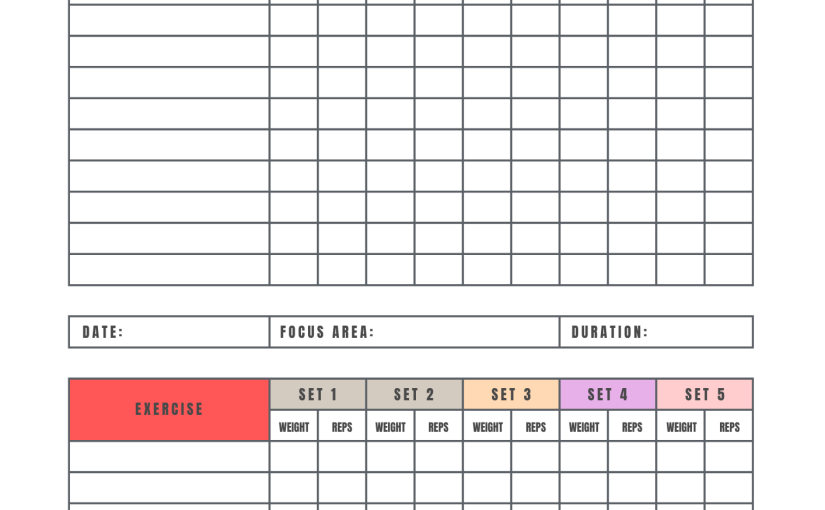
Another helpful strategy is ingredient prep. Instead of cooking everything at once, you can chop vegetables, marinate proteins, and portion ingredients in advance. This reduces cooking time and makes daily meal preparation much easier.

Freezing meals is also a great option. If you prepare extra portions, you can store them for future use. This is especially useful for maintaining consistency during hectic weeks.
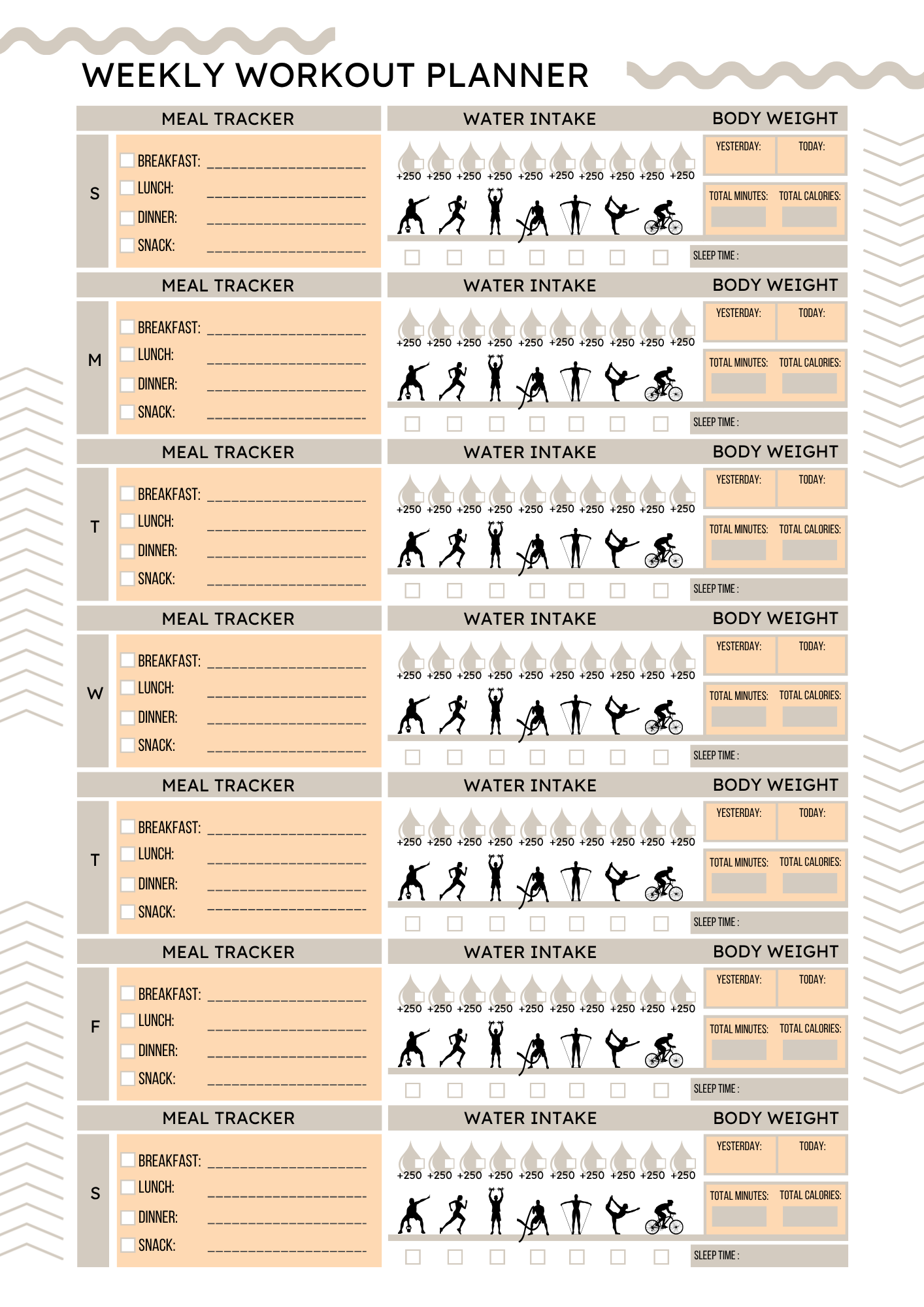
Best Practices for Using a Weekly Meal Planner Template

To get the best results, follow these simple tips.

Keep It Simple

Avoid overcomplicating your plan with too many recipes.

Repeat Meals

Repeating meals can save time and reduce effort.

Plan Around Your Schedule

Choose quick meals for busy days and more complex ones for weekends.

Stay Flexible

Adjust your plan as needed.

Track What Works

Take note of meals you enjoy and reuse them.

Common Mistakes to Avoid

Even a great Weekly Meal Planner Template won’t help if these mistakes are made.

Overplanning

Trying too many new recipes can lead to burnout.

Ignoring Preferences

Plan meals you actually enjoy eating.

Skipping the Grocery List

Without a weekly meal plan and grocery list template, you may forget key ingredients.

Not Prepping

Lack of preparation can derail your plan.

How a Weekly Meal Planner Template Supports Different Goals

A Weekly Meal Planner Template can be adapted to fit various lifestyles.

For Weight Loss

  • Focus on portion control
  • Track calories
  • Plan balanced meals

For Muscle Gain

  • Increase protein intake
  • Include nutrient-dense foods

For Busy Professionals

  • Plan quick and easy meals
  • Use batch cooking

For Families

  • Include meals everyone enjoys
  • Plan ahead to avoid stress

Tips to Stay Consistent With Meal Planning

Consistency is key to success.

  • Choose a fixed planning day each week
  • Keep your templates easily accessible
  • Start simple and improve gradually
  • Celebrate small wins

Final Thoughts

A Weekly Meal Planner Template is more than just a schedule—it’s a powerful tool for improving your lifestyle. It helps you stay organized, eat healthier, and reduce daily stress.

Whether you prefer a simple weekly meal planning template or a detailed weekly meal plan and grocery list template, the key is to find a system that works for you and stick with it.

With consistent use, you’ll save time, reduce waste, and enjoy a more structured and balanced approach to your meals.

Bonus: Simple Weekly Meal Plan Example

  • Monday: Grilled chicken + vegetables
  • Tuesday: Pasta + salad
  • Wednesday: Stir-fry
  • Thursday: Rice + protein + veggies
  • Friday: Light meals
  • Weekend: Flexible

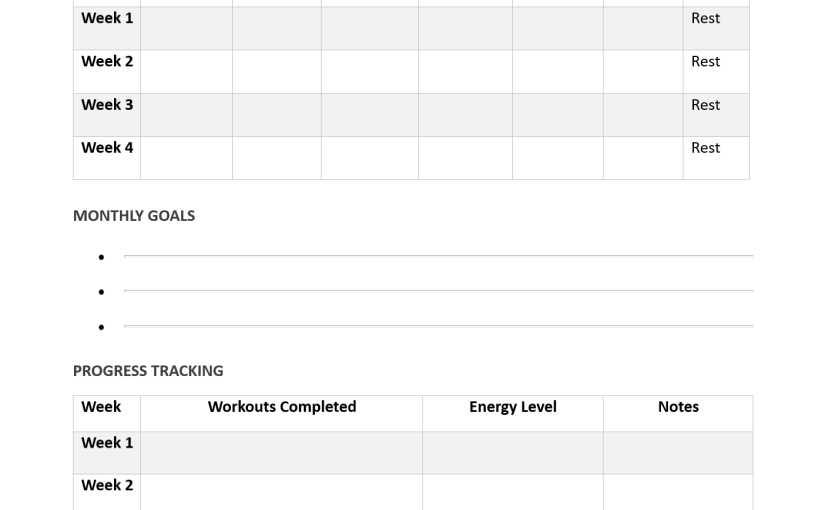
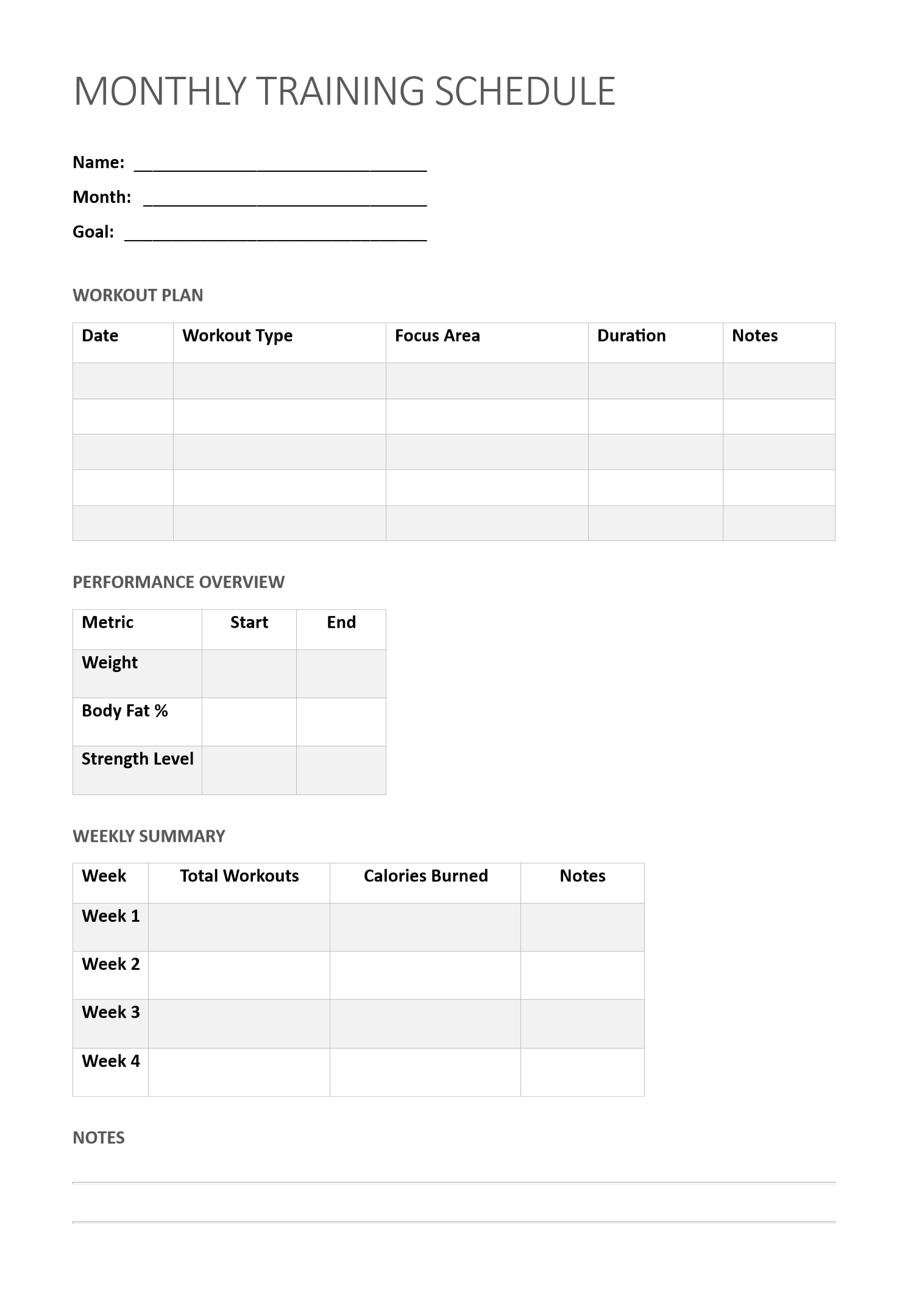
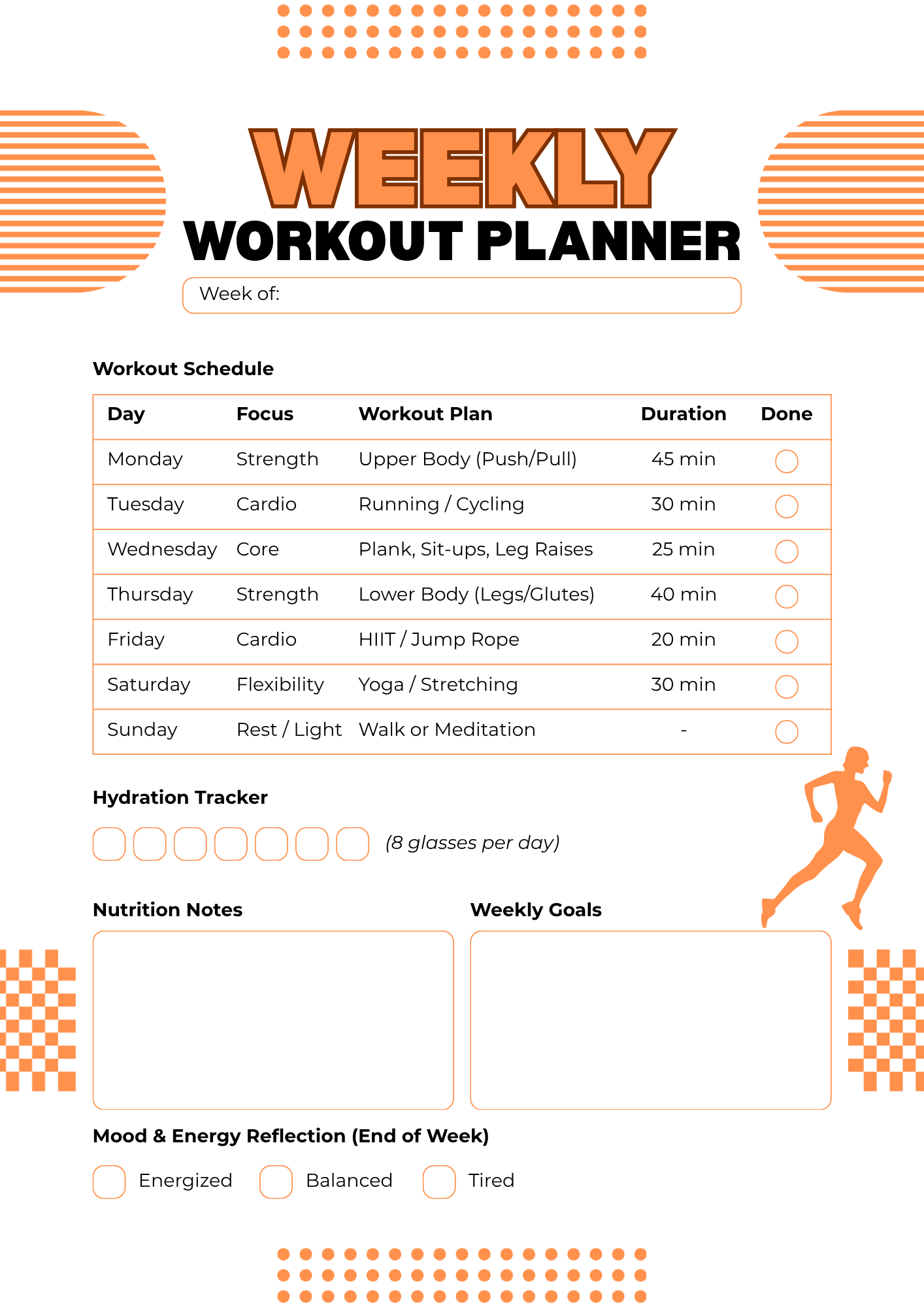
Monthly Workout Plan Template: 8+ Best Designs for Your Fitness Routine

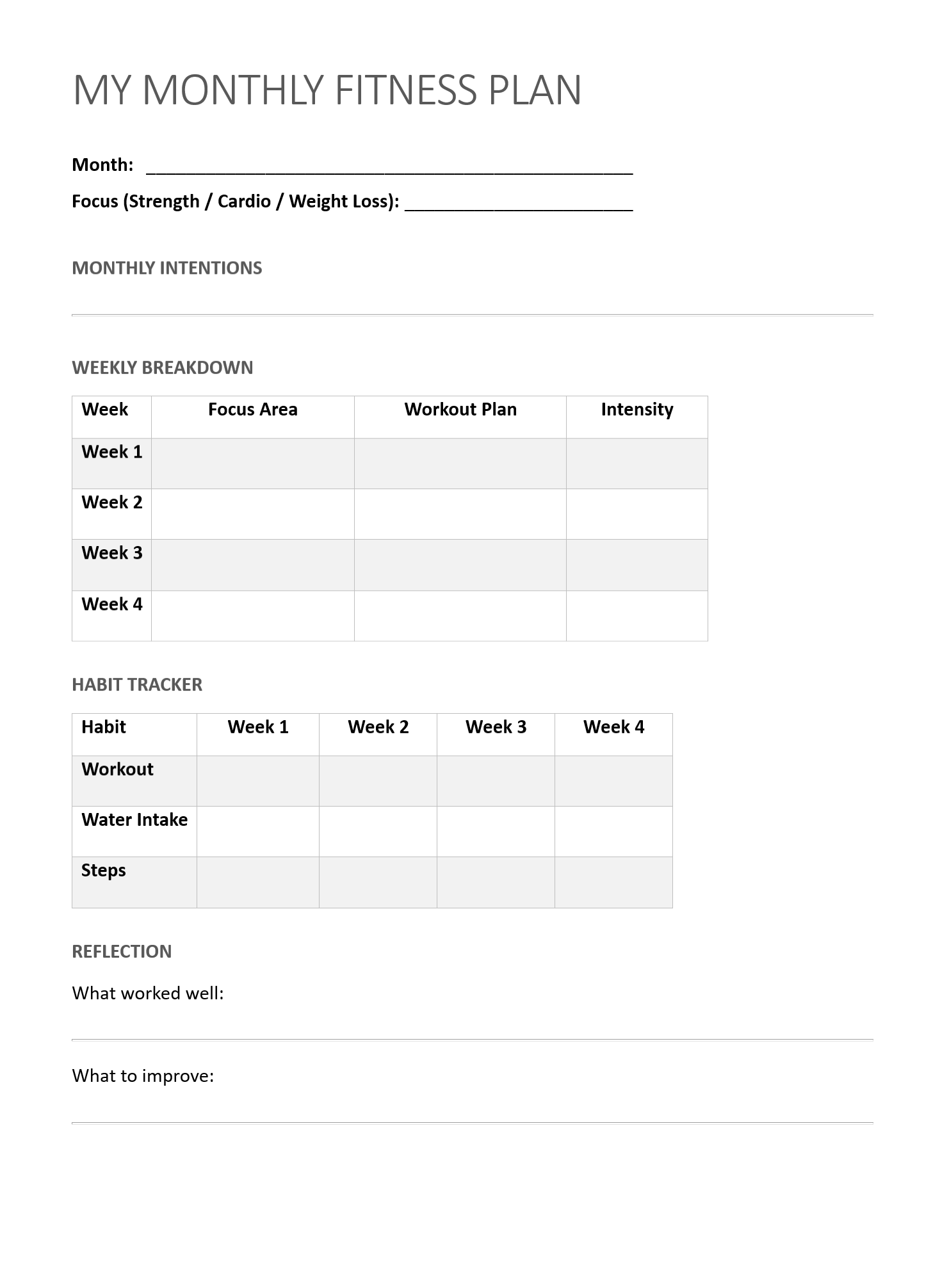
A monthly workout plan template is one of the most effective ways to stay consistent, track progress, and achieve long-term fitness goals. Instead of planning workouts day by day, a monthly approach gives you a clear roadmap that keeps you focused and disciplined.

Whether you’re training at the gym, following a monthly workout plan at home, or working toward fat loss with a monthly workout plan for weight loss, having a structured system can make a huge difference in your results.

In this guide, you’ll learn how to use a monthly workout schedule, explore different formats, and build a plan that actually works.

What Is a Monthly Workout Planner?

A monthly workout planner is a structured layout that organizes your workouts across an entire month. It helps you plan your routines in advance, balance intensity, and include proper recovery.

Unlike weekly or daily plans, a monthly format allows you to:

  • Track long-term progress
  • Adjust intensity gradually
  • Maintain consistency over time

A well-designed monthly workout schedule ensures that your workouts are balanced and aligned with your goals.

Why You Should Use a Monthly Workout Plan

Many people struggle with consistency because they lack a long-term plan. A monthly workout planner solves this problem by providing structure and clarity.

1. Builds Long-Term Consistency

Planning your workouts for the entire month helps you stay committed and avoid skipping sessions.

2. Improves Progress Tracking

With a monthly workout schedule, you can clearly see how your performance evolves over time.

3. Helps Balance Workouts and Recovery

A monthly plan ensures that you include rest days and avoid overtraining.

4. Supports Different Fitness Goals

Whether your goal is muscle gain, endurance, or a monthly workout plan for weight loss, a structured plan helps you stay on track.

5. Saves Time and Effort

You don’t have to plan your workouts every day. Everything is already organized.

Key Components of an Effective Monthly Workout Planner

To get the best results, your monthly workout planner should include these essential elements.

1. Clear Fitness Goals

Define your primary goal for the month:

  • Weight loss
  • Muscle gain
  • Endurance
  • General fitness

Your goal will determine the structure of your plan.

2. Weekly Breakdown

Divide your month into weeks and assign workout focuses such as:

  • Strength training
  • Cardio
  • Recovery

This makes your plan easier to follow.

Get also: Free Weekly Workout Plan Template

3. Daily Workout Structure

Each day should have a clear purpose:

  • Upper body
  • Lower body
  • Full body
  • Cardio

Get also: Daily Workout Plan Template

4. Rest and Recovery Days

Recovery is essential for progress. A good monthly workout schedule template always includes rest days.

5. Progress Tracking Section

Track metrics such as:

  • Workouts completed
  • Weight or body measurements
  • Energy levels

Types of Monthly Workout Plan Templates

Different types of monthly workout plan templates are designed for different needs.

1. Basic Monthly Workout Schedule Template

This format focuses on scheduling workouts throughout the month. It is simple, easy to use, and perfect for beginners.

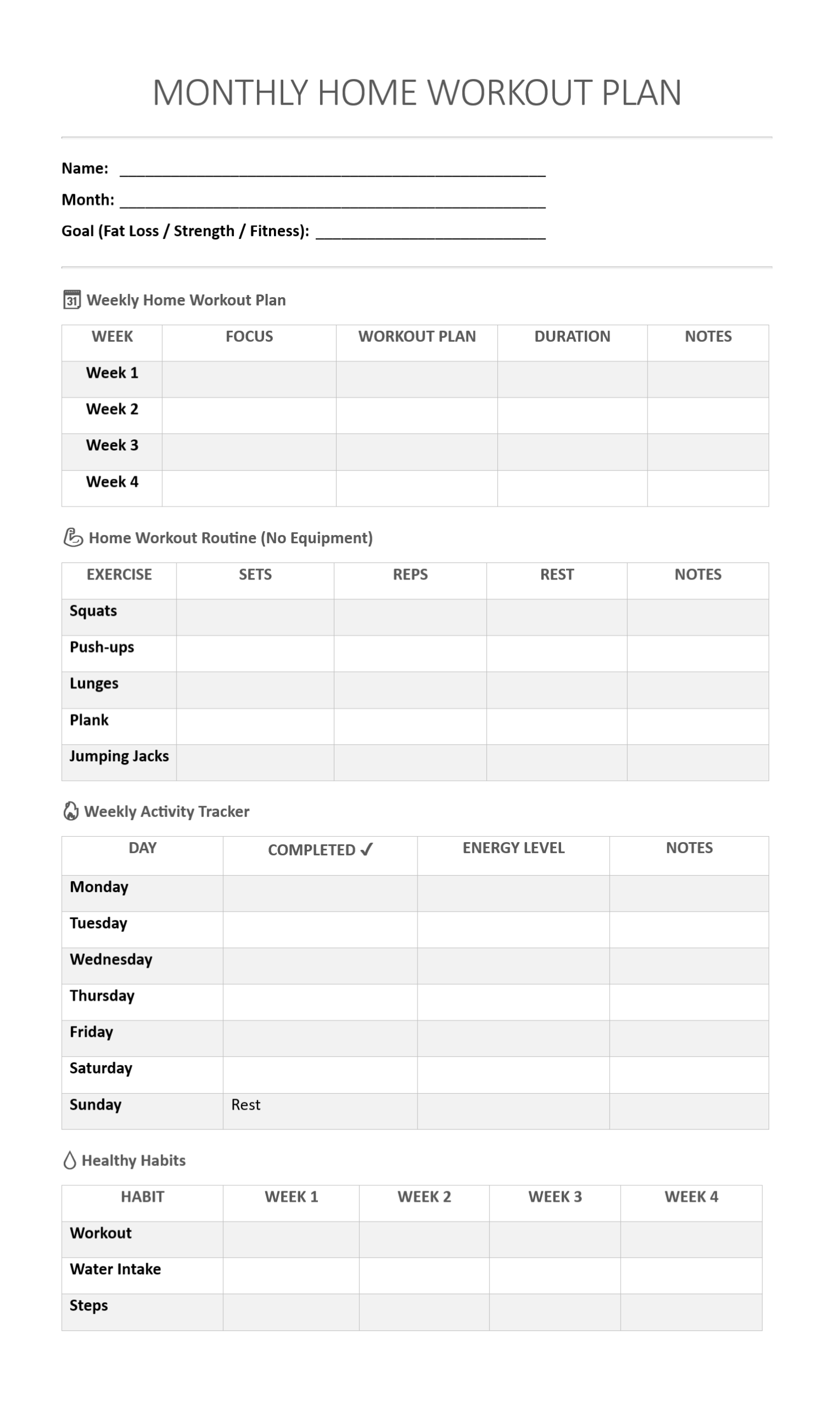
2. Monthly Workout Plan at Home

A workout plan at home is ideal for people who prefer convenience.

It includes:

  • Bodyweight exercises
  • Minimal equipment routines
  • Flexible scheduling

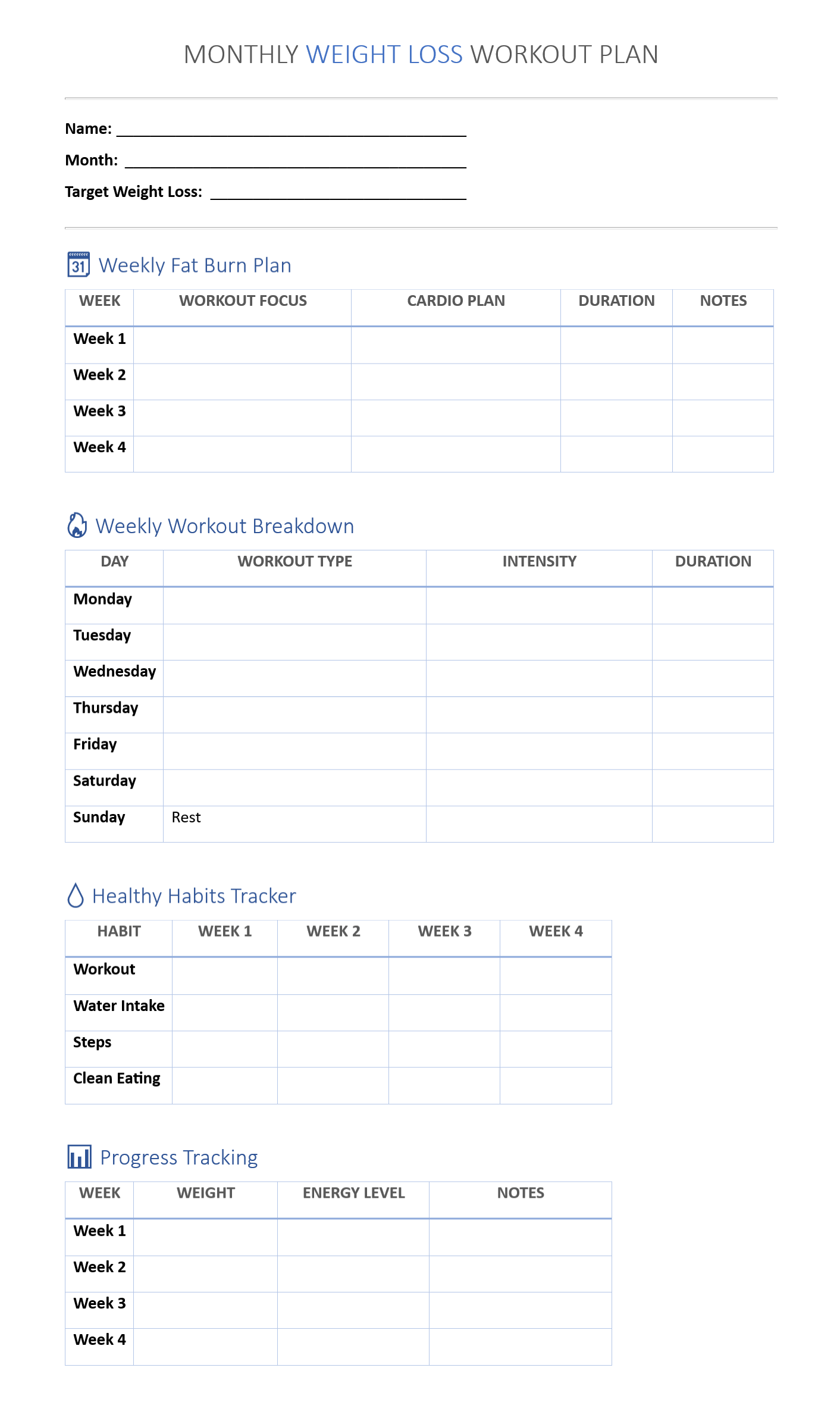
3. Monthly Workout Plan for Weight Loss

This type focuses on fat loss and includes:

  • Cardio sessions
  • High-intensity workouts
  • Calorie-burning routines

A monthly workout plan for weight loss helps maintain consistency and track progress effectively.

4. Advanced Monthly Workout Plan

Designed for experienced individuals, this Workout Planner Template includes:

  • Progressive overload
  • Structured training splits
  • Performance tracking

5. Printable Monthly Workout Template

This version is designed for easy printing and manual tracking.

How to Create a Monthly Workout Plan That Works

Creating an effective monthly workout plan template is simple if you follow a structured approach.

Step 1: Define Your Goal

Start with a clear objective for the month.

Step 2: Plan Weekly Structure

Divide your workouts into weekly segments with different focuses.

Step 3: Assign Daily Workouts

Plan specific workouts for each day.

Step 4: Include Rest Days

Ensure your schedule includes recovery time.

Step 5: Track and Adjust

Use your monthly workout schedule to monitor progress and make improvements.

Best Practices for Using a Monthly Workout Plan Template

To maximize your results, follow these best practices.

Stay Consistent

Consistency is the key to long-term success.

Keep It Realistic

Avoid overly ambitious plans that are difficult to maintain.

Focus on Progress

Track improvements rather than aiming for perfection.

Combine With Proper Nutrition

Nutrition plays a major role in achieving your goals, especially for a monthly workout planner for weight loss.

Listen to Your Body

Adjust your plan based on your energy levels and recovery needs.

Common Mistakes to Avoid

Even with a structured monthly workout plan template, mistakes can happen.

Overtraining

Too much exercise without rest can lead to fatigue and injury.

Lack of Planning

Without a clear structure, workouts become inconsistent.

Ignoring Recovery

Recovery is essential for long-term success.

Not Tracking Progress

Without tracking, it’s difficult to measure improvement.

How to Adapt Your Plan for Home Workouts

A monthly workout plan at home requires a slightly different approach compared to gym training.

Focus on:

  • Bodyweight exercises
  • Resistance bands or light equipment
  • High-repetition routines

Home workouts can be just as effective when structured properly.

How to Stay Motivated Throughout the Month

Staying motivated for an entire month can be challenging, but there are ways to make it easier.

  • Set weekly milestones
  • Track your progress
  • Reward yourself for consistency
  • Keep your routine interesting

Motivation may fluctuate, but consistency is what drives results.

The Role of Nutrition in Monthly Fitness Planning

Your workout plan should always be supported by proper nutrition.

For weight loss:

  • Maintain a calorie deficit
  • Focus on whole foods
  • Stay hydrated

For muscle gain:

  • Increase protein intake
  • Ensure adequate calories
  • Support recovery with proper nutrients

Combining a monthly workout plan template with good nutrition leads to better and faster results.

Final Thoughts

A well-structured monthly workout plan template is essential for building consistency and achieving long-term fitness goals. It helps you stay organized, track progress, and maintain balance in your routine.

Whether you are using a monthly workout schedule template, following a monthly workout plan at home, or focusing on a workout plan for weight loss, the key is to stay consistent and committed.

With the right plan, realistic goals, and continuous improvement, you can transform your fitness routine and achieve lasting results.

Bonus: Simple Monthly Workout Plan Example

Here’s a simple example you can follow:

  • Week 1: Build foundation
  • Week 2: Increase intensity
  • Week 3: Push performance
  • Week 4: Recovery and adjustment

This structure allows you to progress gradually while avoiding burnout.

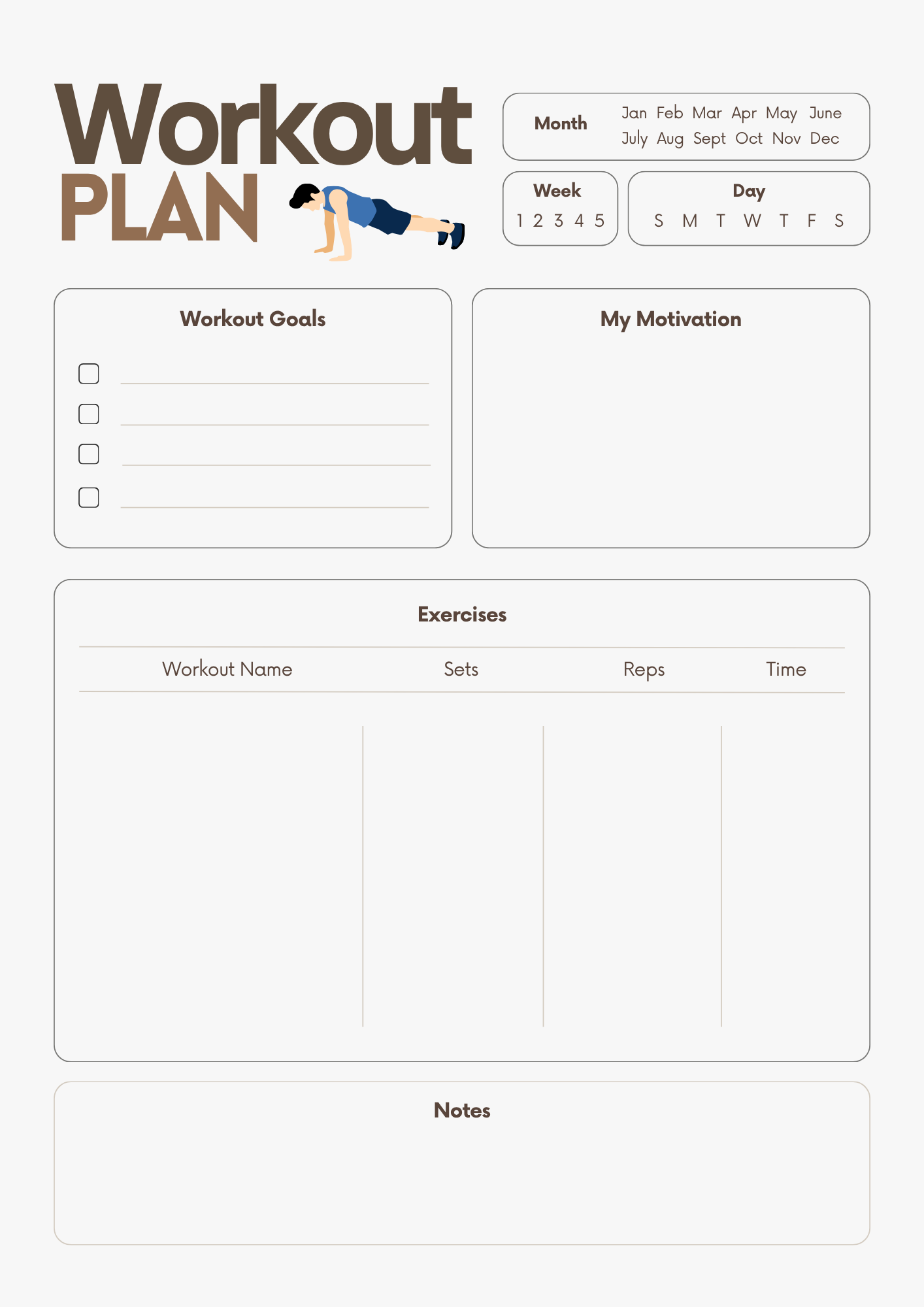
Daily Workout Plan Template: 8+ Free Designs to Maximize Your Fitness Results

A daily workout plan template is one of the most effective tools for building consistency, improving performance, and staying focused on your fitness goals. Instead of randomly choosing exercises every day, a structured plan gives you direction and purpose in every workout session.

Whether you are working out at the gym or following a daily workout plan at home, having a clear structure ensures that your time and effort are used efficiently. A well-designed daily workout planner helps you track progress, maintain discipline, and achieve better results over time.

In this guide, you’ll learn how to use a daily workout routine planner, explore different formats, and build a system that fits your lifestyle.

What Is a Daily Workout Plan?

A daily workout plan is a structured layout used to organize a single day’s workout session. It includes details such as exercises, sets, repetitions, duration, and notes.

Unlike weekly or monthly plans, a daily format allows for more detailed tracking and focus. This is especially helpful for people who want to improve performance, monitor progress, or follow a specific training program.

A daily workout planner template ensures that every workout session is planned and executed effectively.

Why You Should Use a Daily Workout Plan Template

Many people struggle to stay consistent because they lack structure. A daily workout plan template solves this by providing a clear and actionable plan.

1. Improves Focus

When you know exactly what to do, you can focus entirely on your workout instead of wasting time deciding.

2. Enhances Performance

A structured daily workout routine planner allows you to track your performance and gradually improve over time.

3. Saves Time

You don’t have to plan your workout on the spot. Everything is already prepared.

4. Builds Discipline

Following a consistent routine helps develop discipline, which is essential for long-term success.

5. Supports All Fitness Levels

Whether you are a beginner or advanced, a daily workout plan at home or in the gym can be tailored to your needs.

Key Components of an Effective Daily Workout Plan

To get the most out of your daily workout plan, it should include the following elements.

1. Workout Goal

Start by defining your goal for the day.

Examples:

  • Strength training
  • Cardio endurance
  • Flexibility
  • Recovery

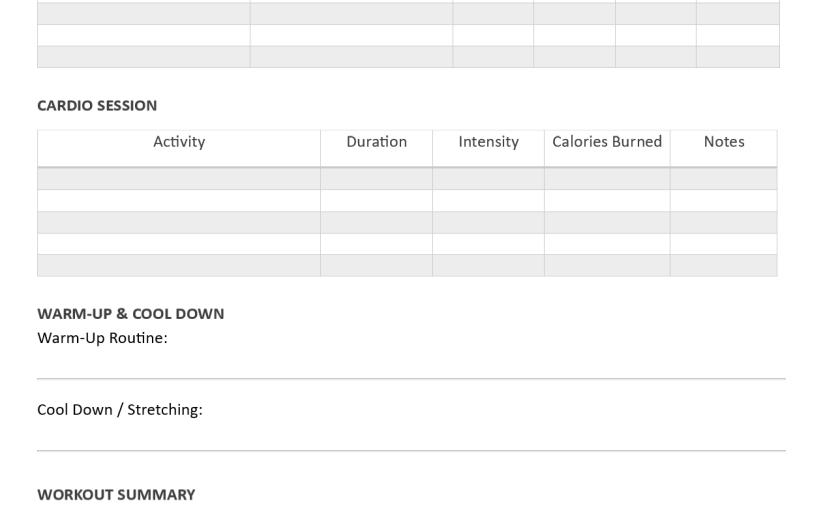
2. Warm-Up Section

A proper warm-up prepares your body for exercise and reduces the risk of injury.

Common warm-up activities include:

  • Light cardio
  • Dynamic stretching
  • Mobility exercises

3. Main Workout

This is the core of your plan. It should include:

  • Exercise names
  • Sets and repetitions
  • Duration or intensity
  • Rest intervals

4. Cardio or Conditioning

Many daily workout planner templates include a cardio section to improve endurance and burn calories.

5. Cool Down and Stretching

Cooling down helps your body recover and reduces muscle soreness.

6. Progress Tracking

Tracking your performance allows you to monitor improvement.

You can track:

  • Weight lifted
  • Workout duration
  • Energy levels

7. Notes Section

This section helps you reflect on your workout and make adjustments.

Types of Daily Workout Plan Templates

Different types of daily workout plan templates are designed for different purposes.

1. Gym Daily Workout Plan Template

This template is ideal for gym users and includes:

  • Strength training exercises
  • Equipment-based workouts
  • Structured sets and reps

2. Daily Workout Plan at Home

A daily workout plan at home focuses on:

  • Bodyweight exercises
  • Minimal equipment
  • Flexible routines

This is perfect for people who prefer convenience and simplicity.

3. Daily Workout Routine Planner Template

A daily workout routine planner template provides a detailed breakdown of the entire workout session.

It often includes:

  • Warm-up
  • Main workout
  • Cardio
  • Cool down
  • Notes

4. Beginner Daily Workout Plan Template

Beginners need simple and easy-to-follow plans.

These templates usually include:

  • Basic exercises
  • Lower intensity
  • Clear instructions

5. Advanced Daily Workout Planner Template

Advanced users benefit from detailed tracking and structured routines.

These Workout Planner Templates may include:

  • Progressive overload tracking
  • High-intensity workouts
  • Performance metrics

Get also: Free Weekly Workout Plan Template

How to Create a Daily Workout Plan That Works

Creating an effective daily workout plan template is simple if you follow a structured approach.

Step 1: Define Your Goal

Decide what you want to achieve in that session.

Step 2: Choose the Right Exercises

Select exercises that align with your goal.

Step 3: Set Structure

Determine:

  • Sets
  • Repetitions
  • Duration
  • Rest time

Step 4: Include Warm-Up and Cool Down

Never skip these sections, as they are essential for safety and recovery.

Step 5: Track Your Results

Use your daily workout planner to monitor performance and progress.

Best Practices for Using a Daily Workout Plan

To maximize results, follow these tips.

Stay Consistent

Consistency is the key to success in fitness.

Keep It Simple

Avoid overly complex routines, especially if you are a beginner.

Focus on Progress

Track improvements over time rather than aiming for perfection.

Combine with Proper Nutrition

A balanced diet supports your fitness goals.

Listen to Your Body

Adjust your plan if you feel fatigued or overwhelmed.

Common Mistakes to Avoid

Even with a structured daily workout plan template, mistakes can happen.

Skipping Warm-Ups

This increases the risk of injury.

Overtraining

Too much exercise without rest can harm your progress.

Lack of Tracking

Without tracking, it’s difficult to measure improvement.

Ignoring Recovery

Recovery is essential for long-term success.

How to Build a Sustainable Daily Fitness Habit

Building a daily fitness routine is not just about planning workouts—it’s about creating habits that you can maintain long-term. Many people start strong but lose consistency after a few weeks. The difference between success and failure often comes down to sustainability.

One of the most effective ways to build a lasting habit is to start small. Instead of committing to long and intense workouts every day, begin with manageable sessions. Even 20–30 minutes of focused exercise can deliver results if done consistently.

Another important factor is routine timing. Try to exercise at the same time every day, whether it’s in the morning, afternoon, or evening. Consistency in timing helps your body and mind adapt, making workouts feel like a natural part of your day.

The environment also plays a key role. If you are following a daily workout plan at home, create a dedicated space for your workouts. It doesn’t have to be large—just a clean, distraction-free area where you can focus.

How to Stay Motivated Every Day

Motivation naturally fluctuates, so relying on it alone is not enough. Instead, you should build systems that keep you going even when motivation is low.

One effective strategy is setting short-term goals. Instead of focusing only on long-term results, aim for small wins such as completing all planned workouts for the week. These small achievements create momentum.

Tracking progress visually can also boost motivation. Seeing completed workouts in your daily workout planner template provides a sense of accomplishment and encourages consistency.

You can also reward yourself for staying consistent. Rewards don’t have to be big—they can be simple things like a rest day, a favorite meal, or new workout gear.

Adapting Your Plan for Busy Schedules

One of the biggest challenges people face is finding time to work out. A structured plan helps, but flexibility is just as important.

If you have a busy schedule, consider shorter workouts. High-intensity sessions can be very effective even if they only last 15–20 minutes.

Another option is splitting your workouts into smaller sessions throughout the day. For example:

  • Morning: quick cardio
  • Evening: strength training

This approach allows you to stay active without needing a large block of time.

Planning ahead is also crucial. Use your daily workout routine planner template to decide your workouts in advance so you don’t waste time thinking about what to do.

The Role of Nutrition in Daily Fitness

Exercise alone is not enough to achieve optimal results. Nutrition plays an equally important role in supporting your fitness routine.

Your body needs the right fuel to perform well and recover properly. A balanced diet should include:

  • Protein for muscle repair
  • Carbohydrates for energy
  • Healthy fats for overall health

Hydration is also critical. Drinking enough water improves performance, reduces fatigue, and supports recovery.

If your goal is weight loss or muscle gain, tracking your meals alongside your workouts can be extremely beneficial. Combining fitness and nutrition creates a more complete and effective system.

Final Thoughts

A well-designed daily workout plan template is essential for anyone serious about fitness. It helps you stay organized, consistent, and focused on your goals.

Whether you use a daily workout planner, a detailed daily workout routine planner, or a flexible daily workout plan at home, having a structured plan makes a huge difference.

By following a clear routine, tracking your progress, and staying consistent, you can achieve better results and build a sustainable fitness lifestyle.

Consistency, structure, and balance are the foundation of any successful fitness routine. A well-organized daily plan helps you stay focused, track progress, and continuously improve.

By combining proper planning, realistic goals, and a sustainable approach, you can turn daily workouts into a long-term habit that delivers real results.

Remember, progress does not happen overnight. What matters most is showing up every day and putting in the effort. Over time, those small daily actions lead to significant transformations.

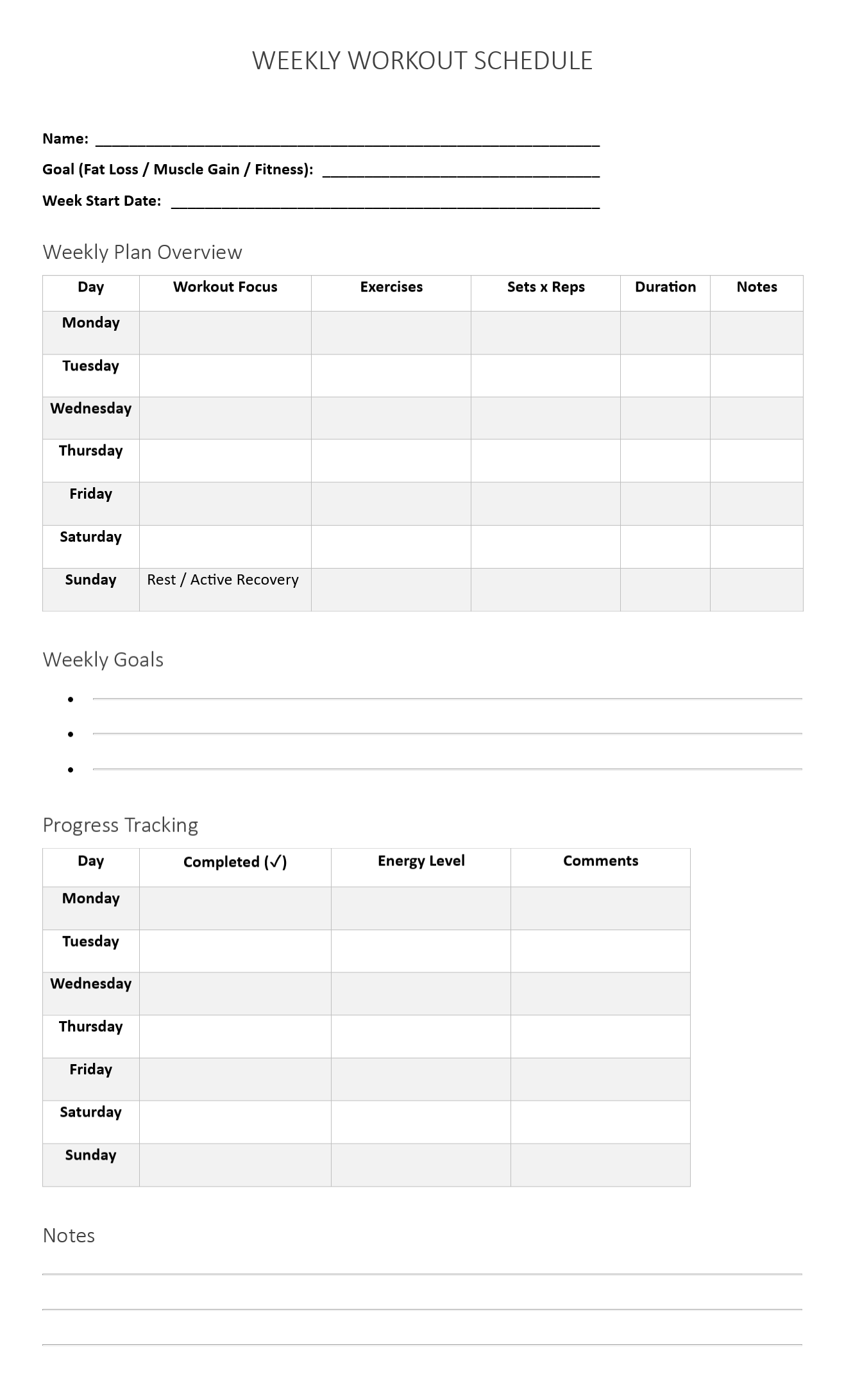
10+ Free Weekly Workout Plan Templates: Stay Consistent and Get Results

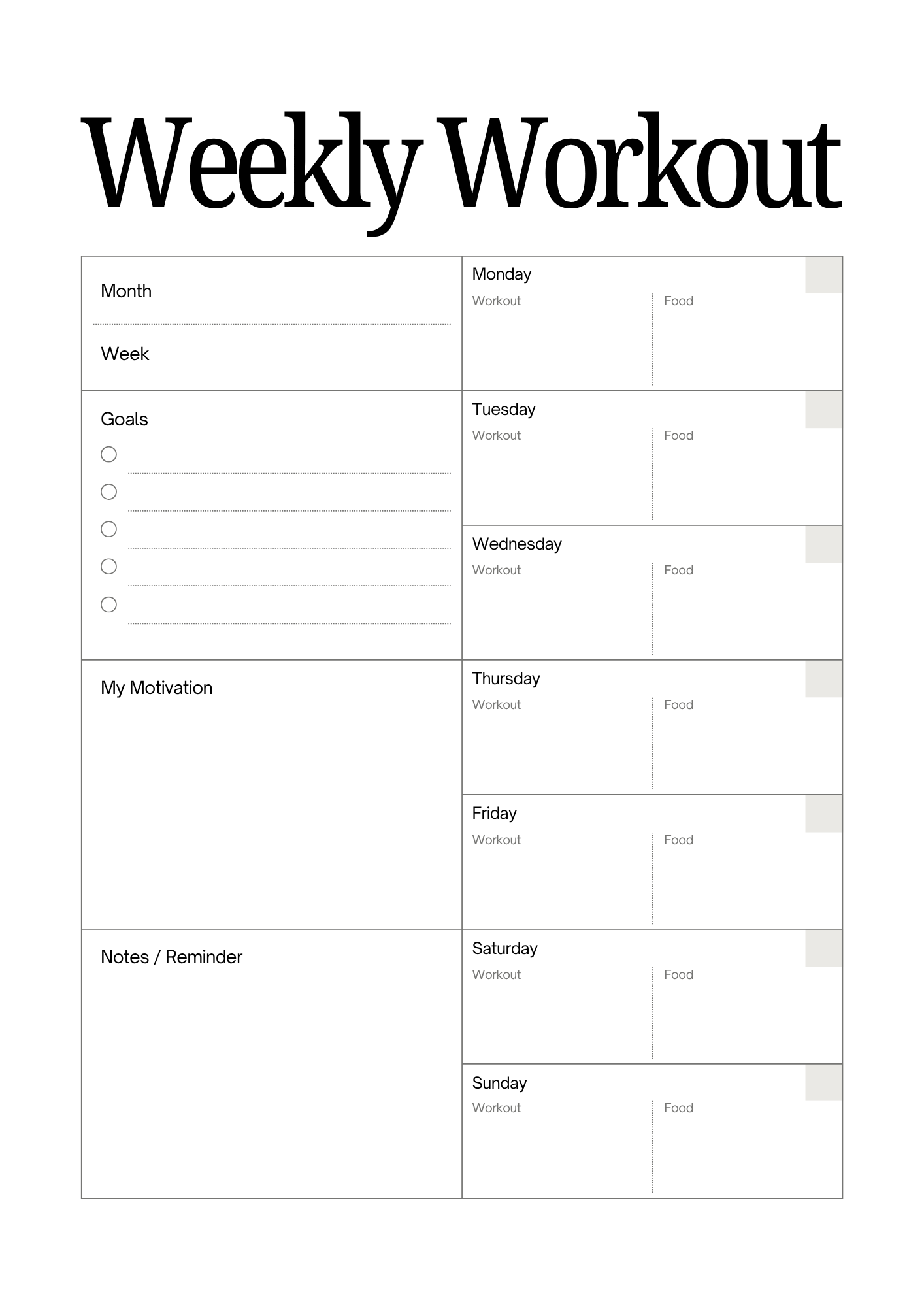
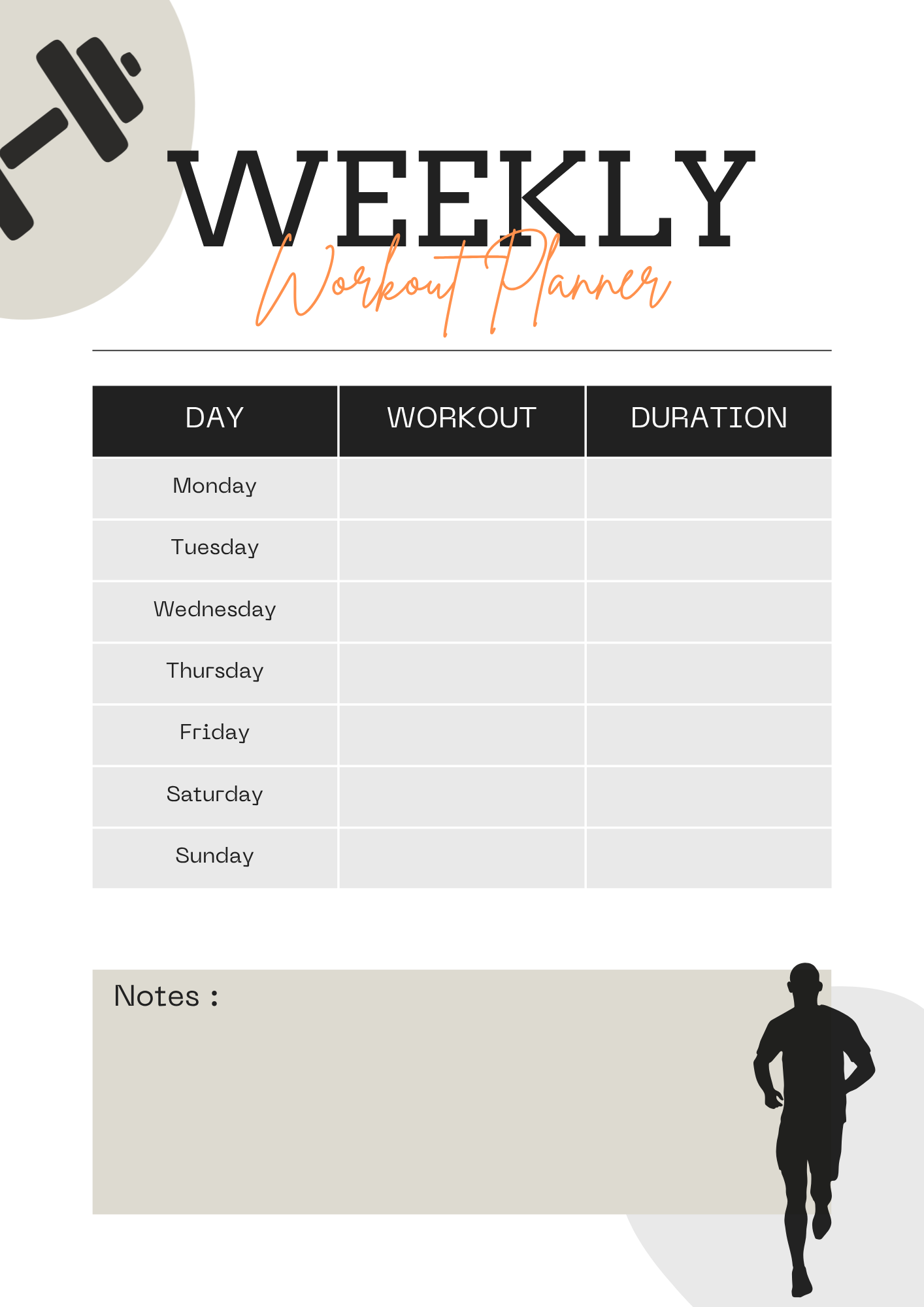
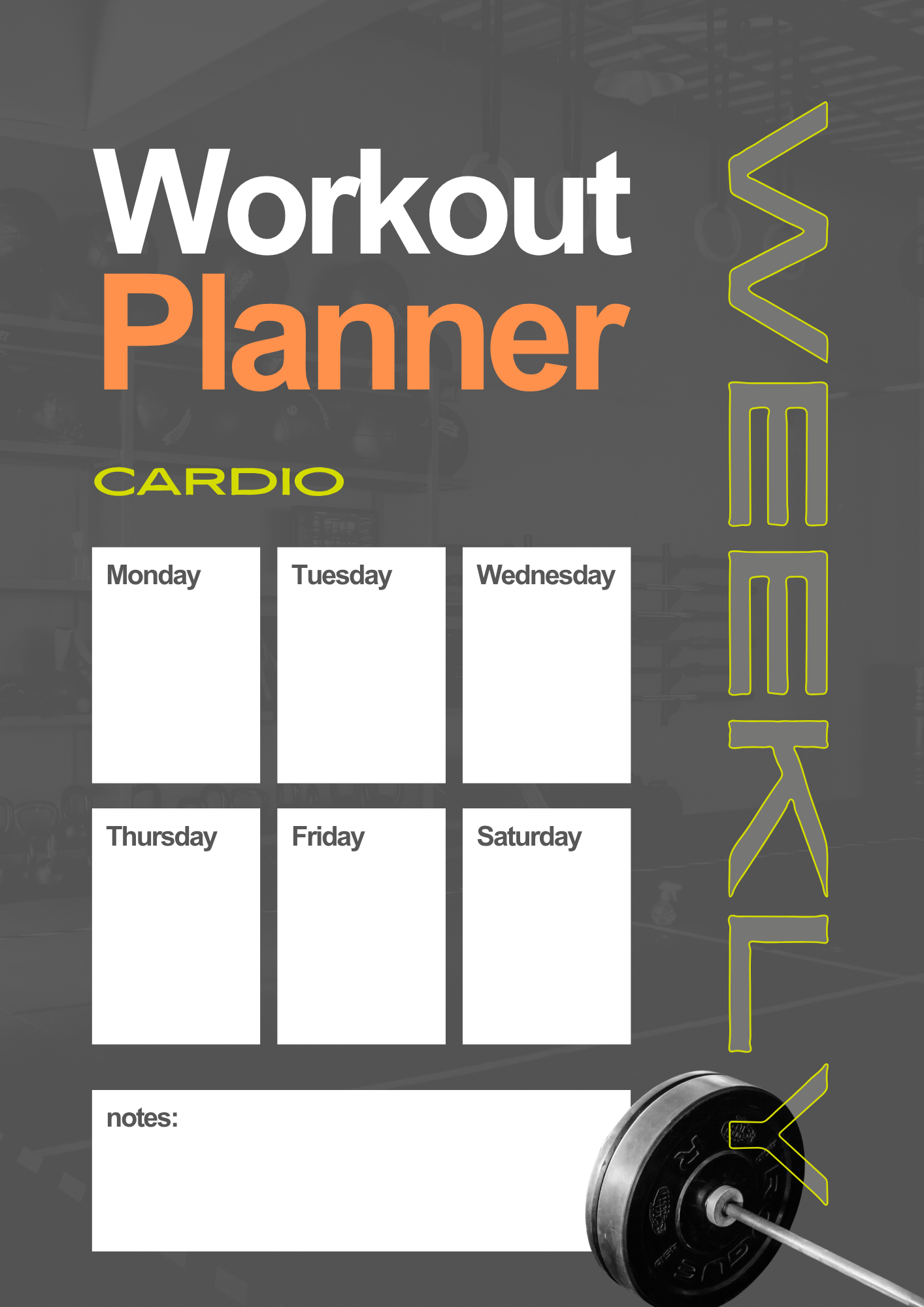
A weekly workout plan template is one of the simplest yet most powerful tools to keep your fitness routine consistent and effective. Instead of guessing what to do every day, a structured weekly plan helps you stay focused, organized, and aligned with your fitness goals.

Whether you’re a beginner trying to build a habit or someone experienced looking to optimize performance, using a weekly workout planner template can dramatically improve your results. It gives you a clear roadmap for the week, helping you balance workouts, recovery, and progression.

In this guide, you’ll learn how to use a workout weekly plan template, explore different formats, including a weekly workout schedule, and discover how to create a plan that actually works.

What Is a Weekly Workout Plan?

A weekly workout plan is a structured layout that helps you organize your workouts across seven days. It allows you to plan each session in advance, including exercises, intensity, and rest days.

Most templates include:

  • Daily workout schedule
  • Exercise focus (strength, cardio, etc.)
  • Sets, reps, or duration
  • Notes or progress tracking

Using a weekly plan template ensures that your workouts are balanced and aligned with your goals.

Why You Should Use a Weekly Workout Plan

Many people struggle with consistency because they don’t have a clear plan. A weekly workout plan eliminates that problem.

1. Builds Consistency

Planning your workouts for the week makes it easier to stick to your routine.

2. Saves Time

You don’t have to think about what to do each day. Just follow your schedule.

3. Improves Results

A structured weekly workout planner ensures that all muscle groups are trained properly and recovery time is included.

4. Prevents Overtraining

A good plan includes rest days, which are essential for recovery and performance.

5. Tracks Progress

Using a weekly workout schedule allows you to monitor your performance and make improvements.

Key Components of an Effective Weekly Workout Plan

To get the best results, your weekly workout plan template should include the following elements.

1. Workout Goals

Start by defining your goal:

  • Weight loss
  • Muscle gain
  • Endurance
  • General fitness

Your goal determines your entire weekly structure.

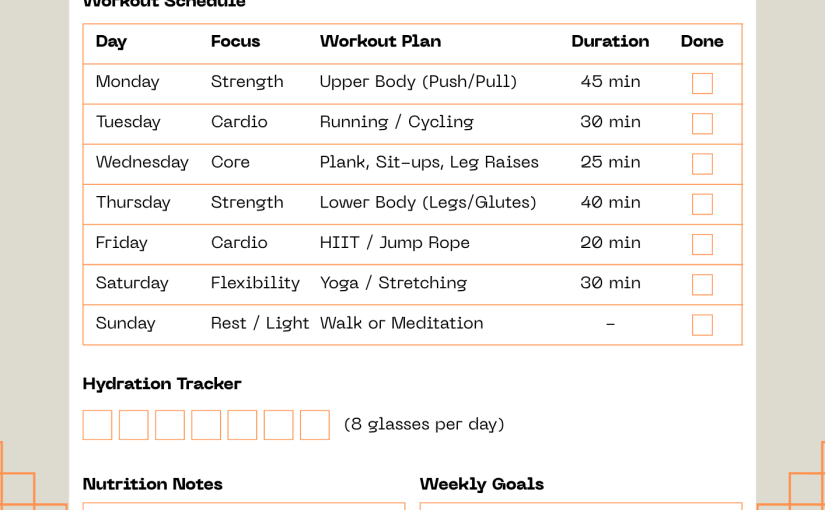
2. Weekly Schedule

This is the core of your plan. Assign workouts to each day of the week.

Example:

  • Monday: Upper body
  • Tuesday: Cardio
  • Wednesday: Lower body
  • Thursday: Rest
  • Friday: Full body
  • Saturday: Cardio
  • Sunday: Rest

3. Exercise Details

Each workout session should include:

  • Exercise names
  • Sets and reps
  • Duration
  • Intensity level

4. Rest and Recovery

Rest days are just as important as workout days. A good weekly workout planner always includes recovery time.

5. Progress Tracking

Track metrics such as:

  • Completed workouts
  • Energy levels
  • Strength improvements

Types of Weekly Workout Plan Templates

There are several variations of a weekly workout plan template, depending on your needs.

1. Basic Weekly Workout Template

This is a simple layout with daily workout planning.

Perfect for beginners who need a straightforward plan.

2. Free Weekly Workout Schedule Template

A free weekly workout schedule template is ideal for those who want a ready-to-use format.

It usually includes:

  • Pre-structured tables
  • Easy-to-fill sections
  • Printable format

3. Weekly Workout Planner Template

A workout planner template provides more detailed tracking.

It may include:

  • Exercise breakdown
  • Notes section
  • Progress tracking

Get also: Monthly Workout Plan Template

4. Workout Weekly Plan Template for Gym

This type focuses on structured training:

  • Strength training splits
  • Equipment-based exercises
  • Progressive overload

Get also: Daily Workout Plan Template

5. Home Workout Weekly Plan Template

Designed for people who work out at home:

  • Bodyweight exercises
  • Minimal equipment
  • Flexible routines

How to Create a Weekly Workout Plan That Works

Creating an effective weekly workout plan template is easier than you think.

Step 1: Define Your Goal

Be specific about what you want to achieve.

Step 2: Choose Training Days

Decide how many days per week you will work out.

Step 3: Plan Workout Types

Balance your routine with:

  • Strength training
  • Cardio
  • Mobility or stretching

Step 4: Schedule Rest Days

Rest is essential for recovery and long-term success.

Step 5: Track and Adjust

Use your weekly workout planning to track progress and make improvements.

Best Practices for Using a Weekly Workout Plan Template

To maximize results, follow these best practices.

Stay Consistent

Consistency is more important than intensity.

Start Simple

Don’t overcomplicate your plan, especially at the beginning.

Focus on Progress

Track improvements instead of aiming for perfection.

Combine with Nutrition

Pair your workouts with proper nutrition for better results.

Listen to Your Body

Adjust your plan if needed to avoid injury or burnout.

Common Mistakes to Avoid

Even with a structured weekly workout plan template, mistakes can happen.

Skipping Workouts

Missing sessions breaks consistency and slows progress.

Overtraining

Too much exercise without rest can lead to fatigue and injury.

Lack of Planning

Without a proper workout plan, workouts can become random and ineffective.

Ignoring Recovery

Recovery is essential for muscle growth and performance.

How to Stay Consistent With Your Weekly Fitness Routine

Consistency is often the biggest challenge in any fitness journey. Even with a well-structured plan, many people struggle to follow through week after week. The key is not just having a plan, but knowing how to stick to it.

One effective strategy is to treat your workouts like important appointments. Schedule them at specific times and avoid skipping them unless absolutely necessary. When workouts become part of your routine, they require less mental effort and discipline.

Another helpful approach is to prepare everything in advance. Lay out your workout clothes, prepare your meals, and decide on your exercises the day before. This reduces friction and makes it easier to start your workout without hesitation.

Motivation also plays a role, but relying on motivation alone is not enough. Building habits is far more reliable. Start small, stay consistent, and gradually increase the intensity of your workouts over time.

Conclusion

A well-designed weekly workout plan template is the foundation of a successful fitness routine. It helps you stay organized, consistent, and focused on your goals.

Whether you use a free weekly workout schedule template, a detailed weekly workout planner template, or a structured workout weekly plan template, having a clear plan makes all the difference.

By following a weekly structure, tracking your progress, and staying consistent, you can achieve better results and build a sustainable fitness lifestyle.

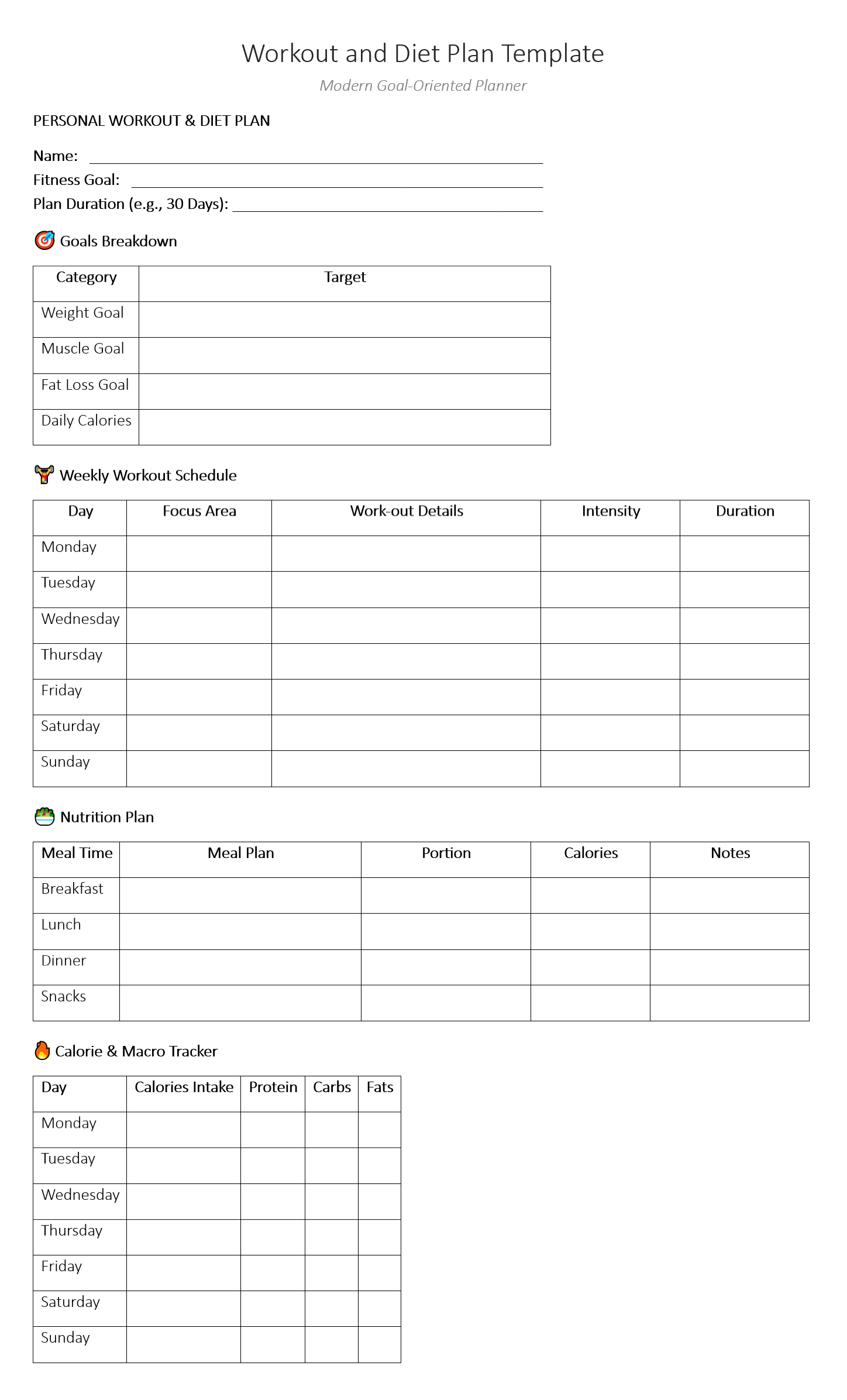
8+ POWERFUL Workout Planner Template Designs to Transform Your Fitness Routine

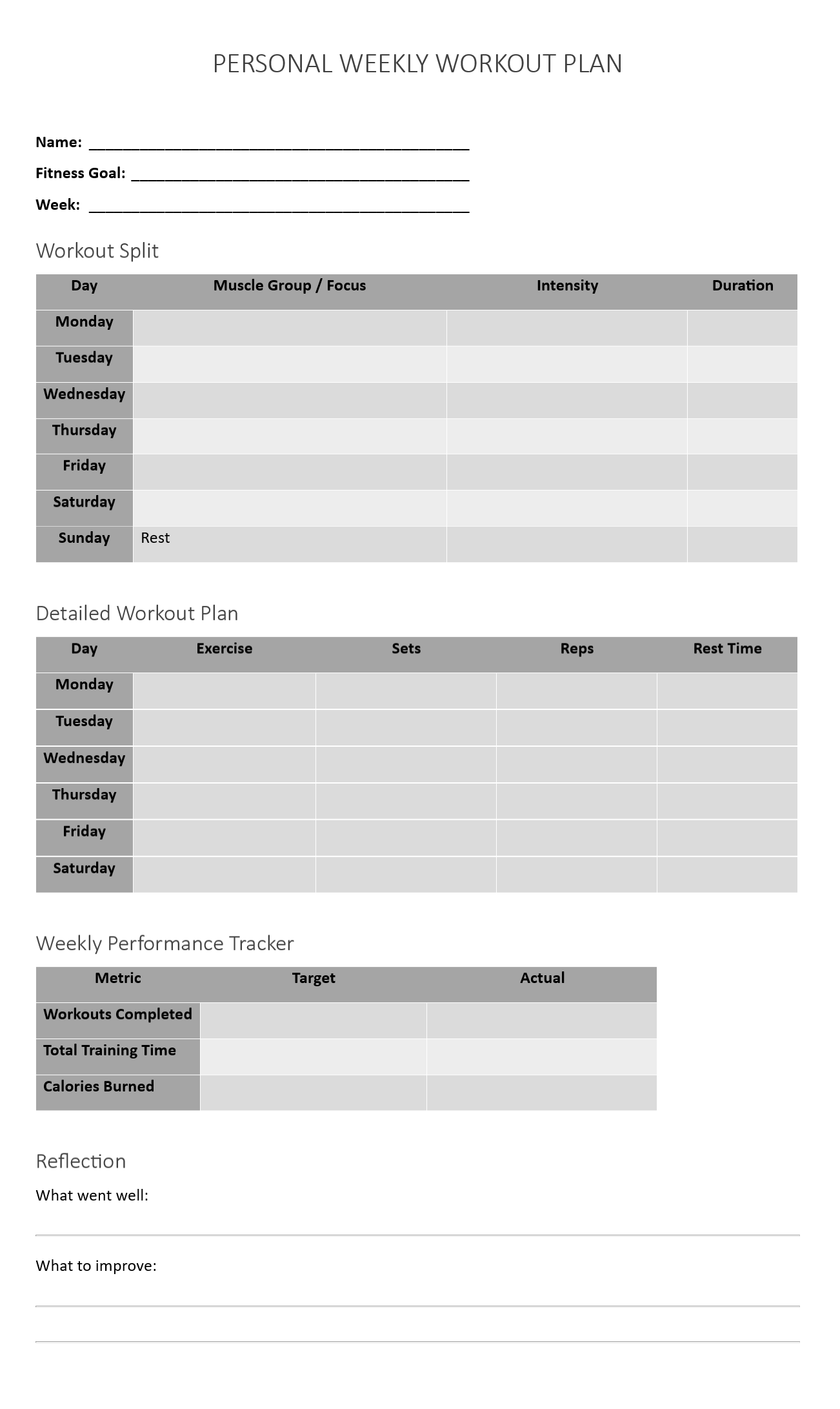
A workout planner template is one of the most effective tools for anyone who wants to stay consistent, organized, and results-driven in their fitness journey. Whether your goal is weight loss, muscle gain, or overall health improvement, having a structured plan makes a huge difference.

Instead of randomly choosing exercises every day, a well-designed workout planning template helps you map out your routines, track progress, and stay accountable. From beginners to advanced athletes, structured planning is often the key factor that separates success from inconsistency.

In this guide, you’ll discover how to use a workout plan template, explore different formats like a workout weekly plan template and a workout and diet plan template, and learn how to build a system that actually works.

What Is a Workout Planner?

A workout planner is a structured document that helps you organize your exercise routines, schedule workouts, and track your fitness progress.

It typically includes:

  • Workout schedule (daily or weekly)
  • Exercise details
  • Sets and repetitions
  • Duration or intensity
  • Notes or progress tracking

Using a planner template ensures that your workouts are consistent and aligned with your fitness goals.

Why You Need a Workout Planner

Many people struggle to stay consistent with their workouts. A structured workout planner solves this problem by creating a clear plan to follow.

Stay Consistent

When your workouts are planned in advance, you are more likely to stick to your routine.

Track Your Progress

A good workout planner allows you to monitor improvements in strength, endurance, and overall performance.

Save Time

Instead of deciding what to do each day, you can simply follow your pre-planned routine.

Improve Results

Structured training helps ensure that all muscle groups and fitness goals are addressed properly.

Key Components of an Effective Workout Planner

A high-quality workout planner should include the following sections.

1. Fitness Goals

Start by defining your objective:

  • Weight loss
  • Muscle building
  • Endurance improvement
  • General fitness

Clear goals help shape your entire plan.

2. Workout Schedule

This section outlines when you will train.

A weekly workout planner is one of the most popular formats because it allows you to balance workouts and recovery days effectively.

3. Exercise Details

Each workout should include:

  • Exercise name
  • Sets and reps
  • Duration
  • Equipment needed

This ensures clarity during your training sessions.

4. Progress Tracking

Tracking progress helps you stay motivated and measure results.

You can track:

  • Weight lifted
  • Workout duration
  • Body measurements
  • Energy levels

5. Notes Section

A notes section allows you to record:

  • How you felt during the workout
  • Adjustments needed
  • Challenges or improvements

Get also: Training Plan Template Free Printable

Types of Workout Planner Templates

There are several variations of a workout training planner template, each designed for different needs.

1. Weekly Workout Planner Template

A weekly workout plan template is the most commonly used format.

It allows you to:

  • Plan workouts for each day
  • Balance strength and cardio
  • Schedule rest days

This format is ideal for both beginners and experienced fitness enthusiasts.

2. Daily Workout Plan Design

This Daily Workout Plan Template focuses on a single workout session.

It is useful for:

  • Detailed exercise breakdown
  • Tracking sets and reps
  • Monitoring performance

3. Workout and Diet Plan Template

A workout and diet plan template combines fitness and nutrition into one system.

This is especially useful for:

  • Weight loss programs
  • Muscle gain plans
  • Overall health improvement

It typically includes:

  • Daily meals
  • Calorie tracking
  • Macronutrient breakdown
  • Workout schedule

4. Monthly Workout Planner

A monthly workout planner provides a broader view of your fitness routine.

It helps you:

  • Track long-term progress
  • Set monthly goals
  • Plan progressive overload

5. Home Workout Planner Design

Designed for people who train at home, this template focuses on:

  • Bodyweight exercises
  • Minimal equipment workouts
  • Flexible scheduling

6. Gym Workout Planner Template

A gym-based workout plan includes:

  • Strength training routines
  • Machine-based exercises
  • Structured workout splits

7. Printable Workout Planner Format

Printable templates are perfect for those who prefer writing things down.

They are:

  • Easy to use
  • Visually organized
  • Great for daily tracking

8. Beginner Workout Planner Design

Beginners need simple and easy-to-follow plans.

These templates usually include:

  • Basic exercises
  • Lower intensity workouts
  • Gradual progression

9. Advanced Workout Planner Design

Advanced users require more detailed planning.

These templates include:

  • Complex workout splits
  • High-intensity training
  • Performance tracking

Get also: Free Meal Planner Template

How to Create a Workout Planner Template That Works

Creating your own workout planner is simple if you follow a structured approach.

Step 1: Define Your Goal

Decide what you want to achieve.

Examples:

  • Lose 5 kg in 2 months
  • Build muscle mass
  • Improve endurance

Step 2: Choose a Training Schedule

Decide how many days per week you will train.

A weekly workout plan template is ideal for balancing workouts and recovery.

Step 3: Select Exercises

Choose exercises based on your goals.

For example:

  • Strength training → weightlifting
  • Fat loss → cardio + HIIT
  • Flexibility → stretching or yoga

Step 4: Set Reps, Sets, and Duration

Structure your workouts clearly to avoid confusion.

Step 5: Track and Adjust

Monitor your progress and adjust your plan as needed.

Best Practices for Using a Workout Planner Template

To get the most out of your workout planner template, follow these tips.

Be Consistent

Consistency is the most important factor in achieving fitness results.

Start Simple

Avoid overly complex plans, especially if you are a beginner.

Focus on Progress

Track improvements over time rather than aiming for perfection.

Combine Workout and Nutrition

Using a diet plan template ensures your fitness and nutrition work together.

Listen to Your Body

Adjust your plan if you feel fatigued or overwhelmed.

Common Mistakes to Avoid

Even with a structured workout planner template, some mistakes can slow your progress.

Skipping Rest Days

Recovery is essential for muscle growth and injury prevention.

Overtraining

Too much exercise without proper recovery can lead to burnout.

Lack of Clear Goals

Without goals, your workouts may lack direction.

Not Tracking Progress

If you don’t track your progress, it’s difficult to measure success.

Conclusion

A well-designed workout planner template can completely transform your fitness routine. It helps you stay organized, consistent, and focused on your goals.

Whether you use a workout plan template for daily tracking, a workout weekly plan template for structured scheduling, or a workout and diet plan template to combine fitness and nutrition, having a clear plan is essential for success.

By using the right template and following a consistent routine, you can achieve better results, stay motivated, and build a sustainable fitness lifestyle.

Holiday Meal Planner Template for 100% Stress Free Celebrations

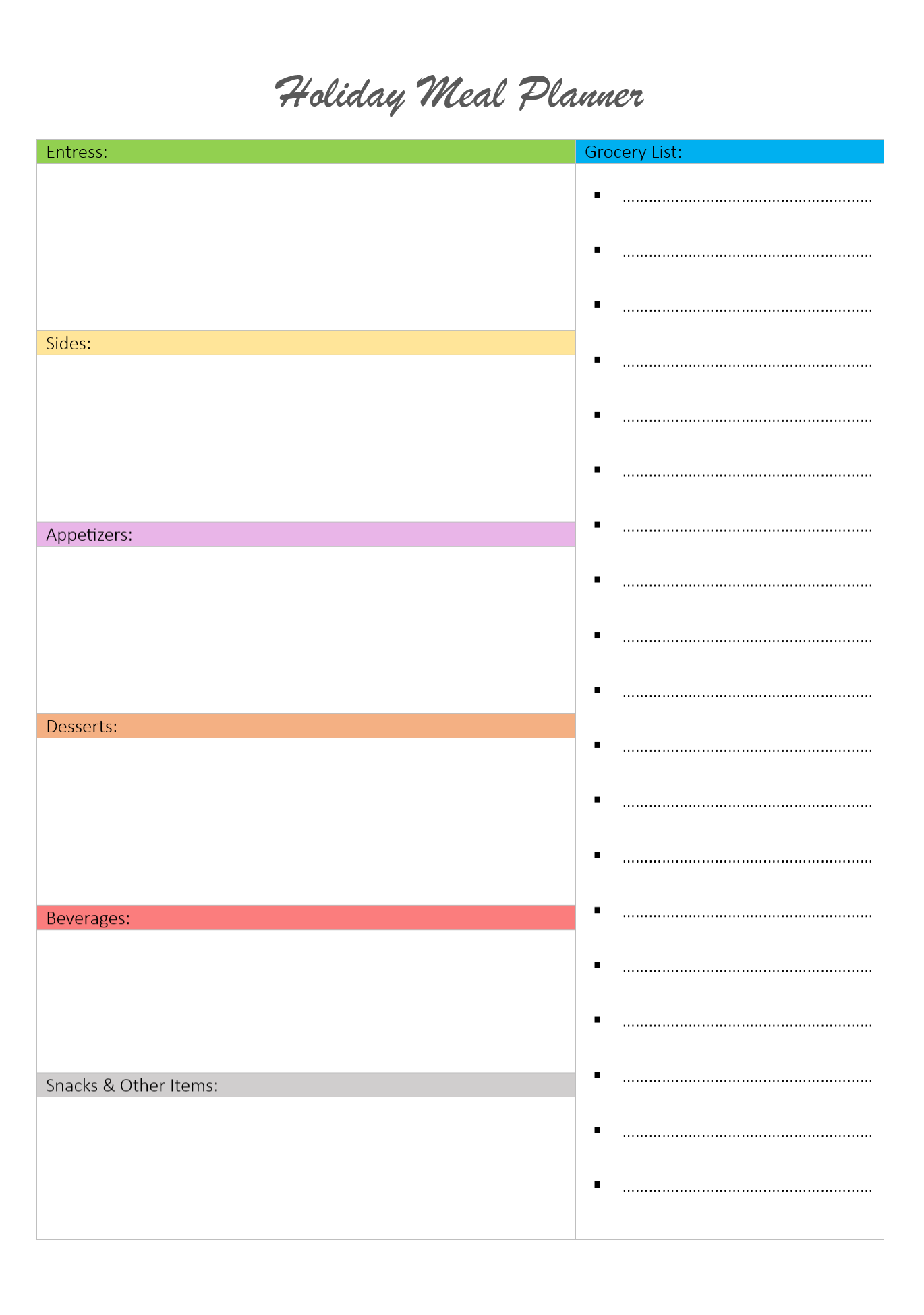
Planning meals during special occasions can quickly become overwhelming. Between grocery shopping, coordinating schedules, and preparing multiple dishes, things can spiral fast. That’s where a Holiday Meal Planner Template becomes your secret weapon for organized, stress-free celebrations.

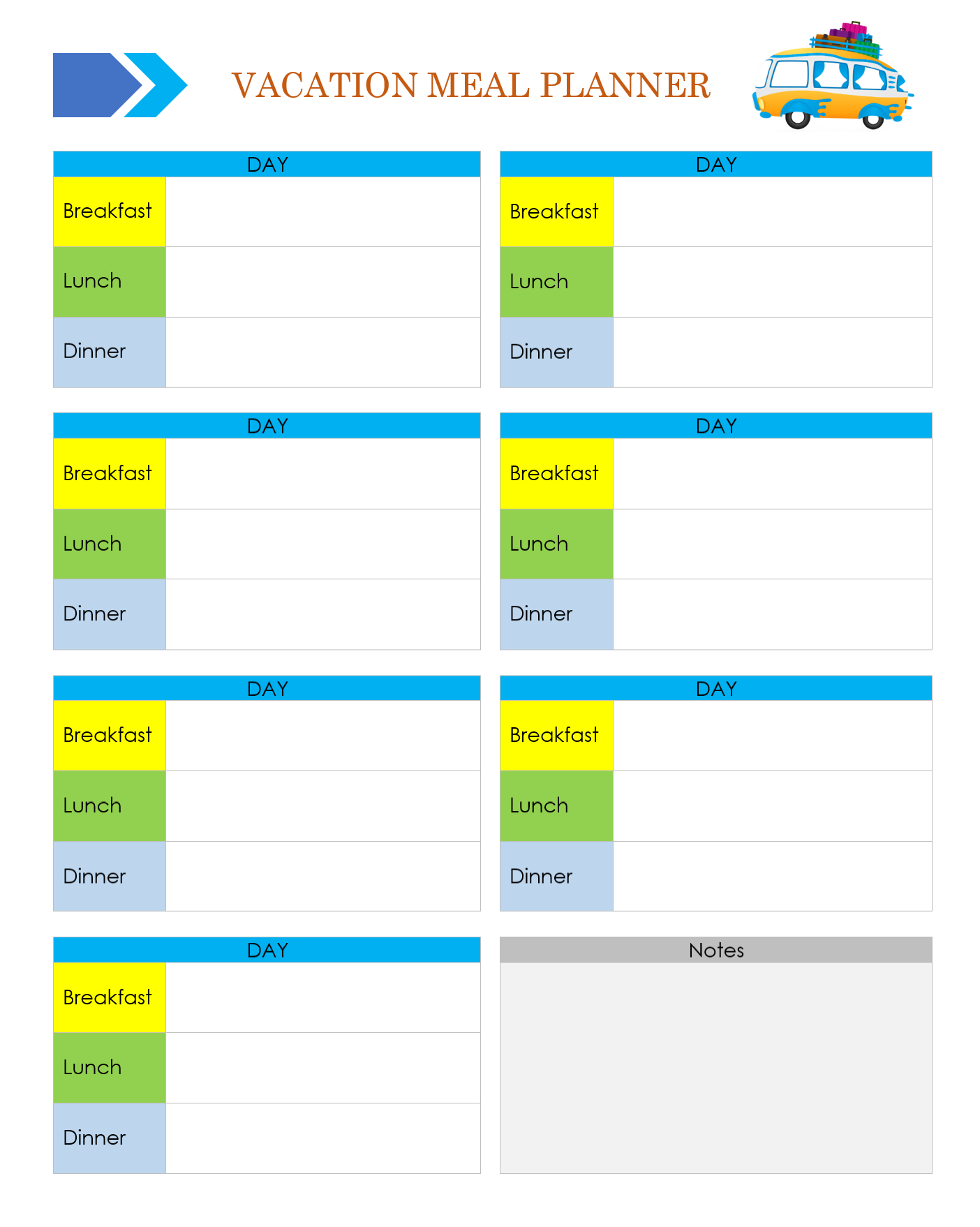
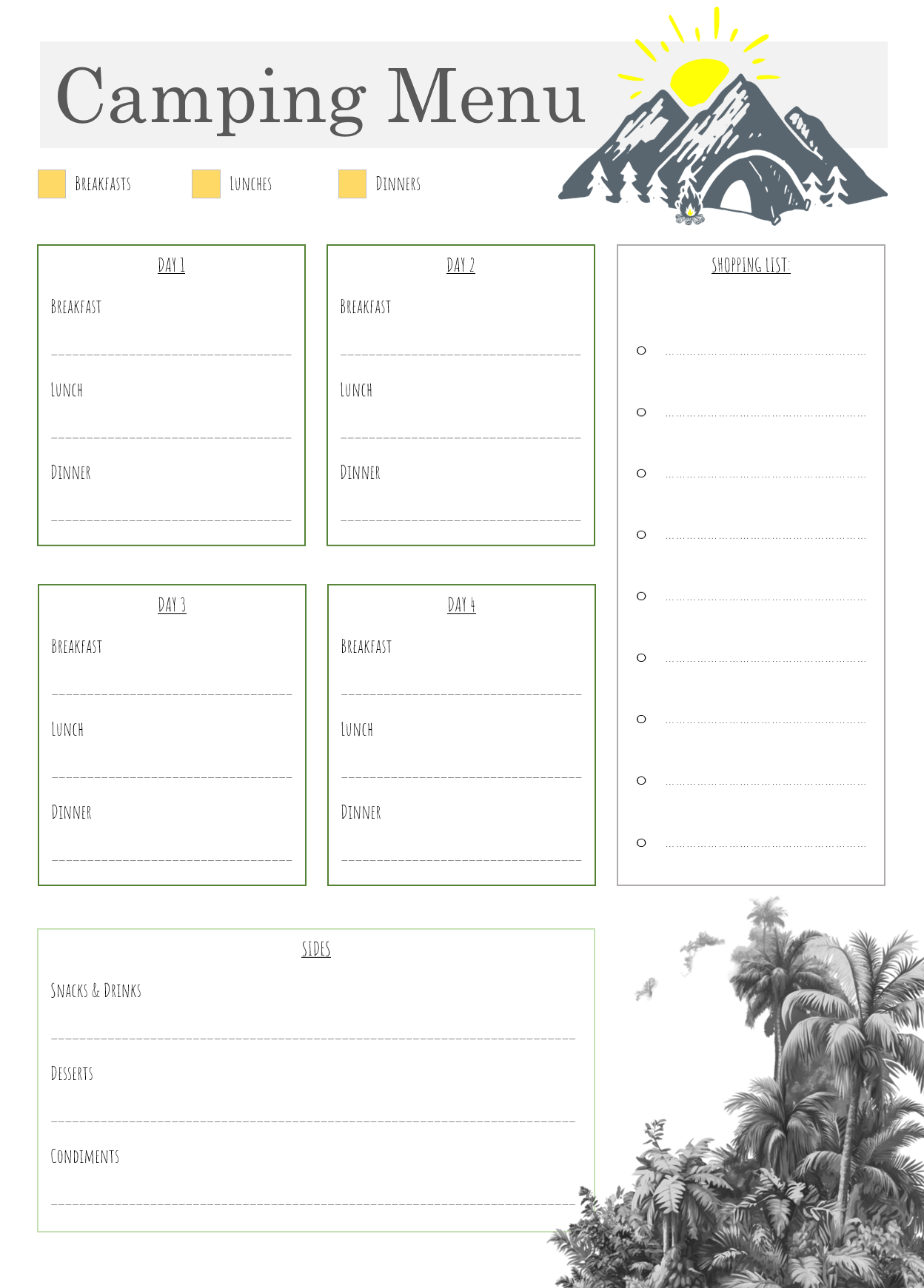
Whether you’re planning a festive family gathering, a long trip, or an outdoor adventure, having a structured Vacation Meal Planner Template or Camping Meal Plan Template keeps everything simple, efficient, and enjoyable.

This guide will show you exactly how to use these planning tools to stay organized and actually enjoy your holiday.

What Is a Holiday Meal Planner?

A Holiday Meal Planner is a structured planning document that helps you:

  • Organize breakfast, lunch, dinner, and snacks
  • Plan menus for multiple days
  • Create a consolidated grocery list
  • Track dietary needs
  • Assign cooking responsibilities
  • Avoid food waste

Instead of scrambling at the last minute, you’ll have everything mapped out clearly.

Why You Need a Holiday Meal Planner Template

Holidays are meant to be joyful, not chaotic. Here’s why this template is essential:

1. Reduces Last-Minute Stress

No more “What are we cooking tomorrow?” panic.

2. Prevents Overspending

Planning ahead keeps your grocery budget under control.

3. Avoids Food Waste

Buy only what you need.

4. Balances Nutrition

It’s easier to include healthy options when meals are pre-planned.

5. Improves Time Management

Batch prep and coordinated cooking save hours.

Key Sections to Include in Your Holiday Meal Planner Template

To maximize efficiency, your template should include:

1. Event Overview

  • Holiday name or occasion
  • Number of guests
  • Dietary restrictions
  • Location (home, rental, campsite)

2. Daily Meal Breakdown

Organize by day and meal:

Breakfast
Lunch
Dinner
Snacks & Desserts

For longer holidays, use a 3–7 day structure to stay organized.

3. Grocery List Section

Group items by category:

  • Produce
  • Dairy
  • Meat & Protein
  • Pantry
  • Beverages
  • Snacks

This makes shopping faster and more systematic.

4. Prep Timeline

Add a section for:

  • What to prep 3 days before
  • What to prep 1 day before
  • Same-day cooking tasks

This prevents kitchen overload.

Using a Vacation Meal Planner Template for Travel

When traveling, meal planning becomes even more important. A Vacation Meal Planner Template helps you:

  • Plan meals for hotel stays or rental homes
  • Coordinate shared meals with friends
  • Prepare make-ahead meals
  • Budget food expenses
  • Avoid relying solely on restaurants

For example:

Day 1 – Easy arrival dinner
Day 2 – Simple breakfast + packed lunch
Day 3 – Special dinner night

Planning ahead makes vacations smoother and more affordable.

How a Camping Meal Plan Template Saves Your Trip

Outdoor cooking requires even more preparation. A Camping Meal Plan Template helps you:

  • Plan grill-friendly meals
  • Calculate the cooler space
  • Organize non-perishable foods
  • Prepare pre-chopped ingredients
  • Ensure balanced meals in nature

When camping, you can’t just “run to the store.” Planning avoids forgotten essentials.

Sample 3-Day Holiday Meal Plan

Here’s a quick example structure:

Day 1

Breakfast: Pancakes & fruit
Lunch: Sandwich bar
Dinner: Roast chicken, vegetables, rice
Snack: Cookies

Day 2

Breakfast: Yogurt parfaits
Lunch: Leftover chicken wraps
Dinner: Pasta night
Snack: Fruit & nuts

Day 3

Breakfast: Scrambled eggs & toast
Lunch: Light salad
Dinner: Holiday feast

This structure fits easily into a Holiday Meal Planner Template.

How to Combine Holiday, Vacation, and Camping Planning

The beauty of these Free Meal Planner Templates is their flexibility. You can create one master document that includes:

  • Holiday menu
  • Travel food planning
  • Outdoor meal preparation

A hybrid planner works perfectly for holiday road trips or festive camping weekends.

Common Mistakes to Avoid

When using a Holiday Meal Planner Template, avoid these errors:

Overcomplicating the Menu

Stick to manageable recipes.

Ignoring Storage Limitations

Especially important for camping or vacation rentals.

Forgetting Snacks

Hungry guests equal stress.

Not Planning Leftovers

Repurpose meals creatively.

Smart Planning Tips

  • Choose at least one make-ahead dish per day
  • Keep breakfast simple
  • Pre-chop vegetables
  • Double-check kitchen tools at rental homes
  • Assign cooking roles

Efficiency reduces burnout.

Printable vs Editable Templates

You can choose between:

Printable Template

  • Great for physical planners
  • Easy to share with family
  • Ideal for kitchen use

Editable Digital Template

  • Easy to update
  • Perfect for collaborative planning
  • Great for recurring holidays

Many people prefer a digital Meal Plan Template combined with a printable grocery list.

Who Should Use a Holiday Meal Planner Template?

This tool is perfect for:

  • Large family gatherings
  • Friends hosting holiday dinners
  • Road trip planners
  • Campers
  • Budget-conscious travelers
  • Busy parents

Anyone planning meals for multiple days can benefit.

Long-Term Benefits

Using a structured Holiday Meal Planner Template consistently helps you:

  • Save money
  • Reduce stress
  • Improve nutrition balance
  • Stay organized
  • Enjoy holidays more

Planning turns chaos into calm.

Final Thoughts

A well-designed Holiday Meal Planner Template transforms your celebrations from stressful to seamless. Whether you’re organizing a festive family gathering, coordinating meals with friends using a Vacation Meal Planning Template, or preparing outdoor dishes with a Camping Meal Planner Template, structured planning makes everything easier.

Food brings people together. With the right planning system in place, you can focus less on logistics and more on making memories.

Start planning early, keep it simple, and enjoy a holiday that feels organized, relaxed, and truly special.

My Self Care Plan Template: Building a 100% Balanced Life

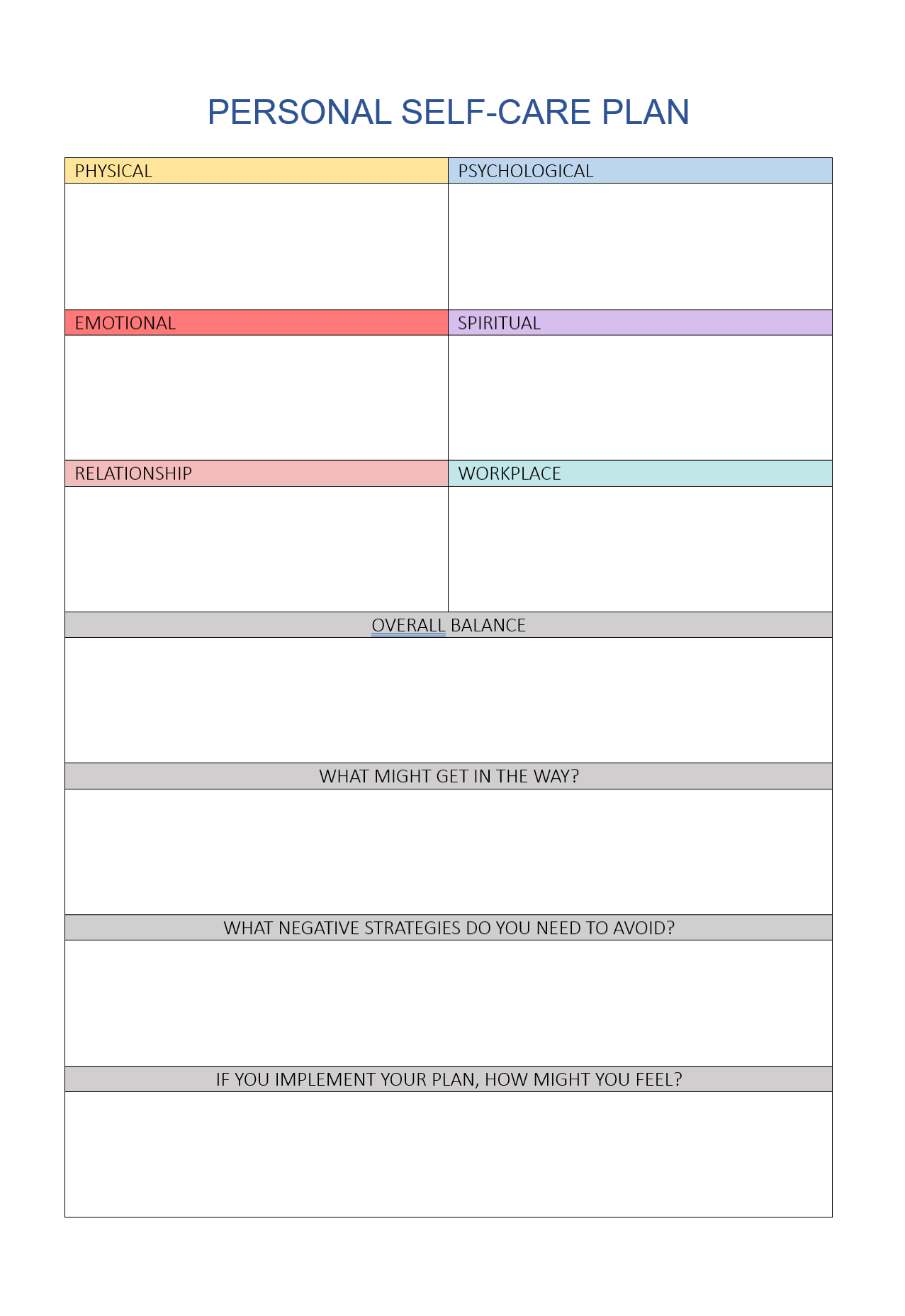
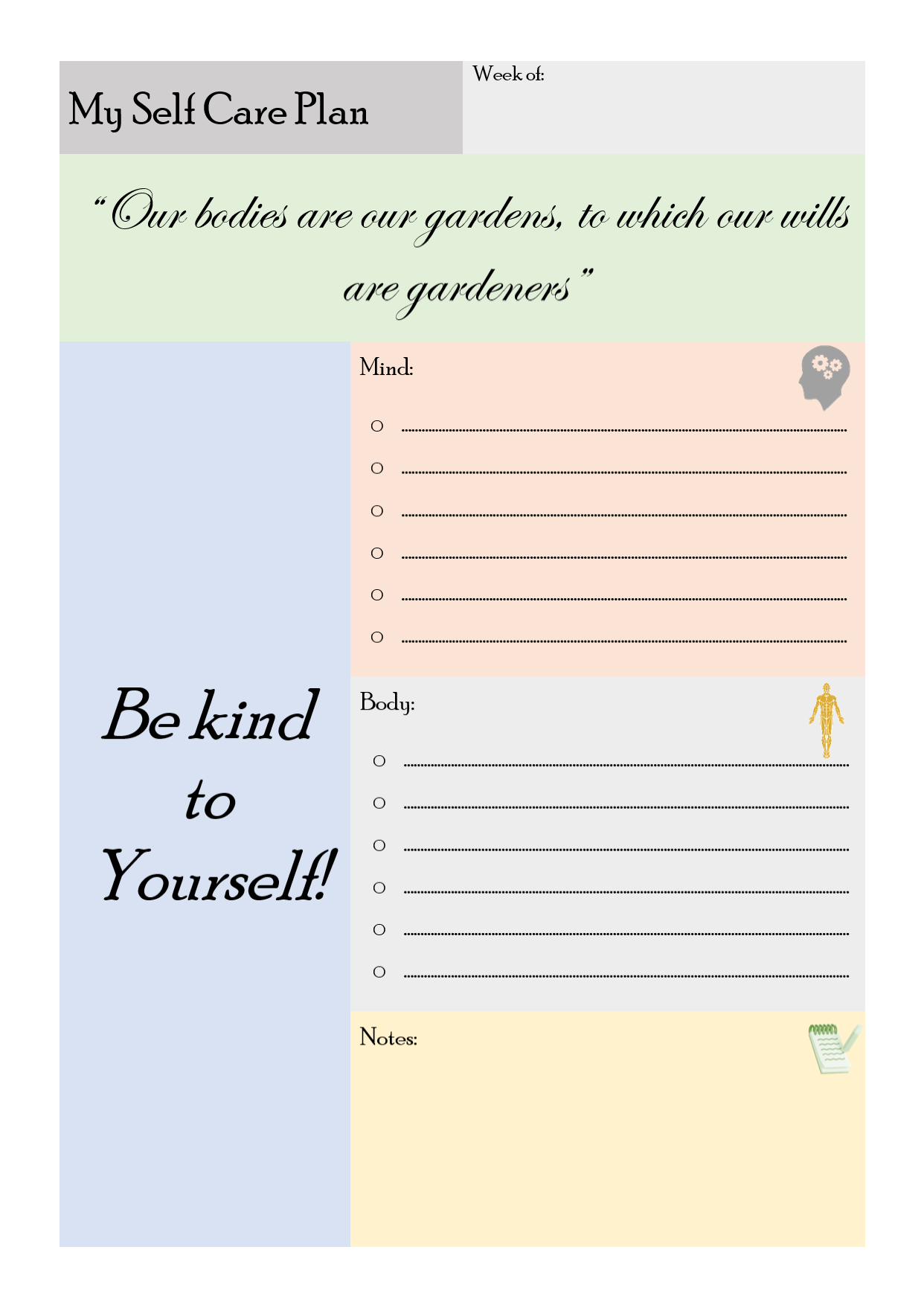
Taking care of yourself is not a luxury—it is a necessity. Whether you are managing daily stress, supporting others, or simply trying to maintain balance, having a structured plan can make a powerful difference. A My Self Care Plan Template helps you turn good intentions into clear, actionable steps that support your mental, emotional, and physical well-being.

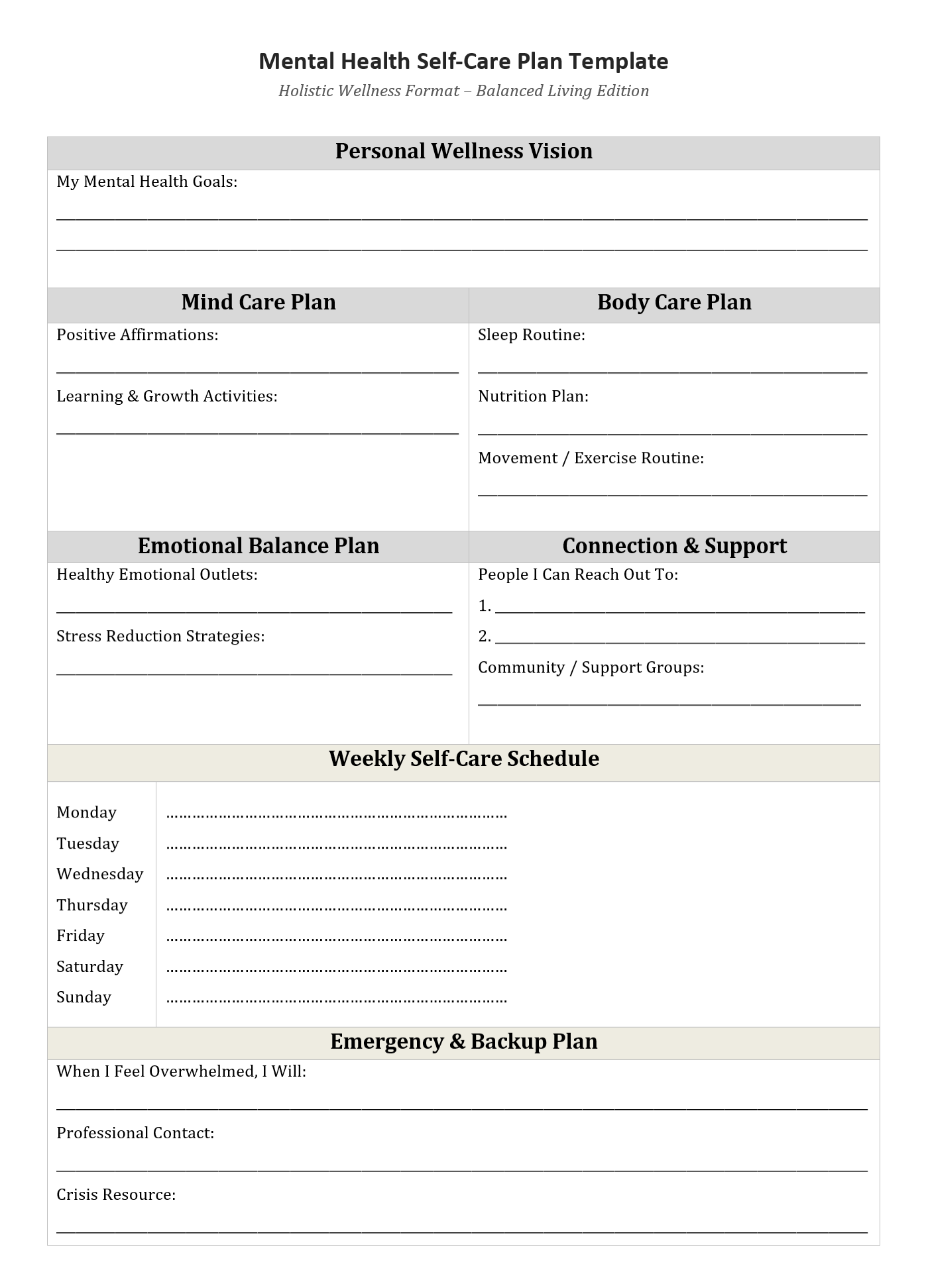
Instead of relying on vague ideas like “I should rest more” or “I need to reduce stress,” a structured format allows you to define exactly what self-care looks like in your life. This guide will help you understand how to use a Personal Self Care Plan Template, what to include in a Mental Health Self Care Plan Template, and how to design a plan that truly works for you.

What Is a My Self Care Plan Template?

A My Self Care Plan Template is a structured document designed to help individuals:

  • Identify personal stressors
  • Recognize emotional and physical warning signs
  • Set realistic self-care goals
  • Plan daily, weekly, and long-term wellness actions
  • Create a response strategy for overwhelming situations

It serves as a personal roadmap for maintaining balance and resilience. Unlike generic advice, this template is customized to your specific needs, lifestyle, responsibilities, and mental health goals.

Why a Personal Self Care Plan Template Matters

A Personal Self Care Plan Template transforms self-care from something reactive into something proactive. Many people only think about self-care when they are already exhausted, anxious, or overwhelmed. By then, recovery takes longer.

With a written plan, you can:

  • Detect burnout early
  • Maintain consistent routines
  • Reduce emotional overload
  • Strengthen coping strategies
  • Improve overall life satisfaction

Writing things down increases clarity. When your strategies are documented, you are more likely to follow through.

Core Sections to Include in Your Plan

A well-designed Self Care Plan Template should include structured but flexible sections. Below are the essential components.

1. Personal Wellness Overview

Start with a snapshot of your current state.

Include:

  • Current stress level (low, moderate, high)
  • Main sources of stress
  • Current mental health concerns
  • Recent emotional patterns

This section provides context. It helps you understand where you are starting from before setting goals.

2. Personal Triggers and Warning Signs

One of the most important elements in a My Self Care Plan Template is identifying triggers.

Examples of triggers:

  • Work deadlines
  • Family conflict
  • Financial pressure
  • Lack of sleep
  • Social overload

Warning signs may include:

  • Irritability
  • Headaches
  • Withdrawal
  • Racing thoughts
  • Fatigue

Recognizing these early signs allows you to activate your coping plan before things escalate.

3. Daily Self-Care Practices

Daily routines create stability. Your Personal Self Care Plan Template should outline small, achievable actions such as:

  • 10–15 minutes of quiet time
  • Light stretching or walking
  • Drinking enough water
  • Balanced meals
  • Journaling
  • Limiting screen time before bed

Consistency matters more than intensity. Simple daily habits often have the greatest long-term impact.

4. Weekly Self-Care Goals

Weekly goals allow deeper care and reflection.

Examples:

  • Schedule one meaningful conversation
  • Engage in a hobby
  • Attend therapy or counseling
  • Declutter a small space
  • Spend time outdoors

Your My Self Care Plan Template can include a weekly review section to track what worked and what needs adjustment.

5. Emotional Regulation Strategies

A structured Mental Health Self Care Planner should list coping techniques for moments of distress.

These may include:

  • Deep breathing exercises
  • Grounding techniques (5-4-3-2-1 method)
  • Positive affirmations
  • Mindfulness practices
  • Creative expression
  • Listening to calming music

The key is choosing strategies you are realistically willing to use.

6. Support System Mapping

Self-care does not mean doing everything alone. Include a section where you list:

  • Trusted friends
  • Family members
  • Healthcare providers
  • Counselors or therapists
  • Community support groups

Write down contact information so that reaching out becomes easier during difficult moments.

7. Crisis Action Plan

Even the best routines cannot prevent every crisis. Your My Self Care Plan Template should include:

  • Early escalation signs
  • Immediate coping steps
  • People to contact
  • Professional resources
  • Emergency services, if necessary

This section provides clarity during emotionally intense situations.

Get also: Free Nursing Care Plan Template

Designing a Mental Health Self Care Plan Template That Works

A strong Mental Health Self Care Plan Template balances structure with flexibility. Here are practical design principles:

Keep It Simple

Avoid overwhelming yourself with too many sections. Focus on what truly matters in your daily life.

Make It Realistic

Do not create a plan that requires drastic lifestyle changes. Small improvements are sustainable.

Use Clear Headings

Organize your document with clear sections for easy navigation.

Review Regularly

Your needs will change. Revisit your plan monthly or quarterly.

How to Personalize Your Self Care Plan

A My Self Care Plan Template should reflect your personality and values. Consider adding:

  • Personal affirmations
  • Motivational quotes
  • Visual trackers
  • Habit checklists
  • Mood logs

Personalization increases engagement. The more connected you feel to your plan, the more likely you are to use it.

Common Mistakes to Avoid

When creating a My Self Care Plan Template, avoid these pitfalls:

Overcomplicating the Plan

Too many goals can lead to burnout.

Setting Unrealistic Standards

Perfection is not required. Progress is the goal.

Ignoring Mental Health

Self-care is not only about spa days or relaxation. Emotional and psychological well-being are central.

Failing to Reassess

Life changes. Your plan should evolve, too.

Sample Weekly Structure for Inspiration

Here is a simple weekly breakdown that can be included in your template:

Monday–Friday

  • Morning grounding practice
  • Midday movement break
  • Evening reflection

Saturday

  • Social connection activity
  • Hobby or creativity session

Sunday

  • Weekly review
  • Prepare meals or schedule
  • Plan upcoming priorities

This format supports balance without overwhelming your schedule.

Integrating Physical, Emotional, and Social Care

A complete Mental Health Self Care Planner addresses multiple dimensions:

Physical Care

  • Sleep routine
  • Balanced diet
  • Regular exercise

Emotional Care

  • Journaling
  • Therapy
  • Emotional check-ins

Social Care

  • Meaningful conversations
  • Community engagement
  • Healthy boundaries

Balance across these areas strengthens resilience.

Long-Term Vision Section

Add a long-term reflection section to your My Self Care Plan Template where you can write:

  • Where do you want your mental health to be in 6 months
  • Habits you want to build
  • Stressors you want to reduce
  • Skills you want to develop

This creates forward momentum and purpose.

Making Your Plan Sustainable

Sustainability is more important than intensity. To maintain your plan:

  • Keep it visible
  • Set reminders
  • Pair habits with existing routines
  • Celebrate small wins

Your Personal Self Care Plan Template should support you, not pressure you.

Final Thoughts

A well-designed My Self Care Plan Template is more than a document—it is a commitment to your well-being. By organizing your goals, triggers, coping strategies, and support systems in one clear structure, you gain confidence and direction.

A thoughtful Personal Self Care Plan Template empowers you to respond to stress with intention instead of reaction. When structured correctly, a Mental Health Self Care Plan Template becomes a practical tool for resilience, clarity, and emotional balance.

Self-care is not selfish. It is foundational. With a structured plan in place, you create a steady framework that supports both your daily life and your long-term mental wellness.

11+ Self Care Plan Templates for a Balanced & Intentional Life

Creating healthy habits doesn’t happen by accident. It requires structure, awareness, and consistency. A well-designed Self Care Plan Template helps you organize your physical, emotional, and mental well-being in a practical and sustainable way.

Instead of relying on motivation alone, a structured system—like a Self Care Planner Template or a Weekly Self Care Plan Template—gives you clarity and direction. Whether you’re feeling overwhelmed, rebuilding routines, or simply trying to live more intentionally, this guide will show you exactly how to build and use a plan that works long-term.

What Is a Self Care Planner?

A Self Care Planner is a structured document that helps you identify, organize, and maintain habits that support your overall well-being.

It typically includes:

  • Physical health goals
  • Emotional regulation strategies
  • Mental wellness practices
  • Social boundaries
  • Rest and recovery planning
  • Personal growth objectives

Unlike random to-do lists, a Self Care Planner creates a system you can revisit and refine over time.

Why You Need a Self Care Plan Template

Modern life is fast, demanding, and often draining. Without structure, self-care becomes reactive instead of intentional.

Here’s why using a Self Care Plan Template matters:

1. Reduces Overwhelm

It organizes your wellness goals into manageable steps.

2. Builds Consistency

Small daily actions compound into long-term change.

3. Improves Emotional Awareness

You begin to recognize triggers and patterns.

4. Prevents Burnout

Planning rest is just as important as planning productivity.

5. Encourages Accountability

Writing things down increases follow-through.

Key Sections to Include in a Self Care Plan

An effective Self Care Planner should cover multiple wellness dimensions.

1. Physical Self Care

Include habits such as:

  • Exercise schedule
  • Sleep goals
  • Hydration tracking
  • Balanced meals
  • Medical appointments

Physical health is the foundation of sustainable well-being.

2. Emotional Self Care

Your template should include space for:

  • Journaling
  • Therapy or counseling sessions
  • Mood tracking
  • Boundary setting
  • Stress-release activities

Emotional regulation requires proactive planning.

3. Mental Self Care

Add:

  • Reading goals
  • Learning time
  • Digital detox periods
  • Mindfulness practices
  • Cognitive reframing exercises

Mental clarity improves decision-making and resilience.

4. Social Self Care

Healthy relationships require intention:

  • Scheduled connection time
  • Family check-ins
  • Friend meetups
  • Communication boundaries

Your Self Care Plan should remind you to nurture relationships without overextending yourself.

5. Spiritual or Personal Growth

Depending on your beliefs or goals, this may include:

  • Meditation
  • Reflection
  • Gratitude practice
  • Purpose alignment
  • Long-term vision planning

Personal growth strengthens self-awareness and direction.

Get also: Family Nursing Care Plan Template

Daily Self Care Checklist: Small Actions That Matter

A Daily Self Care Checklist helps you focus on simple, repeatable habits. It keeps your plan actionable rather than abstract.

Examples of daily checklist items:

  • Drink 8 glasses of water
  • 10-minute stretch
  • 5-minute breathing exercise
  • Write 3 gratitude statements
  • Go to bed before 11 PM
  • 15 minutes of reading

A Daily Self Care Checklist prevents self-care from becoming overwhelming. It emphasizes small wins.

Weekly Self Care Plan Template: A Bigger Picture Approach

A Weekly Self Care Plan Template helps you see patterns and balance across seven days.

It may include:

  • Weekly intention
  • Top wellness priority
  • Scheduled workouts
  • Rest day planning
  • Social commitments
  • Reflection section

Weekly planning allows you to distribute energy wisely instead of cramming everything into one day.

How to Build Your Self Care Planner Template Step-by-Step

Follow this simple structure:

Step 1: Identify Your Current Stress Points

Write down what feels overwhelming.

Step 2: Define 3 Priority Areas

Focus on no more than three categories initially (e.g., sleep, stress, exercise).

Step 3: Create a Daily Self Care Checklist

Start with 5 simple habits.

Step 4: Build a Weekly Self Care Planner

Schedule intentional rest and structured self-improvement.

Step 5: Review Every Sunday

Adjust based on what worked.

Get also: My Self-Care Planner Template

Daily vs Weekly Self Care Planning: Which Is Better?

Both formats serve different purposes.

Daily Self Care ChecklistWeekly Self Care Planner
Focused on habitsFocused on balance
Small, repeatable tasksBroader lifestyle planning
Great for beginnersGreat for structured routines
Immediate accountabilityLong-term sustainability

Most people benefit from combining both systems.

Common Mistakes to Avoid

Even with a Self Care Strategy Plan Template, some mistakes can slow progress:

  • Overloading your schedule
  • Treating self-care like a reward instead of a necessity
  • Being too rigid
  • Ignoring rest days
  • Not tracking emotional triggers

Self-care should feel supportive, not stressful.

Customizing Your Self Care Plan Template

To make your Self Care Planner Template truly effective, tailor it to your life stage.

For Busy Professionals

  • Add burnout monitoring
  • Schedule device-free time
  • Protect sleep blocks

For Students

  • Include study-rest cycles
  • Track exam stress
  • Add social balance reminders

For Caregivers

  • Include emotional decompression time
  • Track support system check-ins
  • Schedule solo recovery periods

Personalization increases consistency.

Long-Term Benefits of Using a Self Care Plan

Using a structured system consistently can lead to:

  • Improved emotional regulation
  • Reduced anxiety
  • Better sleep patterns
  • Stronger relationships
  • Increased productivity
  • Greater self-awareness

Over time, your Weekly Self Care Plan Template becomes a reflection tool for growth.

Sample Layout Structure

Here’s a simple example structure:

Header Section

  • Weekly intention
  • Focus word
  • Energy level rating

Daily Checklist Section

  • Hydration
  • Movement
  • Mindfulness
  • Connection
  • Reflection

Weekly Review Section

  • Wins
  • Challenges
  • Adjustments

This layout keeps your Self Care Plan Design simple yet powerful.

How to Stay Consistent

Consistency is more important than intensity.

Try these strategies:

  • Keep your template visible
  • Pair habits with existing routines
  • Celebrate small wins
  • Track streaks
  • Adjust when life shifts

Self-care is a lifestyle, not a one-time project.

Who Should Use a Self Care Plan?

A Self Care Plan is beneficial for:

  • Professionals managing stress
  • Students balancing academics
  • Parents and caregivers
  • Individuals in recovery
  • Anyone seeking structure and clarity

If you feel reactive instead of proactive, this tool can help restore balance.

Final Thoughts

A well-designed Self Care Plan Template transforms vague wellness goals into structured daily and weekly actions. By combining a practical Self Care Planner Template, a focused Daily Self Care Checklist, and a balanced Weekly Self Care Plan, you create a system that supports long-term emotional and physical well-being.

Self-care isn’t selfish—it’s strategic. When planned intentionally, it becomes the foundation for resilience, productivity, and a more balanced life.

Start small, stay consistent, and refine your plan as you grow.

Diabetes Meal Plan Template: 6+ Free Printable Designs & Practical Guide

Managing diabetes requires consistency, planning, and clarity. A well-structured Diabetes Meal Plan Template can help simplify daily food decisions, balance blood sugar levels, and support long-term health goals. Whether you are newly diagnosed or have been managing diabetes for years, having a clear plan makes meal preparation more organized and less stressful.

This guide explains how to use a Diabetes Meal Plan Template effectively, what to include in it, and how a Diabetic Diet Meal Plan Free Printable can help you stay on track. You’ll also learn how to customize a Diabetic Meal Plan Template for different needs, including type 1, type 2, gestational diabetes, or prediabetes.

Why You Need a Diabetes Meal Planner

Living with diabetes means paying close attention to:

  • Carbohydrate intake
  • Portion sizes
  • Meal timing
  • Blood glucose patterns
  • Nutrient balance

Without a structured plan, it’s easy to rely on guesswork. A Meal Plan Template provides a visual and practical system to:

  • Organize meals for the week
  • Monitor carbohydrate distribution
  • Track blood sugar responses
  • Prevent impulsive eating
  • Reduce stress around food choices

Meal planning also improves consistency, which is one of the most important factors in maintaining stable blood glucose levels.

What Is a Diabetes Meal Plan?

A Diabetes Meal Planner is a structured document designed to help individuals organize meals according to diabetes-friendly guidelines. It typically includes sections for:

  • Breakfast
  • Lunch
  • Dinner
  • Snacks
  • Carbohydrate count
  • Portion sizes
  • Blood sugar tracking
  • Notes or adjustments

Some templates are daily planners, while others are weekly planners. A Diabetic Meal Plan Template may also include space for grocery planning or calorie tracking.

When formatted clearly, it becomes a powerful daily management tool.

Key Components of an Effective Diabetic Meal Plan Template

To make your Diabetes Meal Plan practical and easy to use, include the following elements:

1. Meal Sections (Breakfast, Lunch, Dinner, Snacks)

Each meal should have a designated space to write:

  • Main dish
  • Side dishes
  • Beverage
  • Portion size

This ensures balanced plate composition.

2. Carbohydrate Tracking Column

Carbohydrate management is central to diabetes care. Your Diet Meal Plan Free Printable should include:

  • Estimated carb grams per meal
  • Total carbs per day
  • Fiber intake (optional)

This helps prevent blood sugar spikes.

3. Protein & Healthy Fats Indicator

Protein and healthy fats help stabilize blood sugar. Including a column to check off protein sources (e.g., lean meats, tofu, eggs, legumes) can improve meal balance.

4. Blood Sugar Log

Adding space to record:

  • Fasting blood sugar
  • Pre-meal glucose
  • Post-meal glucose

This makes your Diabetes Meal Plan Template not just a food planner, but also a monitoring tool.

5. Grocery List Section

A practical Diabetic Meal Plan often includes:

  • Weekly grocery checklist
  • Pantry inventory
  • Fresh produce list
  • Lean protein list

This supports healthier shopping habits.

Daily vs Weekly Diabetes Meal Plan Template

Daily Template

Best for:

  • Newly diagnosed individuals
  • People adjusting medication
  • Those closely monitoring glucose

A Daily Meal Plan Template allows detailed tracking and reflection.

Weekly Template

Best for:

  • Meal prepping
  • Busy professionals
  • Families managing shared meals

A Weekly Diet Meal Plan Free Printable helps organize seven days of meals at once and reduces last-minute decisions.

Sample Structure of a Diabetes Meal Plan

Here is a common structure used in many Diabetes Meal Plan designs:

Header Section

  • Name
  • Date / Week
  • Blood glucose target range

Daily Grid Layout

  • Breakfast | Carb Count | Notes
  • Snack | Carb Count | Notes
  • Lunch | Carb Count | Notes
  • Snack | Carb Count | Notes
  • Dinner | Carb Count | Notes

Tracking Section

  • Total daily carbs
  • Water intake
  • Exercise notes

This format keeps everything clear and systematic.

How to Customize a Diabetic Meal Plan Template

Not every person with diabetes has the same dietary needs. Customization is key.

For Type 1 Diabetes

  • Include insulin dosage tracking
  • Add carb-to-insulin ratio notes
  • Record correction factors

For Type 2 Diabetes

  • Add weight tracking
  • Include activity log
  • Emphasize portion control

For Gestational Diabetes

  • Include strict carb distribution
  • Track fasting and 1-hour post-meal glucose
  • Monitor meal timing carefully

Your Plan Template should reflect your individual medical guidance.

Foods to Include in a Diabetic Diet Meal Plan Free Printable

A balanced diabetes meal plan often includes:

Non-Starchy Vegetables

  • Spinach
  • Broccoli
  • Zucchini
  • Bell peppers

Lean Proteins

  • Chicken breast
  • Fish
  • Eggs
  • Tofu
  • Beans

Whole Grains (Controlled Portions)

  • Brown rice
  • Quinoa
  • Whole wheat bread

Healthy Fats

  • Avocado
  • Olive oil
  • Nuts

These food groups should be reflected in your Diabetic Meal Plan Template to ensure balanced nutrition.

Foods to Limit or Monitor

Your template should also help you monitor:

  • Refined sugars
  • Sugary beverages
  • Processed snacks
  • White bread and pastries
  • High-sodium packaged foods

Having these listed as reminders inside your template can help reinforce healthier decisions.

Benefits of Using a Structured Diabetes Meal Plan Template

Using a consistent system offers several advantages:

1. Improved Blood Sugar Stability

Planning reduces unexpected carb overload.

2. Reduced Food Anxiety

Knowing what you will eat removes daily uncertainty.

3. Better Portion Awareness

Writing meals down encourages mindful serving sizes.

4. Enhanced Accountability

Tracking makes patterns visible and actionable.

5. Easier Communication with Healthcare Providers

A completed Diabetic Meal Planner provides clear data during medical appointments.

How Often Should You Update Your Diabetic Meal Plan?

It depends on your health goals:

  • Weekly updates for general management
  • Daily updates during medication adjustments
  • Monthly revisions if dietary goals change

Keeping your Diabetic Meal Plan current ensures it remains useful and accurate.

Printable vs Digital Diabetes Meal Plan Template

Printable Format

  • Easy to write on
  • Visible on the refrigerator or the kitchen wall
  • Encourages manual reflection

Digital Format

  • Editable
  • Easy to duplicate weekly
  • Convenient for tracking data

Both formats of a Diabetic Diet Meal Plan Free Printable can be effective, depending on personal preference.

Tips for Successful Diabetes Meal Planning

  1. Plan meals at the same time each week.
  2. Prep ingredients in advance.
  3. Keep healthy snacks accessible.
  4. Monitor portion sizes carefully.
  5. Review blood sugar trends weekly.

A structured Diabetic Meal Plan Template makes these habits easier to maintain.

Common Mistakes to Avoid

Even with a Diabetes Meal Plan Template, some mistakes can occur:

  • Ignoring carb counts
  • Skipping meals
  • Not tracking blood sugar
  • Overestimating portion sizes
  • Failing to adjust for physical activity

Regular review of your plan helps correct these issues.

How a Diabetes Meal Plan Supports Long-Term Health

Consistent meal planning can help reduce the risk of:

  • Blood sugar spikes
  • Hypoglycemia episodes
  • Weight gain
  • Cardiovascular complications
  • Poor dietary patterns

Over time, a well-used Diabetic Diet Meal Plan Free Printable becomes part of a sustainable lifestyle.

Who Can Benefit from a Diabetic Meal Plan Template?

This structured planning tool is useful for:

  • Individuals with type 1 diabetes
  • Individuals with type 2 diabetes
  • People with prediabetes
  • Pregnant women with gestational diabetes
  • Caregivers managing diabetic family members

A Diabetes Meal Plan Template is adaptable to various care settings and personal goals.

Final Thoughts

Managing diabetes does not have to feel overwhelming. A clear and structured Diabetes Meal Plan Template provides organization, consistency, and confidence in daily food choices. Whether you prefer a daily tracker or a weekly overview, using a Diabetic Meal Plan Template helps simplify decision-making and support blood sugar control.

If you prefer a ready-to-use format, a Diabetic Diet Meal Plan Free Printable can make implementation even easier. With consistent use, thoughtful tracking, and mindful adjustments, meal planning becomes a powerful tool in long-term diabetes management.

Taking time to plan today can lead to better health outcomes tomorrow.

Exit mobile version