
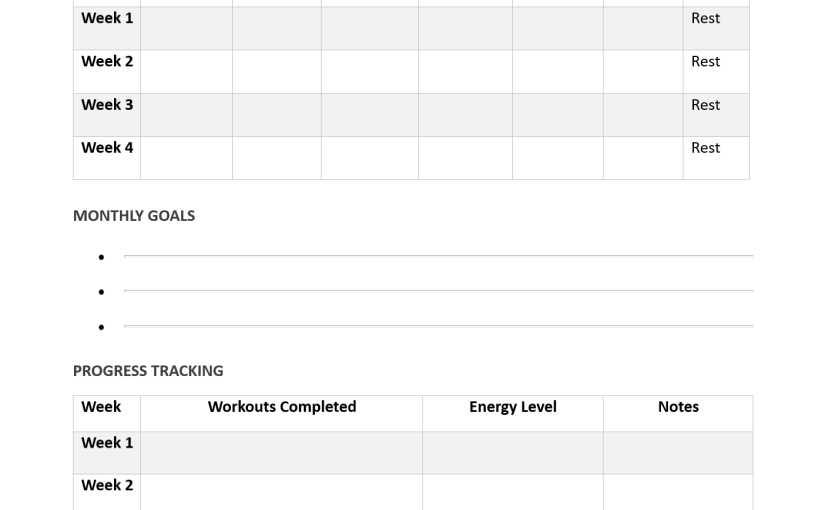
A monthly workout plan template is one of the most effective ways to stay consistent, track progress, and achieve long-term fitness goals. Instead of planning workouts day by day, a monthly approach gives you a clear roadmap that keeps you focused and disciplined.
Whether you’re training at the gym, following a monthly workout plan at home, or working toward fat loss with a monthly workout plan for weight loss, having a structured system can make a huge difference in your results.
In this guide, you’ll learn how to use a monthly workout schedule, explore different formats, and build a plan that actually works.
What Is a Monthly Workout Planner?
A monthly workout planner is a structured layout that organizes your workouts across an entire month. It helps you plan your routines in advance, balance intensity, and include proper recovery.
Unlike weekly or daily plans, a monthly format allows you to:
- Track long-term progress
- Adjust intensity gradually
- Maintain consistency over time
A well-designed monthly workout schedule ensures that your workouts are balanced and aligned with your goals.
Why You Should Use a Monthly Workout Plan
Many people struggle with consistency because they lack a long-term plan. A monthly workout planner solves this problem by providing structure and clarity.
1. Builds Long-Term Consistency
Planning your workouts for the entire month helps you stay committed and avoid skipping sessions.
2. Improves Progress Tracking
With a monthly workout schedule, you can clearly see how your performance evolves over time.
3. Helps Balance Workouts and Recovery
A monthly plan ensures that you include rest days and avoid overtraining.
4. Supports Different Fitness Goals
Whether your goal is muscle gain, endurance, or a monthly workout plan for weight loss, a structured plan helps you stay on track.
5. Saves Time and Effort
You don’t have to plan your workouts every day. Everything is already organized.
Key Components of an Effective Monthly Workout Planner
To get the best results, your monthly workout planner should include these essential elements.
1. Clear Fitness Goals
Define your primary goal for the month:
- Weight loss
- Muscle gain
- Endurance
- General fitness
Your goal will determine the structure of your plan.
2. Weekly Breakdown
Divide your month into weeks and assign workout focuses such as:
- Strength training
- Cardio
- Recovery
This makes your plan easier to follow.
Get also: Free Weekly Workout Plan Template
3. Daily Workout Structure
Each day should have a clear purpose:
- Upper body
- Lower body
- Full body
- Cardio
Get also: Daily Workout Plan Template
4. Rest and Recovery Days
Recovery is essential for progress. A good monthly workout schedule template always includes rest days.
5. Progress Tracking Section
Track metrics such as:
- Workouts completed
- Weight or body measurements
- Energy levels
Types of Monthly Workout Plan Templates
Different types of monthly workout plan templates are designed for different needs.
1. Basic Monthly Workout Schedule Template

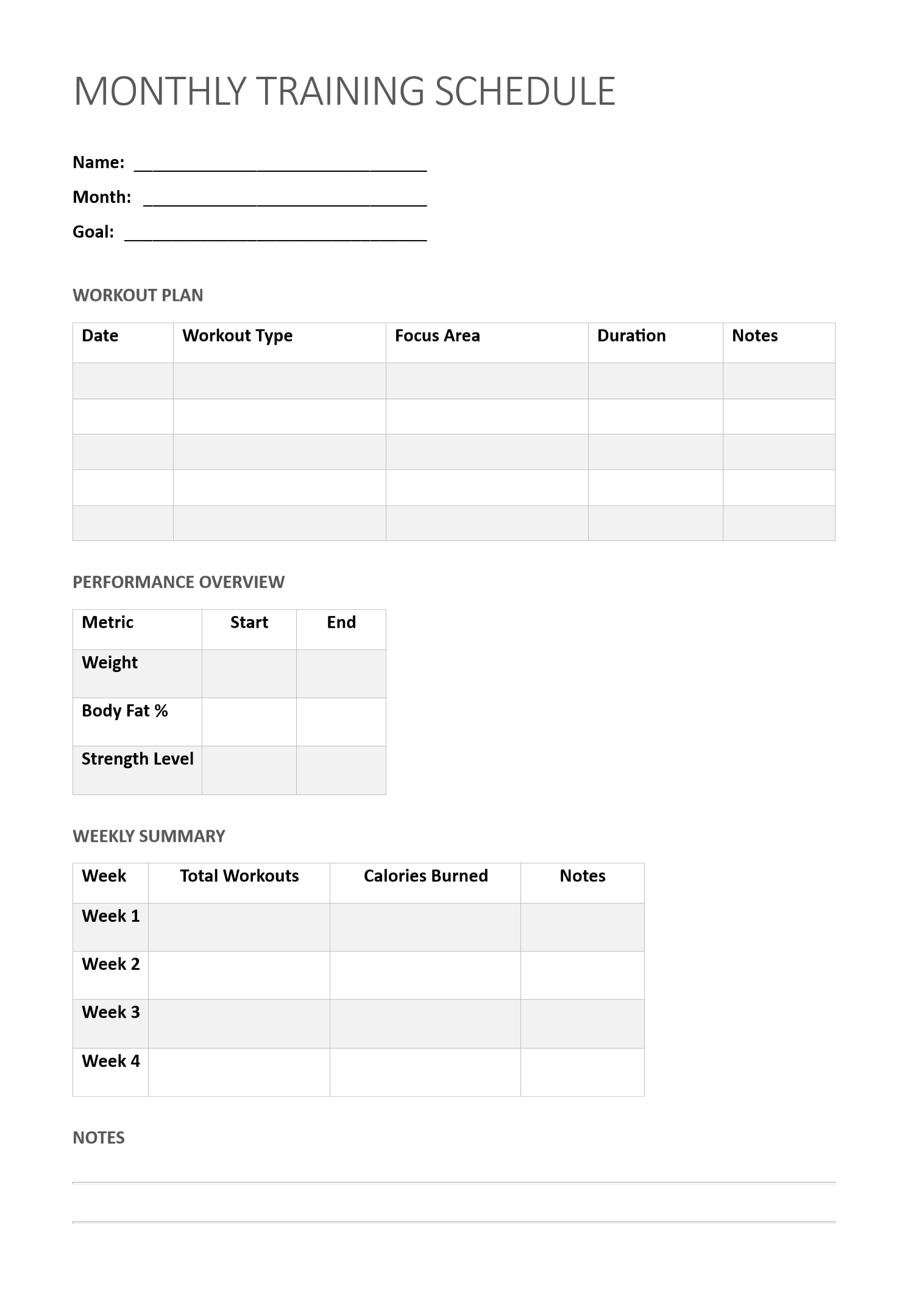
This format focuses on scheduling workouts throughout the month. It is simple, easy to use, and perfect for beginners.
2. Monthly Workout Plan at Home

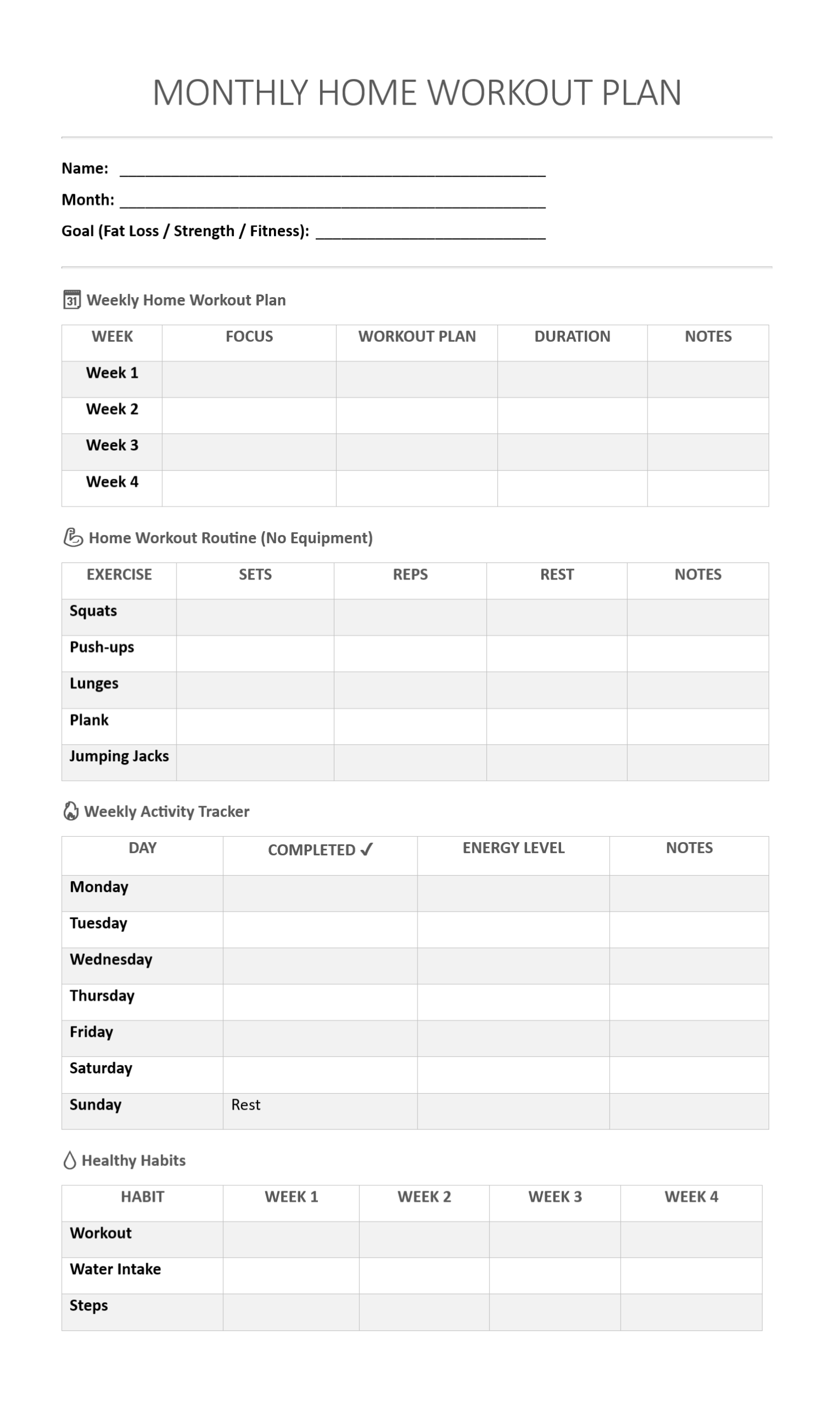
A workout plan at home is ideal for people who prefer convenience.
It includes:
- Bodyweight exercises
- Minimal equipment routines
- Flexible scheduling
3. Monthly Workout Plan for Weight Loss

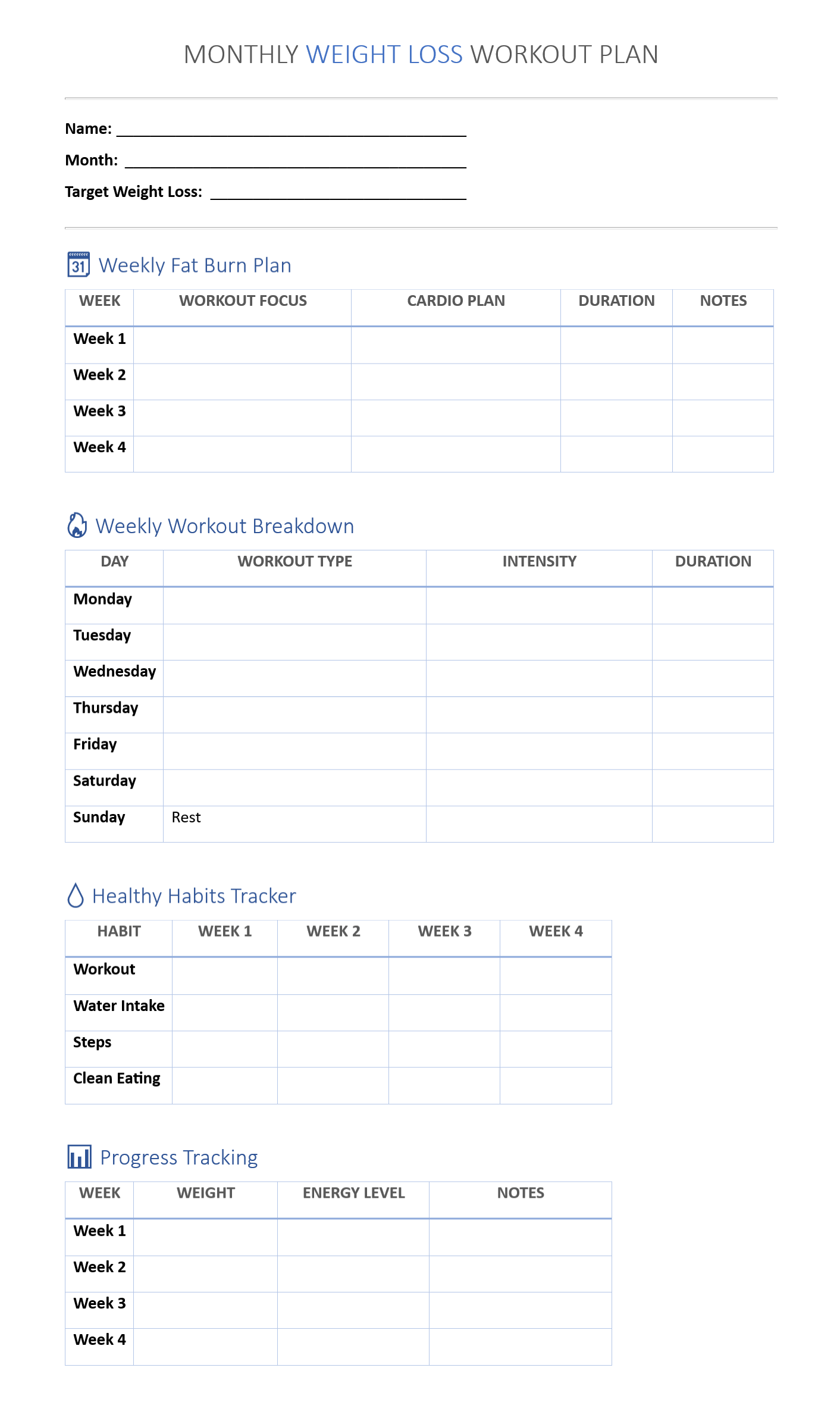
This type focuses on fat loss and includes:
- Cardio sessions
- High-intensity workouts
- Calorie-burning routines
A monthly workout plan for weight loss helps maintain consistency and track progress effectively.
4. Advanced Monthly Workout Plan

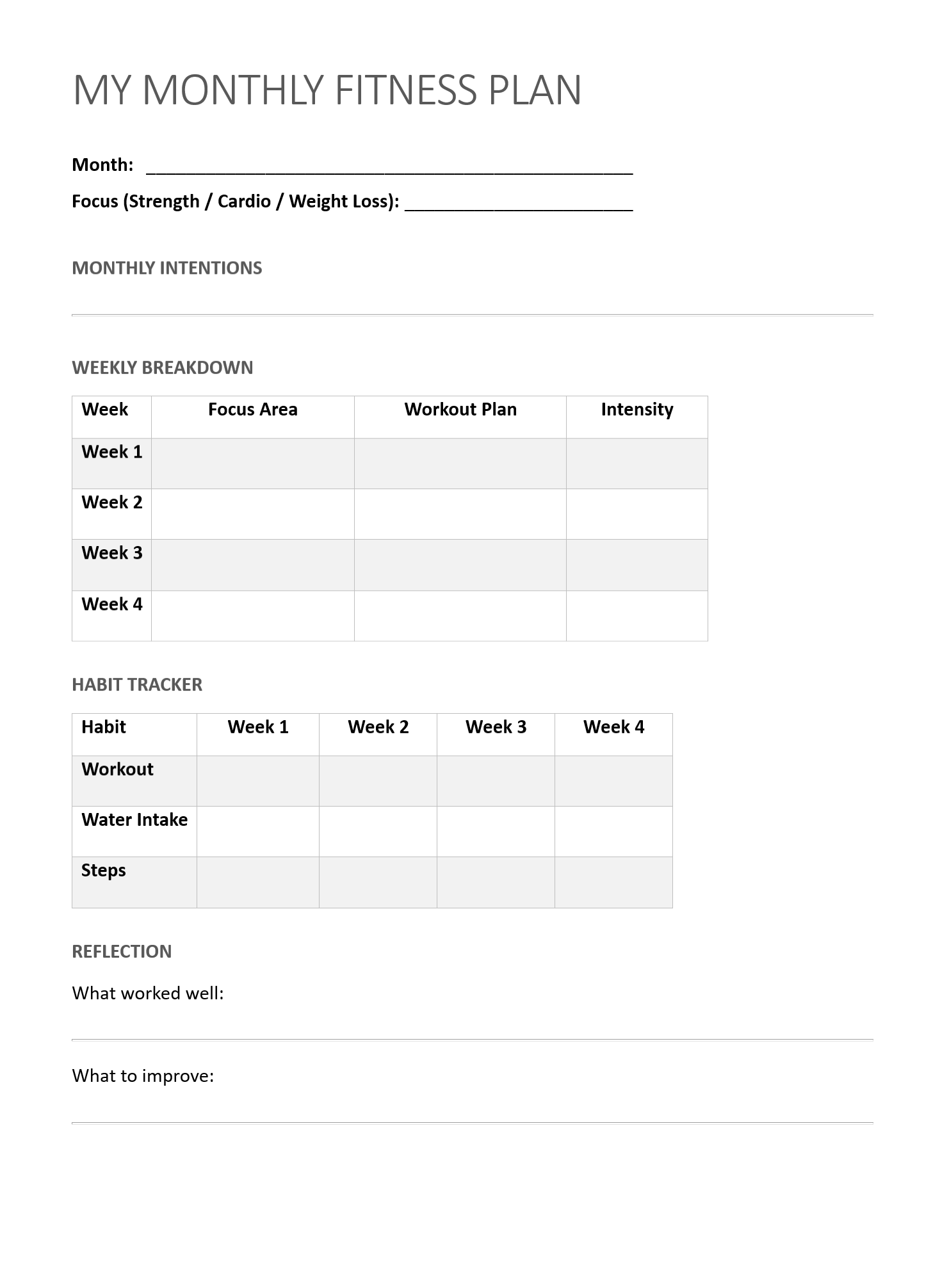
Designed for experienced individuals, this Workout Planner Template includes:
- Progressive overload
- Structured training splits
- Performance tracking
5. Printable Monthly Workout Template
This version is designed for easy printing and manual tracking.
How to Create a Monthly Workout Plan That Works
Creating an effective monthly workout plan template is simple if you follow a structured approach.
Step 1: Define Your Goal
Start with a clear objective for the month.
Step 2: Plan Weekly Structure
Divide your workouts into weekly segments with different focuses.
Step 3: Assign Daily Workouts
Plan specific workouts for each day.
Step 4: Include Rest Days
Ensure your schedule includes recovery time.
Step 5: Track and Adjust
Use your monthly workout schedule to monitor progress and make improvements.
Best Practices for Using a Monthly Workout Plan Template
To maximize your results, follow these best practices.
Stay Consistent
Consistency is the key to long-term success.
Keep It Realistic
Avoid overly ambitious plans that are difficult to maintain.
Focus on Progress
Track improvements rather than aiming for perfection.
Combine With Proper Nutrition
Nutrition plays a major role in achieving your goals, especially for a monthly workout planner for weight loss.
Listen to Your Body
Adjust your plan based on your energy levels and recovery needs.
Common Mistakes to Avoid
Even with a structured monthly workout plan template, mistakes can happen.
Overtraining
Too much exercise without rest can lead to fatigue and injury.
Lack of Planning
Without a clear structure, workouts become inconsistent.
Ignoring Recovery
Recovery is essential for long-term success.
Not Tracking Progress
Without tracking, it’s difficult to measure improvement.
How to Adapt Your Plan for Home Workouts
A monthly workout plan at home requires a slightly different approach compared to gym training.
Focus on:
- Bodyweight exercises
- Resistance bands or light equipment
- High-repetition routines
Home workouts can be just as effective when structured properly.
How to Stay Motivated Throughout the Month
Staying motivated for an entire month can be challenging, but there are ways to make it easier.
- Set weekly milestones
- Track your progress
- Reward yourself for consistency
- Keep your routine interesting
Motivation may fluctuate, but consistency is what drives results.
The Role of Nutrition in Monthly Fitness Planning
Your workout plan should always be supported by proper nutrition.
For weight loss:
- Maintain a calorie deficit
- Focus on whole foods
- Stay hydrated
For muscle gain:
- Increase protein intake
- Ensure adequate calories
- Support recovery with proper nutrients
Combining a monthly workout plan template with good nutrition leads to better and faster results.
Final Thoughts
A well-structured monthly workout plan template is essential for building consistency and achieving long-term fitness goals. It helps you stay organized, track progress, and maintain balance in your routine.
Whether you are using a monthly workout schedule template, following a monthly workout plan at home, or focusing on a workout plan for weight loss, the key is to stay consistent and committed.
With the right plan, realistic goals, and continuous improvement, you can transform your fitness routine and achieve lasting results.
Bonus: Simple Monthly Workout Plan Example
Here’s a simple example you can follow:
- Week 1: Build foundation
- Week 2: Increase intensity
- Week 3: Push performance
- Week 4: Recovery and adjustment
This structure allows you to progress gradually while avoiding burnout.