A Physical Education Lesson Plan Template helps teachers organize engaging, structured, and effective activities for students. Whether you teach elementary, middle school, or multiple grade levels, having a clear template ensures every lesson includes objectives, warm-ups, skill practice, assessment, and cool-down activities.
PE classes move quickly, and without a clear plan, valuable learning time can be lost. That is why many teachers rely on a PE Lesson Plan Template to guide each session, track student progress, and maintain consistent lesson quality throughout the school year.
This guide explains how to use different types of templates, what elements they should include, and how to adapt them for various grade levels, including an Elementary Physical Education Lesson Plan Template and a Middle School PE Lesson Plan Template.
What Is a Physical Education Lesson Plan Template?
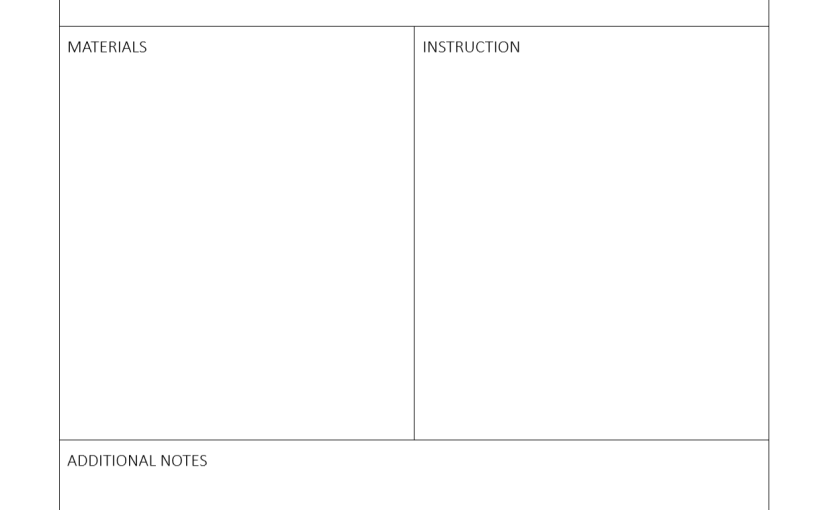
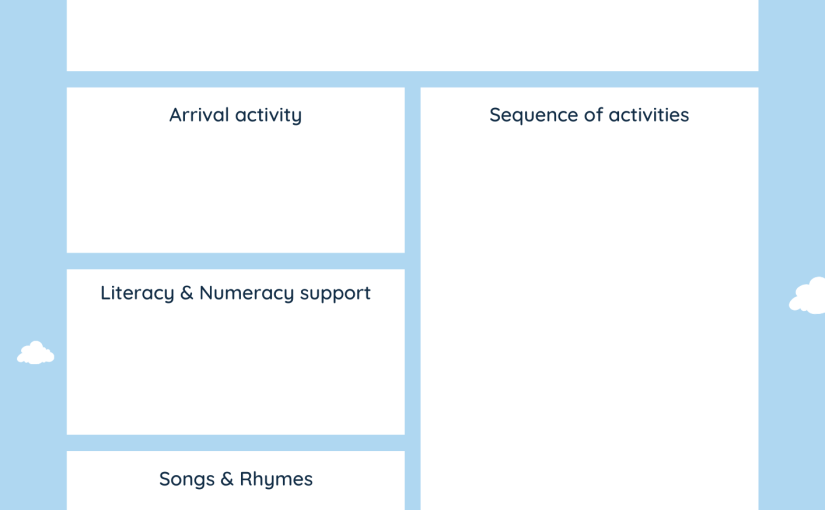
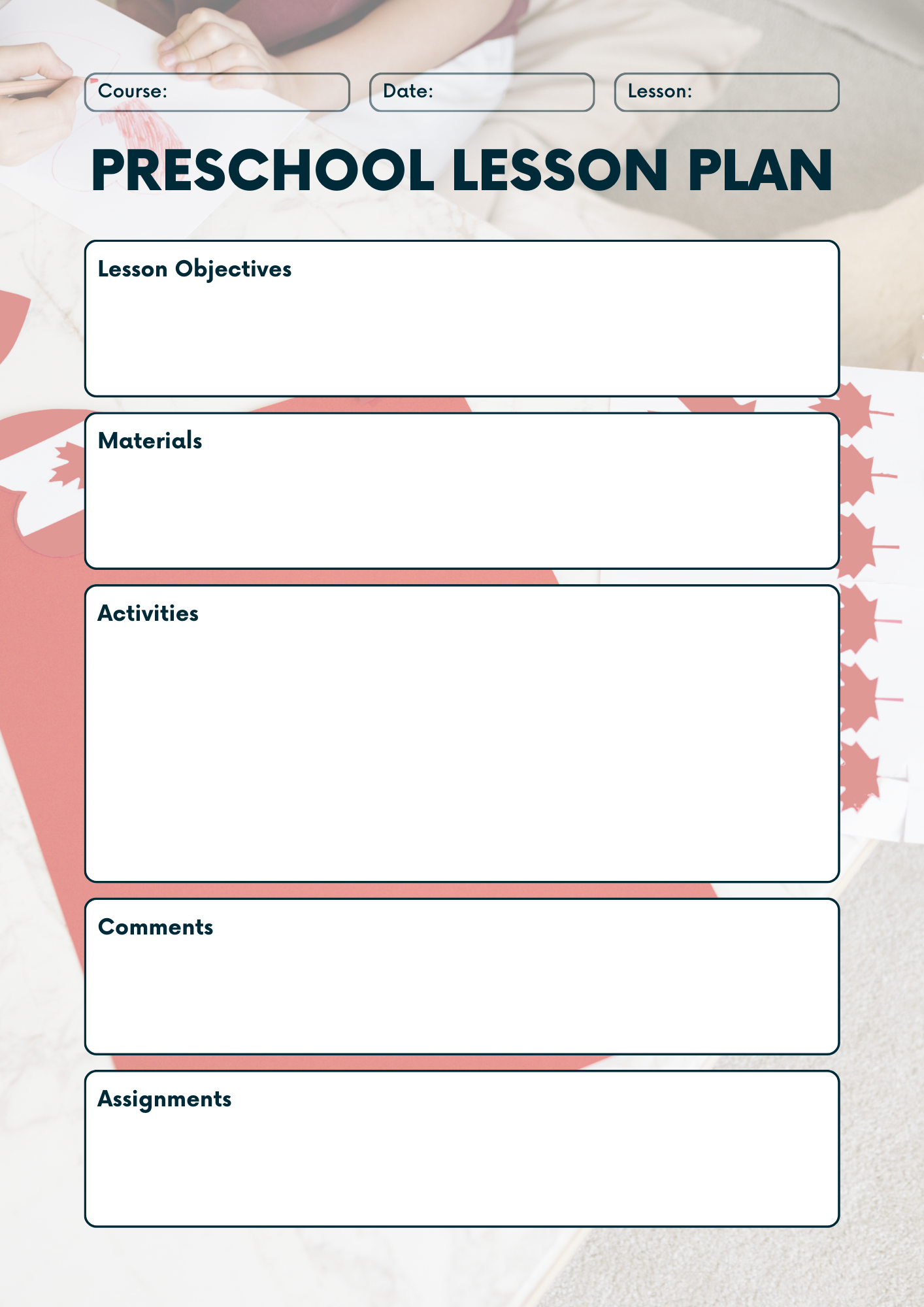
A Physical Education Lesson Plan Template is a structured document designed to help PE teachers plan their classes in an organized format. It typically includes sections for lesson objectives, materials, warm-ups, main activities, skill instruction, and assessments.
Instead of planning every class from scratch, teachers can simply fill in the template and adjust it depending on the activity or sport being taught.
Common benefits include:
- Clear lesson structure
- Better time management
- Improved student engagement
- Easier tracking of learning objectives
- Consistent class organization
With a well-designed PE Lesson Plan Template, teachers can focus more on instruction and less on planning logistics.
Why PE Teachers Should Use a Lesson Plan Template
Teaching physical education requires careful coordination of activities, equipment, and student movement. A teacher’s lesson plan template ensures that every class has a clear beginning, middle, and conclusion.
Here are some key advantages of using a Physical Education Lesson Plan Template.
1. Keeps Lessons Organized
A structured template helps teachers outline the flow of the lesson. Students move smoothly from warm-up activities to skill practice and then to games or drills.
This structure improves classroom management and minimizes confusion during transitions.
2. Saves Planning Time
Once a template is created, teachers only need to adjust the activity details rather than design a new lesson format each time.
This is especially helpful for teachers who teach multiple classes or grade levels.
3. Improves Student Learning
Well-planned lessons allow students to build skills gradually. Activities become more purposeful when they align with specific objectives and learning outcomes.
4. Encourages Balanced Activities
A good PE Lesson Plan Template ensures that every class includes:
- Warm-up
- Skill instruction
- Practice drills
- Active games
- Cool-down and reflection
This balance supports both skill development and physical fitness.
Key Sections in a Physical Education Lesson Plan Template


An effective Physical Education Lesson Plan Template usually contains several core sections that guide teachers through the planning process.
Lesson Information
This section provides basic details such as:
- Grade level
- Class duration
- Topic or activity
- Required equipment
These details help teachers prepare materials and adjust the lesson for different groups.
Learning Objectives
The objective explains what students should learn or improve during the class.
Examples include:
- Improve dribbling control
- Develop teamwork during small-sided games
- Practice correct throwing technique
Clear objectives help keep the lesson focused and measurable.
Warm-Up Activities
Warm-ups prepare the body for physical movement and reduce the risk of injury.
Common warm-up activities include:
- Light jogging
- Dynamic stretching
- Movement games
- Coordination drills
Including warm-ups in a Physical Education Lesson Plan Template ensures that every lesson begins safely.
Skill Instruction
This section outlines the main skill being taught during the class.
Teachers typically include:
- Demonstration instructions
- Key teaching points
- Common mistakes to watch for
This part of the lesson focuses on technique development.
Practice Activities
Students need time to apply new skills through structured practice.
Examples include:
- Partner drills
- Small-group exercises
- Skill stations
- Guided practice games
A clear template ensures that practice activities align with lesson objectives.
Main Activity or Game
After practicing skills, students can apply them in a game or challenge.
Examples include:
- Mini soccer matches
- Relay races
- Basketball shooting competitions
- Team challenges
Games increase engagement while reinforcing skill development.
Assessment
Assessment allows teachers to evaluate student progress.
This section might include:
- Skill observation
- Participation tracking
- Quick performance checks
Assessments do not need to be complex. Even simple observation notes can help track improvement.
Cool-Down and Reflection
Cool-down activities help students recover physically and mentally.
Typical examples include:
- Light stretching
- Breathing exercises
- Short class discussions
Reflection questions can help students think about what they learned during the lesson.
Get also: Math Lesson Plan Template Free Download
Elementary Physical Education Lesson Plan Template


An Elementary Physical Education Lesson Plan Template focuses on basic motor skills, coordination, and fun movement activities.
Young students benefit from lessons that emphasize exploration, play, and teamwork.
Important Features for Elementary PE
Elementary lesson plans usually include:
- Simple instructions
- Short activity segments
- Clear demonstrations
- Movement-based learning
Activities should be varied and energetic to maintain student interest.
Example Elementary Lesson Structure
A typical elementary lesson might look like this:
Warm-Up (5 minutes)
Animal movement activities such as bear walks, frog jumps, and crab walks.
Skill Practice (10 minutes)
Throwing and catching with soft balls in pairs.
Main Game (15 minutes)
A modified dodgeball game focusing on accuracy and movement.
Cool-Down (5 minutes)
Stretching and a short discussion about teamwork.
Using an Elementary Physical Education Lesson Plan Template helps teachers ensure that activities remain age-appropriate and enjoyable.
Middle School PE Lesson Plan Template

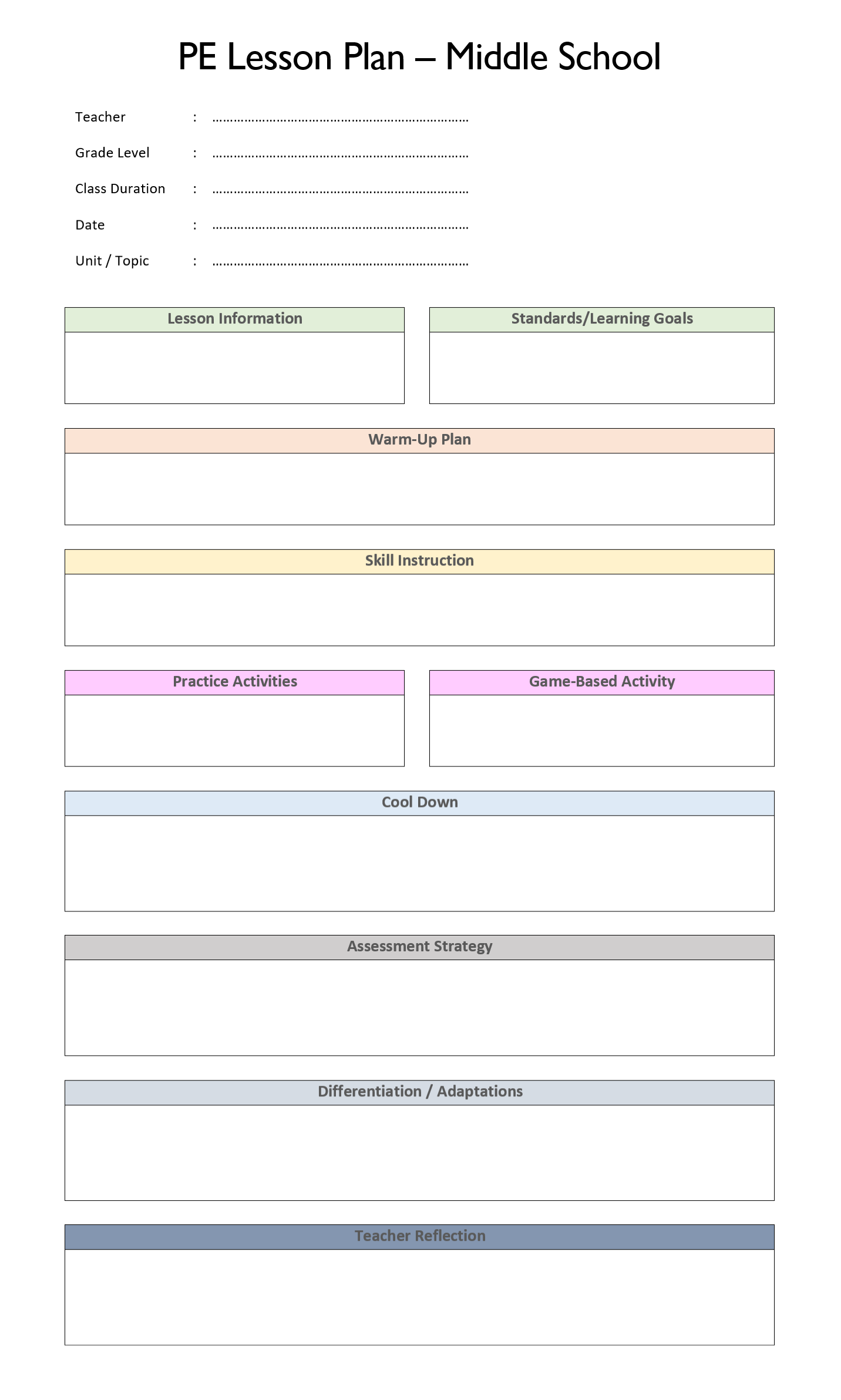
A Middle School PE Lesson Plan Template usually focuses more on sport skills, strategy, and teamwork.
Students at this age are capable of handling more complex activities and longer practice sessions.
Key Elements for Middle School Lessons
Middle school PE plans often include:
- Skill development drills
- Team strategy discussions
- Fitness components
- Competitive games
Teachers may also introduce more detailed assessments.
Example Middle School Lesson Structure
Warm-Up (7 minutes)
Dynamic stretches and agility ladder drills.
Skill Instruction (10 minutes)
Basketball dribbling techniques and ball control drills.
Practice Activity (10 minutes)
Small-group dribbling challenges and passing drills.
Game Activity (15 minutes)
Half-court basketball game focusing on teamwork and ball movement.
Cool-Down (5 minutes)
Stretching and quick feedback discussion.
A structured Middle School PE Lesson Plan Template helps teachers manage larger groups and maintain active participation.
Tips for Designing an Effective PE Lesson Plan Template
Not all templates work equally well. A strong Lesson Plan template should be practical, flexible, and easy to follow.
Here are several tips to improve your lesson planning.
Keep the Layout Simple


Teachers should be able to fill in the template quickly. Clear headings and organized sections make the document easier to use during class.
Focus on Active Time
PE classes should maximize student movement. The template should encourage minimal downtime between activities.
Include Equipment Lists
Listing required equipment helps teachers prepare before class begins.
This prevents delays caused by searching for materials during the lesson.
Allow Space for Notes
Teachers often need to record observations about student performance or activity adjustments.
Adding a notes section helps document these details for future lessons.
Make the Template Flexible
Different sports and activities require different structures. A flexible PE Lesson Plan Template allows teachers to adjust timing, drills, and games as needed.
Adapting the Template for Different Sports
Physical education includes a wide variety of activities, from team sports to individual fitness training.
A Physical Education Lesson Plan Template should be adaptable for different topics, such as:
- Basketball
- Soccer
- Volleyball
- Track and field
- Fitness training
- Gymnastics
Teachers can modify the skill instruction and practice sections depending on the sport being taught.
For example, a soccer lesson might focus on dribbling and passing, while a volleyball lesson might emphasize serving and setting.
Managing Time in PE Lessons
Time management is one of the most important aspects of teaching physical education.
A lesson template helps teachers allocate time efficiently across different activities.
A balanced lesson might look like this:
- Warm-up: 5–7 minutes
- Skill instruction: 8–10 minutes
- Practice drills: 10–12 minutes
- Main game: 10–15 minutes
- Cool-down: 3–5 minutes
Using a Physical Education Lesson Plan Template ensures that every part of the lesson receives adequate time.
Supporting Student Engagement
Engagement is crucial in PE classes. Students participate more actively when lessons include variety and clear goals.
Strategies to increase engagement include:
- Using small-group activities
- Rotating skill stations
- Incorporating cooperative challenges
- Offering positive feedback
Templates can include prompts that remind teachers to vary activities and encourage teamwork.
Tracking Student Progress
Physical education lessons are not only about activity; they also involve skill development and improvement over time.
Teachers can use the assessment section of their PE Lesson Plan Template to track progress in areas such as:
- Skill accuracy
- Coordination
- Team participation
- Effort and sportsmanship
Simple checklists or observation notes can help teachers monitor improvement across multiple lessons.
Creating a Consistent Teaching Routine
Consistency helps students understand what to expect in each class. When lessons follow a predictable structure, transitions become smoother, and behavior management improves.
A reliable PE Lesson Plan Template supports consistency by keeping the same lesson framework while allowing teachers to change the specific activities.
Students quickly learn that every class includes warm-ups, skill practice, games, and cool-downs.
This routine makes PE classes more organized and productive.
Final Thoughts
A well-designed Physical Education Lesson Plan Template helps teachers deliver structured, engaging, and effective PE classes. By organizing each lesson into clear sections—such as warm-ups, skill instruction, practice, and games—teachers can focus on helping students develop physical skills and teamwork.
Whether you are teaching younger students using an Elementary Physical Education Lesson Plan Template or working with older learners using a Middle School PE Lesson Plan Template, the right format simplifies planning and improves lesson quality.
With a flexible PE Lesson Plan Template, teachers can easily adapt activities, manage class time effectively, and create active learning experiences that support both fitness and skill development.