
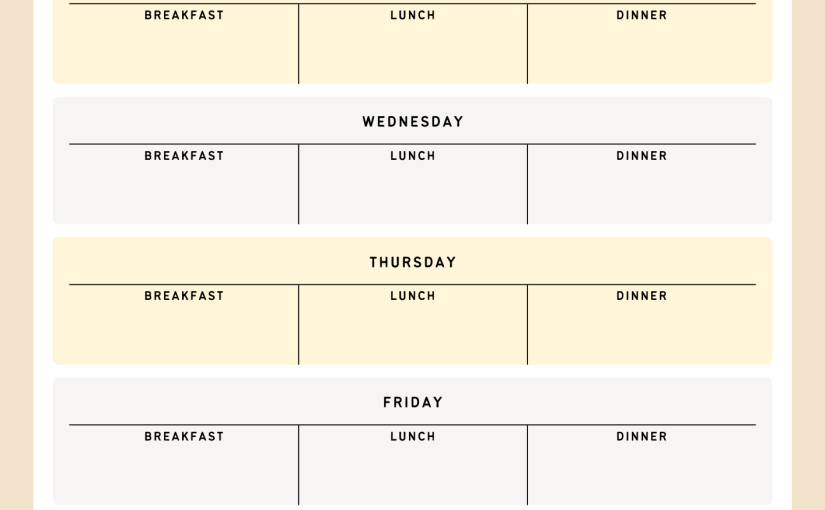
Planning meals doesn’t have to feel overwhelming. With the right Meal Plan Template, you can organize your week, reduce food waste, save money, and make healthier choices without the daily “what’s for dinner?” panic.
Whether you’re cooking for yourself, your family, or managing a busy household schedule, a structured planning system makes everything easier. In this guide, you’ll discover how to use a Meal Plan effectively, how it compares with a Meal Planner, and how to integrate a Meal Plan and Grocery List or Meal Plan Shopping List into your weekly routine.
What Is a Meal Planner?
A Meal Planner is a structured planning layout designed to help you organize meals for a specific period — daily, weekly, or monthly. It provides dedicated spaces for breakfast, lunch, dinner, snacks, and sometimes notes for dietary needs or prep reminders.
Unlike random note-taking, a proper template ensures consistency. It encourages balanced nutrition, reduces impulse grocery spending, and creates a clear system you can repeat week after week.
A well-designed Meal Plan Template typically includes:
- Weekly overview grid
- Sections for each meal category
- Notes for prep or leftovers
- Space for grocery planning
- Optional calorie or dietary tracking
Meal Plan Template vs. Meal Planner Template

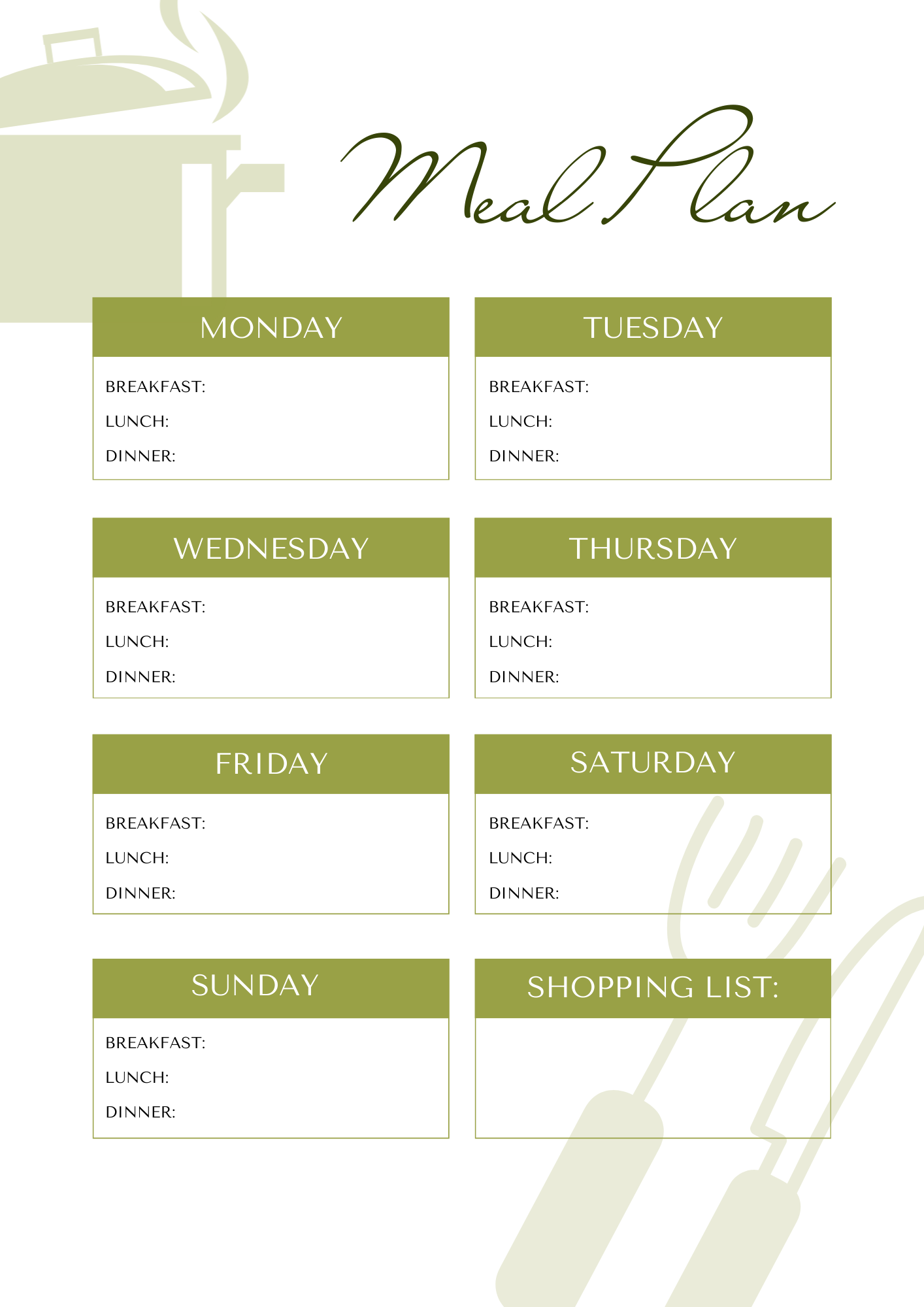
Many people use these terms interchangeably. While similar, there can be subtle differences.
A Meal Planner Template often focuses more on scheduling meals visually across days, while a Meal Plan Template may include more detailed sections for ingredients, preparation notes, or dietary tracking.
In practical use, both serve the same goal: helping you stay organized. The key is choosing a format that fits your routine.
If you prefer a simple grid layout → go with a Meal Planner Template.
If you want more detailed tracking → use a structured Meal Plan Template.
Why You Need a Meal Planning Template
Here are the biggest benefits of using a Meal Planning Template consistently:
1. Saves Time Every Day
Instead of deciding meals last minute, everything is pre-planned.
2. Reduces Grocery Store Stress
You walk in knowing exactly what you need.
3. Minimizes Food Waste
Planning prevents overbuying and forgotten ingredients.
4. Supports Healthy Eating
Balanced meals are easier to plan.
5. Saves Money
Impulse purchases drop significantly when you use a structured system.
How to Structure a Weekly Meal Plan Template
The most practical format is weekly. A weekly Meal Plan Template should include:
- Monday–Sunday columns
- Breakfast / Lunch / Dinner rows
- Snack section (optional)
- Prep notes area
- Grocery summary section
You can also add:
- Leftover tracking
- Family preferences
- Dietary restrictions
- Meal prep schedule
A clear layout keeps planning realistic and manageable.
Using a Meal Plan and Grocery List Template Together
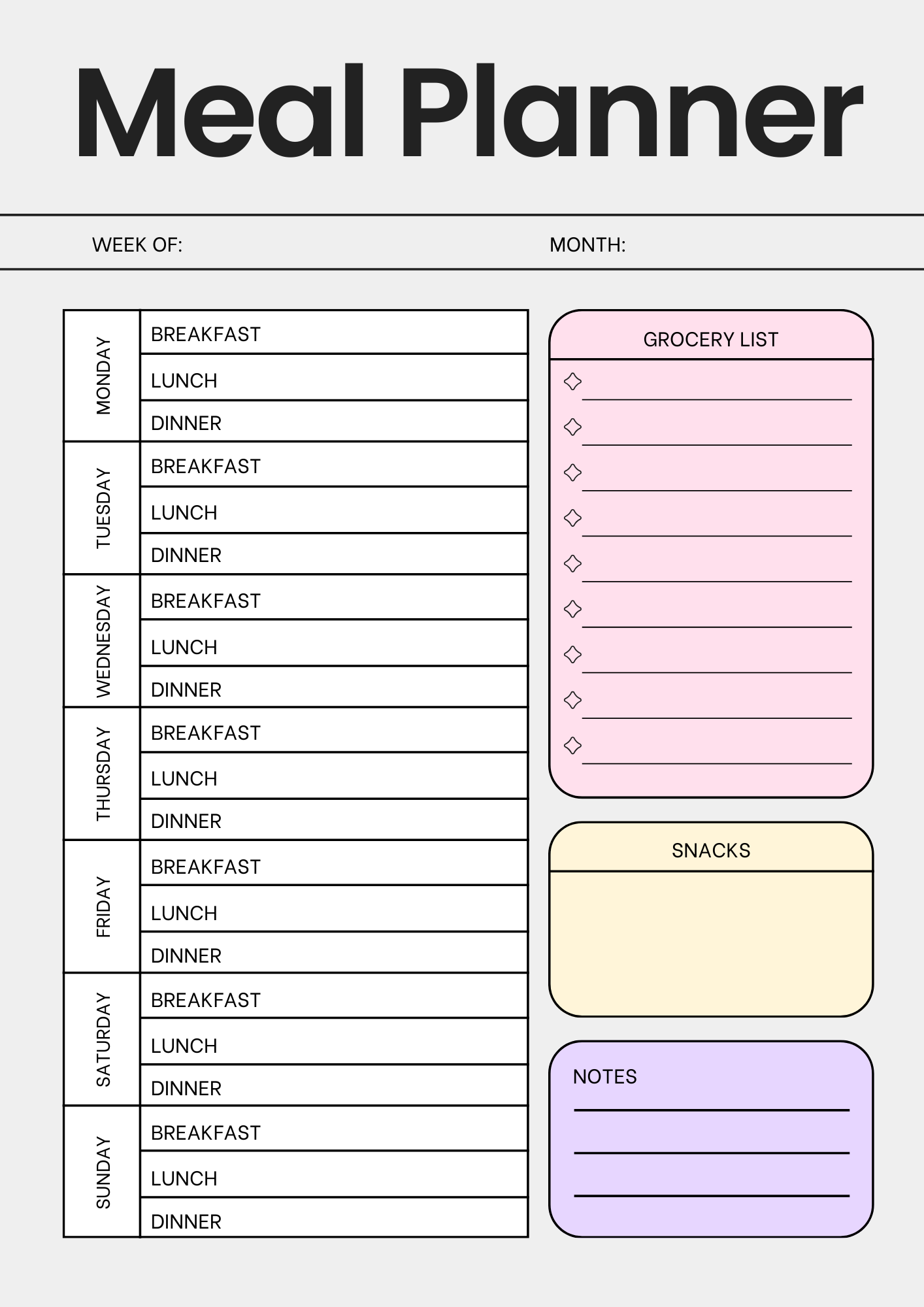
One of the smartest planning methods is combining your meals and shopping list.
A Meal Plan and Grocery List Template allows you to:
- Plan meals on one side
- Automatically build your grocery list
- Categorize items (produce, dairy, pantry, etc.)
This approach eliminates back-and-forth between notes and lists.
When you plan meals first and build your grocery list directly from them, you avoid duplicate purchases and missing ingredients.
Why a Meal Plan Shopping List Template Makes Planning Even Easier
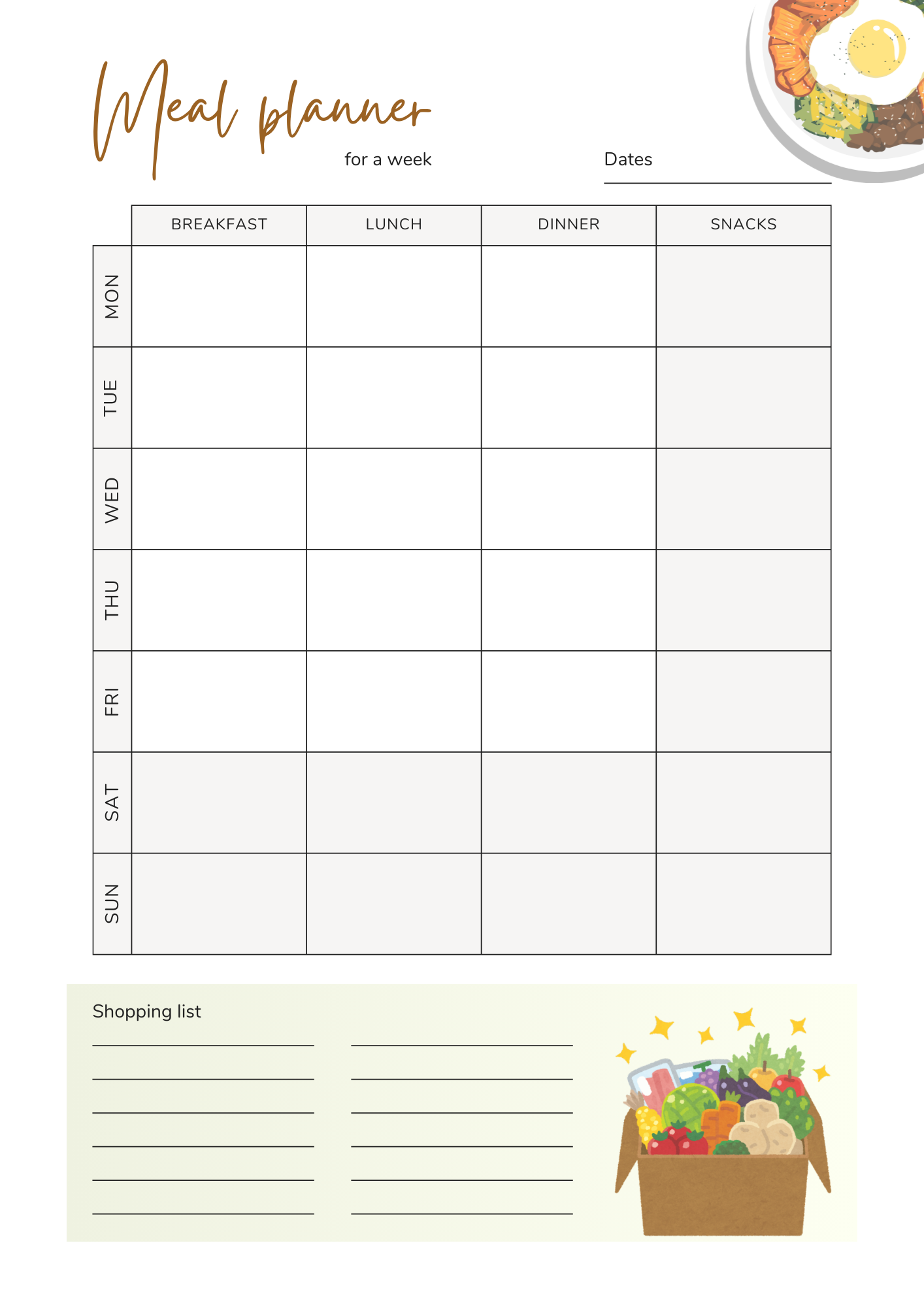
A Meal Plan Shopping List Template goes one step further by organizing groceries into categories. Instead of writing a random list, you group items like:
- Produce
- Meat & Protein
- Dairy
- Grains
- Frozen
- Pantry Staples
- Household Items
This layout mirrors how stores are organized, which makes shopping faster and more efficient.
Get also: Holiday Meal Planning Template
7 Practical Ways to Use a Meal Planning Template
1. Weekly Family Planning
Map out dinners based on family schedules.
2. Budget Meal Planning
Design meals around sales or seasonal produce.
3. Fitness or Diet Planning
Track calories or macros inside your Planner Template.
4. Batch Cooking Strategy
Plan 2–3 large meals and assign leftovers across the week.
5. Busy Professional Schedule
Pre-plan simple meals for workdays and flexible options for weekends.
6. Special Dietary Needs
Use sections to note allergies, restrictions, or substitutions.
7. Monthly Overview Planning
Create a master plan, then break it into weekly templates.
Get also: Diabetic Meal Plan Template Free Printable
How to Make Your Planner Template More Effective
Here are smart adjustments that make your template more powerful:
Keep It Realistic
Avoid planning complex meals every day.
Rotate Favorite Meals
Build a “go-to meal list” and reuse it.
Include Prep Notes
Example: “Chop veggies Sunday” or “Defrost chicken Tuesday.”
Leave One Flexible Day
Life happens — flexibility prevents frustration.
Customizing Your Planner Template
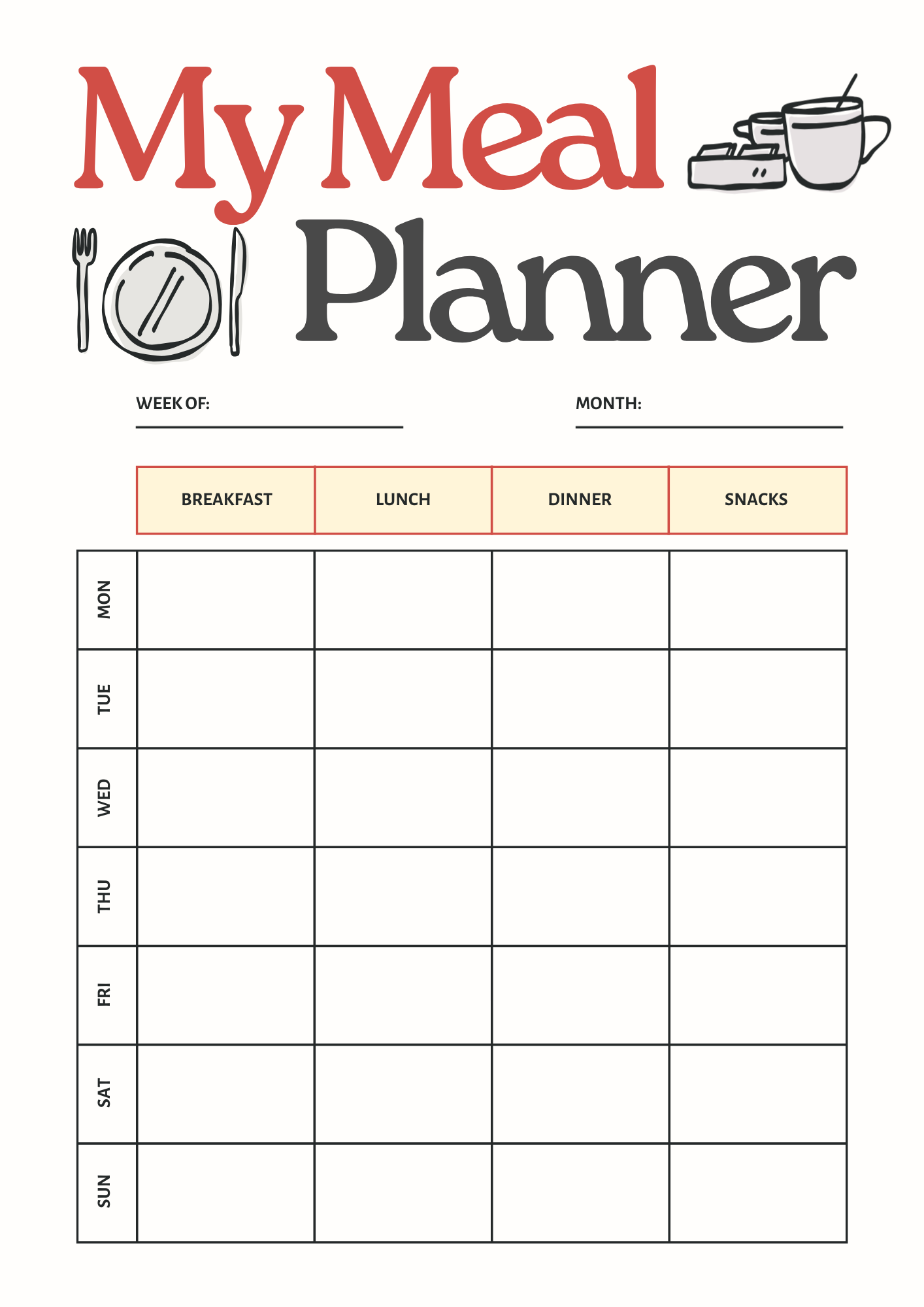
You can personalize your template by adding:
- Color coding (kids, adults, diet meals)
- Calorie tracking
- Budget column
- Prep time column
- Cooking method notes
The best system is one you’ll actually use consistently.
Printable vs. Editable Meal Plan Template
Both formats have advantages:
Printable Version
- Easy to stick on the fridge
- Quick to fill by hand
- Visible reminder for the whole family
Editable Version
- Easy to reuse weekly
- Can duplicate layouts
- Cleaner long-term record keeping
Many people combine both: plan digitally, print for visibility.
Common Mistakes When Using a Meal Plan Blank Template
Even with a good system, people sometimes struggle. Avoid these mistakes:
- Planning too many new recipes at once
- Ignoring leftovers
- Not checking the pantry before shopping
- Making overly strict plans
- Skipping grocery organization
Consistency matters more than perfection.
Sample Weekly Meal Plan Structure
Here’s a simple example layout:
Monday
Breakfast: Oatmeal & fruit
Lunch: Grilled chicken salad
Dinner: Pasta with vegetables
Tuesday
Breakfast: Eggs & toast
Lunch: Leftover pasta
Dinner: Stir-fry with rice
Continue through Sunday with balanced rotation.
Then transfer ingredients into your Meal Plan Shopping List Template.
How Often Should You Update Your Meal Planner?
Most people benefit from:
- Weekly updates for daily households
- Bi-weekly planning for meal prep routines
- Monthly overview planning for budgeting
Choose the rhythm that fits your lifestyle.
Who Benefits Most from a Meal Planner?
- Busy parents
- College students
- Fitness-focused individuals
- Budget-conscious households
- Meal prep enthusiasts
- Caregivers planning structured diets
Anyone who wants structure and simplicity will benefit.
Creating a Sustainable Meal Planning Routine
The secret isn’t complexity — it’s repetition.
- Choose one reliable Plan Template.
- Set a weekly planning day.
- Build your grocery list immediately after planning.
- Review what worked at the end of the week.
- Adjust gradually.
Over time, planning becomes automatic.
Final Thoughts
A well-designed Meal Plan Template is more than just a printable page — it’s a system for reducing stress, improving nutrition, and simplifying your daily life. Whether you prefer a detailed Meal Planner Template, a combined Meal Plan and Grocery List Template, or a categorized Meal Plan Shopping List Template, the key is consistency.
When meals are planned intentionally, grocery shopping becomes faster, budgeting becomes easier, and healthy eating becomes sustainable.
Start simple. Keep it practical. Adjust as needed.
And most importantly — make your planning system work for your real life, not the other way around.