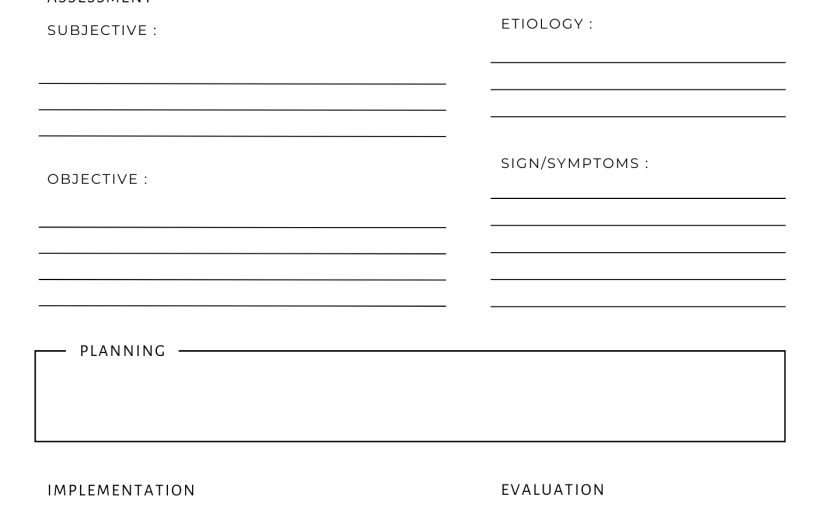
In modern healthcare, documentation is just as important as clinical skill. A structured Nursing Care Plan Template helps nurses organize patient data, define priorities, and deliver consistent, evidence-based care. Without a clear framework, important interventions can be missed, goals become unclear, and communication between healthcare teams suffers.
Whether you are a nursing student, staff nurse, or nurse practitioner, having a reliable planner template simplifies planning while ensuring patient-centered care. In this comprehensive guide, we’ll explore the structure, variations, and practical applications of a well-designed nursing plan — including discharge planning and family-focused care approaches.
What Is a Nursing Care Plan?
A Nursing Care Plan is a structured document used to outline patient assessment data, nursing diagnoses, goals, interventions, rationales, and evaluation outcomes.
It transforms scattered information into a logical, step-by-step care strategy that aligns with the nursing process:
- Assessment
- Diagnosis
- Planning
- Implementation
- Evaluation
Using a consistent structure ensures continuity of care across shifts and providers.
Why Every Nurse Needs a Structured Care Plan

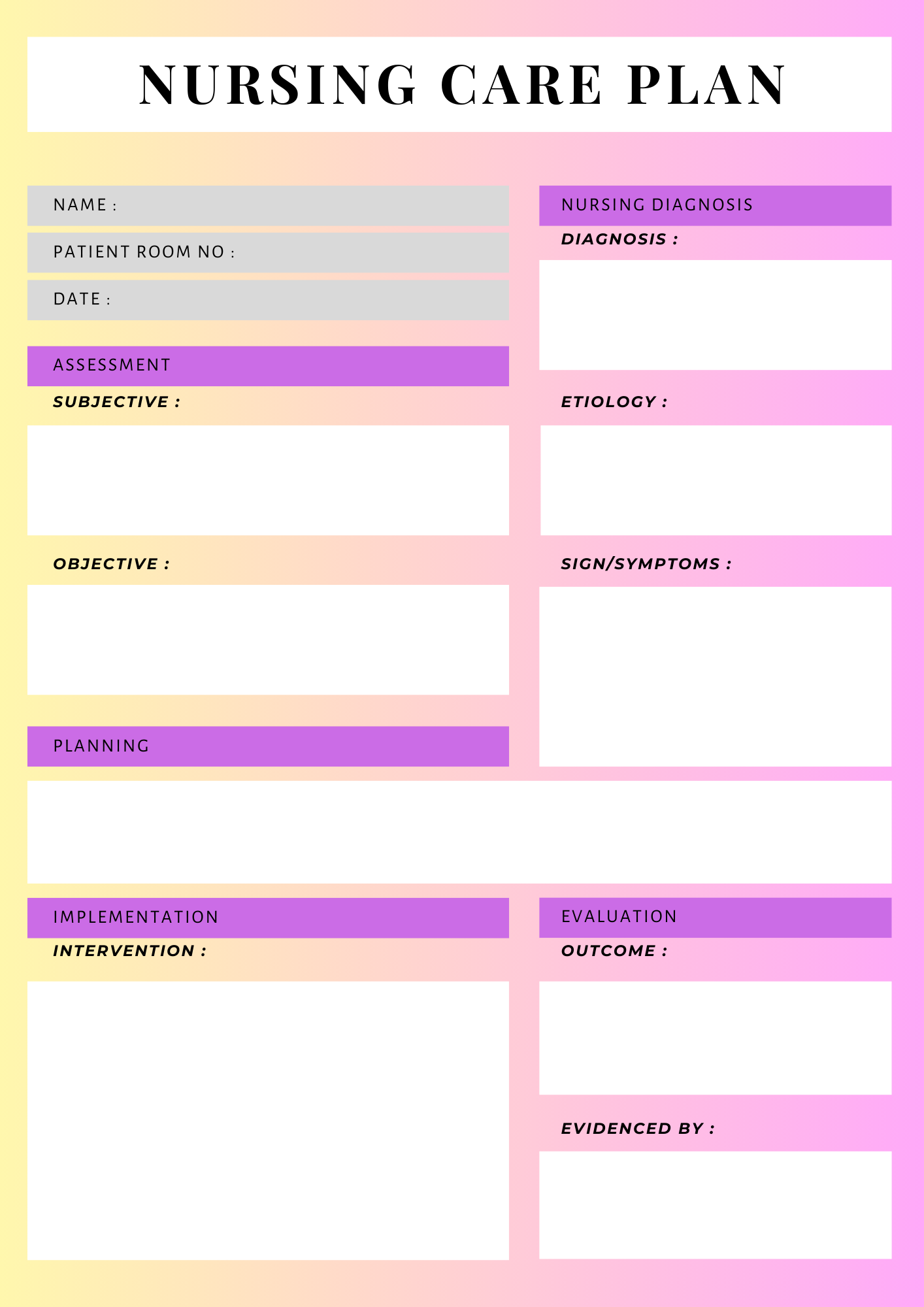
Healthcare environments are fast-paced and complex. A reliable Nursing Care Plan helps:
- Improve patient safety
- Enhance clinical reasoning
- Standardize documentation
- Reduce errors
- Support communication with interdisciplinary teams
For students, it builds critical thinking. For professionals, it improves efficiency.
Core Components of an Effective Nursing Care Planner
A strong template includes clearly defined sections.
1. Patient Assessment
This section captures subjective and objective data:
- Vital signs
- Medical history
- Lab results
- Symptoms
- Patient concerns
Without an accurate assessment, the rest of the Nursing Care Planner becomes unreliable.
2. Nursing Diagnosis
Based on assessment findings, nurses identify priority problems. Diagnoses should follow standardized terminology where required.
Examples:
- Impaired mobility
- Risk for infection
- Acute pain
A structured format ensures diagnoses are specific and measurable.
3. Goals and Expected Outcomes
Goals should be SMART:
- Specific
- Measurable
- Achievable
- Relevant
- Time-bound
A properly organized Nursing Care Planner clearly links each diagnosis to corresponding goals.
4. Nursing Interventions
Interventions describe what the nurse will do to address the identified problem. They may include:
- Monitoring vital signs
- Administering medications
- Providing education
- Assisting with mobility
Each intervention should include a rationale explaining why it is necessary.
5. Evaluation
Evaluation determines whether goals were met. If not, the plan must be revised. A complete Nursing Care Plan includes space to document outcomes and adjustments.
Nursing Discharge Care Plan Template for Safe Transitions

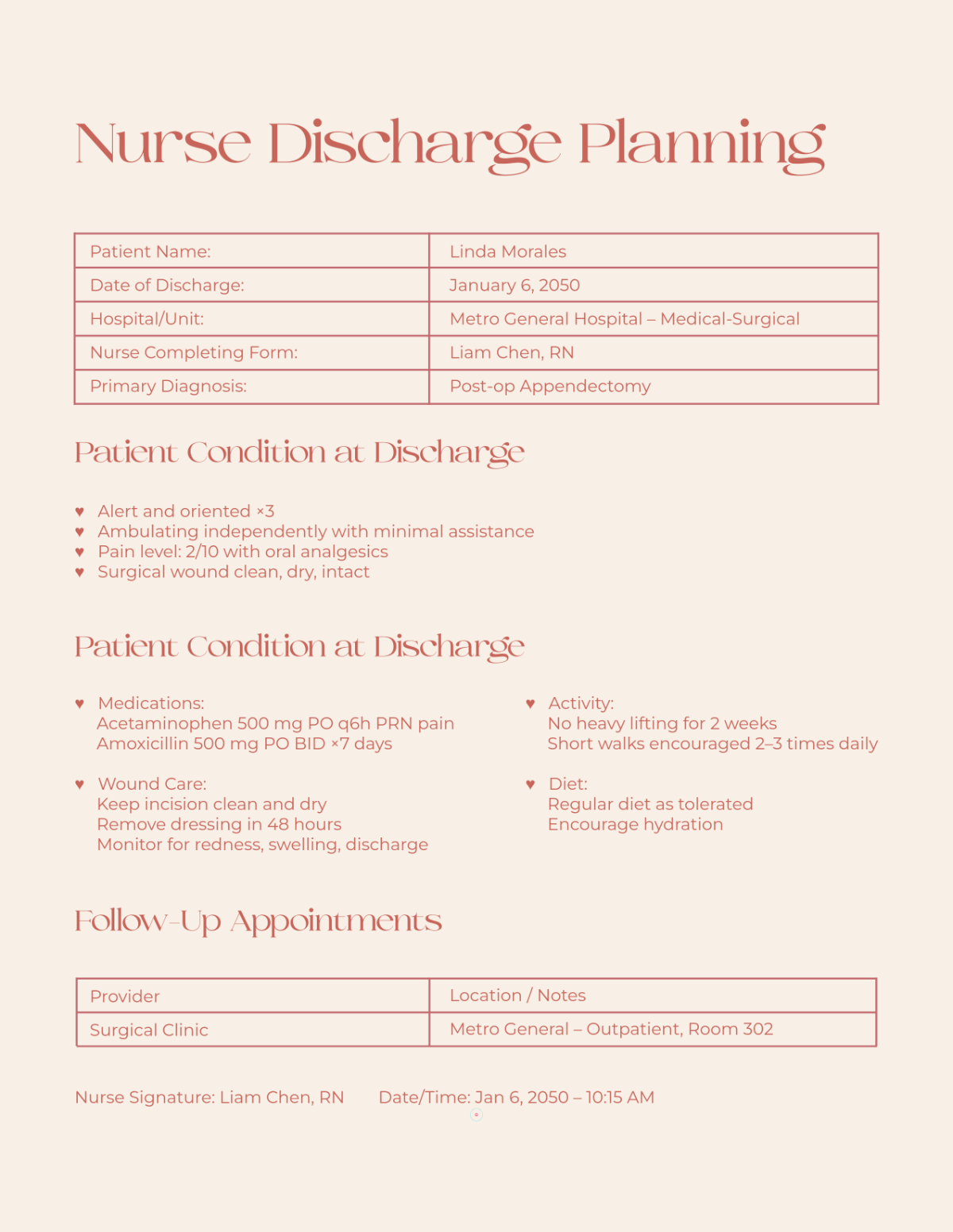
Discharge planning is critical in preventing readmissions and complications. A Nursing Discharge Care Plan Template focuses on preparing patients and families for care at home or in another facility.
Key components include:
- Medication instructions
- Wound care guidance
- Follow-up appointments
- Activity restrictions
- Warning signs to monitor
Effective discharge documentation ensures continuity of care beyond the hospital setting.
Why Discharge Planning Matters
Poor discharge planning increases the risk of:
- Medication errors
- Infection
- Treatment non-compliance
- Hospital readmission
Integrating a discharge-focused section into your nursing planner template strengthens patient safety.
Family Nursing Care Plan Sample for Holistic Support


Healthcare doesn’t affect patients alone — it impacts families. A Family Nursing Care Plan Sample focuses on assessing family dynamics, caregiver readiness, and support systems.
This approach is especially valuable in:
- Chronic illness management
- Pediatric care
- Geriatric care
- Palliative settings
A family-centered section in your Care Planner may include:
- Education strategies
- Emotional support plans
- Caregiver training
- Community resource referrals
By addressing family needs, nurses improve long-term outcomes.
Get also: Psychiatric Nursing Care Plan Template
Nursery Care Plan Template for Pediatric Settings

In pediatric or early childhood healthcare settings, documentation may follow a Nursery Care Plan Template structure tailored to infants and young children.
This format often includes:
- Growth and developmental milestones
- Feeding patterns
- Immunization records
- Parental education notes
- Safety precautions
Because pediatric patients cannot always verbalize symptoms clearly, detailed observation becomes even more critical. A specialized Care Planner Template designed for nursery or pediatric use helps ensure nothing is overlooked.
Get also: Nursing Student Care Plan Template Word
Customizing a Nursing Care Plan Template by Specialty
Different specialties require slightly different planning approaches.
Medical-Surgical Units
Focus on:
- Pain management
- Mobility
- Infection prevention
Mental Health Nursing
Care plans may emphasize:
- Risk assessment
- Behavioral monitoring
- Coping strategies
Community Health Nursing
Templates may incorporate:
- Home safety evaluation
- Family support systems
- Public health education
Adapting your Nurse Care Plan Template to fit your clinical environment increases effectiveness.
Paper vs Digital Nursing Templates
Modern healthcare facilities often use electronic health records (EHR). However, both paper and digital formats have advantages.
Paper-Based Templates
- Easy for students
- Useful during clinical rotations
- Simple for quick drafting
Digital Templates
- Faster editing
- Easy storage and retrieval
- Better for institutional documentation
Regardless of format, structure remains the key strength of a reliable Nurse Care Plan Template.
Common Mistakes in Care Plan Documentation
Even experienced nurses can fall into documentation errors.
Writing Vague Diagnoses
Avoid general statements. Be specific and measurable.
Forgetting Rationales
Interventions should always explain “why.” Without a rationale, the care plan lacks depth.
Not Updating Evaluation
A static plan does not reflect patient progress. Evaluation must be ongoing.
A well-designed Nursing Care Plan Template minimizes these mistakes by guiding the documentation process.
Benefits for Nursing Students
For students, structured planning tools help develop clinical reasoning skills. By repeatedly using a Nursing Care Plan Template, students learn to:
- Connect symptoms to diagnoses
- Prioritize interventions
- Think systematically
- Improve documentation clarity
Practice builds confidence.
How to Create Your Own Template
If you’re designing your own layout, include:
- Clear headings
- Adequate space for notes
- Logical flow following the nursing process
- Editable format for flexibility
Whether it’s a general template, a Nursing Discharge Care Plan Template, or a Family Nursing Care Plan Sample, clarity and usability should come first.
Improving Patient Outcomes Through Structured Planning
Research consistently shows that standardized care planning improves communication, reduces errors, and enhances patient satisfaction.
When nurses consistently use a well-structured Nursing Care Plan Template, care becomes:
- Organized
- Measurable
- Patient-centered
- Collaborative
This structure ultimately leads to better health outcomes.
Final Thoughts
A thoughtfully designed Nursing Care Plan Template is more than just paperwork — it is a clinical roadmap that guides safe, effective, and compassionate care. Whether you’re using a Nursery Care Plan Template in pediatric settings, a detailed Nursing Discharge Care Plan Template for safe transitions, or a comprehensive Family Nursing Care Plan Sample to support caregivers, structured planning remains essential in every nursing role.
By using a consistent, adaptable template, nurses strengthen clinical reasoning, improve documentation quality, and ultimately enhance patient outcomes in a profession where precision matters. Having the right planning tool makes all the difference.