
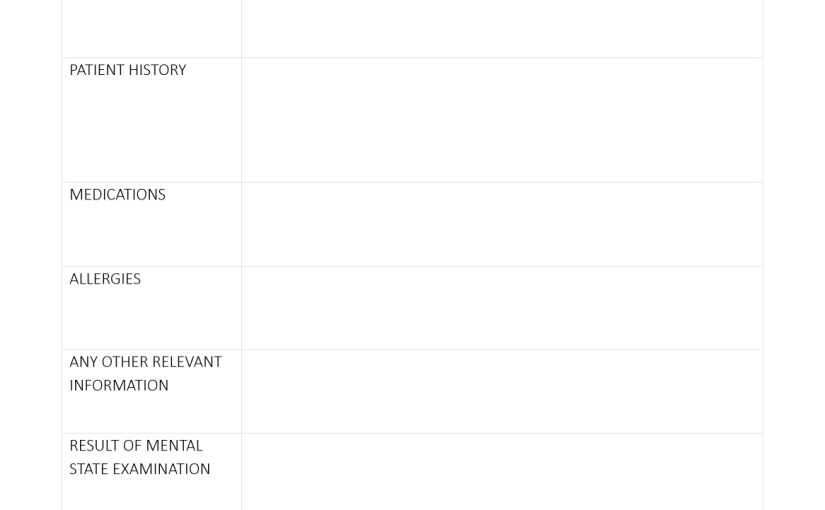
Mental Health Nursing Care Plan Template: Complete Clinical Guide for Psychiatric & Behavioral Health Documentation | A Mental Health Nursing Care Plan is a structured clinical tool used to assess, diagnose, plan, implement, and evaluate care for patients experiencing psychological, emotional, or behavioral health conditions.
In psychiatric and mental health settings, documentation is not optional — it is critical. Unlike many physical conditions, mental health care relies heavily on behavioral observation, therapeutic communication, and risk assessment. Without a structured care plan, important clinical data can easily be missed.
This guide explains how to build and use a professional mental health nursing care plan template, including its application in psychiatric settings and identity-related disorders.
Why a Mental Health Nursing Care Plan Template Is Essential


Mental health patients often present with:
- Mood instability
- Anxiety disorders
- Psychotic symptoms
- Behavioral disturbances
- Trauma-related responses
- Identity disturbances
Because symptoms fluctuate and risk levels can change quickly, nurses must document consistently and systematically.
A well-designed nursing care plan template helps:
- Standardize assessment
- Identify measurable goals
- Track behavioral progress
- Document risk levels
- Support multidisciplinary collaboration
It ensures both clinical accuracy and legal protection.
Core Components of a Mental Health Nursing Care Plan Template
A complete template should follow the nursing process framework: Assessment, Diagnosis, Planning, Intervention, and Evaluation.
1. Patient Information & Background
Include:
- Mental health diagnosis
- Admission type (voluntary/involuntary)
- Previous psychiatric history
- Current medications
- Social support system
This provides context before planning interventions.
2. Comprehensive Mental Health Assessment
Assessment in mental health care goes beyond physical symptoms.
Key elements include:
- Mood and affect
- Thought process and content
- Insight and judgment
- Cognitive functioning
- Behavioral observations
- Suicide or self-harm risk
Documentation must be detailed and objective.
3. Nursing Diagnoses
Common nursing diagnoses in psychiatric care may include:
- Anxiety
- Impaired social interaction
- Risk for self-directed violence
- Disturbed thought processes
- Disturbed personal identity
- Ineffective coping
The selected diagnosis determines the direction of care planning.
4. SMART Goals & Expected Outcomes
Goals must be:
- Specific
- Measurable
- Achievable
- Relevant
- Time-bound
Examples:
- Patient will verbalize two coping strategies within 48 hours.
- Patient will demonstrate a reduced anxiety score from 8/10 to 4/10 in one week.
- The patient will participate in at least one group therapy session daily.
Clear goals improve measurable outcomes.
5. Nursing Interventions
Interventions may include:
- Therapeutic communication
- Active listening
- Behavior monitoring
- Medication administration
- Crisis intervention
- Psychoeducation
- Family involvement
Each intervention should include a scientific rationale.
6. Evaluation & Reassessment
Evaluation determines:
- Whether goals were met
- Whether the risk level changed
- Whether interventions need adjustment
Mental health care requires frequent reassessment due to dynamic symptom patterns.
Mental Health Care Plan Template for Nurses

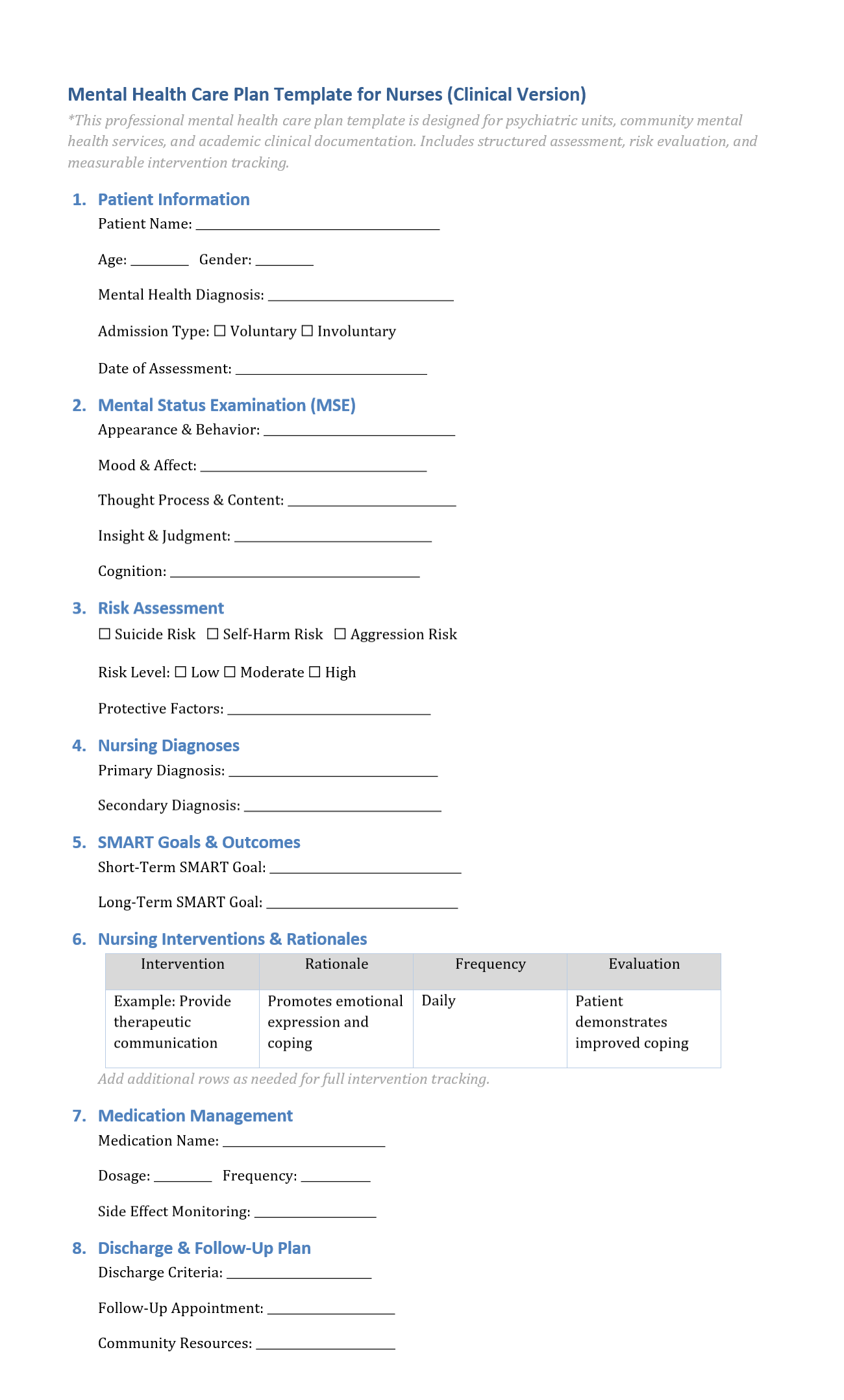
A Mental Health Care Plan Template for Nurses is often broader than condition-specific templates. It is suitable for:
- Psychiatric inpatient units
- Community mental health clinics
- Outpatient therapy settings
- School counseling services
- Crisis intervention centers
This type of template usually includes:
- Mental Status Examination (MSE) section
- Risk assessment checklist
- Medication tracking
- Crisis response planning
- Follow-up documentation
It allows nurses to manage diverse diagnoses within one structured framework.
Psychiatric Nursing Care Plan Template

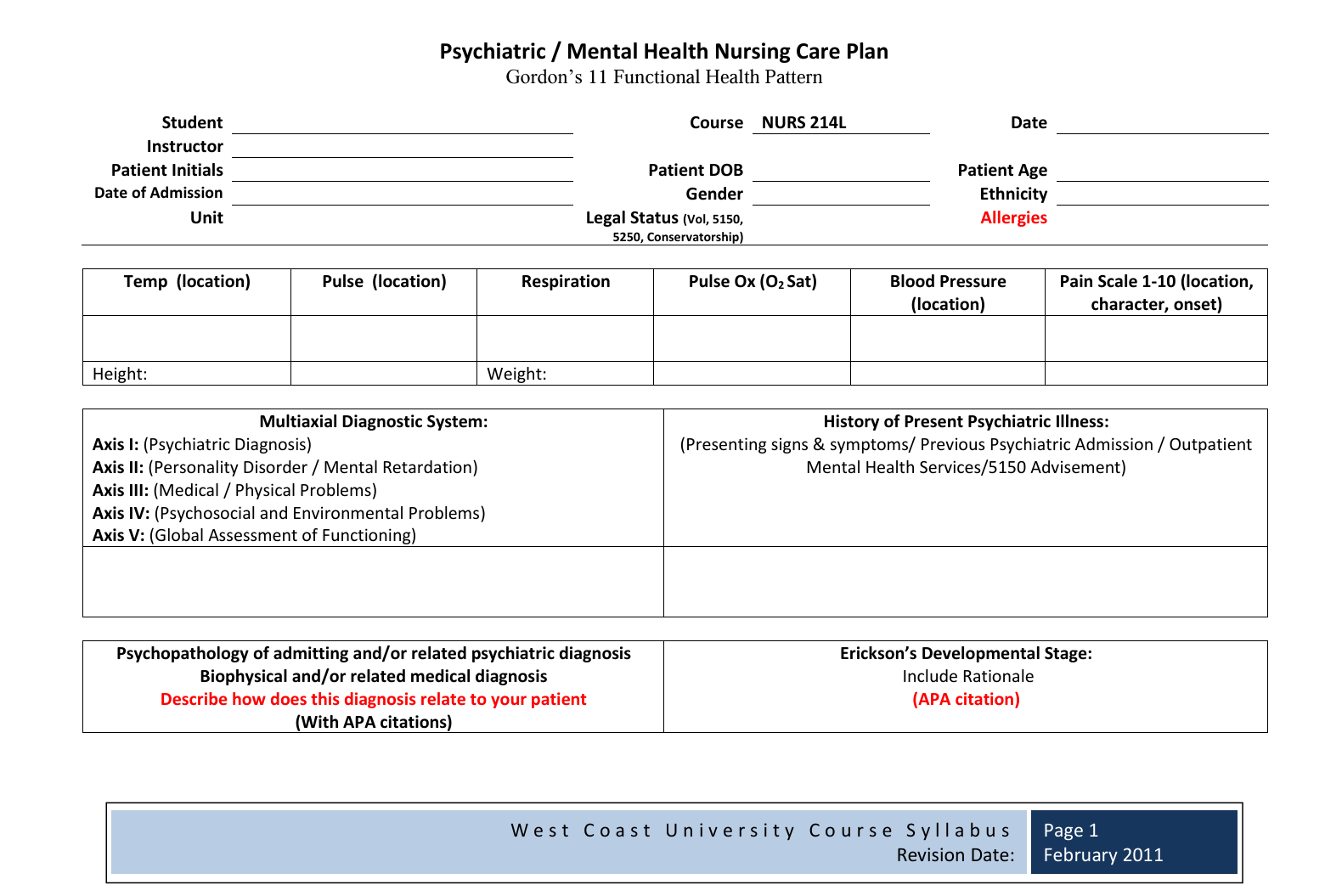
A Psychiatric Nursing Care Plan Template is typically more specialized and detailed.
It focuses on:
- Severe mental illness
- Acute psychiatric episodes
- Behavioral stabilization
- Structured therapeutic environment
In psychiatric units, documentation must cover:
- Aggression risk
- Suicide precautions
- Seclusion/restraint documentation (if applicable)
- Medication side effects
- Compliance with treatment
Because psychiatric patients may present with complex symptom patterns, this template often includes multidisciplinary coordination notes.
Disturbed Personal Identity Nursing Care Plan Template

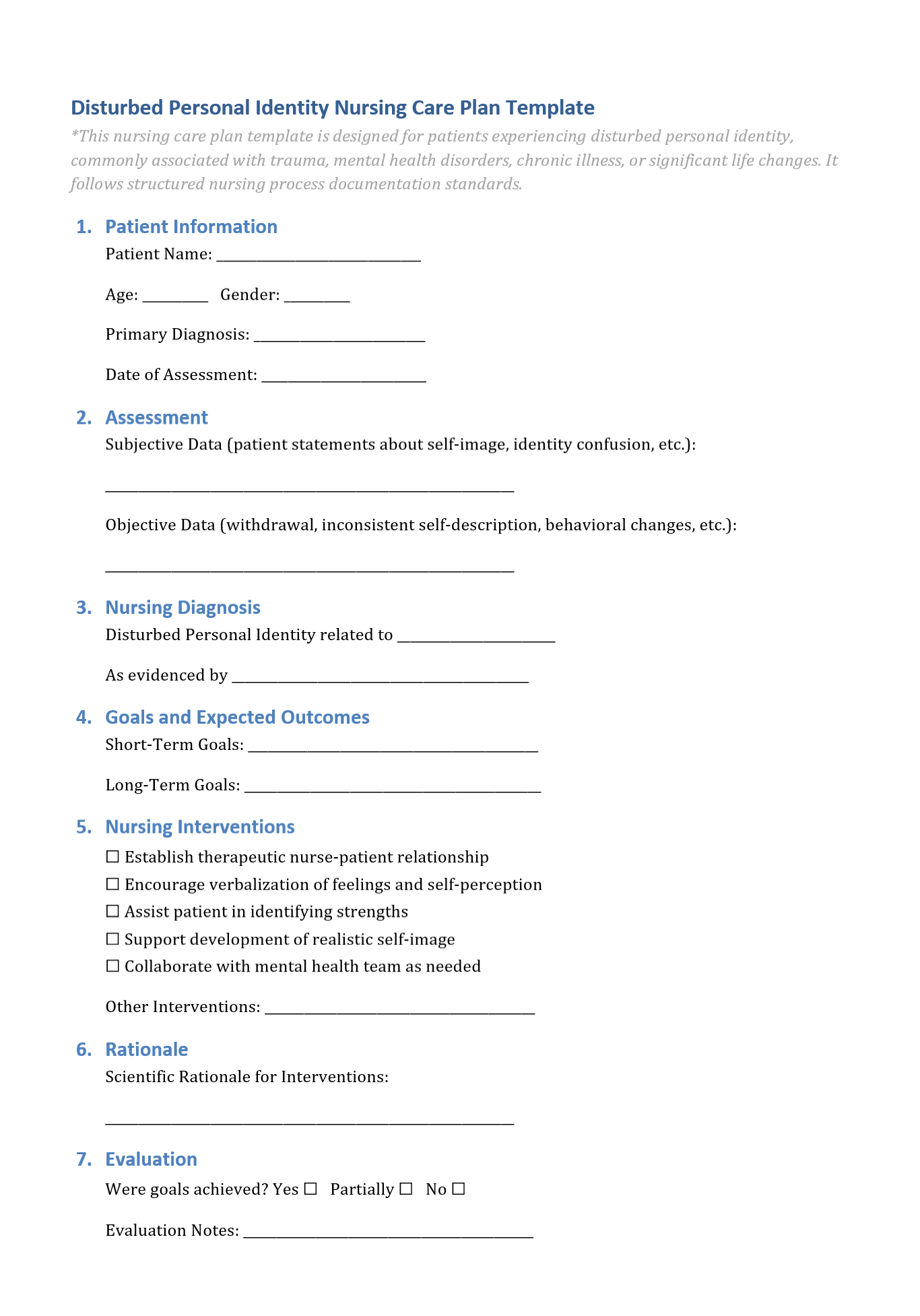
A Disturbed Personal Identity Nursing Care Plan Template addresses patients experiencing identity confusion, altered self-perception, or role instability.
This condition may be associated with:
- Trauma
- Chronic illness
- Personality disorders
- Major life transitions
- Dissociative disorders
Assessment focuses on:
- Self-description inconsistencies
- Emotional instability
- Withdrawal
- Confusion about life roles
Nursing priorities may include:
- Establishing therapeutic trust
- Encouraging expression of feelings
- Strength identification
- Role clarification
- Self-esteem building
Because identity disturbance affects long-term functioning, goals should focus on self-awareness and stability.
Get also: Family Nursing Care Plan Template
Differences Between General Mental Health & Psychiatric Templates
Although related, these templates serve slightly different purposes.
| Feature | Mental Health Nursing Care Plan Template | Psychiatric Nursing Care Plan Template |
|---|---|---|
| Scope | Broad mental health conditions | Severe or acute psychiatric disorders |
| Risk Focus | Moderate risk management | Intensive risk monitoring |
| Setting | Community or outpatient | Inpatient psychiatric units |
| Structure | Flexible | Highly structured |
Understanding this difference helps you design appropriate documentation.
Get also: Free Cuztomizable Self Care Plan Template
Key Risk Management in Mental Health Care Planning
One of the most important components in any mental health nursing care plan template is risk assessment.
Nurses must evaluate:
- Suicide risk
- Self-harm behaviors
- Aggression toward others
- Medication non-compliance
- Substance use
Risk level must be categorized as:
- Low
- Moderate
- High
Documentation should include protective factors such as:
- Family support
- Religious beliefs
- Treatment adherence
- Coping skills
Risk documentation protects both patient and clinician.
Get also: My Self-Care Planner Template
Common Mistakes in Mental Health Care Planning
Without a structured template, nurses may:
- Write vague goals
- Omit measurable outcomes
- Skip risk assessment details
- Fail to document therapeutic communication
- Ignore medication side effect monitoring
A structured mental health nursing care plan template prevents incomplete documentation.
Who Should Use This Template?
This template is suitable for:
- Nursing students
- Psychiatric nurses
- Community health nurses
- Clinical instructors
- Mental health educators
- Behavioral health professionals
It is ideal for:
- Academic assignments
- Clinical rotations
- Hospital documentation
- Case study development
Why Word-Based Templates Work Well
If your template is built in Microsoft Word, it offers several advantages:
- Easy to customize
- Compatible with academic submission formats
- Printable for hospital use
- Editable for different diagnoses
- Simple to convert to PDF
For digital product selling, Word format increases usability and buyer satisfaction.
Final Thoughts
A professional Mental Health Nursing Care Plan Template is an essential clinical tool for structured psychiatric and behavioral health documentation.
Whether using:
- A Mental Health Care Plan Template for Nurses
- A Psychiatric Nursing Care Plan Template
- Or a Disturbed Personal Identity Nursing Care Plan Template
The goal remains the same: systematic assessment, measurable planning, targeted interventions, and continuous evaluation.
With a clear and organized format, nurses can provide safe, evidence-based mental health care while maintaining professional documentation standards.