Expense Report Template – Strengthen 2026 Financial Transparency

Expense Report Template systems are essential for documenting costs, monitoring spending patterns, and maintaining financial accountability across organizations of all sizes. Without a standardized reporting format, expense tracking often becomes inconsistent, error-prone, and difficult to analyze. A structured template turns scattered receipts and transactions into clear financial insight.

Whether used by individuals, teams, or entire organizations, expense reporting supports better budgeting, clearer reimbursement processes, and stronger financial oversight. This article explores the purpose of expense reporting, the key components of an effective template, and the most practical formats used in different financial reporting scenarios.

What Is an Expense Report Template and Why Does It Matter

An Expense Report is a structured document designed to record, categorize, and summarize expenses over a specific period. Its primary purpose is to provide transparency into how money is spent and to ensure that financial records are accurate and complete.

Organizations and individuals rely on standardized expense reporting to:

  • Track spending consistently
  • Support reimbursement and approval workflows
  • Identify cost patterns and anomalies
  • Improve budget control and forecasting
  • Maintain clear financial documentation

By using the same reporting framework repeatedly, expense data becomes easier to review, compare, and validate.

The Role of Expense Reporting in Financial Management

Expense reporting plays a critical role in maintaining financial discipline. When expenses are recorded consistently, decision-makers gain visibility into where funds are allocated and how spending aligns with planned budgets.

A well-designed Expense Report helps prevent:

  • Missing or duplicated expense entries
  • Unclear spending justifications
  • Delayed reimbursements
  • Inaccurate financial summaries

Clear documentation also builds trust between employees, finance teams, and management by ensuring that all expenses are transparent and verifiable.

Essential Components of an Effective Expense Report

Although formats may vary, effective expense reports share a common structure that balances detail with usability.

Reporting Period and Basic Information

This section defines the timeframe covered by the report and includes basic details such as name, department, or project reference.

Expense Categories

Expenses are grouped into clear categories, such as travel, meals, supplies, or operational costs, to improve clarity and analysis.

Itemized Expense Details

Each expense entry typically includes the date, description, amount, and payment method.

Supporting Documentation

Receipts or references are listed to support verification and approval.

Total Expense Summary

A consolidated summary shows total spending for the reporting period.

Approval and Review Section

Every Expense Report Template should include space for review, approval, or acknowledgment, ensuring accountability.

Common Types of Expense Report Templates

Different financial needs require different reporting formats. Below are the most widely used expense report variations.

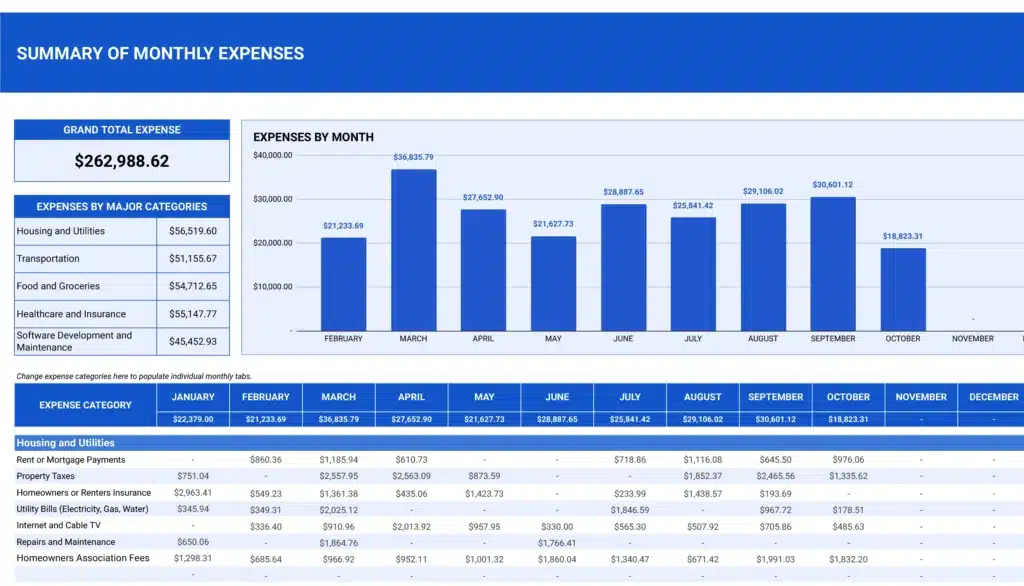
Expense and Income Report Template for Balanced Financial Tracking

An Expense and Income Report Template for Balanced Financial Tracking combines cost tracking with income documentation. This format provides a clearer picture of overall financial performance.

It is commonly used for:

  • Small businesses
  • Freelancers and consultants
  • Personal finance tracking

By capturing both inflows and outflows, this template supports better cash flow awareness and financial planning.

Get also: Annual Income and Expense Report Template

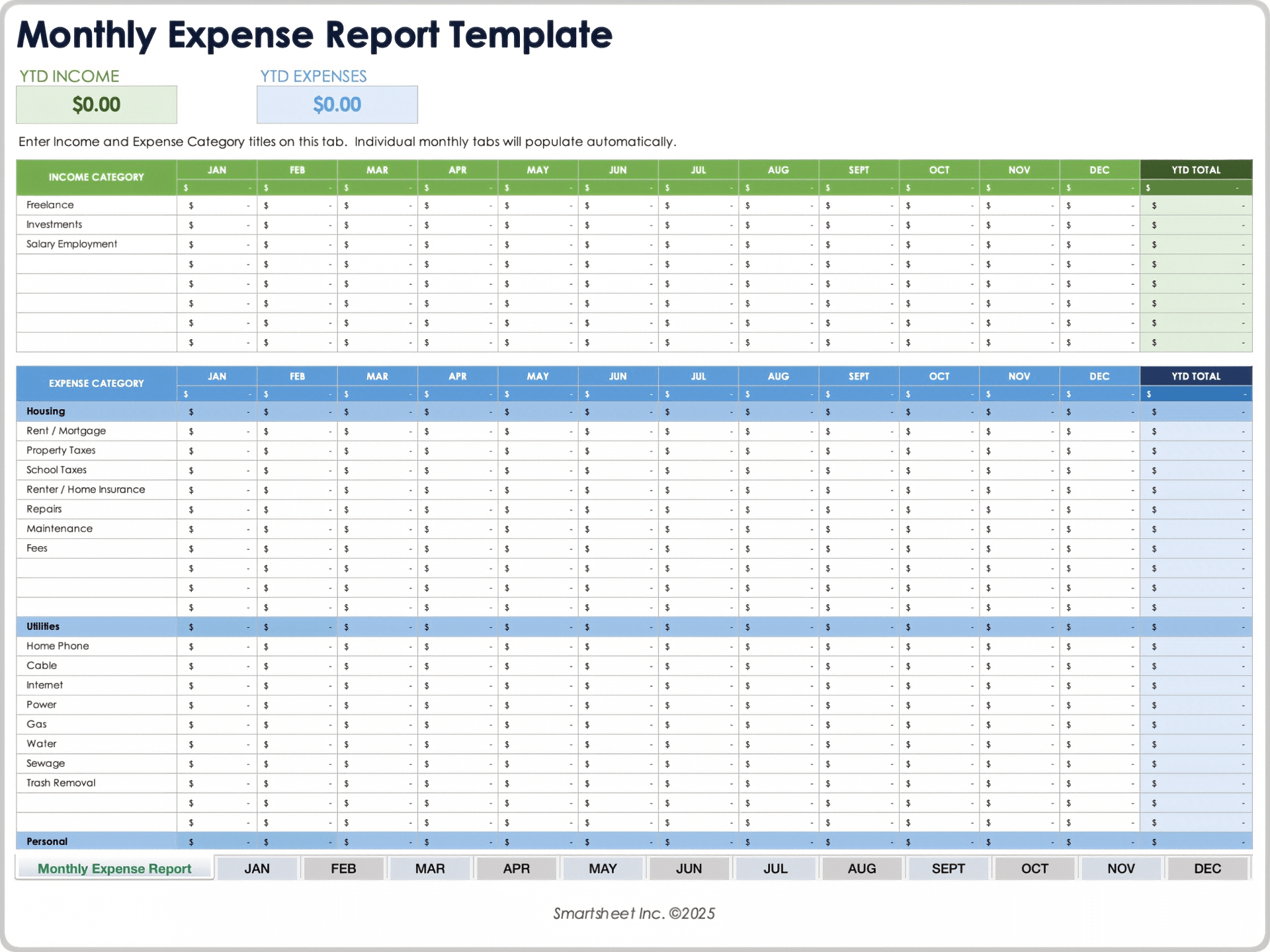
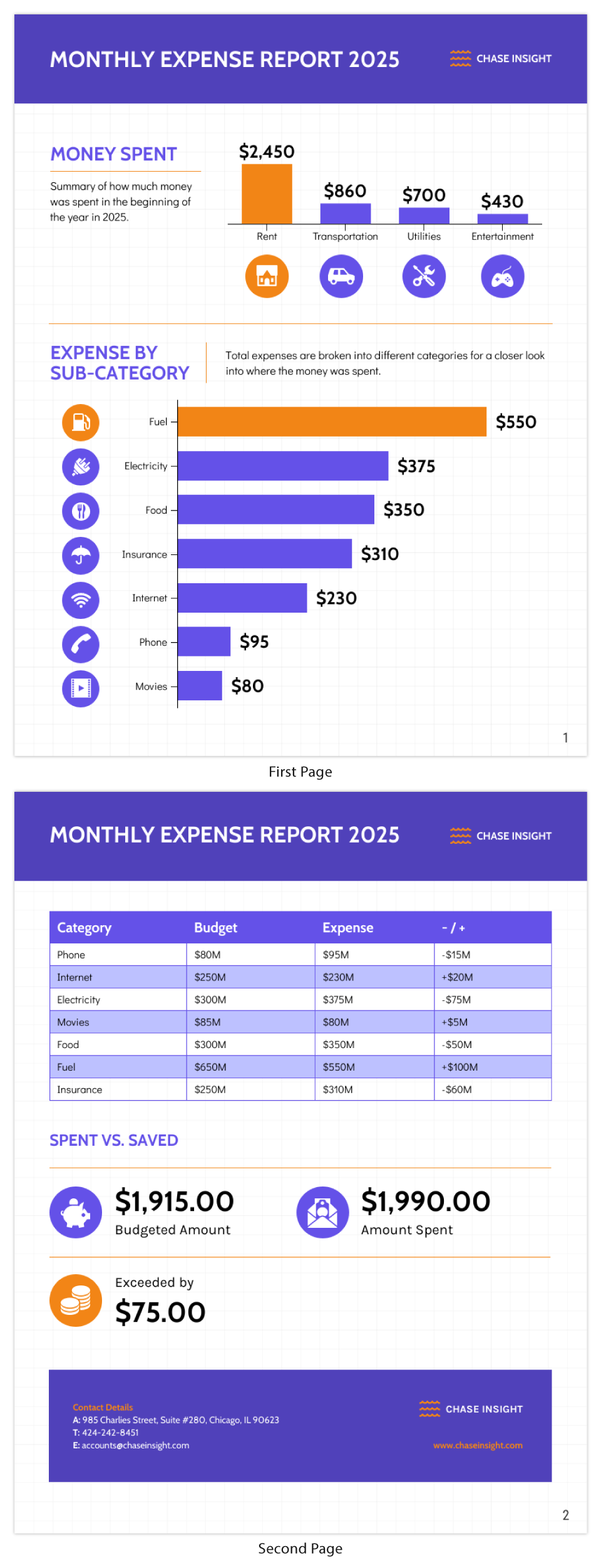
Monthly Expense Report Template for Consistent Budget Oversight

A Monthly Expense Report Template summarizes expenses over a fixed monthly period. Monthly reporting allows for reliable comparison and trend analysis.

This format typically includes:

  • Monthly spending totals
  • Category-based summaries
  • Comparison with planned budgets
  • Notable variances

Monthly expense reports are widely used by finance teams, managers, and individuals who require structured oversight without daily detail.

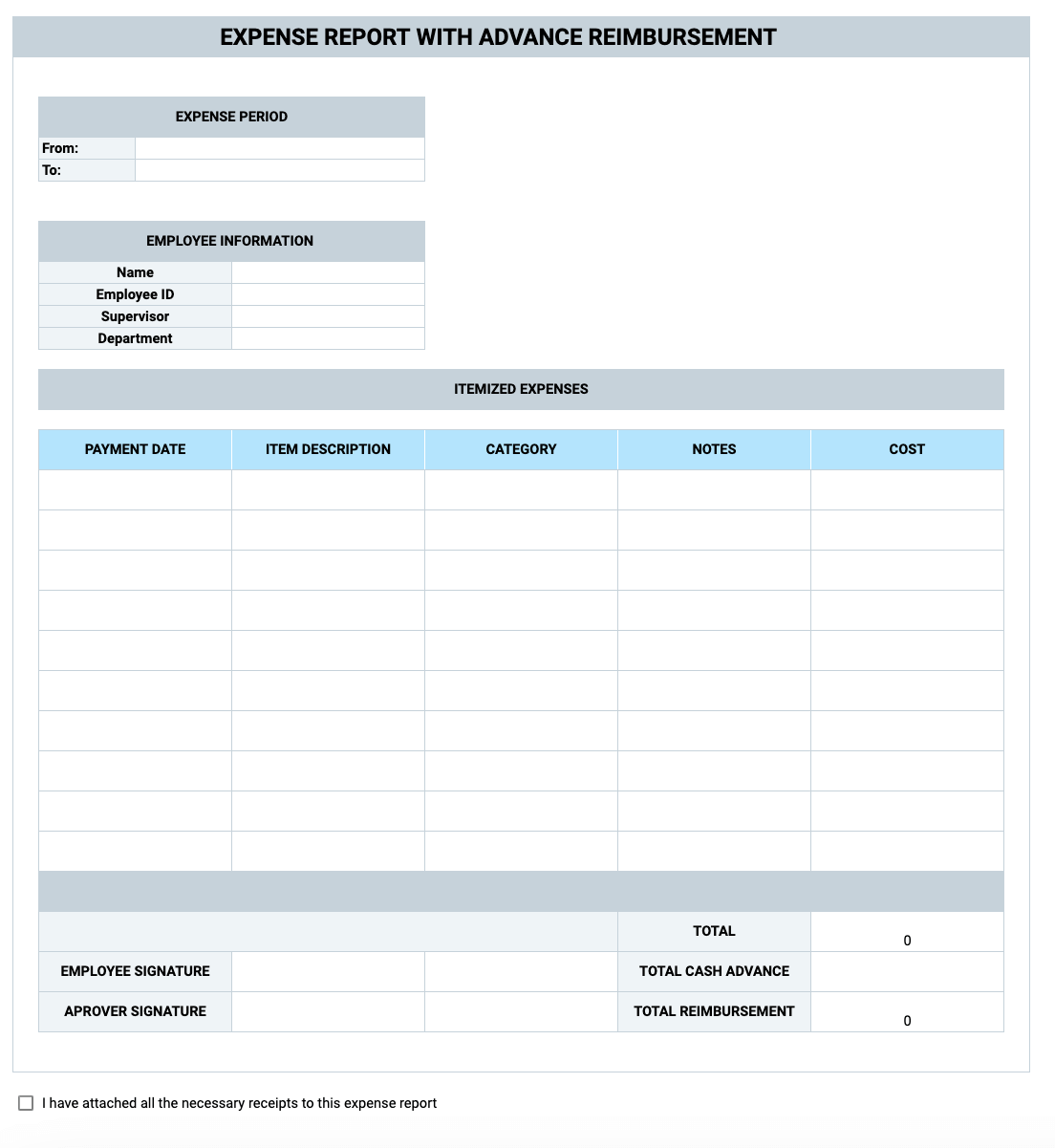
Free Printable Expense Report Form for Simple Documentation

A Free Printable Expense Report Form for Simple Documentation provides a straightforward, paper-based solution for recording expenses.
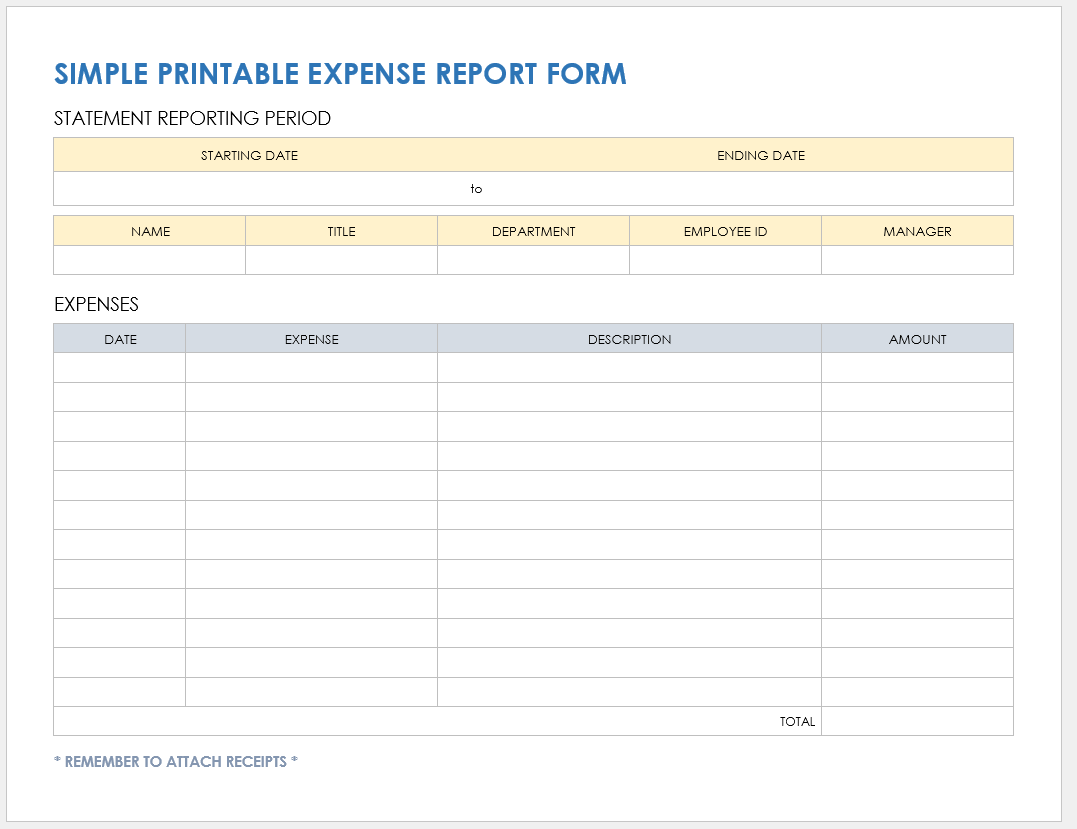
This format is especially useful for:

  • Small teams
  • Field workers
  • Temporary or offline reporting needs

While simple, printable forms still support consistency and clarity when designed with clear fields and categories.

Get also: Travel Expense Report Template

Choosing the Right Expense Report Template

Selecting the appropriate template depends on several factors:

  • Reporting frequency
  • Level of detail required
  • Approval processes
  • User familiarity

A good Expense Report should be easy to complete consistently while capturing all necessary financial details.

Overly complex templates discourage regular use, while overly simple formats may lack sufficient information for proper review.

Adapting Expense Reports for Different Use Cases

Expense reporting requirements vary across roles and contexts.

Employee Expense Reporting

Employees benefit from clear templates that simplify submission and reimbursement.

Team or Project Reporting

Project-based expense reports help track costs against specific initiatives or budgets.

Personal Expense Tracking

Individuals use simplified templates to monitor spending habits and manage budgets.

Tailoring the format ensures that expense reporting remains efficient and accurate.

Common Mistakes in Expense Reporting

Even well-designed templates can lose effectiveness if common mistakes occur, such as:

  • Incomplete or missing expense details
  • Poor categorization
  • Delayed reporting
  • Inconsistent reporting periods

A strong Expense Report Template emphasizes completeness, accuracy, and consistency.

Best Practices for Maintaining Accurate Expense Reports

To maximize the value of expense reporting:

  • Record expenses promptly
  • Use clear and consistent categories
  • Attach supporting documentation
  • Review reports before submission
  • Maintain a consistent reporting schedule

These practices reduce errors and improve financial reliability.

Using Expense Reports to Improve Financial Decisions

Expense reports are not only for recordkeeping. When reviewed regularly, an Expense Report Template supports better decision-making by revealing spending patterns and cost drivers.

Consistent reporting helps organizations and individuals:

  • Identify unnecessary expenses
  • Adjust budgets proactively
  • Improve cost control
  • Strengthen financial planning

Over time, historical expense data becomes a valuable resource for forecasting and optimization.

Long-Term Benefits of Standardized Expense Reporting

Organizations that adopt structured expense reporting gain:

  • Improved financial transparency
  • Faster approval and reimbursement cycles
  • Reduced risk of errors or disputes
  • Stronger budget discipline
  • Clearer audit trails

A reliable Expense Report Template becomes a foundational element of sound financial management.

Conclusion

An Expense Report is a vital tool for tracking spending, maintaining transparency, and supporting informed financial decisions. By standardizing how expenses are documented and reviewed, individuals and organizations gain clarity, consistency, and control.

Whether using an Expense and Income Report Template for Balanced Financial Tracking, a Monthly Expense Report Template for Consistent Budget Oversight, or a Free Printable Expense Report Form for Simple Documentation, the right format ensures that financial data is accurate, accessible, and actionable.

When applied consistently, expense reporting transforms everyday transactions into meaningful financial insight and stronger fiscal discipline.

Monthly Expense Report Template – 8+ Hidden Advantages for Smarter Financial Tracking

Monthly Expense Report Template | Managing monthly expenses isn’t exactly the most glamorous part of running a business, but it sits right at the core of sustainable growth. A well-structured Monthly Expense Report Template makes the entire process easier, clearer, and far more reliable. Instead of chasing random spreadsheets, emails, and handwritten notes that somehow always disappear at the worst moment, a solid template gives you a consistent and dependable way to capture financial activity every month.

An organized monthly expense system doesn’t just record numbers—it shapes better decision-making. When every detail is presented cleanly, teams can understand spending patterns, identify budget leaks, and map out future allocations without the usual guesswork. That level of clarity becomes even more important as companies grow and pockets of spending begin to multiply across teams, departments, and projects.

Visualizing financial movements in one place also minimizes the friction of reporting. People take action faster when the format is familiar and predictable. Instead of inventing a new structure every month, the template becomes the standard language for reporting, ensuring that everyone—from employees to managers to stakeholders—knows how to read and interpret the information instantly.

Monthly Expense Report Template – Hidden Benefits

A thoughtfully designed Monthly Expense Report Template does much more than tally numbers. It delivers structure, reduces ambiguity, and elevates the way financial information moves through a team. When reporting becomes easier, consistency naturally follows. And consistency is what makes trends obvious, risks visible, and decisions more informed.

Using a centralized format also prevents the “creative accounting” chaos that arises when every department submits reports using its own preferred layouts. Instead of 10 different spreadsheets with 10 different styles, the organization works with a cohesive framework. The result is a streamlined approval flow and fewer clarification emails that begin with, “What does this column mean?”

Templates also make onboarding simpler. New employees don’t need to learn the history of past reports—they simply follow a structure that already works. Over time, that uniformity becomes the backbone of predictable budgeting and smoother audits.

A structured monthly reporting rhythm also encourages financial discipline. When teams know exactly what will be examined at the end of each cycle, they become more mindful of how money moves. It’s not about restricting spending—it’s about improving visibility so decisions feel responsible rather than reactive.

A Clearer Approach to Breakdown and Reporting

A polished monthly report template works because it removes unnecessary decisions: What columns should be included? Where should totals go? Which categories matter most? When those questions are already answered, people can focus on documenting information accurately instead of worrying about formatting.

At its core, the Monthly Expense Report Template typically highlights:

  • Spending categories
  • Amounts allocated and amounts used
  • Notes or justifications
  • Dates, receipts, and supporting information
  • Comparisons with previous months

These sections turn raw expenses into readable patterns. Over time, they reveal the operation style of the business—where money consistently goes, which months spike, and which areas become unexpectedly resource-heavy.

Some businesses use the Monthly Expense Report Template purely for internal review, while others rely on it for cross-functional communication. When several teams collaborate on shared goals, having one unified financial reporting system makes planning much easier. Misunderstandings shrink, and the team can focus on outcomes instead of sorting through mismatched financial data.

Supporting Insights for Effective Monthly Documentation

Financial reporting sounds dry, yet a well-structured Monthly Expense Report Template adds a surprising level of clarity that teams genuinely appreciate. The standardized approach builds confidence because people know they’re tracking information the right way and can trust the accuracy of what they see.

A strong monthly system also enables:

  • Clearer spending accountability
  • Faster budget adjustments
  • Better alignment between team leads
  • A more realistic view of operational costs
  • Less confusion when preparing quarterly or annual summaries

Even small businesses benefit from this discipline. When monthly data is precise, larger financial reports—whether annual or departmental—become much more manageable.

A Monthly Expense Report Template isn’t just a tool for recording; it’s a tool for improving decision-making. It keeps teams aware of their habits, helps prevent waste, and encourages more responsible use of resources.

Detailed Insights and Template Extensions

A refined Monthly Expense Report Template can expand into more specific formats based on operational needs. Some teams need deeper tracking for reimbursements. Others need clearer visuals for financial presentations. Many need an easy-to-share file that plugs seamlessly into systems like Excel or cloud-based reporting software.

These extensions often include:

  • Automated totals
  • Built-in comparison charts
  • Category breakdowns
  • Receipt attachment fields
  • Notes for explanation and justification

The more intuitive the layout, the easier it is to use consistently—and consistency is what generates reliable financial patterns.

Now, let’s break down how each specialized version of the Monthly Expense Report Template functions and where it builds the most value.

Get also: Weekly Expense Report Template

Specialized Template Variations for Different Reporting Needs

Monthly Business Expense Report Template – Essential Enhancements

A Monthly Business Expense Report Template Essential Enhancements offers structure tailored specifically for company-wide spending. This variation helps businesses keep a clean log of operational costs, departmental expenses, and activity-based spending that occurs throughout the month.

It typically includes:

  • Fields for each department
  • Line items for recurring vs. one-time costs
  • Optional notes for vendor details or unusual expenses
  • Summary sections for management review

This version works particularly well for organizations with multiple teams contributing to shared budgets. The consistency helps finance departments reconcile records without unnecessary back-and-forth. Managers also gain clearer visibility into spending behavior, allowing them to adjust budgets in real time when needed.

It’s also common for this Monthly Business Expense Report Template to be used during presentations or oversight meetings, since the structured layout simplifies discussions around cost optimization and upcoming operational needs.

Monthly Income Expense Report Template – Hidden Structure

A Monthly Income Expense Report Template Hidden Structure blends income tracking with expense documentation, giving a complete view of financial inflow and outflow in one convenient layout. This dual-format approach is ideal for teams that need to evaluate profitability or monitor financial health across short cycles.

Its structure often includes:

  • Gross and net income fields
  • Separate expense categories
  • Automatic balance calculations
  • Comparative sections for previous months

This Monthly Income Expense Report Template is particularly useful for small businesses, freelancers, or departments managing their own budgets. By combining income and expenses, it highlights patterns that might be easy to overlook when they’re tracked separately.

Teams can quickly spot months with unusually high spending, irregular earnings, or mismatched balance patterns. Over time, this consistent visibility helps guide decisions for upcoming projects, resource needs, or investment adjustments.

Monthly Expenses Report Excel Template: Unexpected Advantages

A Monthly Expenses Report Excel Template brings flexibility to the reporting process, especially for teams familiar with spreadsheet-based systems. Excel allows formulas, conditional formatting, automated graphs, and built-in checks—all of which increase accuracy and reduce manual work.

Key advantages include:

  • Automatic calculations
  • Color-coded categories
  • Dynamic charts for visual summaries
  • Option to lock formulas to prevent edits
  • Flexible exporting options for PDF or shared folders

This type of Monthly Financial Report Template works flawlessly for organizations that rely heavily on data-driven evaluations. It’s also ideal for teams preparing financial summaries for leadership, since visual structures can communicate information much faster than raw numbers alone.

Even non-technical users benefit from the intuitive layout—fields are already set, totals compute automatically, and categories remain consistent month after month.

Final Thoughts on Practical Monthly Reporting Frameworks

A reliable Monthly Expense Report Template isn’t just a form—it’s a strategic tool that influences how businesses plan, allocate, and evaluate their spending. With the right layout, teams gain clarity, structure, and confidence in their financial decisions. Supplementary versions like business-focused templates, income-expense hybrids, and Excel-based formats expand these benefits even further.

When financial documentation becomes predictable and easy to follow, companies operate with more stability. Small details—like consistent categories and automated calculations—stack up into habits that shape better financial discipline across the entire organization.

If the goal is smoother operations, clearer insights, and a stronger understanding of monthly financial patterns, adopting a refined monthly expense reporting system becomes an invaluable step.

Monthly Financial Report Template – 8+ Free Unconventional Ideas

Monthly Financial Report Template – Hidden Strategies for Crystal-Clear Financial Control | A Monthly Financial Report Template isn’t just a worksheet or a neat little document tucked away in a shared drive. For many businesses, it’s the only thing standing between well-planned financial clarity and the kind of chaos where nobody knows why the marketing team spent $800 on “miscellaneous snacks.” This type of template organizes numbers, highlights spending behavior, and reveals patterns that can help any business stay grounded, especially when expenses and revenue start dancing unpredictably. By giving structure to financial data, it becomes a monthly foundation for better decisions.

Some organizations treat their monthly financial reporting like a ritual—same time, same routine, like paying bills or pretending to understand tax tables. Others need something far more deliberate: a format that’s reliable, clean, accurate, and easy to scan when executives only have five minutes before a meeting. That’s where a Monthly Financial Report Template becomes a powerful internal tool. It keeps figures consistent across teams, departments, and months, offers transparency, and ensures everyone interprets the same numbers without ambiguity.

The true value of a structured approach isn’t just about tracking revenue and expenses. It’s about understanding why fluctuations happen. Why was revenue up last month? Why did operational costs spike? Which product line is performing unusually well, or unexpectedly poorly? Without a dependable format, these questions turn into wild guesses. With one, they turn into actionable conversations.

Let’s dive into how a structured monthly reporting framework strengthens decision-making and how different specialized templates can support more targeted financial needs.

Monthly Financial Report Template – Unexplored Advantages for Smarter Budget Management

A Monthly Financial Report Template offers a snapshot of financial health at a specific point in time. Think of it as reading vital signs during a medical checkup. Revenue is your pulse, expenses are your blood pressure, and net income is that deep breath you take when things are safely in the green. When formatted correctly, these templates simplify complex calculations and create a system that helps teams compare performance from month to month without diving back into raw numbers.

A dependable Monthly Financial Report Template usually starts with revenue categories—products, services, subscriptions, or operational income—followed by fixed and variable expenses. It ends with net profit, loss, or break-even outcomes. The goal is clarity. Numbers that speak for themselves. Figures that don’t trigger confusion or require frantic searching through spreadsheets.

Another benefit is repeatability. A consistent Monthly Financial Report Template means teams don’t improvise each cycle. They know what they’re filling out, what goes where, and how totals are calculated. This reduces mistakes while allowing managers to focus on interpreting the data, not hunting for it.

Templates also help identify financial leaks. A spike in administrative expenses? A pattern of rising software costs? An unexpected drop in revenue from a specific segment? These insights become far easier to notice when the data lives inside a predictable structure. With clear month-to-month comparisons, small issues are detected early—before they grow into large ones.

Businesses with multiple departments benefit even more. When each team reports using the same structure, consolidating data becomes effortless. Finance isn’t forced to decipher mismatched formats or retype numbers because someone decided to “get creative” with their reporting layout.

The best part? A good reporting structure encourages accountability. When numbers are transparent and easy to interpret, teams naturally become more aware of how their actions affect overall financial outcomes. It inspires thoughtful spending, deliberate planning, and realistic forecasting.

Supporting Tools and Specialized Uses for Monthly Reports

Some organizations need more than a general reporting template—they need supplementary formats tailored for specific financial roles. These formats dig into specialized data, offering deeper insights for more targeted workflows. This is where secondary Monthly Report Templates become valuable tools to support the broader monthly reporting system.

Below are three essential types of supporting templates, each offering different functions depending on the business model and reporting needs.

Get also: Monthly Status Report Template

Monthly Expense Report Template – Unbelievable Breakdown for Precise Cost Tracking

A specialized Monthly Team Expense Report Template can support internal departments by highlighting how teams use budgets month by month. Although businesses generally rely on a primary financial report, this secondary breakdown shows where each department invests resources—and how efficiently they operate within their allocated budget.

A Monthly Expense Report Template helps businesses categorize spending with extraordinary clarity. While the general financial report highlights totals, this template zooms in on individual expenses, documenting where money flows each month. It highlights patterns that might otherwise hide inside aggregated totals.

For example, if a company notices operational costs rising, the expense report can show whether the cause is travel, utilities, software, outsourced services, or unplanned purchases. Teams can also attach notes explaining why certain expenses occurred—useful when managers review unexpected costs.

This format is especially valuable for organizations where multiple employees or departments make monthly purchases. Instead of relying on memory or last-minute guesses, the expense template becomes a structured log that minimizes errors and suspicious “accidental” overspending. It creates complete visibility across categories and helps forecast future expenses with surprising accuracy.

This Monthly Financial Report Template also prevents miscommunication. When financial questions arise, teams aren’t left scrambling to justify numbers—they can rely on a documented, structured breakdown that reinforces responsibility and clarity.

Another advantage is reimbursement management. Employees often struggle to recall minor purchases, such as office supplies, fuel, training materials, or small subscriptions. Logging these in a Monthly Expense Report Template prevents receipts from getting lost and gives finance departments the documentation they need to process reimbursements without delays.

Get also: Free Monthly Marketing Report Template

Monthly Treasurer Report Template – Classified Insights for Transparent Financial Stewardship

A Monthly Treasurer Report Template is commonly used in nonprofits, clubs, associations, and community-based groups. It offers a deeper look at inflows, outflows, balances, and designated funds. The treasurer doesn’t just track money—they oversee the stewardship of collective resources. This template helps maintain transparency in ways that general corporate reports rarely provide.

Many organizations rely on donations, fees, or fundraising. These income sources need precise tracking. How much came in from dues? How much was spent on events, supplies, or maintenance? How much remains allocated for upcoming programs? The treasurer’s report organizes all of this without ambiguity.

This structure builds trust. Members, volunteers, and stakeholders want reassurance that funds are used responsibly. When finances are presented clearly and consistently, everyone feels confident about the organization’s management. With this level of clarity, issues like unauthorized spending, overlooked income, or accidental double-charging become far less likely.

Another strength of this format is the ability to track restricted versus unrestricted funds. Some contributions come with rules—they can be used only for specific programs or purposes. A Monthly Treasurer Report Template keeps these distinctions separated so compliance becomes automatic.

Final Thoughts on Using Monthly Financial Report Templates Effectively

A strong monthly reporting structure does more than organize numbers. It introduces a rhythm—a predictable pattern that keeps teams aligned. Businesses that adopt a reliable Monthly Financial Report Template notice improvements not only in clarity but also in decision-making, accountability, and forward planning.

The secret is consistency. When data lives inside an organized format, trends become easier to interpret. Budget strategies become smarter. Teams collaborate with more confidence. And financial conversations shift from debates to solutions.

With specialized templates supporting the main monthly report—expense logs, treasurer insights, team-based spending breakdowns—organizations gain a complete financial ecosystem that works together seamlessly.

If you’re building a reliable foundation for financial clarity, adopting these structures isn’t just useful—it’s transformative. Let the numbers tell their story each month, and the decisions that follow will naturally grow sharper, stronger, and more aligned with long-term goals.

Exit mobile version