Monthly Financial Report Template – 8+ Free Unconventional Ideas

Monthly Financial Report Template – Hidden Strategies for Crystal-Clear Financial Control | A Monthly Financial Report Template isn’t just a worksheet or a neat little document tucked away in a shared drive. For many businesses, it’s the only thing standing between well-planned financial clarity and the kind of chaos where nobody knows why the marketing team spent $800 on “miscellaneous snacks.” This type of template organizes numbers, highlights spending behavior, and reveals patterns that can help any business stay grounded, especially when expenses and revenue start dancing unpredictably. By giving structure to financial data, it becomes a monthly foundation for better decisions.

Some organizations treat their monthly financial reporting like a ritual—same time, same routine, like paying bills or pretending to understand tax tables. Others need something far more deliberate: a format that’s reliable, clean, accurate, and easy to scan when executives only have five minutes before a meeting. That’s where a Monthly Financial Report Template becomes a powerful internal tool. It keeps figures consistent across teams, departments, and months, offers transparency, and ensures everyone interprets the same numbers without ambiguity.

The true value of a structured approach isn’t just about tracking revenue and expenses. It’s about understanding why fluctuations happen. Why was revenue up last month? Why did operational costs spike? Which product line is performing unusually well, or unexpectedly poorly? Without a dependable format, these questions turn into wild guesses. With one, they turn into actionable conversations.

Let’s dive into how a structured monthly reporting framework strengthens decision-making and how different specialized templates can support more targeted financial needs.

Monthly Financial Report Template – Unexplored Advantages for Smarter Budget Management

A Monthly Financial Report Template offers a snapshot of financial health at a specific point in time. Think of it as reading vital signs during a medical checkup. Revenue is your pulse, expenses are your blood pressure, and net income is that deep breath you take when things are safely in the green. When formatted correctly, these templates simplify complex calculations and create a system that helps teams compare performance from month to month without diving back into raw numbers.

A dependable Monthly Financial Report Template usually starts with revenue categories—products, services, subscriptions, or operational income—followed by fixed and variable expenses. It ends with net profit, loss, or break-even outcomes. The goal is clarity. Numbers that speak for themselves. Figures that don’t trigger confusion or require frantic searching through spreadsheets.

Another benefit is repeatability. A consistent Monthly Financial Report Template means teams don’t improvise each cycle. They know what they’re filling out, what goes where, and how totals are calculated. This reduces mistakes while allowing managers to focus on interpreting the data, not hunting for it.

Templates also help identify financial leaks. A spike in administrative expenses? A pattern of rising software costs? An unexpected drop in revenue from a specific segment? These insights become far easier to notice when the data lives inside a predictable structure. With clear month-to-month comparisons, small issues are detected early—before they grow into large ones.

Businesses with multiple departments benefit even more. When each team reports using the same structure, consolidating data becomes effortless. Finance isn’t forced to decipher mismatched formats or retype numbers because someone decided to “get creative” with their reporting layout.

The best part? A good reporting structure encourages accountability. When numbers are transparent and easy to interpret, teams naturally become more aware of how their actions affect overall financial outcomes. It inspires thoughtful spending, deliberate planning, and realistic forecasting.

Supporting Tools and Specialized Uses for Monthly Reports

Some organizations need more than a general reporting template—they need supplementary formats tailored for specific financial roles. These formats dig into specialized data, offering deeper insights for more targeted workflows. This is where secondary Monthly Report Templates become valuable tools to support the broader monthly reporting system.

Below are three essential types of supporting templates, each offering different functions depending on the business model and reporting needs.

Get also: Monthly Status Report Template

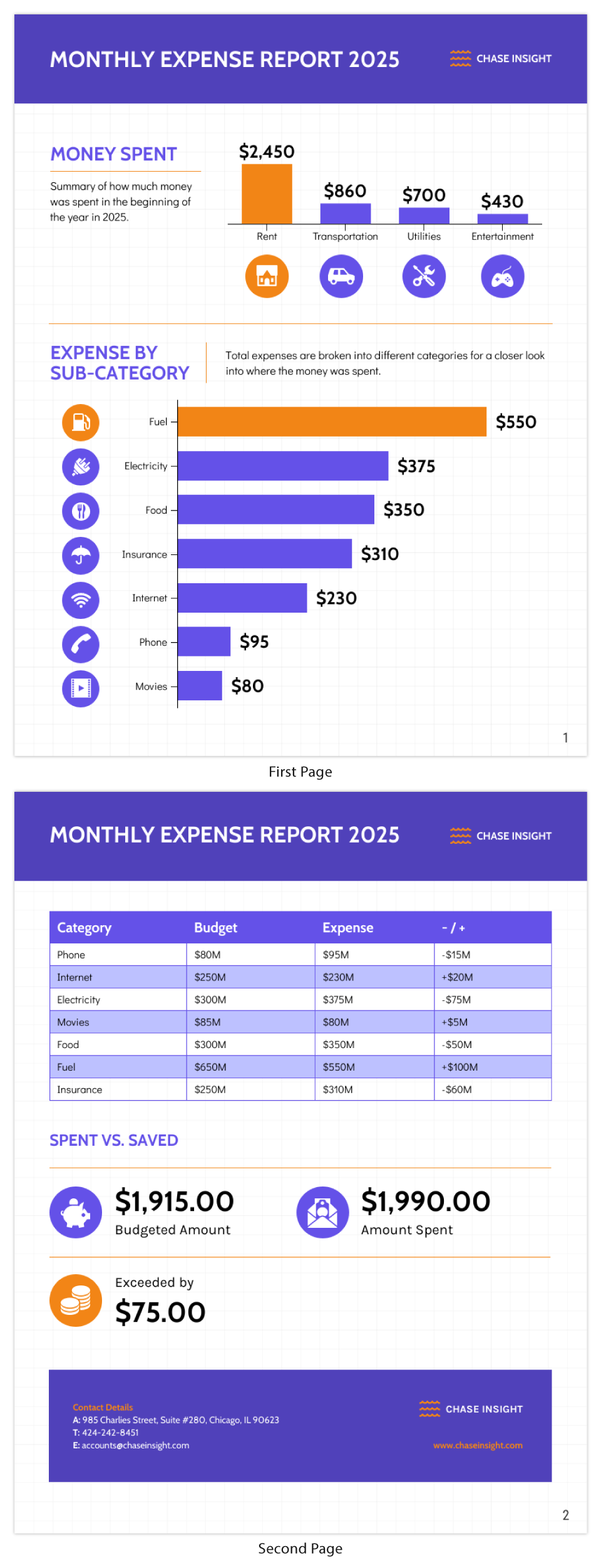
Monthly Expense Report Template – Unbelievable Breakdown for Precise Cost Tracking

A specialized Monthly Team Expense Report Template can support internal departments by highlighting how teams use budgets month by month. Although businesses generally rely on a primary financial report, this secondary breakdown shows where each department invests resources—and how efficiently they operate within their allocated budget.

A Monthly Expense Report Template helps businesses categorize spending with extraordinary clarity. While the general financial report highlights totals, this template zooms in on individual expenses, documenting where money flows each month. It highlights patterns that might otherwise hide inside aggregated totals.

For example, if a company notices operational costs rising, the expense report can show whether the cause is travel, utilities, software, outsourced services, or unplanned purchases. Teams can also attach notes explaining why certain expenses occurred—useful when managers review unexpected costs.

This format is especially valuable for organizations where multiple employees or departments make monthly purchases. Instead of relying on memory or last-minute guesses, the expense template becomes a structured log that minimizes errors and suspicious “accidental” overspending. It creates complete visibility across categories and helps forecast future expenses with surprising accuracy.

This Monthly Financial Report Template also prevents miscommunication. When financial questions arise, teams aren’t left scrambling to justify numbers—they can rely on a documented, structured breakdown that reinforces responsibility and clarity.

Another advantage is reimbursement management. Employees often struggle to recall minor purchases, such as office supplies, fuel, training materials, or small subscriptions. Logging these in a Monthly Expense Report Template prevents receipts from getting lost and gives finance departments the documentation they need to process reimbursements without delays.

Get also: Free Monthly Marketing Report Template

Monthly Treasurer Report Template – Classified Insights for Transparent Financial Stewardship

A Monthly Treasurer Report Template is commonly used in nonprofits, clubs, associations, and community-based groups. It offers a deeper look at inflows, outflows, balances, and designated funds. The treasurer doesn’t just track money—they oversee the stewardship of collective resources. This template helps maintain transparency in ways that general corporate reports rarely provide.

Many organizations rely on donations, fees, or fundraising. These income sources need precise tracking. How much came in from dues? How much was spent on events, supplies, or maintenance? How much remains allocated for upcoming programs? The treasurer’s report organizes all of this without ambiguity.

This structure builds trust. Members, volunteers, and stakeholders want reassurance that funds are used responsibly. When finances are presented clearly and consistently, everyone feels confident about the organization’s management. With this level of clarity, issues like unauthorized spending, overlooked income, or accidental double-charging become far less likely.

Another strength of this format is the ability to track restricted versus unrestricted funds. Some contributions come with rules—they can be used only for specific programs or purposes. A Monthly Treasurer Report Template keeps these distinctions separated so compliance becomes automatic.

Final Thoughts on Using Monthly Financial Report Templates Effectively

A strong monthly reporting structure does more than organize numbers. It introduces a rhythm—a predictable pattern that keeps teams aligned. Businesses that adopt a reliable Monthly Financial Report Template notice improvements not only in clarity but also in decision-making, accountability, and forward planning.

The secret is consistency. When data lives inside an organized format, trends become easier to interpret. Budget strategies become smarter. Teams collaborate with more confidence. And financial conversations shift from debates to solutions.

With specialized templates supporting the main monthly report—expense logs, treasurer insights, team-based spending breakdowns—organizations gain a complete financial ecosystem that works together seamlessly.

If you’re building a reliable foundation for financial clarity, adopting these structures isn’t just useful—it’s transformative. Let the numbers tell their story each month, and the decisions that follow will naturally grow sharper, stronger, and more aligned with long-term goals.

Monthly Report Template for 2026 Smarter Business Tracking

Monthly Report Template – Hidden High-Impact Insights for Smarter Business Tracking | A Monthly Report Template can easily become one of the most underrated tools inside any organization, sitting quietly in a folder while everyone rushes around looking for updates, numbers, summaries, and explanations.

Yet this simple document is often the backbone of decisions, budget approvals, performance evaluations, and long-term planning. It keeps communication structured, information reliable, and team efforts aligned. And when crafted thoughtfully, it can transform a jumble of monthly activities into a streamlined, meaningful narrative that leaders can actually use.

A good template doesn’t overwhelm readers with a wall of text, nor does it drown them in colourful charts with no context. Instead, it organizes data into digestible categories so stakeholders can quickly assess trends, identify gaps, and respond to issues before they escalate. Think of it as the monthly equivalent of tidying up your house—you don’t move the furniture every day, but once a month, everything gets refreshed and realigned.

Businesses, big and small, rely on a uniform reporting system to stay consistent. A structured Monthly report template gives teams the confidence to communicate clearly while reducing the chance of missing details. It also cuts preparation time, because no one enjoys starting a report from scratch each month—unless they’re powered exclusively by caffeine and misplaced optimism. With a reusable, polished layout, teams can focus on the content instead of the formatting.

In the sections below, you’ll find what makes this template invaluable, how organizations apply it across different functions, and why it works as a foundation for financial updates, marketing activities, and sales performance. Most importantly, it can adapt to a variety of work styles, fields, and business structures without becoming messy or complicated.

Monthly Report Template – Limited Breakdown of Structure and Function

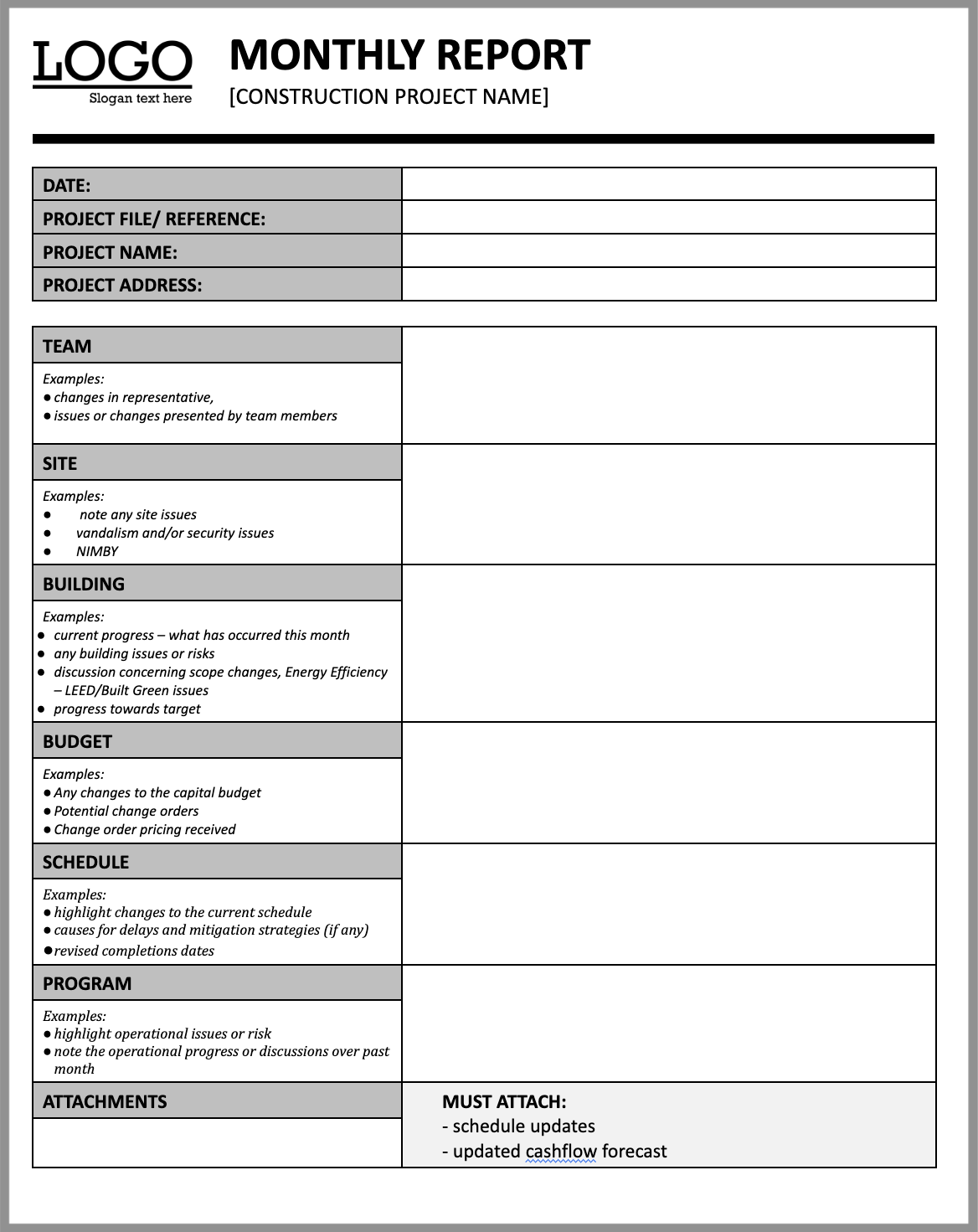
A powerful Monthly report template typically begins with a clear overview summarising the entire month. This high-level section is like the trailer of a movie—short, engaging, and packed with the most relevant highlights. It immediately gives stakeholders the big picture, including milestones achieved, setbacks faced, and priorities for the upcoming month.

After the overview, the Monthly Report Template often moves into key categories such as project updates, team progress, financial insights, workflow performance, challenges encountered, and forward-looking plans. Using consistent sections each month makes analyzing trends easier, especially when teams compare past cycles to track improvements. It’s similar to monitoring your fitness progress; one monthly snapshot doesn’t mean much, but several months of organized results reveal valuable patterns.

A well-designed Monthly Report provides a predictable structure. People know where to find financial details. They know where project updates are. They know where risks are flagged. This reduces confusion and keeps reports laser-focused. And while some managers prefer reports so short they could fit on a sticky note, others love detailed breakdowns that rival full documentaries—this Monthly Report Template supports both by offering adjustable sections without sacrificing clarity.

Designed thoughtfully, this report template ensures every part of the business stays accountable without making reporting feel like a punishment. Tasks become traceable, performance becomes measurable, and communication becomes consistent. In short, the template becomes a monthly ritual that clarifies the organization’s direction rather than complicating it.

Strategic Applications and Adaptability Across Business Functions

A single Monthly report template can stretch across multiple departments because each team can adapt the structure to highlight their specific contributions. Finance professionals might focus on revenue trends and expenditure patterns. Marketing teams may emphasize campaign performance, engagement metrics, and content output. Sales groups zero in on pipeline growth, conversions, and customer behaviours.

Despite their differences, every department benefits from the template’s consistent reporting flow. It helps unify communication styles so executives can quickly move from one section to another without requiring a translator. The ability to integrate numbers, narratives, and action steps in a cohesive format makes the template universally valuable.

Below are three powerful extensions of the Monthly report template, each represented by a structured sub-template that focuses on a different business area.

Get also: Annual Marketing Report Template Free Download

Monthly Financial Report Template – Extraordinary Framework for Smarter Budget Tracking

A monthly financial report template allows decision-makers to understand exactly how money moves across the organization. It organizes financial data into sections such as revenue streams, cost analysis, recurring expenses, operational budgets, liquidity updates, and profitability evaluations. Without a clean template, financial updates can quickly turn into an avalanche of spreadsheets that nobody wants to sift through unless they’re being bribed with snacks.

This type of financial report template often includes visuals such as bar charts, line graphs, and performance indicators that change month to month. However, the true value lies in the narrative context that accompanies these numbers. Data without explanation is like a puzzle without edges—it’s harder to see the bigger picture. The financial template resolves this by encouraging brief commentary under each section to clarify trends and highlight anomalies.

By using the same template consistently, businesses can detect patterns like seasonal fluctuations, cost escalations, or unexpected dips before they become major issues. For example, if expenditures rise steadily for three consecutive months, leaders can act proactively rather than reactively. Conversely, strong revenue performance can guide investment decisions or early expansion plans.

This Monthly Report Template also works well for cross-functional collaboration. Finance teams aren’t the only ones interested in the numbers; operations teams use the insights to plan resources, marketing teams adjust budgets for upcoming campaigns, and leadership teams use the overview to shape strategic directions. Everything becomes easier to interpret when numbers are presented in a coherent, structured manner.

Monthly Marketing Report Template – Stunning High-Impact Lens for Campaign Evaluation

A monthly marketing report template dives into performance indicators that reveal how well ongoing campaigns, content strategies, and audience outreach efforts are working. It captures social engagement, lead generation, traffic patterns, content output, advertising impact, and audience behaviour—all in a layout that is both informative and easy to skim.

Without a structured monthly marketing template, updates can become chaotic. Numbers get scattered across different tools, anecdotes get mixed with performance data, and trying to understand which campaign actually worked feels like decoding an ancient text. A consistent monthly template prevents this confusion by keeping marketing evaluations organized and actionable.

One major strength of this Monthly Report Template is its focus on long-term patterns rather than short-lived spikes. Monthly intervals give marketing teams enough data to identify meaningful behaviours—such as which platforms consistently bring in leads, which campaigns generate the most conversions, or which content formats are gaining traction.

This Monthly Marketing Report Template also helps teams align their storytelling across channels. Marketing isn’t just numbers; it’s the art of understanding what resonates with audiences. Monthly snapshots reveal the relationship between strategies and outcomes, helping teams refine their approach. Whether it’s assessing creative output, evaluating partnerships, or planning the next quarter’s activities, the template ensures no detail gets lost.

Ultimately, it helps marketing teams communicate their value clearly, which is especially important when the rest of the organization still thinks “posting memes online” is their main job.

Get also: Weekly Report Template Free Printable

Monthly Sales Report Template – Uncharted Insight for Stronger Revenue Momentum

A monthly sales report template highlights how effectively the sales pipeline moves over the course of a month. It structures updates on lead acquisition, conversion rates, product performance, customer engagement, territory management, and revenue forecasts. Without a clear template, sales reports risk looking like a collection of numbers pulled from random places—probably because they are pulled from random places.

This Monthly Report Template eliminates inconsistencies by offering a unified reporting style. Every metric sits in its designated section, making it easy for managers to compare performance among individuals, teams, or territories. And because sales cycles often shift quickly, a monthly breakdown helps leaders catch early signs of momentum or slowdown.

The narrative portion of this template also encourages teams to highlight opportunities and challenges. For example, if the sales cycle lengthens unexpectedly, teams can dig deeper to identify trends in buyer hesitation. If a specific product suddenly gains traction, managers can focus on expanding availability or launching targeted campaigns.

What makes this template especially impactful is its forward-looking section. After showcasing the results of the current month, it naturally transitions into next-step planning—such as strategies for reaching upcoming targets, opportunities that emerged recently, or areas requiring improvement. This helps sales teams maintain a consistent direction even during volatile cycles.

Across industries, this template remains one of the most versatile. Whether used in real estate, retail, B2B services, SaaS companies, or distribution networks, the structure helps transform raw performance data into meaningful insights that support confident decision-making.

Final Thoughts on Using the Monthly Report Template Effectively

The Monthly report template functions as a communication bridge connecting every team in the organization—finance, marketing, sales, operations, and beyond. With structured sections, clear breakdowns, and predictable formatting, it ensures everyone stays aligned while reducing the time needed for preparation and review.

When used consistently, it becomes a powerful tool for trend analysis, risk identification, performance evaluation, and strategic planning. It keeps all departments accountable, organized, and moving in the same direction, even when priorities shift or new projects emerge unexpectedly.

A strong reporting system doesn’t just document what happened; it clarifies what must happen next. And that’s the true value of a Monthly report template: it turns scattered updates into a coherent narrative that supports smarter decisions month after month.

Exit mobile version