Marketing Report Template (9+ BEST Strategic Formats)

Marketing Report Template usage is essential for translating marketing activity into clear, actionable insight. As marketing efforts become more complex and data-driven, structured reporting helps teams understand what is working, what needs adjustment, and where resources should be focused next.

Without a consistent reporting format, marketing data often becomes fragmented, difficult to interpret, and disconnected from objectives. A well-designed template provides structure, consistency, and clarity—turning raw data into meaningful performance narratives.

What Is a Marketing Report Template?

A Marketing Report Template is a structured document used to summarize marketing activities, results, and insights over a defined period. It presents key information in a clear, organized format that supports evaluation, communication, and decision-making.

Marketing reports typically aim to:

  • Track campaign performance
  • Measure progress against objectives
  • Identify trends and insights
  • Communicate results to stakeholders
  • Support planning and optimization

By standardizing how information is presented, reporting becomes more efficient and easier to compare over time.

Why Structured Marketing Reporting Matters

Marketing generates large volumes of data, but data alone does not create value. Structure is what turns numbers into understanding.

Using a Marketing Report Template helps teams:

  • Focus on relevant metrics
  • Maintain consistency across reporting periods
  • Reduce misinterpretation of results
  • Improve accountability and transparency
  • Support informed decision-making

Clear reporting aligns marketing activity with broader business goals and expectations.

Core Components of an Effective Marketing Report

While formats vary by purpose and audience, effective marketing reports share several key elements.

Reporting Period and Objectives

This section defines the timeframe covered and outlines the goals the marketing activity aimed to achieve.

Campaign or Channel Overview

Summarizes the main initiatives, channels, or campaigns included in the report.

Performance Metrics

Key indicators are presented clearly to show progress and outcomes.

Insights and Observations

This section explains what the results mean and highlights notable patterns or trends.

Challenges and Learnings

Document issues encountered and lessons gained during execution.

Next Steps and Recommendations

Every Marketing Report should guide future action, not just describe past performance.

Types of Marketing Report Templates by Reporting Frequency

Different reporting cycles serve different purposes. Below are the most commonly used formats based on timeframes.

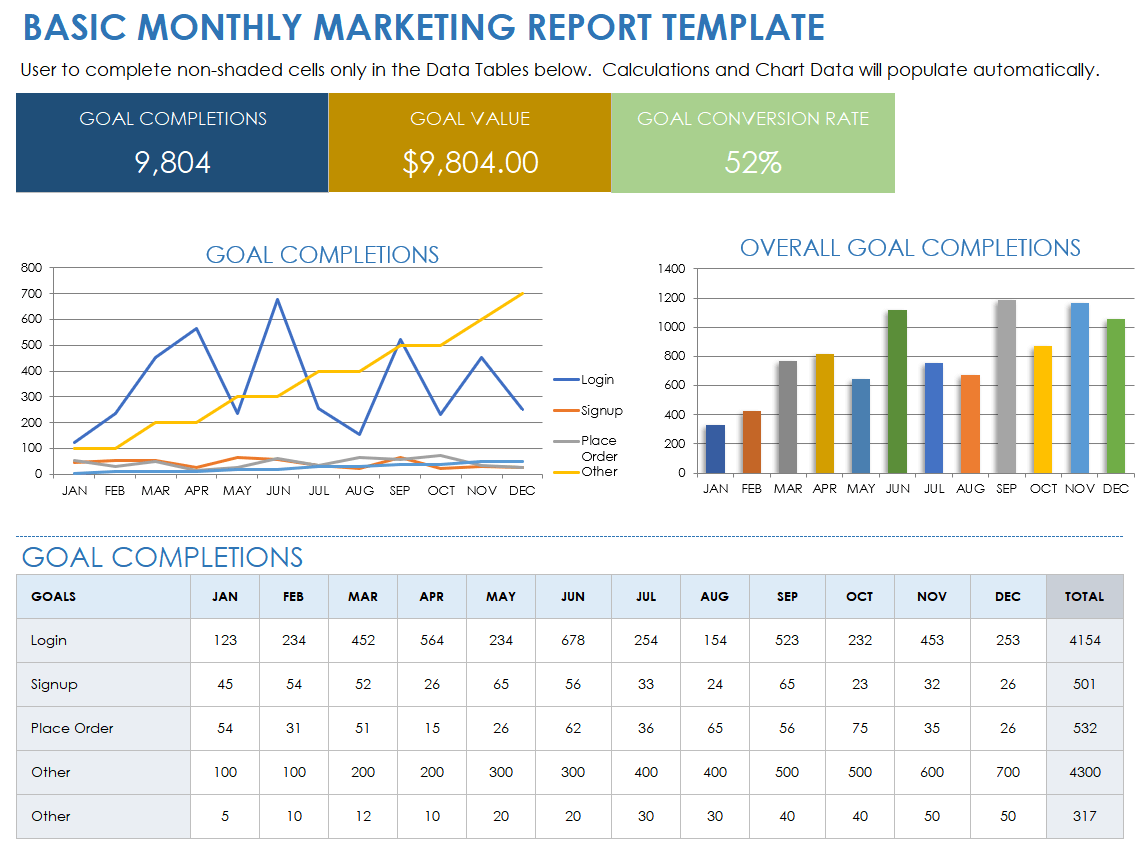
Monthly Marketing Report Template for Consistent Performance Review

A Monthly Marketing Report Template for Structured Performance Evaluation provides a balanced view of short-term results and emerging trends.

This format is commonly used to:

  • Compare performance month over month
  • Track progress toward quarterly goals
  • Identify channels or campaigns needing adjustment

Monthly reports offer enough data for meaningful analysis without overwhelming detail.

Weekly Marketing Report Template for Tactical Execution Tracking

A Weekly Marketing Report Template for Agile Execution Oversight focuses on immediate activity and short-term outcomes.

This format typically includes:

  • Weekly campaign updates
  • Key performance snapshots
  • Issues or blockers
  • Priorities for the next week

Weekly reporting supports fast-paced environments where quick adjustments are critical.

Get also: Consulting Report Template

Specialized Marketing Report for Different Needs

Beyond frequency-based reports, marketing teams often use specialized formats tailored to specific objectives.

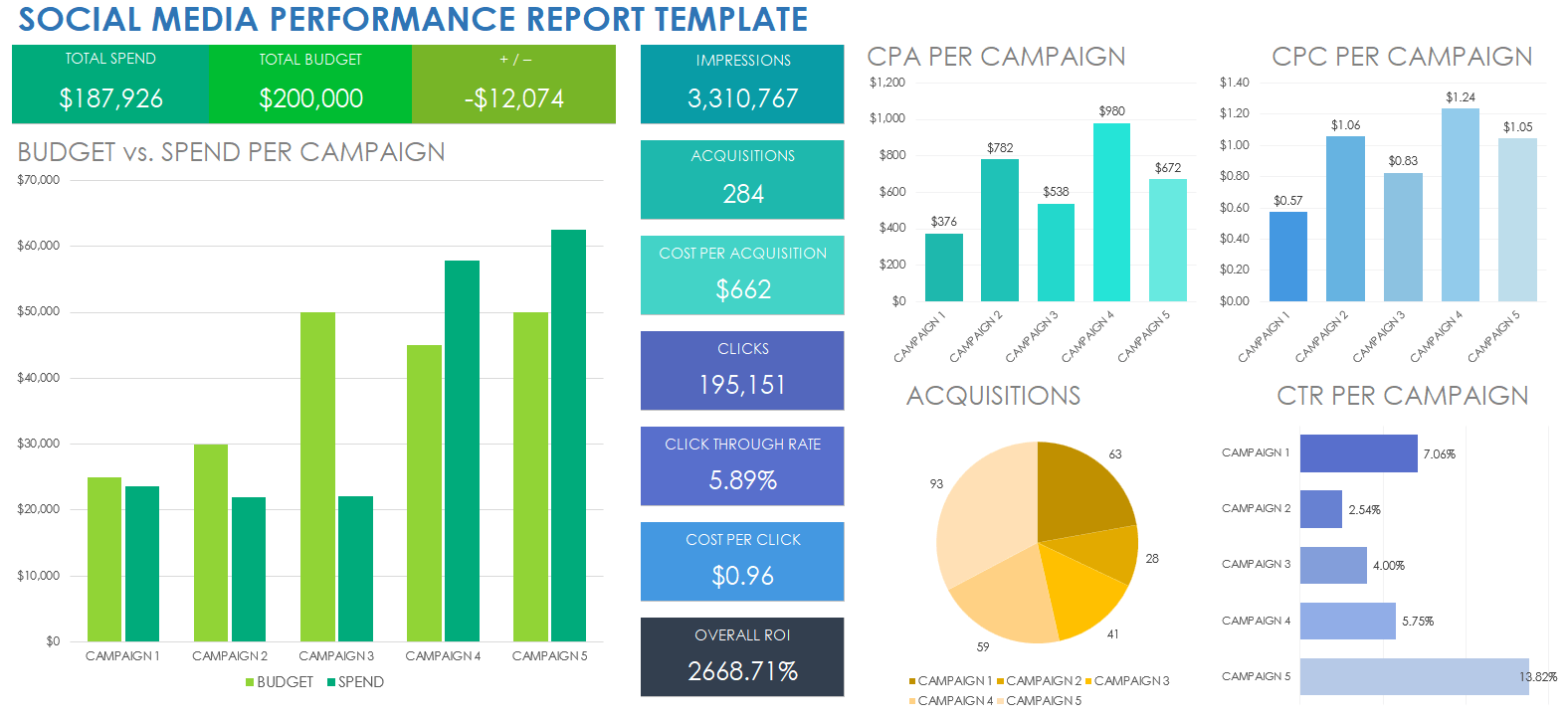
Digital Marketing Report Template for Multi-Channel Performance Clarity

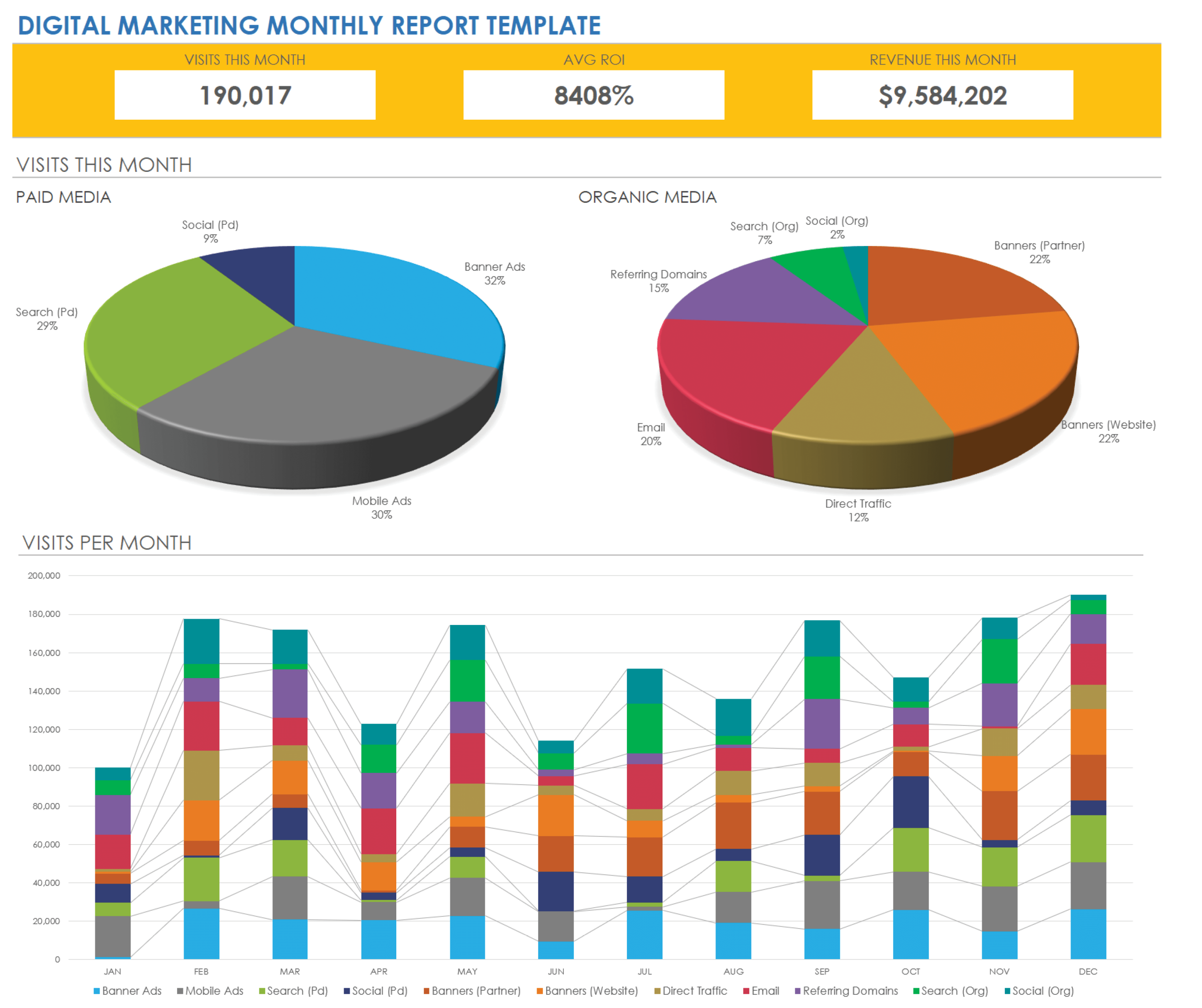
A Digital Marketing Report Template focuses on online campaigns and digital touchpoints.

It commonly covers:

  • Channel-level performance
  • Campaign outcomes
  • Engagement and conversion trends
  • Budget allocation and efficiency

This format helps teams understand how digital initiatives perform collectively and individually.

Choosing the Right Marketing Report Template

Selecting the right template depends on several factors:

  • Reporting audience
  • Decision-making needs
  • Level of detail required
  • Reporting frequency

A Marketing Report Template should be detailed enough to inform decisions, yet concise enough to be reviewed efficiently.

Reports that are too complex risk being ignored, while overly simple reports may lack actionable insight.

Adapting Marketing Reports for Different Stakeholders

Marketing reports are most effective when tailored to their audience.

Executive-Level Reporting

Executives value summaries, insights, and implications rather than granular detail.

Management and Team Reporting

Managers and teams benefit from operational detail, performance drivers, and next steps.

Client or External Reporting

External audiences require clarity, transparency, and alignment with agreed objectives.

A flexible Marketing Report allows for content adjustment without losing structural consistency.

Common Mistakes in Marketing Reporting

Even experienced teams can reduce report effectiveness through common errors, such as:

  • Reporting metrics without context
  • Overloading reports with unnecessary data
  • Ignoring insights and recommendations
  • Changing the report structure frequently

Strong reporting emphasizes clarity, relevance, and interpretation.

Best Practices for Creating High-Quality Marketing Reports

To maximize reporting value:

  • Align metrics with objectives
  • Focus on insights, not just numbers
  • Use consistent formatting
  • Highlight trends and implications
  • End with clear next steps

A well-crafted Marketing Report turns reporting into a strategic asset rather than an administrative task.

Using Marketing Reports to Improve Strategy and Execution

Marketing reports should inform action. When reviewed consistently, they help teams:

  • Identify high-performing initiatives
  • Address underperforming areas
  • Allocate resources more effectively
  • Improve planning accuracy

Over time, historical reports create a performance baseline that supports smarter strategy development.

Integrating Marketing Reports into Planning Cycles

Marketing reports are most valuable when integrated into regular planning and review processes.

They often feed into:

  • Campaign planning sessions
  • Budget reviews
  • Quarterly strategy discussions
  • Performance evaluations

A consistent Marketing Report Template ensures continuity across these cycles.

Long-Term Benefits of Standardized Marketing Reporting

Organizations that adopt structured marketing reporting gain:

  • Improved visibility into performance
  • Stronger alignment across teams
  • Faster decision-making
  • Greater accountability
  • Clearer performance documentation

Over time, reporting becomes a foundation for continuous improvement.

Marketing, Reporting, and Organizational Alignment

Clear reporting creates shared understanding. When everyone reviews performance using the same structure, alignment improves naturally.

A strong Marketing Report ensures that discussions focus on insights and actions rather than debating data interpretation.

Evolving Marketing Reports as Teams Mature

As marketing capabilities grow, reporting should evolve accordingly.

Early-stage teams may focus on activity tracking, while mature teams emphasize:

  • Comparative analysis
  • Trend identification
  • Strategic implications

Templates should adapt without losing consistency.

Conclusion

A Marketing Report Template is a critical tool for organizing marketing data, communicating performance, and supporting informed decision-making. By providing structure and clarity, it transforms marketing activity into actionable insight.

Whether using a Digital Marketing Report Template for Multi-Channel Performance Clarity, a Monthly Marketing Report Template for Consistent Performance Review, or a Weekly Marketing Report Template for Tactical Execution Tracking, the right format ensures that marketing results are visible, understandable, and meaningful.

When applied consistently, marketing reporting strengthens execution, improves alignment, and drives smarter, more confident marketing decisions.

Digital Marketing Monthly Report Template – 8+ Hidden Insights for Smarter Growth

A Digital Marketing Monthly Report Template gives structure to what can sometimes feel like a tornado of ads, analytics, campaigns, impressions, and one too many coffee-fueled creative ideas. When a team runs multiple initiatives across platforms, the need for clarity becomes louder than a notification spike after launching a viral post. A reliable template keeps everything organized, consistent, and genuinely useful for decision-making—not just a collection of charts that look pretty but explain nothing.

This kind of template exists to help brands understand their progress, spot odd patterns, uncover opportunities, and communicate performance without drowning in data. When used well, it becomes a core operational tool, supporting every upcoming campaign, strategy, and content overhaul.

Digital Marketing Monthly Report Template Classified Structure for Better Clarity

A dependable Digital Marketing Monthly Report Template serves as a roadmap—a way to track what happened, why it happened, and what needs to come next. It keeps the entire marketing ecosystem aligned, whether the focus is paid campaigns, social media content, email sequences, or a mix of everything.

The strength of a structured Digital Marketing Monthly Report Template lies in consistency. When teams review the same format each month, they no longer need to decode unfamiliar layouts or search endlessly for buried insights. Everything is laid out logically, helping stakeholders focus more on decisions and less on deciphering reports.

A well-designed Digital Marketing Monthly Report Template typically includes high-level metrics, channel-specific breakdowns, top-performing content, month-over-month comparisons, and recommendations for future actions. This setup makes it easy for leaders to identify growth areas and for teams to refine their work without needing to comb through endless raw data.

It also helps pinpoint whether shifts in numbers come from strategy changes, seasonal variations, platform trends, or the occasional surprise result that nobody planned for—but everyone claims they “totally expected.”A Comprehensive Framework for Monthly Marketing Reports

A polished monthly reporting system doesn’t rely solely on numbers; it depends on context. Every spike, dip, or steady line has a reason behind it. A powerful reporting template builds that context directly into the structure, ensuring everything remains understandable even for stakeholders who aren’t deep in daily execution.

This second section outlines supporting elements that elevate a report from “functional” to “strategically essential.”

Monthly Marketing Report Template: Uncharted Breakdown

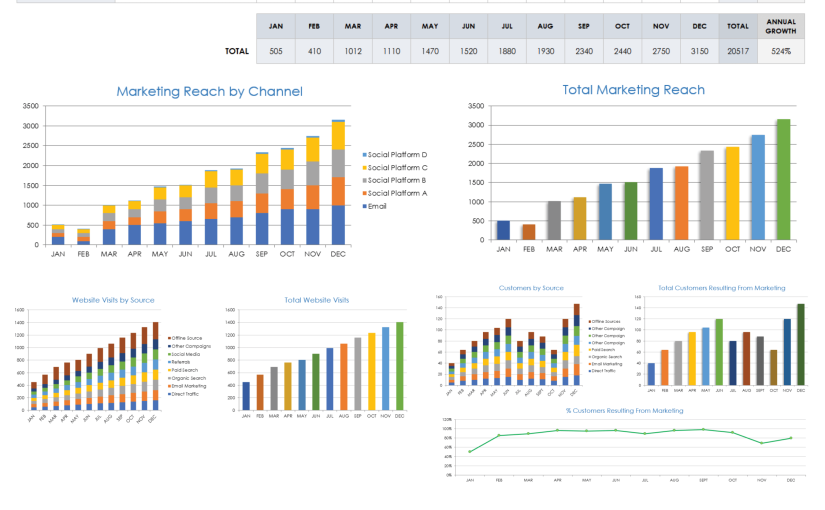
A Monthly Marketing Report Template works best when it captures details across all ongoing marketing activities. Because monthly cycles often include multiple campaigns, events, or product pushes, the report should highlight:

  • Campaign timelines showing what ran and when
  • Performance metrics for each marketing channel
  • Cost allocation and how efficiently the budget was used
  • Audience behavior shifts driven by seasonality or targeting
  • Creative performance of visuals, captions, messaging, or hooks

This helps the team understand not just results, but why those results surfaced.

A strong Digital Marketing Monthly Report Template also spotlights channel relationships. For example, if social media content boosted organic search activity, or if an email campaign nudged more people toward retargeting ads. These connections build awareness of how the broader marketing machine works together.

In many cases, teams discover that minor changes—like switching posting formats or adjusting delivery times—produce disproportionately strong outcomes. The Digital Marketing Monthly Report Template helps capture and replicate that success.

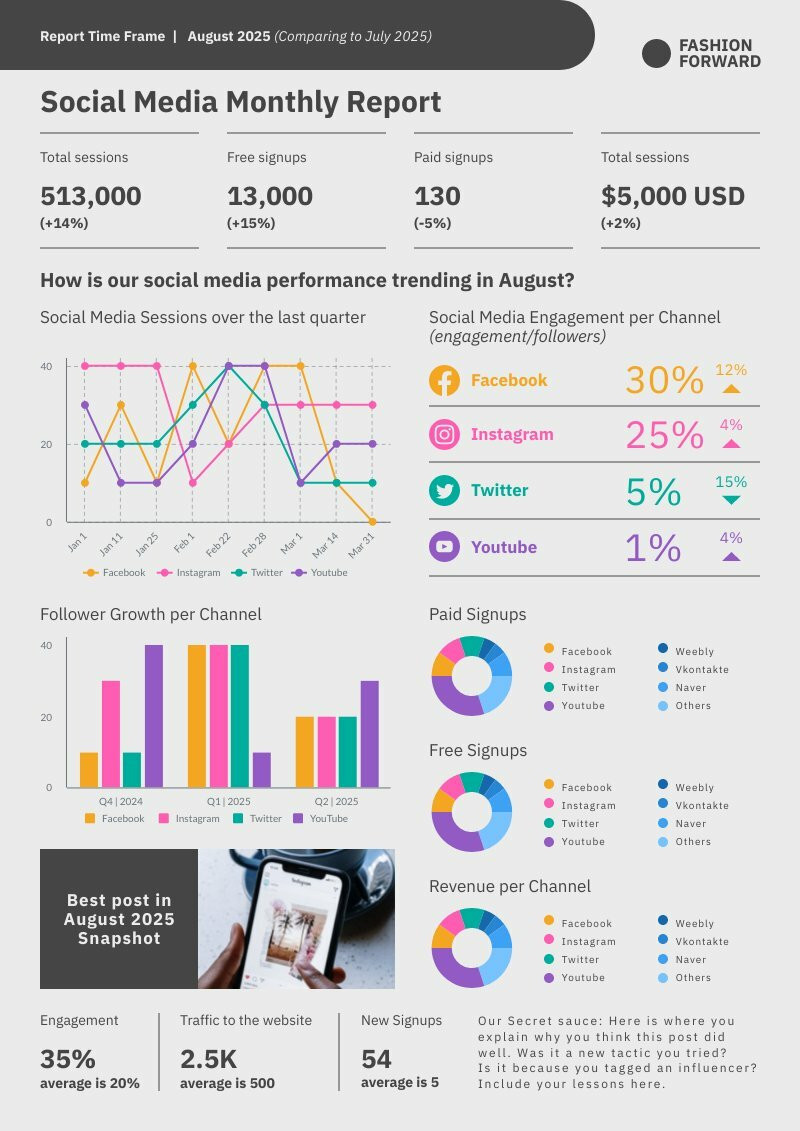
Social Media Monthly Report Template: Lost Analysis

A Social Media Monthly Report Template brings order to the lightning-fast environment of timelines, feeds, and algorithms. Social performance can swing wildly depending on trends, formats, and even random external factors nobody controls. A monthly template stabilizes that chaos by providing consistent insights across:

  • Engagement rates (which posts sparked the most conversation)
  • Reach and impressions (how widely the content traveled)
  • Follower growth and what may have influenced it
  • Top-performing content categories
  • Audience demographics and behavior patterns

The value lies in identifying patterns—like which content types consistently outperform, or which platforms deliver predictable returns.

This report doesn’t just summarize performance; it supports decisions like where to invest creative effort, which platforms deserve more attention, and when it’s time to retire formats that have overstayed their welcome.

It also gives teams an honest view of platform behaviors. Sometimes, the content that took the longest to produce barely gets a reaction, while a simple post made in five minutes suddenly blows up. The template captures these surprises without judgment—only useful information for future planning.

Get also: Free Digital Marketing Report Template

Social Media Marketing Performance Report Template: Hidden Opportunities

A Social Media Marketing Performance Report Template focuses on the deeper layer of performance: How well did social content support broader marketing goals?

While general social reports focus on engagement and visibility, performance-focused templates dive into:

  • Click-through trends and which messaging led users to act
  • Conversion behavior is influenced by social content
  • Audience pathways from post → landing page → action
  • Retention signals based on recurring interactions
  • Content and campaign A/B test insights

These sections make it clear whether social activities are just entertaining the audience or genuinely contributing to growth.

Teams can use this performance layer to improve campaign messaging, refine offers, and adjust how content supports the overall customer journey. The Digital Marketing Monthly Report Template prevents teams from guessing what worked and instead provides a grounded understanding.

How a Digital Marketing Monthly Report Template Strengthens Decision-Making

A strong Digital Marketing Monthly Report Template reduces uncertainty and increases confidence when planning upcoming campaigns. Without a clear reporting structure, decision-makers often rely on anecdotal evidence or personal assumptions. A dependable monthly template replaces guesswork with clarity.

It creates a narrative that traces the full month of activity—from planning to execution to outcomes. The result is a document that communicates what changed, why it changed, and what to adjust next.

The consistency of using the same structure month after month creates a historical archive, enabling year-over-year pattern discovery and long-term performance predictions. Over time, the template becomes more than a reporting tool; it becomes a foundational part of strategic planning.

A well-built marketing report template also increases internal communication quality. When all departments review the same structure, misunderstandings shrink. Marketing, product, sales, and leadership operate with the same information, reducing the number of “Wait, why did this happen?” meetings and allowing teams to focus on action rather than confusion.

Get also: Free Monthly Sales and Marketing Report Template

Making Monthly Reports More Actionable

Actionable reports require more than charts; they need context, recommendations, and the reasoning behind decisions. A thoughtful template encourages this by guiding the team toward reflection, not just reporting.

Many teams enrich their monthly reports by including:

  • Highlights of major wins or milestones
  • Challenges and unexpected outcomes
  • Learning points from successful or unsuccessful campaigns
  • Next-step recommendations informed by data trends

These elements ensure the report leads to insight-driven change, enabling better planning for the next monthly cycle.

Including comparisons—month-over-month, quarter-over-quarter, or year-over-year—helps identify meaningful shifts. For example, a spike in engagement may look promising, but the underlying cause might be seasonal. A long-term template exposes these patterns.

The Role of Templates in Cross-Channel Alignment

Most marketing operations involve several platforms working together. A monthly report template aligns these channels by putting their performance into a unified structure. Paid ads, social media, email marketing, content marketing, and influencer activity can be reviewed side-by-side.

This creates a complete picture, making it easier to understand:

  • Which channels drove the strongest results
  • How cross-channel interactions influenced outcomes
  • Where budget allocation produced the best returns
  • What message themes consistently resonated

When these insights are reported consistently, planning becomes smoother. Teams can double down on winning strategies, refine weaker areas, and retire campaigns that no longer perform.

Tracking Performance Trends Over Time

Monthly reporting templates are essential for identifying longer-term patterns. While weekly or daily reports capture short-term shifts, monthly reports capture overarching trends that influence strategy at a broader level.

Over time, these patterns reveal:

  • Platform algorithm shifts
  • Seasonal engagement curves
  • Content fatigue or emerging formats
  • Budget efficiency changes
  • Conversion rate fluctuations

This allows teams to make informed decisions about future campaigns, channel investment, and creative direction.

Why a Digital Marketing Monthly Report Template Creates Stronger Teams

A team aligned under a reliable reporting structure communicates more effectively, collaborates more smoothly, and moves with shared clarity. It minimizes unnecessary friction caused by misinterpretation or inconsistent updates.

Regular reporting also encourages accountability—not in a restrictive way, but through transparency. Everyone knows what’s happening, why it’s happening, and how their work contributes to the whole.

Templates also speed up onboarding for new team members. With a fixed reporting structure, newcomers quickly learn what matters, how to measure success, and what defines strong performance.

Final Thoughts

A well-crafted Digital Marketing Monthly Report Template does more than present numbers; it builds understanding. It supports better decisions, aligns teams, and enables organizations to recognize what moves the needle. With the right structure, monthly reporting becomes smoother, more consistent, and far more impactful.

Monthly Marketing Report Template – 7+ Best References

Monthly Marketing Report Template – Stunning Insider Breakdown for Clearer Results | A Monthly Marketing Report Template can feel like the difference between navigating with a GPS or relying on the stars—sure, both can eventually get you somewhere, but one of them doesn’t require guessing constellations or pretending you’re an ancient sailor. A well-designed template gives teams clarity, alignment, and visibility into what’s working, what’s wasting budget, and what needs immediate fixing before it turns into the office version of a sinking ship.

Modern marketing moves quickly. Campaigns shift, audiences respond (or don’t), and trends evolve almost overnight. A structured monthly reporting tool ensures every team—growth, content, sales, social, paid media, analytics—can understand the story behind the numbers. And more importantly, act on it. That’s where a Monthly Marketing Report Template becomes an essential piece of operational gear, offering consistency, accuracy, and a reliable format that keeps everyone from interns to executives on the same page.

Below is a deeper, structured dive into what makes a strong reporting framework, how it actually functions in practical scenarios, and why a dependable template turns monthly chaos into an organized narrative that teams can use to improve performance every cycle.

Monthly Marketing Report Template – Hidden Advantages That Transform Your Workflow

A Monthly Marketing Report Template does more than simply store metrics. It frames them. It guides interpretation. It prevents scattershot reporting that mixes vanity metrics with irrelevant details. And unlike ad-hoc presentations that feel like last-minute patchwork, a repeatable template forms a predictable rhythm that leadership trusts.

The value begins with consistency. When every month uses the same format, performance trends become easier to spot. Instead of flipping between mismatched spreadsheets and random PowerPoint slides, the template connects content performance, channel progression, traffic sources, revenue contribution, and customer behavior in one narrative. The end result is clarity. Not the vague “we think things are going okay” clarity, but concrete, structured visibility.

A marketing report template also improves accountability. People are less likely to hide weak performance beneath walls of unrelated data when the structure forces measurable transparency. It becomes clear which campaigns are thriving, which experiments are stagnating, and which channels are quietly draining budget in the background like a subscription forgotten on a credit card.

The hidden magic? Time saved. Nobody wants to spend the first week of the new month wrestling with scattered analytics tabs. With a solid template, much of the process becomes rinse-and-repeat—update data, compare results, summarize insights, recommend next steps.

Practical Use Cases That Prove Its Importance

There’s no single marketing team that doesn’t benefit from organized monthly reporting, but a few environments stand out:

Growing companies
They need predictable communication between departments. Reporting templates prevent misalignment as teams scale.

Agencies
Clients love clarity. They love understanding where their money goes even more. Templates help agencies deliver polished updates that inspire confidence.

In-house performance teams
Paid search, paid social, and growth channels move fast. Monthly reports help spot patterns too subtle to catch day-to-day.

Content and social teams
Monthly Marketing Report Templates give them visibility into how their campaigns actually contribute to conversions and revenue, not just likes and impressions.

Sales-led organizations
A monthly marketing structure helps bridge the communication gap between marketing efforts and pipeline outcomes.

No matter the team structure, the Monthly Marketing Report Template acts like a compass—quiet, consistent, and always pointing in the right direction.

What Strong Monthly Marketing Reports Usually Contain

A strong Monthly Marketing Report Template typically uses a narrative flow. It doesn’t just dump charts onto a page. It walks readers through performance step by step.

1. Summary Overview
A concise snapshot summarizing the biggest wins, challenges, and notable changes across the marketing landscape for that month.

2. Goals vs. Outcomes
Metrics only have meaning when placed in context. This section aligns planned objectives with actual results.

3. Channel Performance Breakdown
Traffic sources, paid media results, content engagement, email performance, social outcomes, and more.

4. Budget Allocation & Efficiency
Shows where money went, what it returned, and which campaigns delivered the best ROI.

5. Audience Behavior Trends
Shifts in user engagement, demographics, and customer patterns.

6. Campaign Highlights & Learnings
List high-impact actions and the reasoning behind future course corrections.

7. Recommendations for the Next Month
Data-backed direction that helps leadership make smarter decisions.

Every element works together to tell a cohesive story. Not a random collage.

Why Teams Rely on This Template Month After Month

Marketing reports can be dull. It’s true. But when a Monthly Report Template is designed well, it becomes far more than a routine deliverable. Teams rely on it because:

  • It brings order to the wide world of campaign data.
  • It creates a communication bridge between creatives, analysts, strategists, and executives.
  • It breaks down silos and makes individual contributions visible.
  • It builds historical context, which is essential for forecasting.
  • It motivates action, especially when teams clearly see which areas are bottlenecks.
  • It reinforces discipline, preventing random reporting styles that confuse more than they clarify.

People don’t love marketing reports. But they definitely love good ones—especially those that actually drive decisions and fix problems.

Monthly Marketing Report Template – Uncharted Strengths for Improving Consistency

A Monthly Marketing Report Template becomes more powerful over time. The longer a team uses it, the more patterns emerge, causing insights to sharpen and strategies to mature.

One of the template’s biggest strengths is how it centralizes diverse performance indicators into a unified picture. Modern marketing spans countless touchpoints—organic content, paid ads, PR, partnerships, email, influencer collaborations, video campaigns, and more. Without a structured reporting system, it becomes incredibly easy to miss something important.

This unified format keeps every stakeholder aligned. Creatives understand what messaging works best. Media buyers see which audiences deliver the strongest ROI. Content strategists recognize which topics consistently draw conversions. Executives finally see the full picture rather than disjointed updates.

The result is long-term clarity. And consistency drives better decisions, better planning, and better growth cycles.

Supporting Insights and Deep-Dive Evaluation

Monthly Digital Marketing Report Template – Confidential Metrics Framework for Smarter Planning

A Monthly Digital Marketing Report Template helps teams make sense of everything happening across digital channels—search, email, social, paid media, video platforms, and landing pages. What makes it especially useful is the compartmentalized view of digital behavior: impressions, clicks, conversions, drop-off patterns, device usage, and content interactions.

Digital landscapes move quickly. One month’s hero campaign can become next month’s underperformer. That’s why a structured format helps teams detect subtle shifts—like rising acquisition costs, new audience clusters gaining traction, or sudden declines in retargeting efficiency.

This kind of Monthly Marketing Report Template also helps teams evaluate their omnichannel strategy. Instead of treating every platform like an isolated island, the report connects them. Maybe email drives more high-quality leads than expected. Maybe video content indirectly lifts organic traffic. A structured digital report uncovers connections people usually overlook.

With its compartmentalized yet integrated structure, this Monthly Digital Marketing Report Template helps guide budget allocation and campaign adjustments with precision—not guesses.

Get also: Free Monthly Financial Report Template

Monthly Sales and Marketing Report Template – Shocking Alignment Blueprint for Revenue-Focused Performance

A Monthly Sales and Marketing Report Template is the bridge between two teams that often speak similar concepts with vastly different accents. Marketing talks about impressions, leads, and engagement. Sales talks about qualified opportunities, close rates, and revenue. This monthly sales report template unifies both sides into one narrative.

It highlights which marketing initiatives influence the upper funnel—and how those contributions flow into conversion activities. Sales teams get clarity on which campaigns produce the best-quality leads. Marketing teams get direct visibility into what results from their efforts downstream.

One underrated benefit is pattern discovery. For instance:

  • A specific content series might repeatedly correlate with high-quality lead generation.
  • Certain audiences might convert better across both organic and paid channels.
  • Some campaigns might overproduce volume but underdeliver quality.

This unified structure prevents miscommunication and finger-pointing. Instead, it fosters collaboration built on shared data. When both teams use the same blueprint, performance analysis becomes smoother, faster, and more objective.

Get also: Monthly Expense Report Template

Monthly Marketing Report PowerPoint Template – Secret Visual Storyboard for High-Impact Presentations

A Monthly Marketing Report PowerPoint Template transforms raw data into visually digestible information. Not every stakeholder wants to sift through spreadsheets. Executives and cross-functional leaders appreciate structured visuals—charts, funnels, indicator tiles, comparison bars, and performance snapshots.

This Monthly Marketing Report PowerPoint Template acts like a storytelling engine. It frames the narrative clearly, turning a month’s worth of marketing activity into a sequence that audiences can follow effortlessly.

A powerful layout may include:

  • A headline insights slide
  • Channel-by-channel comparison tables
  • Customer journey visualization
  • Budget allocation and return
  • Key wins and losses
  • Strategic recommendations

The beauty of a strong PowerPoint template is that it’s reusable. Instead of reformatting slides every cycle, teams simply plug in updated numbers while maintaining a consistent visual identity. This dramatically reduces production time and prevents the monthly scramble of designing slides from scratch.

In fast-moving companies, that time saved is worth as much as the insights themselves.

Pulling It All Together into an Action-Driven Framework

A Monthly Marketing Report Template is more than a worksheet or a slide deck—it’s a dependable operational rhythm. It tightens team communication, clarifies decision-making, and gives performance trends a clear home. When used consistently, it becomes the backbone of monthly planning, helping every campaign cycle become more predictable and ultimately more successful.

A strong reporting template doesn’t simply show numbers. It tells a story—one that teams can act on, executives can trust, and organizations can use to grow with purpose.

Monthly Report Template for 2026 Smarter Business Tracking

Monthly Report Template – Hidden High-Impact Insights for Smarter Business Tracking | A Monthly Report Template can easily become one of the most underrated tools inside any organization, sitting quietly in a folder while everyone rushes around looking for updates, numbers, summaries, and explanations.

Yet this simple document is often the backbone of decisions, budget approvals, performance evaluations, and long-term planning. It keeps communication structured, information reliable, and team efforts aligned. And when crafted thoughtfully, it can transform a jumble of monthly activities into a streamlined, meaningful narrative that leaders can actually use.

A good template doesn’t overwhelm readers with a wall of text, nor does it drown them in colourful charts with no context. Instead, it organizes data into digestible categories so stakeholders can quickly assess trends, identify gaps, and respond to issues before they escalate. Think of it as the monthly equivalent of tidying up your house—you don’t move the furniture every day, but once a month, everything gets refreshed and realigned.

Businesses, big and small, rely on a uniform reporting system to stay consistent. A structured Monthly report template gives teams the confidence to communicate clearly while reducing the chance of missing details. It also cuts preparation time, because no one enjoys starting a report from scratch each month—unless they’re powered exclusively by caffeine and misplaced optimism. With a reusable, polished layout, teams can focus on the content instead of the formatting.

In the sections below, you’ll find what makes this template invaluable, how organizations apply it across different functions, and why it works as a foundation for financial updates, marketing activities, and sales performance. Most importantly, it can adapt to a variety of work styles, fields, and business structures without becoming messy or complicated.

Monthly Report Template – Limited Breakdown of Structure and Function

A powerful Monthly report template typically begins with a clear overview summarising the entire month. This high-level section is like the trailer of a movie—short, engaging, and packed with the most relevant highlights. It immediately gives stakeholders the big picture, including milestones achieved, setbacks faced, and priorities for the upcoming month.

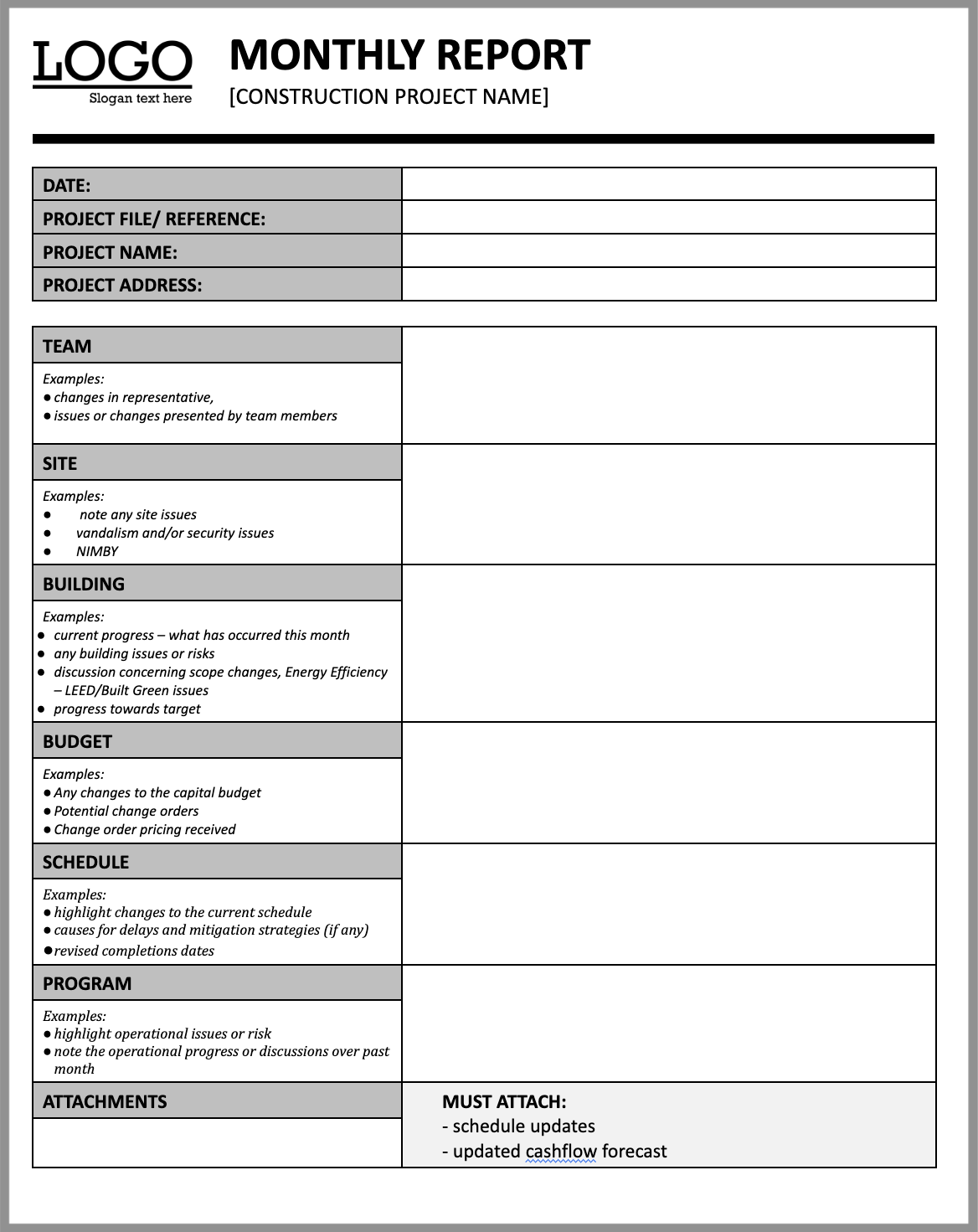
After the overview, the Monthly Report Template often moves into key categories such as project updates, team progress, financial insights, workflow performance, challenges encountered, and forward-looking plans. Using consistent sections each month makes analyzing trends easier, especially when teams compare past cycles to track improvements. It’s similar to monitoring your fitness progress; one monthly snapshot doesn’t mean much, but several months of organized results reveal valuable patterns.

A well-designed Monthly Report provides a predictable structure. People know where to find financial details. They know where project updates are. They know where risks are flagged. This reduces confusion and keeps reports laser-focused. And while some managers prefer reports so short they could fit on a sticky note, others love detailed breakdowns that rival full documentaries—this Monthly Report Template supports both by offering adjustable sections without sacrificing clarity.

Designed thoughtfully, this report template ensures every part of the business stays accountable without making reporting feel like a punishment. Tasks become traceable, performance becomes measurable, and communication becomes consistent. In short, the template becomes a monthly ritual that clarifies the organization’s direction rather than complicating it.

Strategic Applications and Adaptability Across Business Functions

A single Monthly report template can stretch across multiple departments because each team can adapt the structure to highlight their specific contributions. Finance professionals might focus on revenue trends and expenditure patterns. Marketing teams may emphasize campaign performance, engagement metrics, and content output. Sales groups zero in on pipeline growth, conversions, and customer behaviours.

Despite their differences, every department benefits from the template’s consistent reporting flow. It helps unify communication styles so executives can quickly move from one section to another without requiring a translator. The ability to integrate numbers, narratives, and action steps in a cohesive format makes the template universally valuable.

Below are three powerful extensions of the Monthly report template, each represented by a structured sub-template that focuses on a different business area.

Get also: Annual Marketing Report Template Free Download

Monthly Financial Report Template – Extraordinary Framework for Smarter Budget Tracking

A monthly financial report template allows decision-makers to understand exactly how money moves across the organization. It organizes financial data into sections such as revenue streams, cost analysis, recurring expenses, operational budgets, liquidity updates, and profitability evaluations. Without a clean template, financial updates can quickly turn into an avalanche of spreadsheets that nobody wants to sift through unless they’re being bribed with snacks.

This type of financial report template often includes visuals such as bar charts, line graphs, and performance indicators that change month to month. However, the true value lies in the narrative context that accompanies these numbers. Data without explanation is like a puzzle without edges—it’s harder to see the bigger picture. The financial template resolves this by encouraging brief commentary under each section to clarify trends and highlight anomalies.

By using the same template consistently, businesses can detect patterns like seasonal fluctuations, cost escalations, or unexpected dips before they become major issues. For example, if expenditures rise steadily for three consecutive months, leaders can act proactively rather than reactively. Conversely, strong revenue performance can guide investment decisions or early expansion plans.

This Monthly Report Template also works well for cross-functional collaboration. Finance teams aren’t the only ones interested in the numbers; operations teams use the insights to plan resources, marketing teams adjust budgets for upcoming campaigns, and leadership teams use the overview to shape strategic directions. Everything becomes easier to interpret when numbers are presented in a coherent, structured manner.

Monthly Marketing Report Template – Stunning High-Impact Lens for Campaign Evaluation

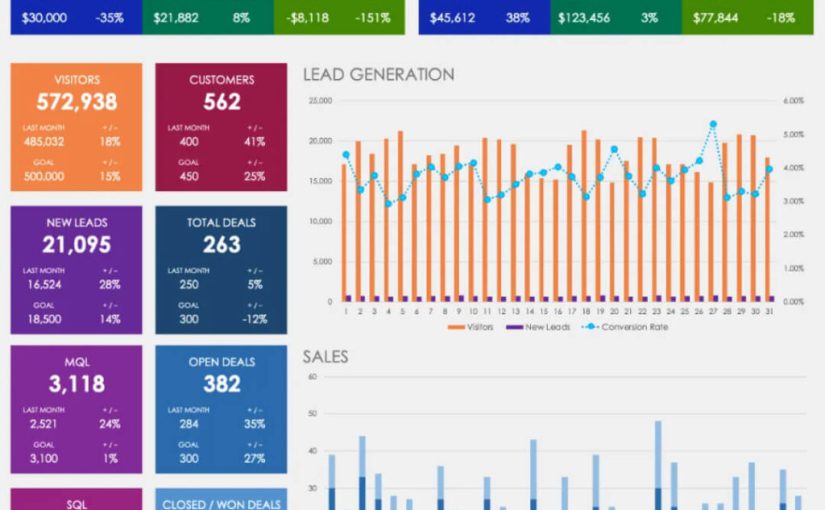
A monthly marketing report template dives into performance indicators that reveal how well ongoing campaigns, content strategies, and audience outreach efforts are working. It captures social engagement, lead generation, traffic patterns, content output, advertising impact, and audience behaviour—all in a layout that is both informative and easy to skim.

Without a structured monthly marketing template, updates can become chaotic. Numbers get scattered across different tools, anecdotes get mixed with performance data, and trying to understand which campaign actually worked feels like decoding an ancient text. A consistent monthly template prevents this confusion by keeping marketing evaluations organized and actionable.

One major strength of this Monthly Report Template is its focus on long-term patterns rather than short-lived spikes. Monthly intervals give marketing teams enough data to identify meaningful behaviours—such as which platforms consistently bring in leads, which campaigns generate the most conversions, or which content formats are gaining traction.

This Monthly Marketing Report Template also helps teams align their storytelling across channels. Marketing isn’t just numbers; it’s the art of understanding what resonates with audiences. Monthly snapshots reveal the relationship between strategies and outcomes, helping teams refine their approach. Whether it’s assessing creative output, evaluating partnerships, or planning the next quarter’s activities, the template ensures no detail gets lost.

Ultimately, it helps marketing teams communicate their value clearly, which is especially important when the rest of the organization still thinks “posting memes online” is their main job.

Get also: Weekly Report Template Free Printable

Monthly Sales Report Template – Uncharted Insight for Stronger Revenue Momentum

A monthly sales report template highlights how effectively the sales pipeline moves over the course of a month. It structures updates on lead acquisition, conversion rates, product performance, customer engagement, territory management, and revenue forecasts. Without a clear template, sales reports risk looking like a collection of numbers pulled from random places—probably because they are pulled from random places.

This Monthly Report Template eliminates inconsistencies by offering a unified reporting style. Every metric sits in its designated section, making it easy for managers to compare performance among individuals, teams, or territories. And because sales cycles often shift quickly, a monthly breakdown helps leaders catch early signs of momentum or slowdown.

The narrative portion of this template also encourages teams to highlight opportunities and challenges. For example, if the sales cycle lengthens unexpectedly, teams can dig deeper to identify trends in buyer hesitation. If a specific product suddenly gains traction, managers can focus on expanding availability or launching targeted campaigns.

What makes this template especially impactful is its forward-looking section. After showcasing the results of the current month, it naturally transitions into next-step planning—such as strategies for reaching upcoming targets, opportunities that emerged recently, or areas requiring improvement. This helps sales teams maintain a consistent direction even during volatile cycles.

Across industries, this template remains one of the most versatile. Whether used in real estate, retail, B2B services, SaaS companies, or distribution networks, the structure helps transform raw performance data into meaningful insights that support confident decision-making.

Final Thoughts on Using the Monthly Report Template Effectively

The Monthly report template functions as a communication bridge connecting every team in the organization—finance, marketing, sales, operations, and beyond. With structured sections, clear breakdowns, and predictable formatting, it ensures everyone stays aligned while reducing the time needed for preparation and review.

When used consistently, it becomes a powerful tool for trend analysis, risk identification, performance evaluation, and strategic planning. It keeps all departments accountable, organized, and moving in the same direction, even when priorities shift or new projects emerge unexpectedly.

A strong reporting system doesn’t just document what happened; it clarifies what must happen next. And that’s the true value of a Monthly report template: it turns scattered updates into a coherent narrative that supports smarter decisions month after month.

Exit mobile version