

Expense Report Template systems are essential for documenting costs, monitoring spending patterns, and maintaining financial accountability across organizations of all sizes. Without a standardized reporting format, expense tracking often becomes inconsistent, error-prone, and difficult to analyze. A structured template turns scattered receipts and transactions into clear financial insight.
Whether used by individuals, teams, or entire organizations, expense reporting supports better budgeting, clearer reimbursement processes, and stronger financial oversight. This article explores the purpose of expense reporting, the key components of an effective template, and the most practical formats used in different financial reporting scenarios.
What Is an Expense Report Template and Why Does It Matter
An Expense Report is a structured document designed to record, categorize, and summarize expenses over a specific period. Its primary purpose is to provide transparency into how money is spent and to ensure that financial records are accurate and complete.
Organizations and individuals rely on standardized expense reporting to:
- Track spending consistently
- Support reimbursement and approval workflows
- Identify cost patterns and anomalies
- Improve budget control and forecasting
- Maintain clear financial documentation
By using the same reporting framework repeatedly, expense data becomes easier to review, compare, and validate.
The Role of Expense Reporting in Financial Management
Expense reporting plays a critical role in maintaining financial discipline. When expenses are recorded consistently, decision-makers gain visibility into where funds are allocated and how spending aligns with planned budgets.
A well-designed Expense Report helps prevent:
- Missing or duplicated expense entries
- Unclear spending justifications
- Delayed reimbursements
- Inaccurate financial summaries
Clear documentation also builds trust between employees, finance teams, and management by ensuring that all expenses are transparent and verifiable.
Essential Components of an Effective Expense Report

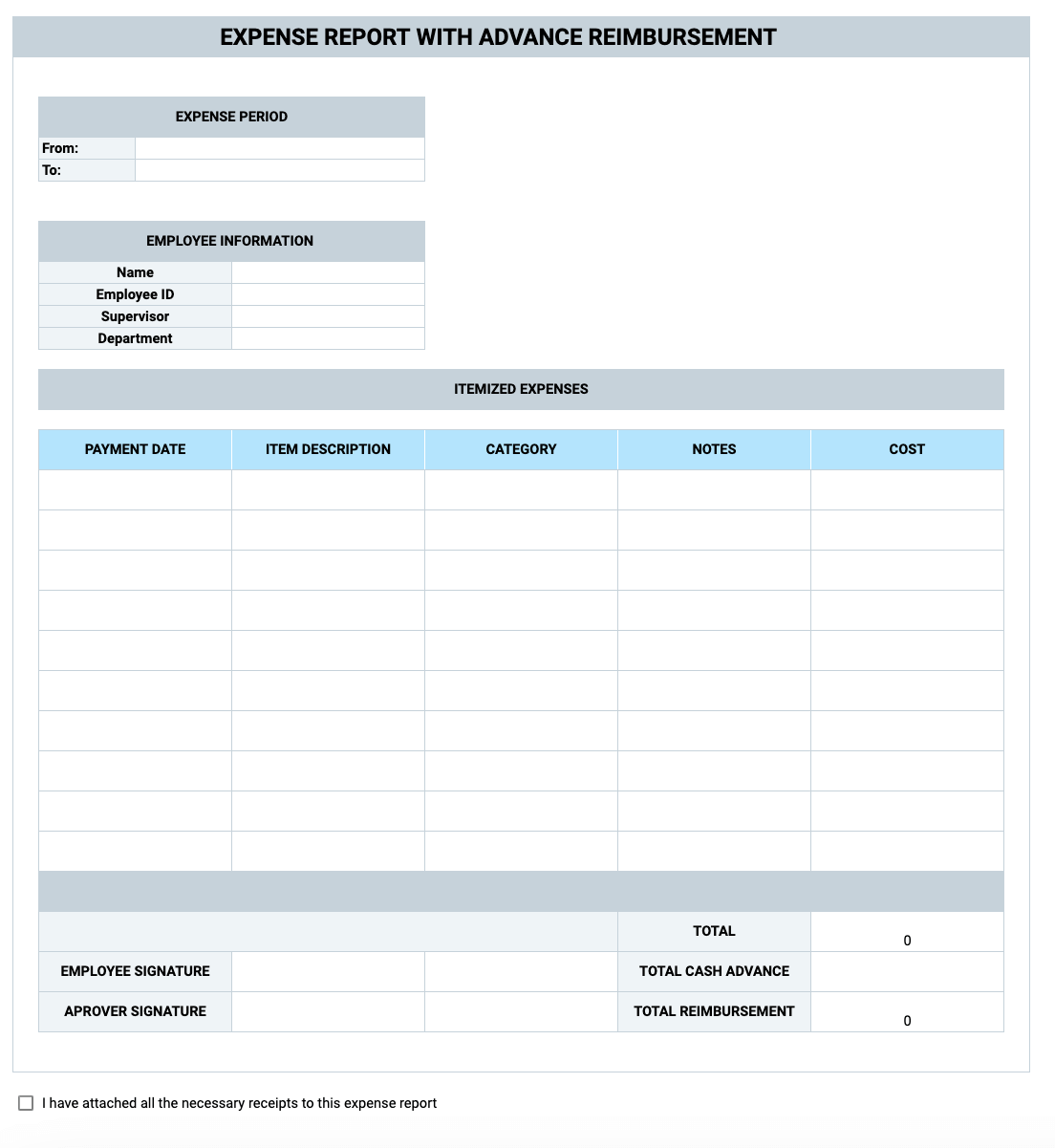
Although formats may vary, effective expense reports share a common structure that balances detail with usability.
Reporting Period and Basic Information
This section defines the timeframe covered by the report and includes basic details such as name, department, or project reference.
Expense Categories
Expenses are grouped into clear categories, such as travel, meals, supplies, or operational costs, to improve clarity and analysis.
Itemized Expense Details
Each expense entry typically includes the date, description, amount, and payment method.
Supporting Documentation
Receipts or references are listed to support verification and approval.
Total Expense Summary
A consolidated summary shows total spending for the reporting period.
Approval and Review Section
Every Expense Report Template should include space for review, approval, or acknowledgment, ensuring accountability.
Common Types of Expense Report Templates
Different financial needs require different reporting formats. Below are the most widely used expense report variations.
Expense and Income Report Template for Balanced Financial Tracking


An Expense and Income Report Template for Balanced Financial Tracking combines cost tracking with income documentation. This format provides a clearer picture of overall financial performance.
It is commonly used for:
- Small businesses
- Freelancers and consultants
- Personal finance tracking
By capturing both inflows and outflows, this template supports better cash flow awareness and financial planning.
Get also: Annual Income and Expense Report Template
Monthly Expense Report Template for Consistent Budget Oversight

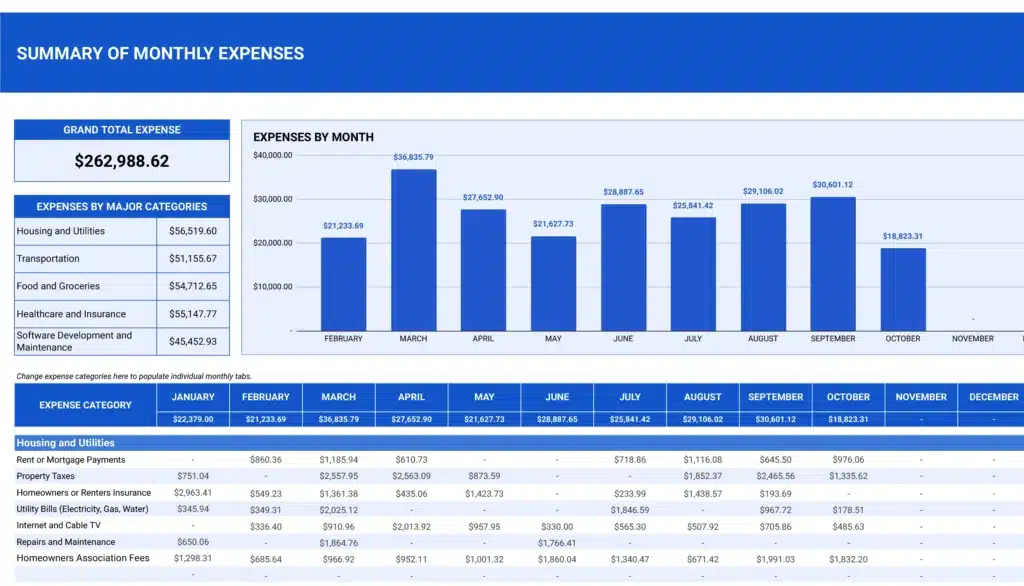
A Monthly Expense Report Template summarizes expenses over a fixed monthly period. Monthly reporting allows for reliable comparison and trend analysis.
This format typically includes:
- Monthly spending totals
- Category-based summaries
- Comparison with planned budgets
- Notable variances
Monthly expense reports are widely used by finance teams, managers, and individuals who require structured oversight without daily detail.
Free Printable Expense Report Form for Simple Documentation

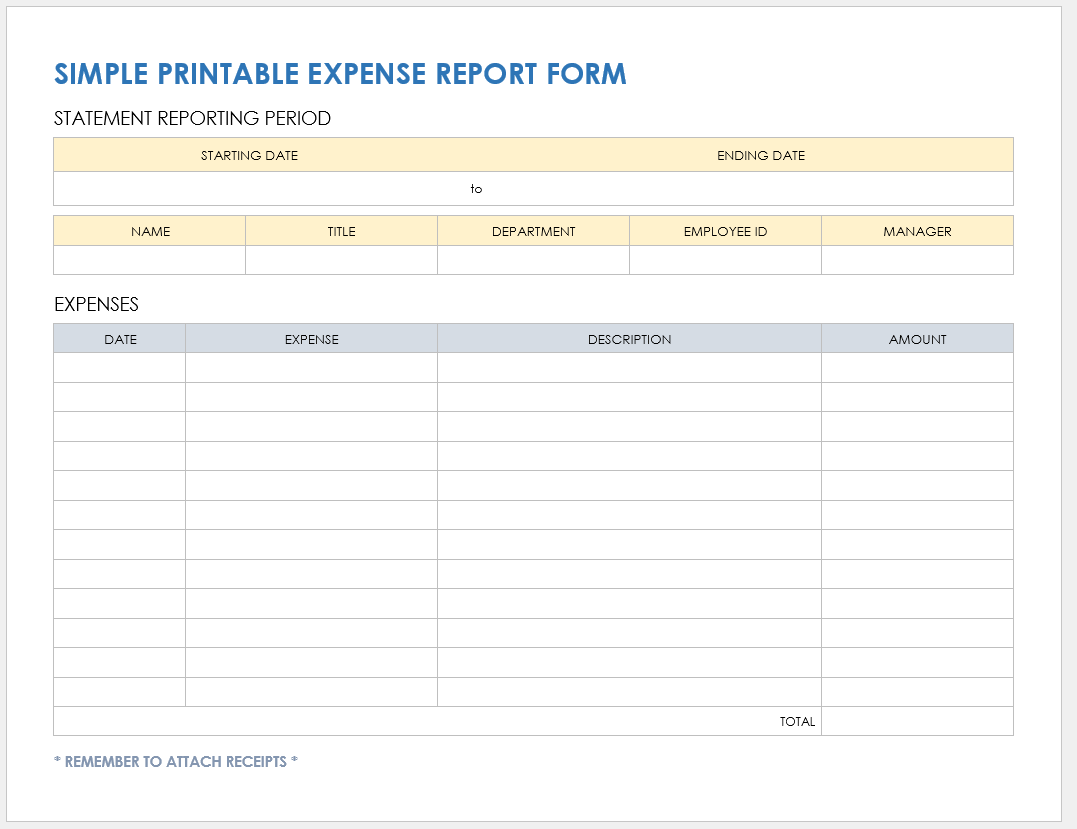
A Free Printable Expense Report Form for Simple Documentation provides a straightforward, paper-based solution for recording expenses.
This format is especially useful for:
- Small teams
- Field workers
- Temporary or offline reporting needs
While simple, printable forms still support consistency and clarity when designed with clear fields and categories.
Get also: Travel Expense Report Template
Choosing the Right Expense Report Template
Selecting the appropriate template depends on several factors:
- Reporting frequency
- Level of detail required
- Approval processes
- User familiarity
A good Expense Report should be easy to complete consistently while capturing all necessary financial details.
Overly complex templates discourage regular use, while overly simple formats may lack sufficient information for proper review.
Adapting Expense Reports for Different Use Cases
Expense reporting requirements vary across roles and contexts.
Employee Expense Reporting
Employees benefit from clear templates that simplify submission and reimbursement.
Team or Project Reporting
Project-based expense reports help track costs against specific initiatives or budgets.
Personal Expense Tracking
Individuals use simplified templates to monitor spending habits and manage budgets.
Tailoring the format ensures that expense reporting remains efficient and accurate.
Common Mistakes in Expense Reporting
Even well-designed templates can lose effectiveness if common mistakes occur, such as:
- Incomplete or missing expense details
- Poor categorization
- Delayed reporting
- Inconsistent reporting periods
A strong Expense Report Template emphasizes completeness, accuracy, and consistency.
Best Practices for Maintaining Accurate Expense Reports
To maximize the value of expense reporting:
- Record expenses promptly
- Use clear and consistent categories
- Attach supporting documentation
- Review reports before submission
- Maintain a consistent reporting schedule
These practices reduce errors and improve financial reliability.
Using Expense Reports to Improve Financial Decisions
Expense reports are not only for recordkeeping. When reviewed regularly, an Expense Report Template supports better decision-making by revealing spending patterns and cost drivers.
Consistent reporting helps organizations and individuals:
- Identify unnecessary expenses
- Adjust budgets proactively
- Improve cost control
- Strengthen financial planning
Over time, historical expense data becomes a valuable resource for forecasting and optimization.
Long-Term Benefits of Standardized Expense Reporting
Organizations that adopt structured expense reporting gain:
- Improved financial transparency
- Faster approval and reimbursement cycles
- Reduced risk of errors or disputes
- Stronger budget discipline
- Clearer audit trails
A reliable Expense Report Template becomes a foundational element of sound financial management.
Conclusion
An Expense Report is a vital tool for tracking spending, maintaining transparency, and supporting informed financial decisions. By standardizing how expenses are documented and reviewed, individuals and organizations gain clarity, consistency, and control.
Whether using an Expense and Income Report Template for Balanced Financial Tracking, a Monthly Expense Report Template for Consistent Budget Oversight, or a Free Printable Expense Report Form for Simple Documentation, the right format ensures that financial data is accurate, accessible, and actionable.
When applied consistently, expense reporting transforms everyday transactions into meaningful financial insight and stronger fiscal discipline.