Weekly Sales Report Template – 7+ Proven Framework for Consistent Growth

Weekly Sales Report Template – Proven High-Impact Framework for Consistent Growth Tracking | Understanding weekly performance is one of the most reliable ways for any business to stay grounded in reality. Revenue numbers don’t lie, and they don’t care how confident a sales team feels after closing one big deal. A weekly sales report template gives structure to that truth-telling process, helping teams organize data, compare progress, and identify opportunities before they slip away.

Across many industries—whether retail, SaaS, B2B, or service-based operations—weekly monitoring has become essential for predicting trends, diagnosing slowdowns, and staying aligned with broader goals. A good template doesn’t just capture numbers; it reveals the underlying story. With clear sections, consistent formatting, and properly presented metrics, a weekly layout can turn chaotic sales chatter into a readable narrative that even a half-asleep manager can understand during Monday meetings.

The value of a well-built weekly sales report template lies in its reliability. It delivers a framework that ensures no detail is forgotten, no performance pattern is overlooked, and no team member can claim they “didn’t know sales were down.” By standardizing how data is captured—pipeline updates, closed deals, follow-up status, revenue projection, and team performance—the template becomes a stabilizing force in an otherwise unpredictable field.

Weekly Sales Report Template for Consistent Growth Tracking

Sales environments thrive on clarity. Without it, every conversation becomes a guessing game, and every update feels like a plot twist. A proper weekly sales report template changes all that. At its core, it provides a structured snapshot of revenue-driving activities within a specific seven-day window, ensuring decision-makers receive the insights they need without digging through long email threads or spreadsheets with mysterious column names.

A strong Weekly Sales Report Template usually includes sections such as key metrics, sales pipeline activity, lead status, revenue comparisons, trends for the week, and action plans. A good one also captures context: the factors affecting performance, forecast adjustments, opportunities at risk, internal challenges, and customer-related insights. By blending numbers with explanations, the template becomes an actual management tool—not just a data dump.

Another advantage of using a weekly sales report template is consistency. When every team member reports using the same structure, managers can spot patterns quickly. Imagine reviewing ten reports written in ten completely different formats; that’s like trying to find a matching pair of socks from a basket of identical black socks. A unified template eliminates clutter and reduces cognitive fatigue.

The Weekly Sales Report Template also encourages accountability. When metrics appear week after week in the same format, gaps and improvements become obvious. A drop in conversion rate, for example, can’t hide behind excuses when it’s clearly displayed next to last week’s numbers. Over time, these small weekly insights lead to better long-term strategies, more accurate forecasting, and a deeper understanding of sales performance drivers.

Supporting insights for building an effective weekly framework

Weekly reporting isn’t just about filling in numbers. It’s about creating a meaningful record that helps organizations adapt. For many teams, the biggest challenge isn’t collecting data—it’s interpreting it correctly. That’s where supporting insights come into play.

Patterns, anomalies, lead quality changes, shifting customer preferences, and market fluctuations all become visible when weekly reports are properly structured. A well-designed weekly report template ensures these insights aren’t lost. Instead, they’re captured in a way that aligns with real business goals.

Another consideration is communication. A good weekly report reduces the friction between sales teams and leadership. When information is clear, concise, and easy to interpret, meetings become shorter and more productive. Instead of debating numbers, teams can focus on solutions, strategy adjustments, and operational improvements.

The Weekly Sales Report Template also supports transparency across departments. Marketing teams can see which campaigns brought qualified leads. Finance teams can track projected revenue more accurately. Operations can forecast workloads based on pipeline movement. In short, a well-built weekly structure becomes a cross-functional asset—not just a sales tool.

Finally, a weekly framework encourages adaptability. Sales environments shift quickly, and waiting for monthly or quarterly reports often means reacting too late. Weekly documentation gives businesses the agility to adjust strategy before minor issues become major setbacks.

Weekly Sales Activity Report Template – Essential Structure for Clear Workflow Insights

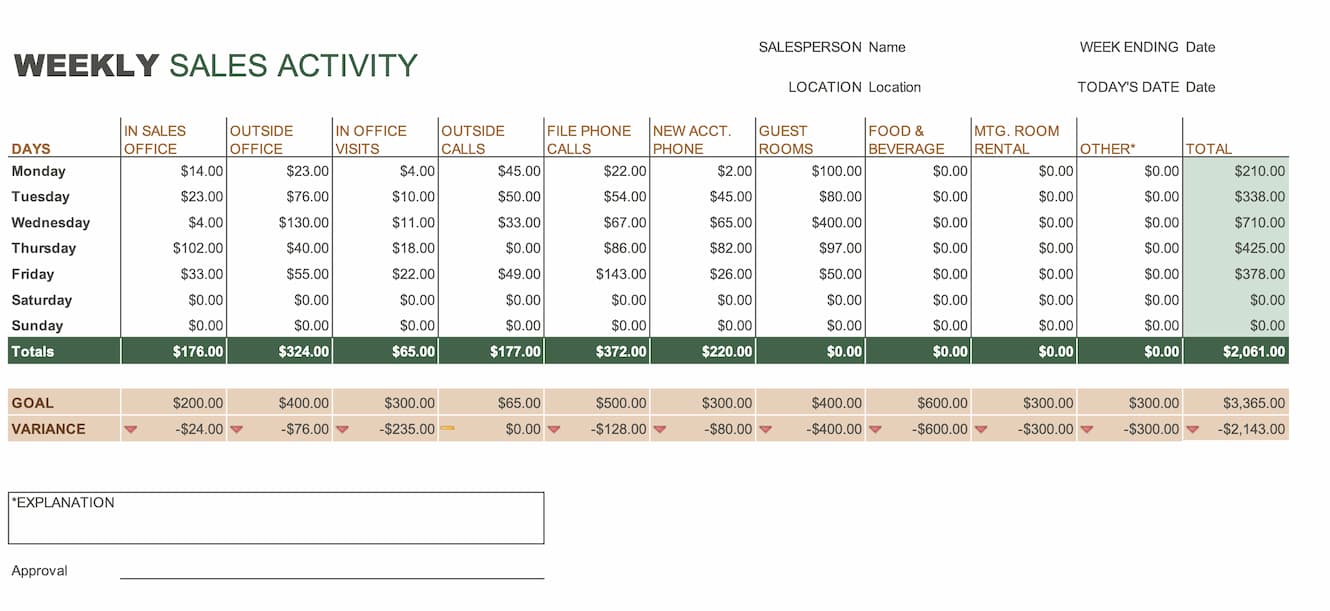
Daily interactions with prospects form the backbone of any sales cycle. A Weekly sales activity report template serves as the perfect format for capturing these interactions and transforming them into actionable insights. Instead of scattered notes about calls, demos, follow-ups, and outreach attempts, this template organizes everything into a structured weekly narrative that shows exactly how sales representatives are spending their time.

The strength of this Weekly Sales Activity Report Template lies in its ability to highlight both productivity and efficiency. Activity numbers alone don’t mean much unless they relate directly to outcomes. For example, making 80 cold calls sounds impressive—until you realize only two resulted in follow-up discussions. By pairing activity metrics with outcomes, the template encourages targeted improvements rather than blind hustle.

Another useful component is the breakdown of touchpoints across different channels. Teams can see whether emails outperform calls, or whether LinkedIn outreach works better with certain industries. Over time, these weekly insights refine the team’s approach to engagement, reducing wasted effort and improving conversion rates.

This template also benefits managers who need to identify coaching opportunities. If a representative repeatedly logs many activities but sees little movement in the pipeline, a deeper conversation can begin. Likewise, a rep who consistently achieves high conversion with fewer actions might reveal best practices that others can adopt.

Used consistently, the Weekly sales activity report template becomes a roadmap—not just a list of actions. It reveals how energy translates into results and helps teams realign efforts toward the most effective strategies.

Weekly Sales Manager Report Template – Powerful Breakdown for Smarter Decision-Making

Leadership thrives on clarity, and a weekly sales manager report template delivers exactly that. It gives managers a comprehensive view of team performance without requiring hours of manual analysis. Instead of sifting through multiple documents, managers receive a unified format that highlights key metrics, team productivity, pipeline movement, forecast accuracy, and blockers that need attention.

One of the most valuable aspects of this template is its emphasis on interpretation. Sales managers don’t just report numbers—they explain them. They outline what drove performance, what hindered progress, and what adjustments might be needed. The template encourages them to think critically about outcomes and communicate insights in a structured, digestible way.

The Weekly Sales Manager Report Template also supports proactive leadership. Weekly patterns can reveal whether a slowdown is temporary or a sign of deeper issues. For example, if every team member reports fewer qualified leads than usual, marketing alignment might need reinforcement. If deals are repeatedly stuck in the same pipeline stage, training on objection handling may be necessary. Early detection enables corrective action before losses compound.

In addition, the weekly sales manager report template helps align teams on shared goals. Managers can compare performance against weekly targets, identify top contributors, and recognize areas where collective improvement is needed. This structure fosters collaboration rather than competition, creating a healthier and more transparent sales culture.

Another advantage lies in risk detection. By tracking stalled deals, unusual customer behavior, or sudden industry shifts, the template ensures that leadership stays alert. These insights improve forecasting and support more confident decision-making, especially in fast-changing environments.

Weekly Team Status Report Template – High-Impact Format for Strong Alignment and Collaboration

Success in sales isn’t an individual sport; it’s a coordinated effort across an entire group. A weekly team status report template helps teams stay aligned, ensuring that every member understands shared objectives, current challenges, and ongoing initiatives. It creates visibility across roles and helps prevent miscommunication that can derail progress.

One of the biggest strengths of this template is its ability to highlight collective achievements. While individual reporting is important, team-level insights reveal how combined efforts contribute to overall momentum. Whether the focus is on hitting weekly targets, improving outreach quality, or coordinating large deals, the template keeps everyone on the same page.

It also helps teams track collaborative tasks—shared accounts, follow-ups requiring multiple touchpoints, cross-departmental initiatives, or campaigns that involve both marketing and sales. These tasks often slip through the cracks without structured reporting, especially in busy weeks.

The Weekly Sales Report Template also improves alignment with leadership. Managers can quickly see how the team’s energy is distributed, which priorities are receiving the most focus, and where support is needed. This allows them to allocate resources more effectively, whether that means adjusting territory assignments, refining messaging, or providing additional guidance.

Another benefit is morale. Weekly team updates create a rhythm of wins, learnings, and shared progress. They give the team an opportunity to recognize contributions, celebrate completed goals, and reflect on areas for improvement without the pressure of formal performance reviews.

By using this Weekly Sales Report Template consistently, teams build a culture of transparency, clarity, and unified progress—qualities that strengthen collaboration and improve performance across the board.
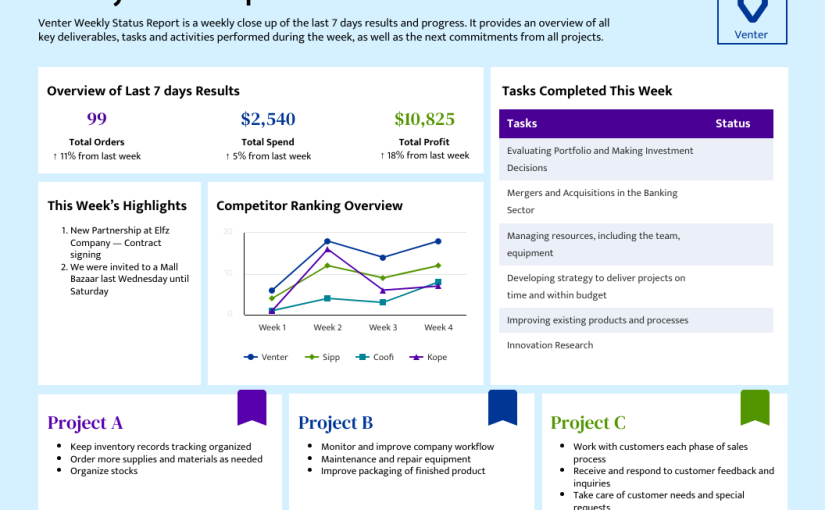
FREE Weekly Status Report Template – 8+ High-Impact Formats

Weekly Status Report Template Mastery: High-Impact Formats for Fast, Clear Updates | A dependable Weekly status report template gives teams something priceless: clarity without chaos. Anyone who has ever sat through an update meeting that felt longer than a slow-loading spreadsheet knows how valuable a well-structured weekly report can be. It organizes scattered tasks, turns vague updates into measurable progress, and helps decision-makers spot issues before they have the chance to snowball. Whether you’re managing a busy project team or overseeing multiple departments, the right structure cuts through noise and delivers meaningful visibility.

A strong Weekly status report template doesn’t just list completed tasks. It provides a structured snapshot of progress, risks, resources, dependencies, and upcoming priorities. It also ensures team members report updates in a consistent format so managers aren’t left decoding wildly different reporting styles—like deciphering hieroglyphs every Friday afternoon.

In many workplaces, weekly reports become the backbone of coordination. They tie together timelines, accountability, and cross-functional work. A polished Weekly status report template guides contributors to focus on specifics: measurable output, clear blockers, and objective progress indicators. Instead of vague commentary, it produces actionable information that the team can work with.

Another advantage is time efficiency. A properly designed Weekly status report template reduces the time spent writing updates because contributors simply fill predefined sections. Instead of figuring out what to say each week, they follow a consistent pattern. Managers also save time since reports become faster to review—no more endless scrolling through paragraphs that feel like someone wrote them in a hurry at 4:59 PM.

Because teams evolve and workloads shift, flexibility matters. A great Weekly status report template adapts to different environments: agile teams, departmental operations, HR functions, engineering pipelines, or administrative routines. Its structure remains simple, but the fields can be expanded or customized to match specific goals. When people actually enjoy filling out the template—well, “enjoy” might be a strong word—but at least they don’t resist it, you know you’ve created something effective.

A refined Weekly status report template also strengthens communication between teams and leadership. It ensures that everyone—from junior staff to senior decision-makers—accesses the same level of structured visibility. That alignment keeps expectations realistic and helps reduce misunderstandings that typically arise from unclear reporting styles.

Now let’s break down the functional value of this template through practical lenses and relatable use cases, without turning it into a snooze-fest that leaves everyone daydreaming about weekend plans.

Optimizing Weekly Status Reporting Through Practical Structure

An effective Weekly status report template starts by separating information into specific categories that reflect real project needs. Most teams benefit from sections like KPIs, completed tasks, ongoing work, blockers, dependencies, risks, and upcoming deliverables. These areas allow contributors to express their progress clearly and logically.

One of the most crucial elements is progress measurement. Instead of general commentary—“working on it,” “almost done,” “nearing completion”—the Weekly status report template encourages measurable statements. For example, “API integration completed at 80%, remaining tasks involve authentication logic.” It’s much easier for leaders to make decisions when updates include numbers, timeframes, and impact estimates.

The weekly report template also supports risk visibility. Blockers and pending items can be listed in a dedicated section to ensure they aren’t hidden behind optimistic phrasing. When a Weekly status report template creates transparency, the entire team benefits from timely escalation and accurate planning.

When used across departments, consistency becomes a major advantage. Marketing, product, engineering, finance, and HR all have different reporting styles. The best Weekly status report template harmonizes those differences without forcing a single rigid style across the organization. It provides a backbone for reliable communication while still leaving room for team-specific information.

Humor can even be subtly woven into these reports—only when appropriate, of course. A dash of personality keeps weekly summaries from feeling robotic. Just enough to make someone smile without making your compliance department faint.

Supporting Templates for Different Reporting Needs

Weekly Project Status Report Template

A Weekly project status report template focuses on task-driven progress. It works best for teams juggling milestones, sprint cycles, or cross-functional deliverables. The structure blends timeline tracking with measurable metrics so project managers can quickly see if everything is running smoothly— or if something is quietly catching fire behind the scenes.

This type of template typically includes fields for scope changes, risk forecasts, timeline deviations, and upcoming sprint goals. It’s ideal for teams balancing large workloads, requiring visibility into dependencies or bottlenecks. Tools like Gantt charts, task lists, and milestone checkpoints pair well with the Weekly project status report template, especially when teams need to communicate how their efforts contribute to larger organizational objectives.

Use cases include software development sprints, marketing campaign rollouts, construction phases, and product lifecycle planning. Anyone overseeing multi-layered work will find that the Weekly project status report template sharpens planning accuracy and keeps contributors aligned.

Get also: Free Monthly Report Template

Weekly Employee Status Report Template

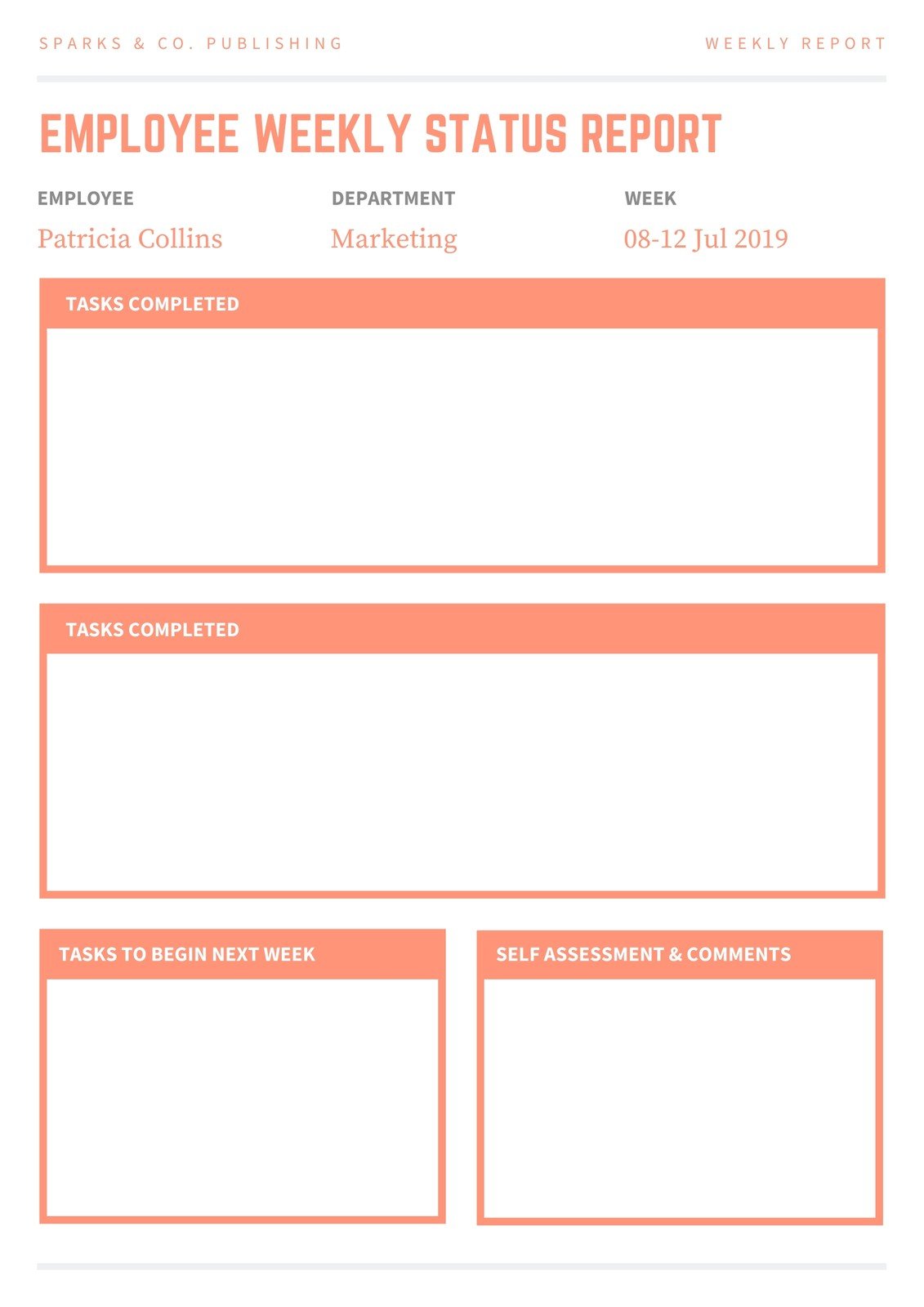
A weekly employee status report template shifts focus from project milestones to individual output. This is where personal accountability shines. Instead of guessing what team members accomplished throughout the week, the template provides a clear breakdown of tasks completed, challenges faced, skill development, and upcoming responsibilities.

Managers benefit from this format when coaching or evaluating performance. The weekly employee status report also supports professional growth by encouraging reflection on workload patterns, productivity roadblocks, and areas where support may be required. It’s particularly effective for remote teams or hybrid environments where ongoing communication is essential.

Employees can use this structure to express achievements without worrying about sounding boastful. The template naturally prompts clarity, and it reduces the “What did you do this week?” back-and-forth that nobody enjoys. With the weekly employee status report template, everyone stays on the same page—literally and figuratively.

Weekly Team Status Report Template

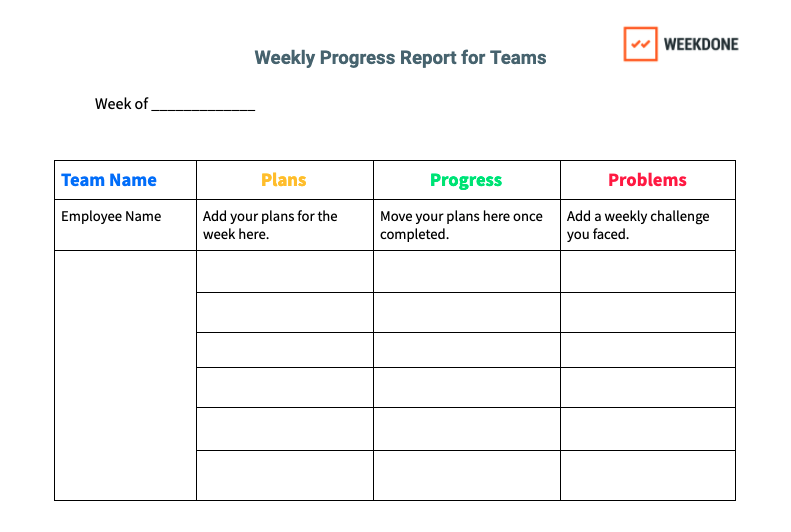
A weekly team status report expands beyond individual or project-specific updates. It captures the collective progress of an entire team. This makes it especially useful for department leads managing diverse workloads across multiple contributors.

Sections often include shared goals, team-level KPIs, collaboration updates, collective blockers, interdepartmental dependencies, and planned priorities. The weekly team status report template helps leadership understand how different team members contribute to unified outcomes while highlighting areas that require resource adjustments.

This template is effective for operations teams, customer support groups, creative departments, and technical squads. It aligns everyone’s progress under a single framework, giving directors a high-level overview without losing sight of critical details. A well-structured weekly team status report keeps momentum high and confusion low.

Enhancing Consistency and Transparency Across Any Organization

A reliable Weekly status report template can transform how teams communicate. It minimizes ambiguity, nurtures accountability, and ensures updates aren’t buried in random email threads or scattered chat messages. Once the structure becomes habitual, weekly reporting turns into a smooth routine—less dread, more clarity.

Companies with complex workflows benefit from the uniformity it creates. When every team uses the same backbone for reporting, decision-makers get a clearer picture of the overall direction. Instead of patching together bits of information from different sources, a standardized Weekly status report centralizes visibility and saves time for everyone involved.

Even better, the template becomes a living record of progress. It highlights improvements, reveals bottlenecks, and provides a historical trail for analyzing patterns. Over time, these insights help teams optimize productivity, strengthen communication flows, and refine planning accuracy.

A smartly crafted Weekly status report template also reduces friction between departments. With consistent reporting standards, teams understand each other better. Marketing knows where engineering stands, HR sees resource needs, finance gets visibility into shifting priorities, and leadership can align strategy accordingly.

While no template can magically make the week feel shorter, the right structure can at least make the workday smoother. And in the world of professional reporting, that’s practically a superpower.

10+ BEST Weekly Report Templates to Boost Team Clarity and Momentum

10 Powerful Weekly Report Template Ideas to Boost Team Clarity and Momentum | A weekly report template is one of those underrated tools that quietly keep a team functioning like a well-oiled machine. While deadlines rush in, tasks multiply, and priorities shift without warning, a structured weekly summary ensures nothing gets lost in the chaos. Instead of scrambling to remember what happened over the past five days, a weekly template gives teams a clean and organized snapshot of everything that matters.

It brings order, consistency, and clarity—three things every workplace needs but often struggles to maintain. A good weekly format shows what has been completed, what’s in progress, and what barriers might block next week’s progress. Whether a team handles creative work, operations, engineering, customer service, or sales, a structured document keeps everyone aligned without requiring long meetings or tedious updates.

The ideal weekly layout is simple: summarize, highlight, track, and prepare. When updates follow the same structure every week, reviewing them becomes second nature. Everyone—from entry-level staff to managers—can quickly grasp where the team stands and what actions must come next. No guesswork. No digging through endless chat threads. No “What did I do last Tuesday?” moments.

A strong weekly report template transforms uncertainty into structure. It helps teams communicate better, work more efficiently, and stay accountable in the gentlest way possible.

Weekly Report Template for Clear and Consistent Workflows

A weekly report template provides a standardized format that teams can rely on. When people switch between multiple projects or deadlines, having a consistent structure removes confusion and keeps information easy to read. Instead of writing updates from scratch, they simply fill in predefined sections that guide their thoughts and ensure key details are covered.

Weekly cycles often fluctuate—some weeks are filled with breakthroughs, while others feel like pushing a shopping cart with a broken wheel. The template smooths out these highs and lows, giving each week the same predictable rhythm. This helps teams maintain flow even during hectic periods.

Because of its flexibility, a weekly layout works for different industries. Creative teams can highlight campaign updates, engineers can log milestone progress, HR can track onboarding, and logistics teams can document operational events. No matter the field, the template adapts easily with minor adjustments.

Weekly Status Report Template

A weekly status report template is designed to give clear visibility into the current condition of tasks and responsibilities. It usually includes sections for accomplishments, ongoing work, blockers, and next steps. With structured headings, contributors don’t need to overthink their updates; they simply fill in relevant details.

Status templates are useful for team meetings, internal updates, one-on-one discussions, and cross-department coordination. Managers can review them quickly and understand how things are progressing without having to dive into every detail individually. The layout promotes transparency, consistency, and accountability.

Weekly Progress Report Template

A weekly progress report template goes deeper into measurable development. While a status report focuses on “what’s happening,” a progress report emphasizes “how far things have moved.”

Typical elements include:

  • Progress percentages or milestones
  • Goals set at the beginning of the week
  • Differences between planned and actual outcomes
  • Short explanations for changes
  • Plans for the upcoming week

This type of template works perfectly for long-term projects requiring consistent tracking. It’s particularly useful for engineering teams, design departments, production units, and any task-driven environment where every increment matters.

Get also: Weekly Expense Report Template

Weekly Report Template for Performance Tracking

Performance monitoring becomes significantly easier with a well-structured weekly report template. Over time, weekly summaries reveal patterns—how quickly tasks are completed, which issues frequently arise, and which improvements might boost efficiency. These patterns help managers respond proactively rather than waiting for problems to escalate.

Because weekly documents contain short, digestible updates, team leaders can detect trends early. They can identify when workloads become overwhelming, when progress slows down, or when communication gaps begin to form. This leads to better decision-making and smoother operations.

The beauty of a performance-focused template lies in its balance between detail and brevity. It gives enough depth to be meaningful without drowning readers in long paragraphs.

Weekly Sales Report Template

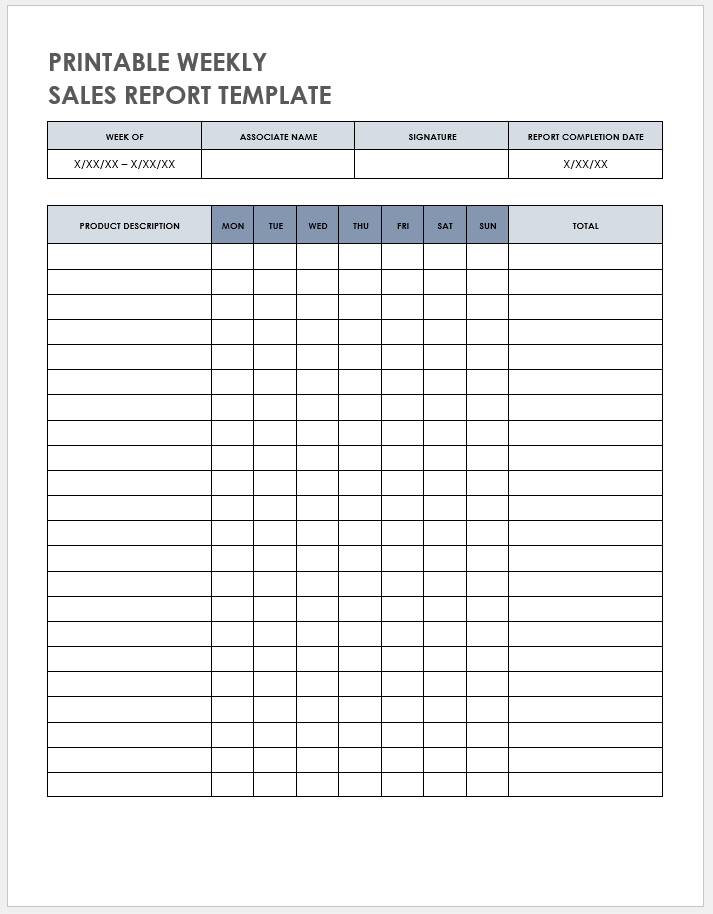
A weekly sales report template is essential for tracking performance in sales-focused teams. It highlights key numbers, revenue movement, client interactions, and shifts in the pipeline. Weekly sales data can change dramatically, so a structured document helps maintain clarity.

Sales templates often include:

  • Total weekly sales
  • New leads and prospects
  • Deal status updates
  • Follow-up actions
  • Obstacles affecting performance

Team leaders can quickly compare sales trends, plan upcoming targets, and adjust strategies to maintain momentum.

Weekly Status Report Template (Performance Focus)

Within a performance-driven environment, a weekly status report template helps evaluate achievements and challenges in a measurable way. It covers items like completed tasks, efficiency notes, risk indicators, and action items. Over time, these reports reveal which processes are working smoothly and which require improvement.

This template is especially helpful in roles that rely on consistent productivity, such as customer support, production teams, IT operations, or administrative work.

Get also: Annual Marketing Report Template

What Makes a Weekly Report Template Truly Effective

The effectiveness of a weekly report template comes from its structure, clarity, and relevance. A good template must offer:

1. Consistent layout
Repetition makes weekly updates easy to write and even easier to read.

2. Clear sections
Well-labelled categories help contributors stay focused and avoid unnecessary explanations.

3. Space for insights
Weekly reflections encourage learning and improvement.

4. Defined priorities
Highlighting important goals helps the team maintain direction.

5. Next week’s planning
This ensures momentum continues and reduces uncertainty.

6. A balanced level of detail
Too much text becomes overwhelming; too little becomes unhelpful. Effective templates strike the right middle ground.

When Weekly Templates Make the Biggest Impact

Project Management

Teams can track milestones, shifting priorities, and potential risks.

Marketing Departments

Campaign performance, content output, and engagement numbers benefit from structured weekly summaries.

Human Resources

Recruitment progress, onboarding steps, and internal activities become clearer and more predictable.

Engineering & Development

Sprint updates, backlog movement, and technical blockers are easier to monitor.

Sales & Retail

Weekly sales reports, customer interactions, and revenue changes are essential for forecasting and performance evaluation.

Every department gains visibility and direction through a weekly report template tailored to its needs.

How Weekly Templates Improve Productivity

A strong weekly reporting system enhances productivity by:

  • Reducing confusion
  • Improving communication
  • Providing accountability
  • Tracking measurable outcomes
  • Highlighting risks early
  • Supporting consistent planning
  • Strengthening team alignment

Weekly templates create a rhythm of reflection and forward planning that keeps teams operating with purpose.

Choosing the Right Weekly Report Template

The ideal template depends on the team’s workflow. Complex projects require more detail, while routine work needs a simpler structure. Key components often include:

  • Weekly overview
  • Completed tasks
  • Ongoing work
  • Blockers or challenges
  • Insights and observations
  • Next week’s goals
  • Relevant metrics or KPIs
  • Optional attachments or references

Mix and match these sections to form a template that fits your environment without overwhelming contributors.

Final Thoughts

A weekly report template is more than a formality—it’s a communication tool that ensures every member of a team understands what’s happening, what matters, and what comes next. In fast-paced workplaces where priorities change daily, a weekly structure offers clarity and stability. With the right layout, teams boost productivity, enhance collaboration, and maintain focus without unnecessary meetings or long-winded updates.

When used consistently, a weekly report template becomes the backbone of internal communication and a reliable foundation for improving performance across the organization.

Exit mobile version