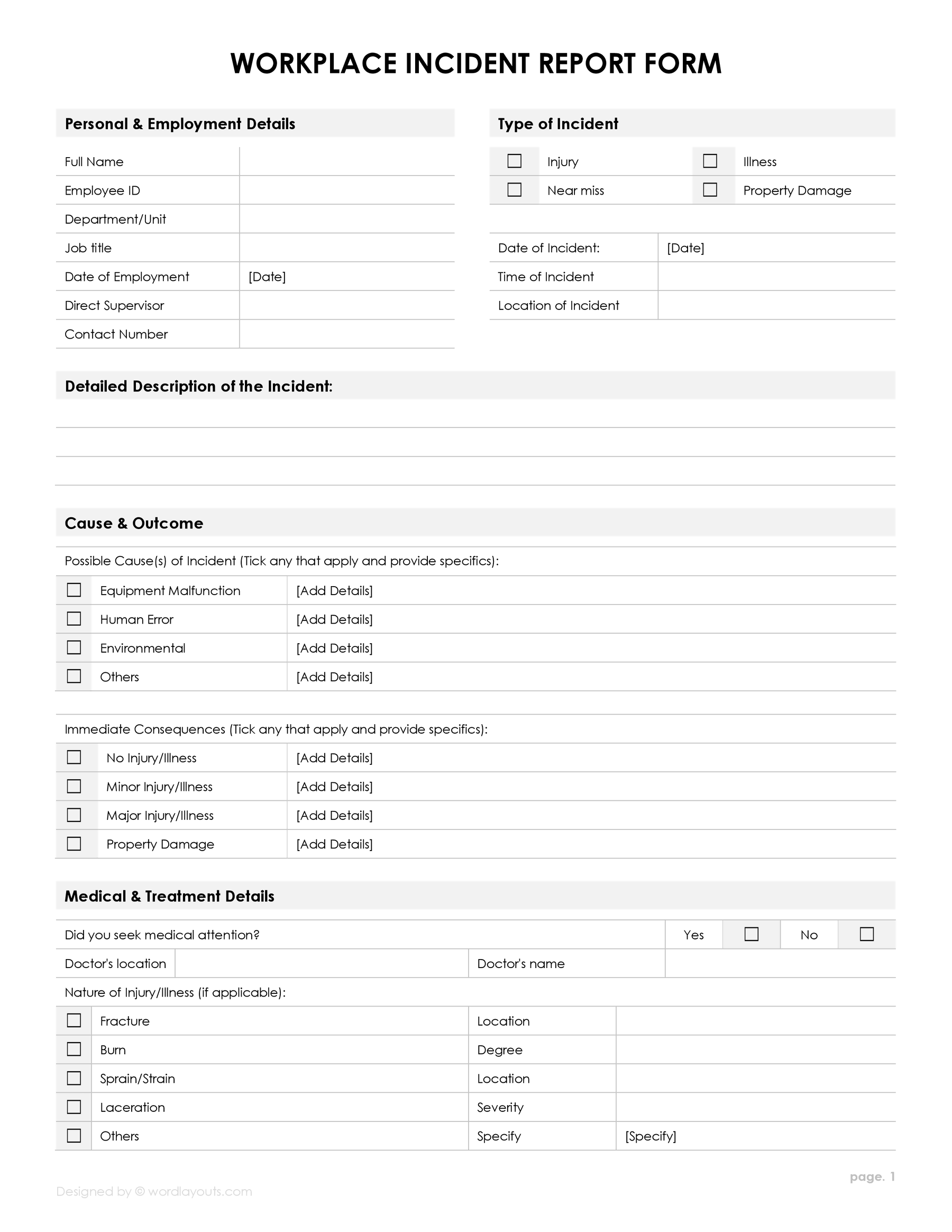
Police Crime Report Template usage is essential in law enforcement operations where accuracy, clarity, and procedural consistency are non-negotiable. Crime reports form the backbone of criminal investigations, providing official documentation that supports case development, evidence tracking, and accountability.
A well-structured reporting format ensures that crime-related information is recorded objectively, preserved correctly, and reviewed efficiently across departments and oversight bodies.
What Is a Police Crime Report?
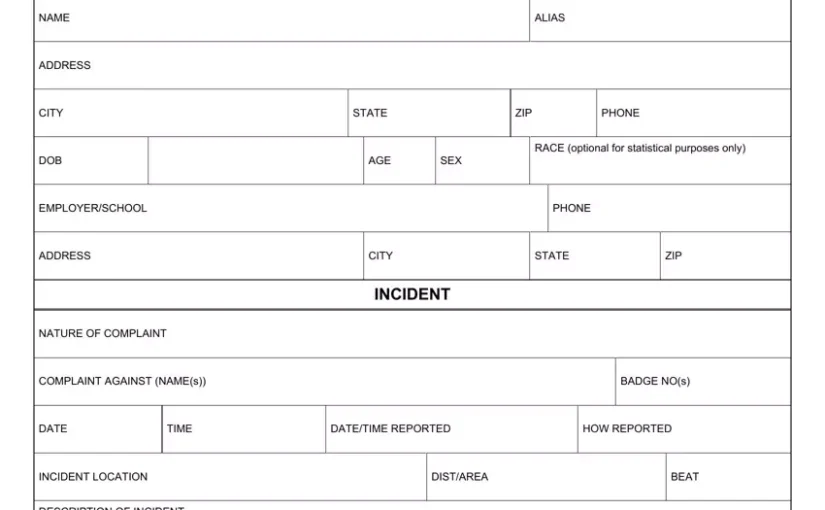
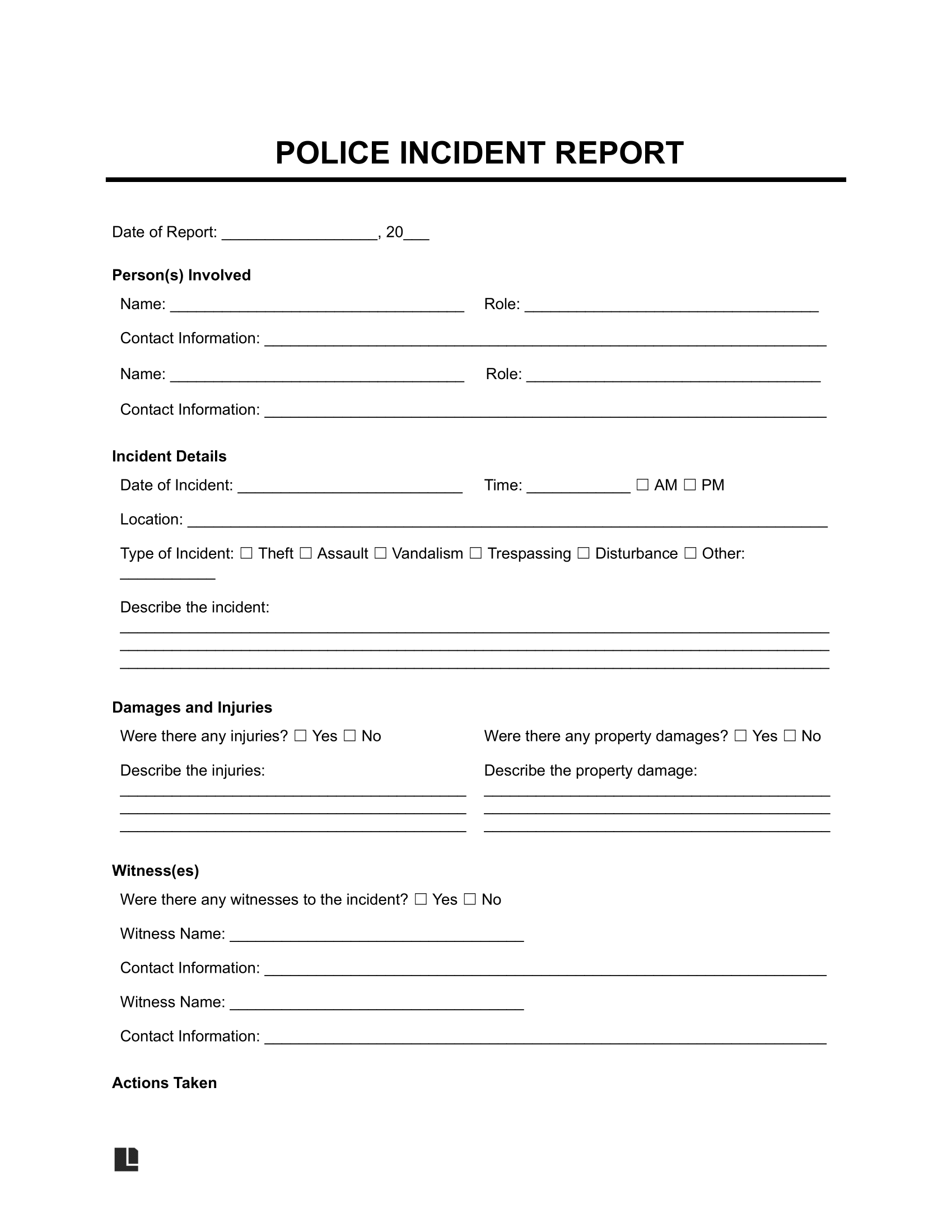
A Police Crime Report is a standardized document framework used by law enforcement officers to record criminal incidents, investigative actions, and related case information. It provides a consistent structure for documenting facts, observations, and procedural steps connected to criminal activity.


These reports are used to:
- Record alleged or confirmed crimes
- Support criminal investigations
- Document arrests and enforcement actions
- Preserve official case records
- Enable supervisory and legal review
Clear formatting improves both internal coordination and long-term record reliability.
Why Structured Crime Reporting Is Critical in Policing
Crime reports are often reviewed by investigators, prosecutors, supervisors, and external authorities. Inconsistent or unclear reporting can weaken cases and slow investigations.
A reliable Police Crime Report helps law enforcement agencies:
- Capture complete and accurate incident details
- Maintain consistency across reports
- Reduce reporting errors and omissions
- Support evidence-based investigations
- Ensure procedural transparency
Structured reporting strengthens the integrity of criminal case documentation.
Key Sections of an Effective Police Crime Report
Although formats may vary by jurisdiction, professional crime reports share core components.
Incident Identification
Includes report number, date, time, location, and responding unit.
Crime Classification
Specifies the type of offense and relevant legal categories.
Involved Individuals
Documents victims, suspects, witnesses, and reporting parties.
Narrative Description
A factual, chronological account of events based on observed facts and statements.
Evidence and Property Information
Details physical evidence, seized property, or forensic materials.
Officer Actions
Records enforcement steps, investigative measures, or follow-up tasks.
A structured Police Crime Report Template ensures each section is documented clearly.
Common Types of Police Crime Report Templates
Law enforcement agencies use different crime report formats depending on case requirements. Below are the most widely used variations.
Police Crime Scene Report Template for Evidence Documentation


A Police Crime Scene Report Template for Accurate Scene Documentation is used to record observations and conditions at the location of a crime.
It typically includes:
- Scene description and layout
- Environmental conditions
- Evidence location and handling
- Scene security measures
This police report template supports forensic integrity and investigative continuity.
Police Arrest Report Template for Custodial Records


A Police Arrest Report Template for Lawful Detention Documentation is used when a suspect is taken into custody.
It documents:
- Arrest time and location
- Legal basis for arrest
- Suspect identification
- Use of force, if applicable
- Property seized during arrest
This report provides an official record of enforcement actions.
Get also: Safety Incident Report Template
Police Supplemental Report Template for Case Updates


A Police Supplemental Report Template for Ongoing Case Development is used to add new information after the initial crime report has been filed.
It may include:
- Additional witness statements
- New evidence or findings
- Follow-up interviews
- Clarifications or corrections
Supplemental reports ensure case files remain complete and current.
Operational Benefits of Standardized Crime Reports
Consistent reporting formats provide operational advantages across law enforcement agencies.
Improved Investigative Efficiency
Clear reports allow investigators to assess cases faster.
Better Evidence Tracking
Structured documentation supports chain-of-custody requirements.
Enhanced Supervisory Review
Uniform reports simplify review and approval processes.
Stronger Case Integrity
Accurate documentation supports prosecution readiness.
A dependable Police Crime Report strengthens operational effectiveness.
Who Uses Police Crime Reports?
Crime reports are prepared and reviewed by multiple roles within law enforcement.
Common users include:
- Patrol officers
- Detectives and investigators
- Supervisors and command staff
- Records and administrative units
- Legal and compliance teams
Defined responsibilities ensure reports are completed correctly and on time.
Writing Clear and Objective Crime Report Narratives
Narrative sections are critical components of crime reports. Effective narratives:
- Use factual, observable language
- Avoid speculation or personal opinions
- Follow chronological order
- Clearly separate statements from observations
A structured Police Crime Report Template guides officers toward objective reporting.
Common Errors in Crime Report Documentation
Even experienced personnel may encounter reporting challenges.
Frequent issues include:
- Incomplete incident timelines
- Vague descriptions
- Missing witness details
- Inconsistent terminology
- Delayed supplemental reporting
Templates reduce these errors by enforcing consistency.
Adapting Crime Report Templates to Different Case Types
While core elements remain consistent, crime reports must reflect case complexity.
Minor Offenses
Focus on clarity, identification, and basic evidence documentation.
Serious Crimes
Require detailed narratives, evidence logs, and multiple report sections.
Multi-Agency Cases
Emphasize coordination details and shared responsibilities.
Flexible Police Crime Report Template designs support diverse case needs.
The Role of Crime Reports in Accountability and Oversight
Crime reports are official records that support transparency and accountability. They may be reviewed internally or externally to evaluate law enforcement actions.
Clear documentation:
- Protects officers and agencies
- Supports internal investigations
- Ensures procedural compliance
- Builds public trust
Structured reporting reinforces professional standards.
Digital vs. Paper-Based Police Crime Report Templates
Modern law enforcement increasingly relies on digital reporting systems, though paper formats remain relevant in certain contexts.
Digital Crime Reports
- Faster submission and retrieval
- Centralized case management
- Easier data analysis
Paper-Based Reports
- Useful in field conditions
- Reliable when technology access is limited
- Suitable for backup documentation
Many agencies use a hybrid reporting approach.
Using Crime Reports for Long-Term Operational Improvement
Beyond individual cases, crime reports provide valuable insights when reviewed collectively.
Agencies can:
- Identify crime patterns
- Evaluate enforcement strategies
- Improve training programs
- Allocate resources effectively
Historical crime data supports informed planning and prevention efforts.
Legal and Procedural Importance of Crime Reports
Crime reports may be referenced in court proceedings, audits, or disciplinary reviews. Accuracy, completeness, and consistency are therefore essential.
A standardized Police Crime Report Template helps ensure documentation meets legal and procedural expectations.
Choosing the Right Police Crime Report Template
The most suitable template depends on:
- Type of crime
- Investigation stage
- Required level of detail
- Reporting and review processes
Selecting the right format ensures reports are both usable and compliant.
Integrating Crime Reporting into Daily Police Operations
Effective crime reporting works best when embedded into routine workflows.
This includes:
- Clear reporting timelines
- Defined supervisory review
- Secure record storage
- Ongoing training
Standardized templates make reporting efficient and reliable.
Conclusion
A Police Crime Report Template is a critical operational tool for documenting criminal incidents with accuracy and consistency. Whether using a Police Crime Scene Report Template for Evidence Documentation, a Police Arrest Report Template for Custodial Records, or a Police Supplemental Report Template for Case Updates, standardized reporting formats support effective investigations and professional accountability.
By adopting reliable crime reporting templates, law enforcement agencies enhance documentation quality, protect case integrity, and strengthen operational trust.