Safety Incident Report Template: 2026 Free Workplace Hazards and Accidents

Safety Incident Report Template usage is a critical component of effective safety management across organizations. When accidents, hazards, or unsafe conditions occur, accurate documentation ensures that incidents are recorded objectively, investigated properly, and addressed through corrective action.

Clear safety reporting supports accountability, strengthens prevention strategies, and helps organizations maintain safer working environments. A structured reporting format removes uncertainty and ensures that essential safety information is captured consistently every time an incident occurs.

What Is a Safety Incident Report?

A Safety Incident Report is a standardized document used to record events that pose a risk to health, safety, or operational stability. It provides a clear framework for documenting what happened, where it occurred, who was involved, and how the situation was managed.

This type of report is commonly used to document:

  • Workplace injuries or near-miss incidents
  • Unsafe conditions or hazards
  • Equipment-related accidents
  • Health and safety violations
  • Environmental or facility safety events

By using a standardized template, organizations improve the accuracy and reliability of safety documentation.

Why Safety Incident Reporting Is Operationally Essential

Safety incidents often have serious consequences if not addressed properly. Accurate reporting allows organizations to respond quickly, investigate thoroughly, and prevent recurrence.

A reliable Safety Incident Report helps organizations:

  • Maintain clear safety records
  • Support incident investigations
  • Identify patterns and recurring hazards
  • Improve safety procedures and training
  • Demonstrate organizational responsibility

Without structured reporting, critical safety information may be lost or misinterpreted.

Core Components of an Effective Safety Incident Report

Although formats may vary by industry, effective safety incident reports share several essential components.

Incident Details

Includes the date, time, and exact location of the incident.

Description of the Safety Incident

A factual, chronological account of what occurred, written objectively and without assumptions.

Individuals Involved

Names and roles of employees, contractors, or visitors affected by the incident.

Immediate Safety Actions Taken

Details of any actions taken to control risk, such as first aid, equipment shutdown, or area isolation.

Injury or Damage Assessment

Documentation of injuries, property damage, or environmental impact.

Corrective and Preventive Measures

Actions planned or implemented to prevent similar incidents.

A strong Safety Incident Report Template ensures these elements are recorded consistently.

Common Types of Safety Incident Report Templates

Safety reporting covers a wide range of scenarios. Below are the most commonly used formats.

Workplace Incident Report Template for Safety Documentation

A Workplace Incident Report Template for Accurate Safety Records focuses on incidents occurring during work-related activities.

It is commonly used to document:

  • Employee injuries
  • Near-miss events
  • Unsafe work practices
  • Facility-related hazards

This format supports ongoing workplace safety monitoring and improvement.

Safety Incident Investigation Report Template for Root Cause Analysis

A Safety Incident Investigation Report Template for Structured Analysis is used after an initial incident report to examine causes and contributing factors.

It typically includes:

  • Detailed event timelines
  • Root cause identification
  • Contributing environmental or procedural factors
  • Corrective action plans

This incident report template supports evidence-based safety improvements.

Health and Safety Incident Report Template for Regulatory Documentation

A Health and Safety Incident Report Template for Compliance and Oversight focuses on incidents affecting employee health and well-being.

It is often used to document:

  • Occupational injuries or illnesses
  • Exposure to hazardous materials
  • Ergonomic or environmental risks

This format emphasizes clarity, neutrality, and completeness.

Operational Benefits of Using Standardized Safety Incident Templates

Organizations that adopt standardized safety reporting gain meaningful operational advantages.

Improved Reporting Accuracy

Clear structure reduces missing or inconsistent information.

Faster Incident Review

Structured reports allow safety teams to assess incidents efficiently.

Better Hazard Visibility

Consistent documentation highlights recurring risks and unsafe conditions.

Stronger Accountability

Documented actions support responsibility tracking and follow-up.

A dependable Safety Incident Report Template strengthens overall safety management.

Who Uses Safety Incident Report?

Safety incident reports are completed by a range of roles depending on the organization.

Common users include:

  • Employees and supervisors
  • Safety officers
  • Facility managers
  • Human resources teams
  • Compliance personnel

Clear reporting responsibilities ensure incidents are documented promptly and accurately.

Adapting Safety Incident Reports to Different Work Environments

Although the structure remains consistent, safety reports should reflect the specific environment.

Office and Corporate Settings

Focus on ergonomic risks, slips, trips, and behavioral safety issues.

Industrial and Manufacturing Environments

Emphasize machinery, equipment, and process-related hazards.

Construction and Field Operations

Document site conditions, tools used, and environmental factors.

Healthcare and Public Facilities

Highlight exposure risks, patient or visitor safety, and infection control issues.

A flexible Safety Incident Report Template allows adaptation without losing consistency.

Common Mistakes in Safety Incident Reporting

Even well-designed templates can be undermined by reporting errors.

Common mistakes include:

  • Vague descriptions
  • Delayed reporting
  • Incomplete injury details
  • Mixing assumptions with facts
  • Failure to document follow-up actions

Effective templates guide users toward objective, timely reporting.

Best Practices for Writing Clear Safety Incident Reports

To ensure high-quality documentation:

  • Use neutral, factual language
  • Record incidents as soon as possible
  • Focus on observable facts
  • Avoid assigning blame
  • Review reports for completeness

These practices enhance the reliability of every Safety Incident Report Template used.

Safety Incident Reporting and Organizational Responsibility

Consistent safety reporting demonstrates that organizations take employee health and safety seriously. Proper documentation supports internal reviews and reinforces a culture of accountability.

Clear reports show that incidents are addressed systematically rather than ignored.

Using Safety Incident Reports for Prevention and Improvement

Safety incident reports are most valuable when analyzed over time. Regular review helps organizations:

  • Identify unsafe trends
  • Improve training programs
  • Strengthen safety controls
  • Reduce future incident risk

Historical data support proactive safety planning.

Integrating Safety Incident Reporting into Daily Operations

Safety reporting is most effective when embedded into everyday workflows.

This includes:

  • Clear reporting procedures
  • Defined review responsibilities
  • Follow-up tracking
  • Management oversight

A standardized Safety Incident Report ensures smooth integration across teams.

Digital vs. Paper-Based Safety Incident Report Templates

Both formats remain relevant depending on operational needs.

Digital Templates

  • Faster submission and review
  • Easier storage and retrieval
  • Better data analysis

Paper-Based Templates

  • Useful in field environments
  • Simple and accessible
  • No technology dependency

Many organizations adopt a hybrid approach.

Choosing the Right Safety Incident Report Template

The ideal template depends on:

  • Industry risk level
  • Type of safety incidents
  • Reporting volume
  • Review and investigation requirements

An effective Safety Incident Report Template balances clarity, detail, and usability.

Conclusion

A Safety Incident Report is an essential operational tool for documenting hazards, accidents, and safety-related events with accuracy and consistency. Whether using a Workplace Incident Report Template for Safety Documentation, a Safety Incident Investigation Report Template for Root Cause Analysis, or a Health and Safety Incident Report Template for Compliance Oversight, structured reporting strengthens safety performance and accountability.

By capturing reliable information and supporting continuous improvement, safety incident reports help organizations create safer, more responsible, and more resilient work environments.

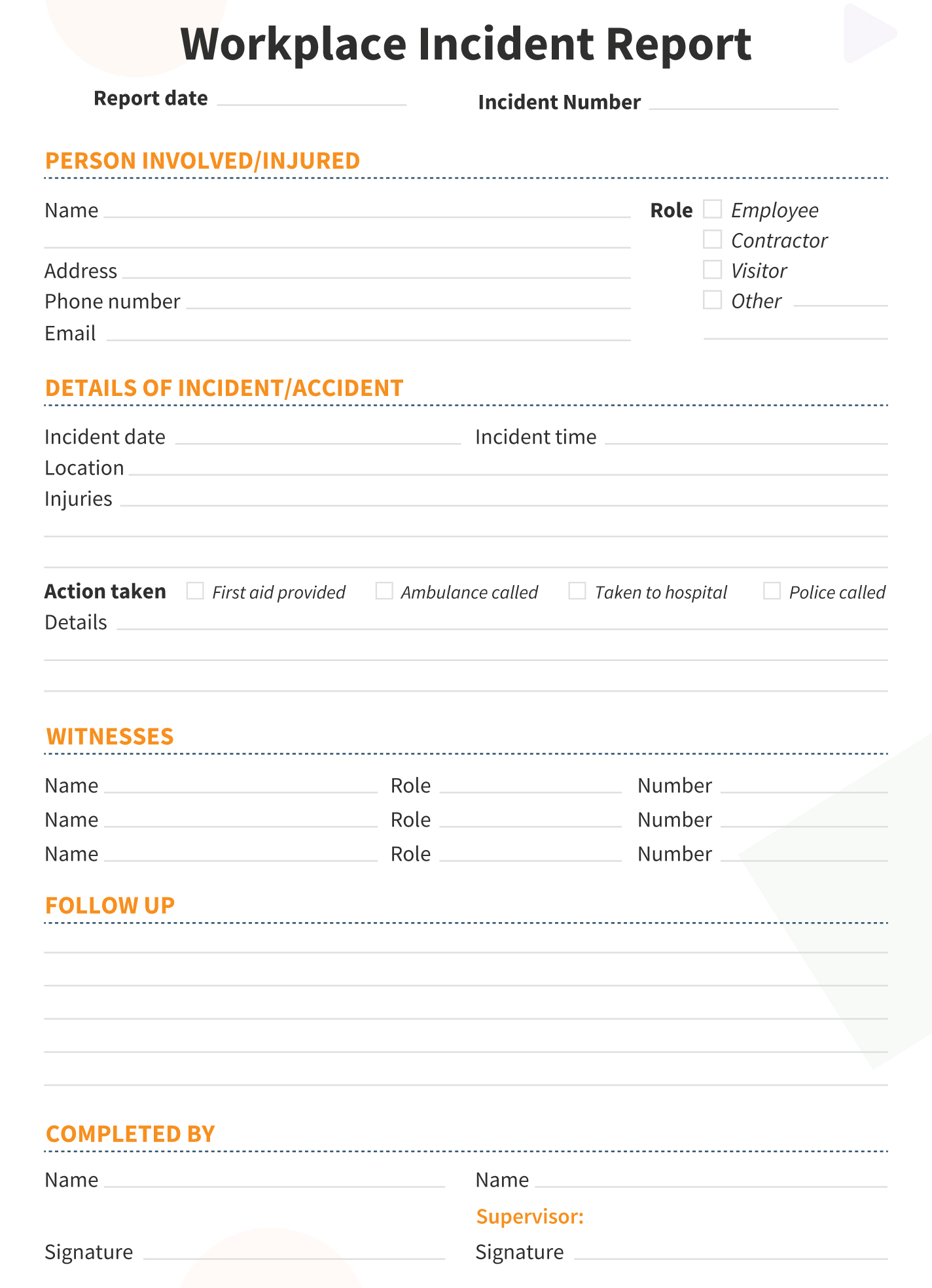
Workplace Incident Report Template – Free 2026 Accuracy and Accountability

Workplace Incident Report Template usage is a fundamental part of maintaining safe, transparent, and well-documented work environments. When incidents occur—whether minor disruptions or serious events—clear documentation ensures facts are recorded accurately, and follow-up actions are properly managed.

Across industries, organizations rely on structured incident reporting to protect employees, reduce operational risk, and maintain accountability. A standardized reporting format removes ambiguity and ensures every workplace incident is documented consistently, regardless of who completes the report.

What Is a Workplace Incident Report?

A Workplace Incident Report is a structured document used to record any unexpected event, unsafe condition, or disruptive behavior that occurs within a work environment. Its primary purpose is to capture factual details about what happened, who was involved, and how the situation was handled.

This type of report is commonly used to document:

  • Employee injuries or near misses
  • Unsafe working conditions
  • Equipment failures
  • Property damage
  • Behavioral or security-related incidents

By using a standardized template, organizations ensure reports are complete, objective, and easy to review.

Why Workplace Incident Reporting Is Essential

Incident reporting is not just administrative paperwork—it is a critical operational safeguard. Accurate documentation helps organizations respond effectively and prevent similar events in the future.

A reliable Workplace Incident Report Template supports:

  • Employee safety and well-being
  • Consistent internal documentation
  • Risk identification and mitigation
  • Accountability and transparency
  • Informed management decisions

Without a clear reporting structure, important details may be missed, misinterpreted, or forgotten.

Core Components of an Effective Workplace Incident Report

While templates may vary slightly depending on organizational needs, effective workplace incident reports share several essential elements.

Incident Identification Details

This section records the date, time, and exact location of the incident, along with department or work area information.

Individuals Involved

Names, roles, and contact details of employees, contractors, or visitors involved or affected by the incident.

Description of the Incident

A factual, chronological account of what occurred, written objectively and without assumptions or emotional language.

Immediate Response Actions

Details of any actions taken at the time, such as first aid, securing the area, or notifying supervisors.

Witness Information

Statements or observations from individuals who saw or heard the incident.

Follow-Up Actions

Corrective or preventive measures are planned or implemented after the incident.

A well-designed Incident Report Template ensures all these elements are captured clearly and consistently.

Common Types of Workplace Incident Report Templates

Workplace incidents can take many forms. Below are the most commonly used formats within organizational settings.

Workplace Incident Report Form Template for Structured Documentation

A Workplace Incident Report Form Template for Standardized Data Capture uses predefined fields to guide users through the reporting process.

This format is ideal for:

  • High-volume workplaces
  • Frontline employee reporting
  • Digital or paper-based systems

Form-based templates reduce variability and ensure consistent data collection across departments.

Workplace Violence Incident Report Template for Sensitive Situations

A Workplace Violence Incident Report Template for Serious Behavioral Events focuses on documenting threats, aggression, or physical altercations.

It is commonly used to record:

  • Verbal threats or intimidation
  • Physical confrontations
  • Harassment or hostile behavior
  • Security-related incidents

This template emphasizes neutrality, clarity, and completeness, supporting proper review and response.

Get also: Security Incident Report Template

Operational Benefits of Using Standardized Workplace Incident Templates

Organizations that adopt standardized incident reporting formats experience measurable operational benefits.

Improved Reporting Accuracy

Clear prompts reduce incomplete or vague reports.

Faster Review and Resolution

Structured reports are easier for supervisors and safety teams to review and act upon.

Better Risk Visibility

Consistent documentation highlights patterns and recurring issues.

Stronger Accountability

Documented records support responsibility tracking and follow-up actions.

A dependable Workplace Incident Report Template turns incident reporting into a proactive management tool.

Who Should Complete Workplace Incident Reports?

Incident reports may be completed by different individuals depending on the organization and situation.

Common report authors include:

  • Employees involved in or witnessing the incident
  • Supervisors or managers
  • Safety officers
  • Human resources personnel
  • Security staff

Clear guidelines ensure reports are completed promptly and accurately.

Get also: Safety Incident Report Template

Adapting Workplace Incident Reports to Different Environments

Although the structure remains consistent, incident reports should reflect the specific workplace context.

Office and Corporate Settings

Focus on ergonomic issues, behavioral incidents, and facility-related concerns.

Industrial and Manufacturing Environments

Emphasize equipment involvement, safety controls, and hazard exposure.

Construction and Field Operations

Include site conditions, tools used, and environmental factors.

Public-Facing Workplaces

Document interactions with customers, visitors, or external parties.

A flexible Workplace Incident Report Template allows customization while maintaining consistency.

Common Mistakes in Workplace Incident Reporting

Even with templates, reporting effectiveness can be reduced by common errors.

Typical mistakes include:

  • Using subjective or emotional language
  • Leaving sections incomplete
  • Delaying report submission
  • Including assumptions instead of facts
  • Failing to document follow-up actions

Effective templates encourage timely, factual, and objective reporting.

Best Practices for Writing Clear Workplace Incident Reports

To ensure high-quality documentation:

  • Write objectively and factually
  • Use clear, concise language
  • Avoid assigning blame in the report
  • Complete reports as soon as possible
  • Review for accuracy before submission

These practices enhance the reliability of every Workplace Incident Report Template used.

Workplace Incident Reporting and Organizational Responsibility

Incident reports play an important role in demonstrating that organizations take safety and accountability seriously. Proper documentation supports internal review processes and reinforces a culture of responsibility.

Consistent reporting shows that incidents are addressed systematically rather than ignored or minimized.

Using Incident Reports for Prevention and Improvement

Incident reports are most valuable when they inform improvement efforts. When reviewed collectively, reports can reveal:

  • Unsafe conditions or behaviors
  • Training gaps
  • Process weaknesses
  • Facility or equipment issues

Over time, this information supports proactive risk reduction and safer work environments.

Integrating Workplace Incident Reports into Daily Operations

Organizations benefit when incident reporting is embedded into daily workflows.

This includes:

  • Clear reporting procedures
  • Defined review responsibilities
  • Timely follow-up actions
  • Management oversight

A standardized Workplace Incident Report Template ensures smooth integration across teams.

Digital vs. Paper-Based Workplace Incident Report Templates

Both formats remain widely used depending on operational needs.

Digital Templates

  • Faster completion and submission
  • Easier storage and retrieval
  • Improved trend analysis

Paper-Based Templates

  • Useful in the field or remote locations
  • Simple and accessible
  • No technology dependency

Many organizations use a hybrid approach to balance flexibility and efficiency.

Choosing the Right Workplace Incident Report Template

The ideal template depends on:

  • Workplace size and complexity
  • Type of incidents typically encountered
  • Reporting volume
  • Review and approval processes

An effective Workplace Incident Report Template balances clarity, completeness, and usability.

Conclusion

A Workplace Incident Report Template is an essential operational tool for documenting incidents with accuracy, clarity, and professionalism. Whether using a Workplace Incident Report Form Template for Standardized Documentation or a Workplace Violence Incident Report Template for Sensitive Situations, structured reporting strengthens accountability and risk management.

By capturing factual details and supporting continuous improvement, workplace incident reports help organizations maintain safer, more transparent, and more resilient operations.

Exit mobile version