
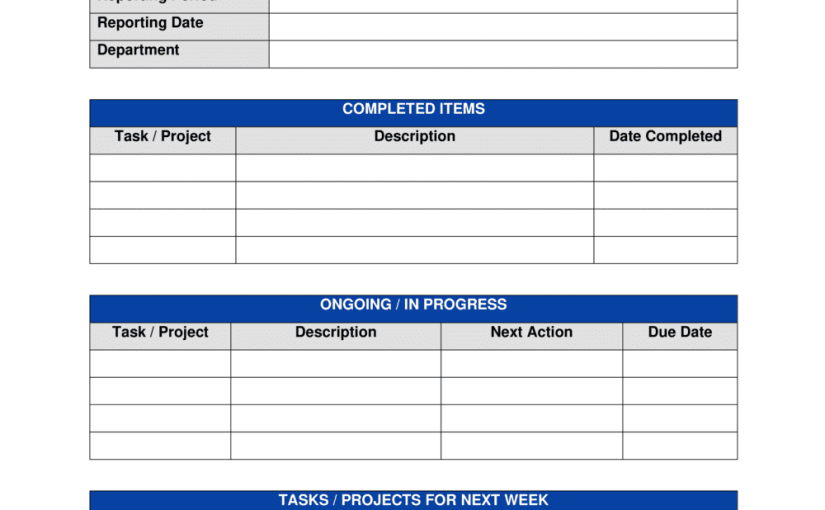
Weekly Progress Report Template structures are essential for teams and organizations that operate in fast-moving environments where visibility, alignment, and timely action matter. Weekly reporting provides a short feedback loop that helps identify issues early, maintain execution momentum, and ensure that priorities stay on track.
Without a standardized weekly format, progress updates often become fragmented, inconsistent, or overly informal. A clear reporting structure transforms weekly activity into meaningful insight that supports coordination, accountability, and continuous improvement.
What Is a Weekly Progress Report?


A Weekly Progress Report is a structured document used to summarize progress, activities, challenges, and next steps within a one-week reporting period. Its primary goal is to provide a clear and consistent snapshot of work status that supports timely decision-making.
Weekly reports focus on execution rather than long-term strategy. They answer critical questions such as:
- What was planned for the week?
- What was completed?
- What is still in progress?
- What issues or risks emerged?
- What are the priorities for next week?
By answering these questions consistently, weekly reporting keeps teams aligned and accountable.
Why Weekly Progress Reporting Is So Effective
Weekly reporting strikes an ideal balance between detail and efficiency. It is frequent enough to catch issues early, yet structured enough to prevent information overload.
A Weekly Progress Report helps teams:
- Detect delays before they escalate
- Maintain focus on short-term priorities
- Track execution against plans
- Improve communication across roles
- Reinforce accountability at the task level
Because the reporting cycle is short, corrective actions can be taken quickly and with minimal disruption.
Core Components of an Effective Weekly Progress Report
Although formats vary by context, high-quality weekly reports share common structural elements.
Reporting Period and Scope
This section clearly defines the week covered and the scope of work included in the report.
Planned vs. Completed Tasks
Comparing planned activities with completed work helps assess execution accuracy and reliability.
Work in Progress
This section documents ongoing tasks, their current status, and expected completion timelines.
Issues, Risks, and Blockers
Early identification of challenges allows teams to resolve problems before they affect delivery.
Key Outcomes or Learnings
Notable achievements or lessons learned during the week are highlighted here.
Next Week’s Priorities
Every Weekly Progress Report Template should end with a clear outline of upcoming priorities and responsibilities.
How Weekly Reporting Improves Execution Discipline
Weekly reporting reinforces discipline by creating a predictable rhythm of planning, execution, and review. When teams know progress will be reviewed weekly, priorities become clearer, and follow-through improves.
A Weekly Progress Report Template also encourages ownership. Individuals and teams become more conscious of commitments, timelines, and outcomes when progress is documented regularly.
Specialized Types of Weekly Progress Report Templates
Different contexts require tailored weekly reporting formats. Below are high-impact variations commonly used across industries and environments.
Weekly Project Status Report Template for Structured Delivery Control


A Weekly Project Status Report Template for Structured Delivery Control focuses on project-level execution, milestones, and dependencies.
This format typically includes:
- Task completion status
- Milestone progress
- Schedule alignment
- Resource or dependency issues
It is widely used in project management environments where coordination across roles and timelines is critical.
Weekly Student Progress Report Template for Academic Performance Tracking


A Weekly Student Progress Report Template for Academic Performance Tracking is designed to monitor learning progress, engagement, and development.
This report format often covers:
- Academic tasks completed
- Participation and engagement levels
- Areas of improvement
- Learning objectives for the next week
Educators and institutions use weekly student reports to provide timely feedback and support consistent progress.
Get also: Free Weekly Status Report Template Excel
Weekly Training Progress Report Template for Skill Development Monitoring


A Weekly Training Progress Report Template for Skill Development Monitoring tracks progress in structured learning or training programs.
Common elements include:
- Training modules completed
- Skill acquisition progress
- Practice outcomes
- Challenges or gaps
This format is especially useful in onboarding, professional development, and certification programs.
Choosing the Right Weekly Progress Report Template
Selecting the right template depends on several factors:
- Nature of the work
- Reporting audience
- Level of detail required
- Decision-making needs
A Weekly Progress Report Template should be simple enough to complete consistently, yet detailed enough to provide real value.
Overly complex templates discourage regular use, while overly simple formats risk missing critical insights.
Adapting Weekly Reports for Different Stakeholders
Although the core structure remains consistent, the presentation should vary depending on who will read the report.
Leadership and Management
Leaders benefit from summaries that highlight outcomes, risks, and alignment with short-term goals.
Team-Level Reporting
Teams need operational detail, task-level status, and clearly defined next steps.
External or Client-Facing Reporting
External audiences value clarity, transparency, and progress tied directly to agreed deliverables.
Tailoring reports ensures relevance without compromising consistency.
Common Mistakes in Weekly Progress Reporting
Weekly reports can lose effectiveness if common mistakes occur, such as:
- Reporting activities without outcomes
- Being too vague or overly detailed
- Ignoring unresolved blockers
- Changing the report structure frequently
A strong Weekly Progress Report Template emphasizes clarity, honesty, and actionability.
Best Practices for Writing Clear Weekly Progress Reports
To maximize the value of weekly reporting:
- Use concise and specific language
- Focus on results and implications
- Be transparent about challenges
- Keep formatting consistent
- Align updates with weekly objectives
Well-written weekly reports support trust, alignment, and continuous improvement.
Using Weekly Progress Reports to Drive Better Decisions
The real value of a Weekly Progress Report lies in how it informs action. When reviewed consistently, weekly reports help teams:
- Adjust priorities quickly
- Resolve issues before they escalate
- Improve execution accuracy
- Strengthen short-term planning
Over time, weekly reporting creates a detailed execution history that supports better forecasting and performance evaluation.
Long-Term Benefits of Consistent Weekly Reporting
Organizations that adopt structured weekly reporting gain:
- Stronger execution discipline
- Improved communication
- Reduced delivery risk
- Clearer accountability
- Better alignment across teams
A Weekly Progress Report Template becomes a foundational tool for maintaining momentum and operational clarity.
Conclusion
A Weekly Progress Report Template is a critical tool for tracking execution, maintaining alignment, and supporting timely decision-making. By standardizing how weekly updates are documented, organizations gain clarity, consistency, and accountability.
Whether using a Weekly Project Status Report Template for Structured Delivery Control, a Weekly Student Progress Report Template for Academic Performance Tracking, or a Weekly Training Progress Report Template for Skill Development Monitoring, the right reporting format ensures that progress is visible and actionable.
When applied consistently, weekly progress reporting transforms short-term activity into sustained performance and measurable results.