Daily Financial Report Template – Incredibly Effective for Tracking Daily Performance | A Daily Financial Report Template gives businesses a reliable way to understand their cash flow, spending behavior, and financial health on a day-to-day basis. Even companies with strong accounting systems often struggle with the “daily gap”—the difference between what happened today financially versus what becomes visible only at the end of the week or month. This Daily Financial Report Template fills that gap with a clean, structured workflow that turns daily activity into immediate insight.
When used consistently, a Daily Financial Report Template becomes a stabilizing force. It highlights opportunities, reveals inconsistencies, and provides a steady rhythm of visibility. Whether you’re monitoring revenue streams, tracking expenses, reviewing balances, or reconciling transactions, the template organizes everything into an easy-to-understand format that anyone on the finance team can use.
It’s especially valuable for businesses handling high-volume transactions, frequent cash movements, or expenses that appear unexpectedly. Retailers, service companies, hospitality venues, contractors, and field teams all benefit from having a daily financial snapshot that increases accuracy and removes guesswork.
Daily Financial Report Template Free Download


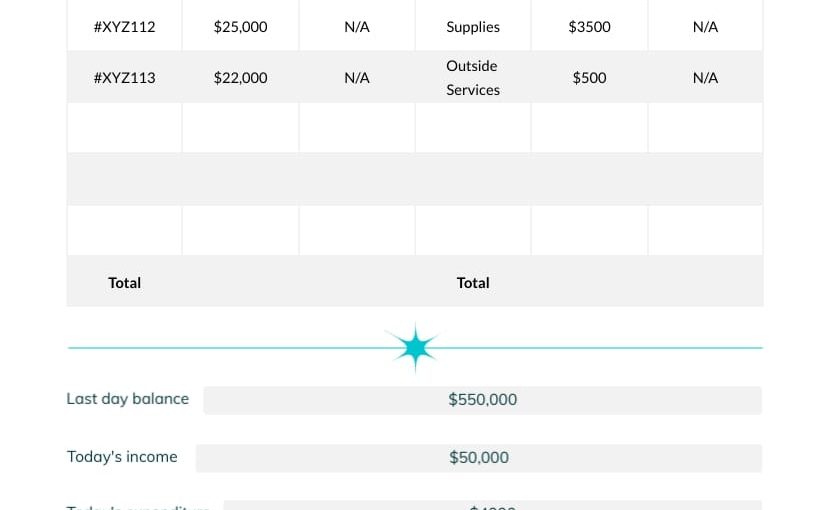
A standard Daily Financial Report Template includes several structured components designed to capture a full day’s financial picture:
- Revenue summary
- Cash inflows and outflows
- Receipts and payment logs
- Outstanding invoices or payables
- Operational expenses
- Account balances and adjustments
- Notes on irregularities or anomalies
- Plans or follow-up actions for the next day
Each section helps maintain transparency. Teams gain immediate visibility into spending patterns, revenue trends, and financial movements that would otherwise remain hidden until later reports are compiled.
By documenting the financial story of each day, businesses avoid miscalculations and ensure every dollar is accounted for. The template also reduces reliance on memory—something especially important when multiple departments or cash handlers are involved.
Daily reporting also simplifies long-term analysis. When patterns emerge over weeks or months, managers can adjust budgets, refine operations, or strengthen financial policies based on concrete evidence collected from daily logs.
General Supporting Section
Daily Cash Report Template Excel – Hidden Advantages for Cash Control and Accuracy


A Daily Cash Report Template Excel provides one of the most practical tools for businesses that depend heavily on cash transactions. Excel’s flexibility—combined with formulas, drop-down fields, and automated calculations—makes it ideal for daily financial documentation.
This kind of template typically includes:
- Opening cash balance
- Total cash received
- Cash payments and withdrawals
- Petty cash transactions
- Closing cash balance
- Variance tracking
The biggest advantage is accuracy. With formulas handling calculations automatically, human error is reduced significantly. Cashiers, bookkeepers, and finance officers can enter numbers quickly while Excel keeps everything aligned and reconciled.
Daily cash reporting also supports accountability. For businesses with multiple cash handlers, shifts, or branches, this template ensures that every cent is tracked with clarity. It helps identify discrepancies early, preventing issues from snowballing into significant financial losses.
It also supports better forecasting. Cash-heavy businesses often rely on these reports to understand purchasing patterns, replenishment needs, or staffing requirements. By reviewing daily movements, managers can plan more effectively and maintain steady operations.
Get also: Daily Sales Report Template
Daily Financial Statements – Little-Known Benefits for Operational Stability


Daily Financial Statements provide a condensed version of a company’s income, expenses, and financial standing for the day. Unlike traditional monthly or quarterly statements, daily statements offer real-time financial intelligence.
These statements tend to include:
- Daily revenue breakdown
- Cost of goods or services sold
- Daily operational expenses
- Taxes, fees, or other obligations
- Running totals for the month
- Short commentary for context
The benefit of daily statements is their ability to expose trends and inefficiencies early. If daily expenses spike without explanation, the issue becomes visible instantly. If revenue dips unexpectedly, managers can investigate within hours rather than waiting until month-end.
For organizations with complex operations or multiple revenue channels, daily statements bring everything together. They allow teams to monitor financial health with a level of frequency that encourages proactive management.
Additionally, they reinforce internal controls. By reviewing daily numbers, managers can verify accuracy, detect errors, or confirm that financial procedures are being followed consistently across the business.
Daily Income and Expense Report Template – Stunning Ways to Improve Budget Visibility


A Daily Income and Expense Report Template gives both individuals and businesses a straightforward way to understand their financial habits. For companies, this template often becomes the backbone of operational financial tracking.
It usually includes:
- Total income collected for the day
- Detailed expense breakdown
- Category sorting (utilities, materials, payroll, marketing, etc.)
- Notes on unusual items
- Net total for the day
- Running daily comparison charts
This format helps teams stay disciplined. It’s easy to underestimate daily spending, especially when purchases are small or frequent. By tracking each expense, organizations gain clarity over where their money is going and which areas may require cost adjustments.
For teams managing projects, service operations, or daily supply needs, this template supports smarter financial behavior. It helps highlight unnecessary expenses, duplicated purchases, or cost inefficiencies that would otherwise go unnoticed.
It also improves accountability. When employees know expenses are monitored daily, adherence to financial policies strengthens naturally. Managers gain visibility without the need for excessive oversight, creating a healthier financial culture.
Get also: Daily Marketing Report Template
How Companies Use a Daily Financial Report Template in Real Scenarios
1. Retail and Hospitality
Businesses with high transaction volume use daily reporting to track sales, reconcile cash, monitor shifts, and adjust staffing needs.
2. Construction and Contracting
Teams use templates to track daily expenses, material purchases, subcontractor payments, and project-specific financial activity.
3. Service-Based Companies
Daily tracking helps align revenue with hours worked, client billing, and operational expenses.
4. Corporate Finance Offices
Daily snapshots support cashflow forecasting, budget pacing, and internal audit readiness.
5. Startups and Small Businesses
Daily clarity helps new businesses avoid overspending and maintain steady control during rapid growth phases.
Internal Benefits of Using Daily Financial Reports
1. Stronger Budget Pacing
Daily visibility ensures budgets are followed consistently rather than over- or under-used.
2. Faster Problem Detection
Errors, fraud, or miscalculations can be discovered immediately.
3. Increased Transparency
Teams gain clarity about where financial resources are going.
4. Better Decision-Making
Daily trends inform smarter operational and financial choices.
5. More Accurate Month-End Reporting
Daily documentation makes the monthly closing smoother and more accurate.
Practical Tips for Getting the Most Out of Your Daily Financial Reports
1. Keep Data Entry Simple
Avoid overly complex fields. Make the template easy to update consistently.
2. Standardize Categories
Consistency ensures comparisons remain accurate and meaningful.
3. Review Numbers with Context
Small daily notes help explain anomalies in future audits.
4. Cross-Check Cash, Cards, and Transfers
Daily reconciliation prevents future confusion.
5. Align the Report With Business Model Needs
Adjust sections based on cashflow patterns, transaction types, or operational demands.
Final Thoughts
A Daily Financial Report Template provides an essential foundation for businesses that need control, accuracy, and real-time financial visibility. Whether used alongside a Daily Cash Report Template Excel, Daily Financial Statements, or a Daily Income and Expense Report Template, it strengthens financial discipline and keeps teams aligned with daily operational realities.