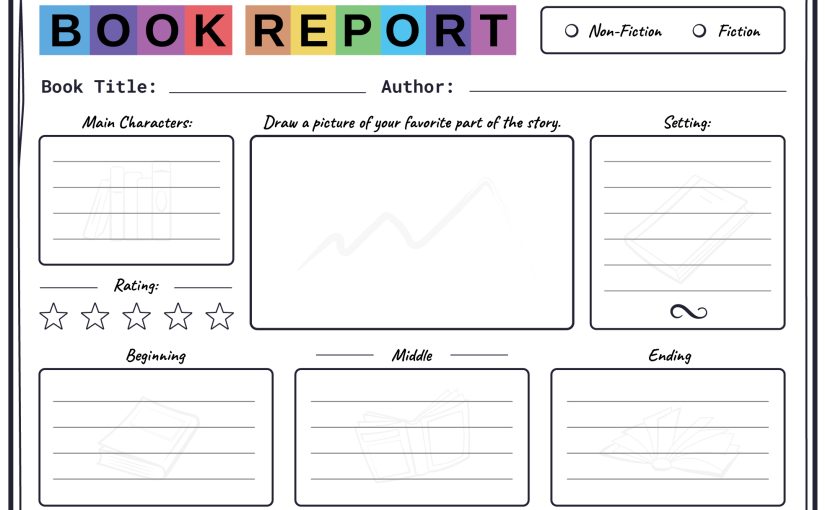
High School Book Report Template – 2026 Best Academic Reading

High School Book Report Template usage is a foundational part of academic writing at the secondary education level. As students transition from basic reading summaries to deeper literary and informational analysis, book reports become an essential tool for demonstrating comprehension, critical thinking, and written communication skills.

A well-designed reporting format helps students organize ideas, interpret texts accurately, and present insights clearly—whether they are analyzing novels, biographies, or nonfiction academic materials.

What Is a High School Book Report?

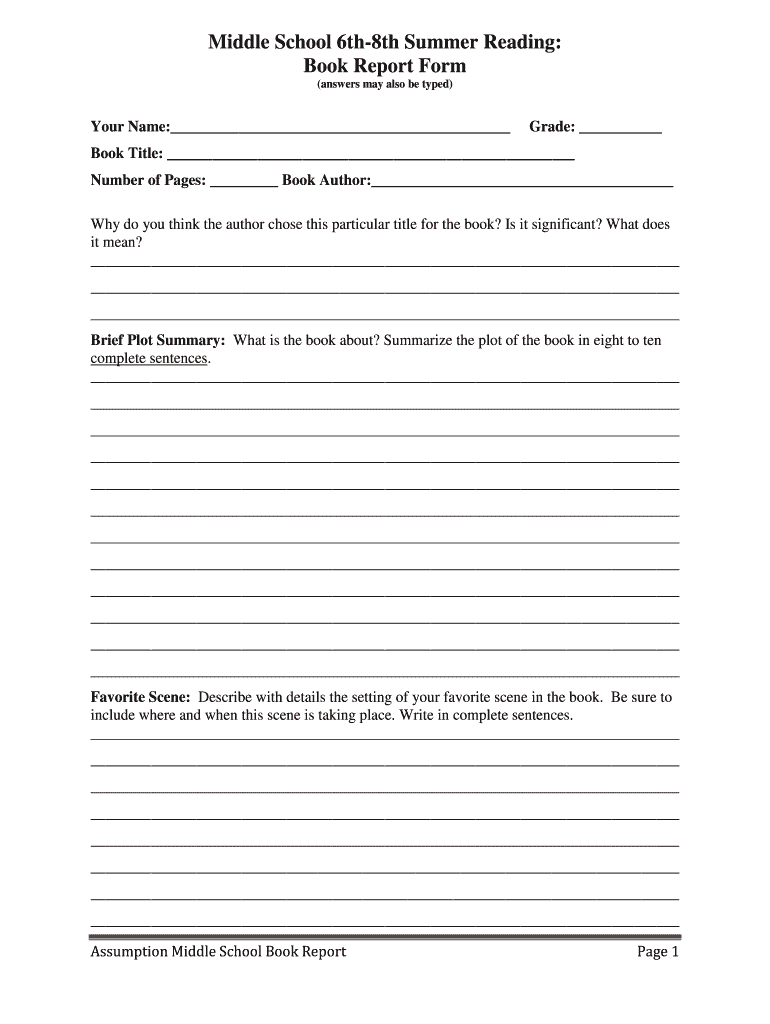
A High School Book Report is a structured academic framework that guides students in presenting a written analysis of a book they have read. Unlike elementary-level reports, high school book reports require more depth, interpretation, and evidence-based discussion.

These templates typically help students:

  • Summarize key ideas clearly
  • Analyze themes, characters, or arguments
  • Support opinions with textual evidence
  • Practice structured academic writing
  • Meet curriculum and grading standards

Using a standardized format reduces confusion and encourages consistency in student submissions.

Why Book Reports Matter in High School Education

At the high school level, book reports are not just about proving that a student finished reading a book. They assess higher-order thinking skills such as analysis, evaluation, and synthesis.

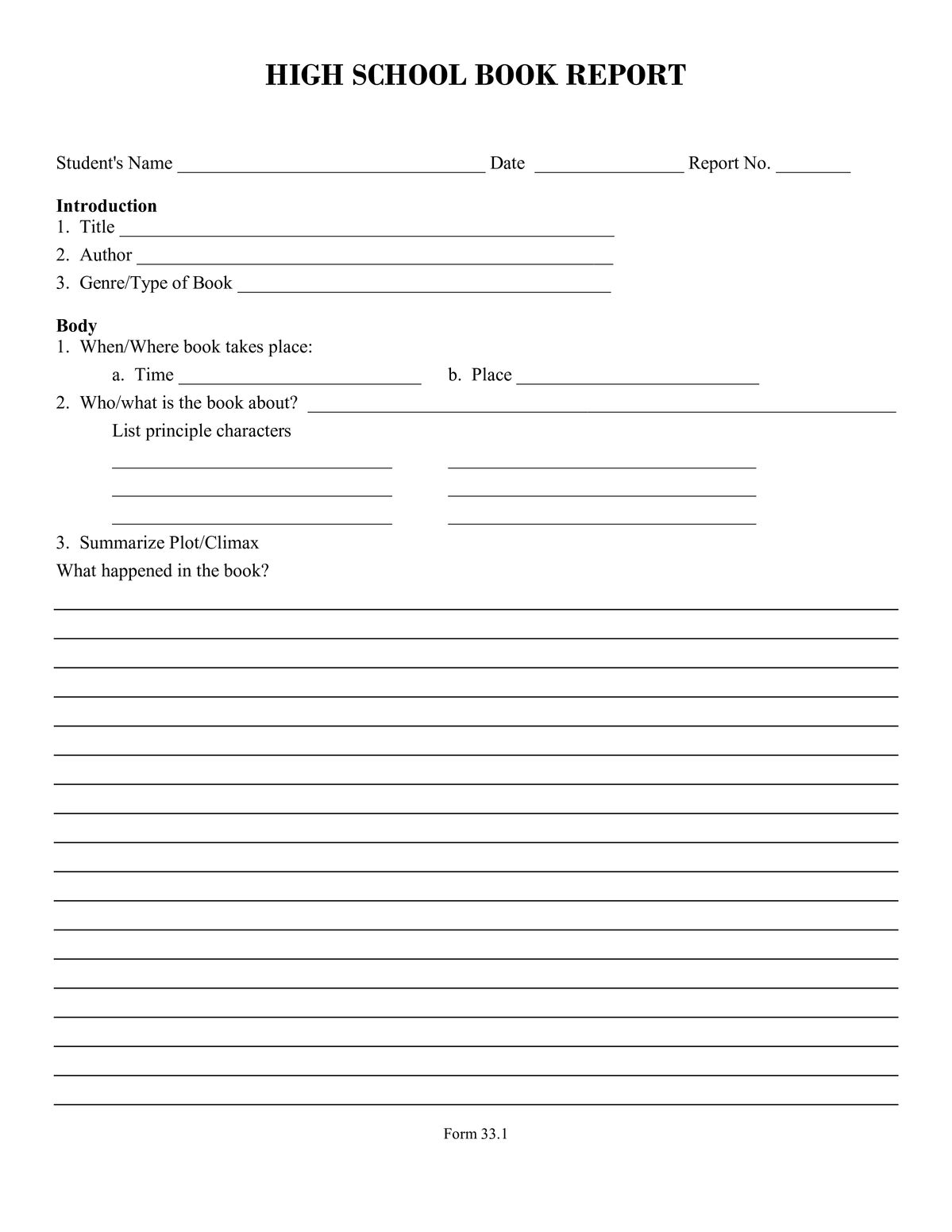
A structured High School Book Report helps educators evaluate:

  • Reading comprehension
  • Analytical depth
  • Writing organization
  • Argument clarity
  • Proper use of evidence

For students, templates provide a roadmap for producing clear and academically sound reports.

Core Sections of an Effective High School Book Report

While formats may vary by subject or teacher preference, high-quality book reports usually include several key sections.

Book Information

Includes the title, author, genre, publication year, and student details.

Introduction

Introduces the book’s context, purpose, and relevance while presenting a brief overview.

Summary

Provides a concise yet accurate overview of the book’s main events or arguments without excessive detail.

Analysis and Interpretation

Examines themes, character development, conflicts, or central ideas depending on the book type.

Personal Evaluation

Encourages students to express informed opinions supported by examples from the text.

Conclusion

Summarizes insights and reflects on the overall significance of the book.

A strong High School Book Report Template ensures logical flow between these sections.

Common Types of High School Book Report Templates

High school reading assignments cover a wide range of genres and academic goals. Below are the most commonly used report formats.

Free Printable Book Report Form for Classroom and Home Use

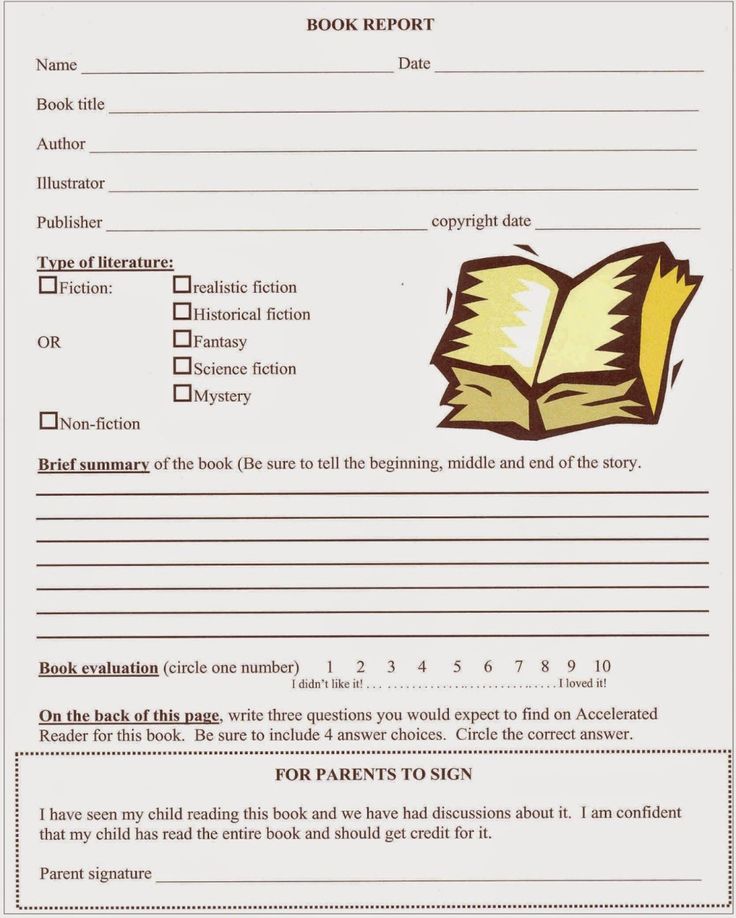
A Free Printable Book Report Form for Easy Academic Submission provides a simple, accessible structure for students and teachers.

This format is ideal for:

  • In-class assignments
  • Homework projects
  • Standardized reporting requirements
  • Independent reading programs

Printable forms help maintain uniformity while allowing flexibility in content depth.

Non Fiction Book Report Template High School Edition for Analytical Writing
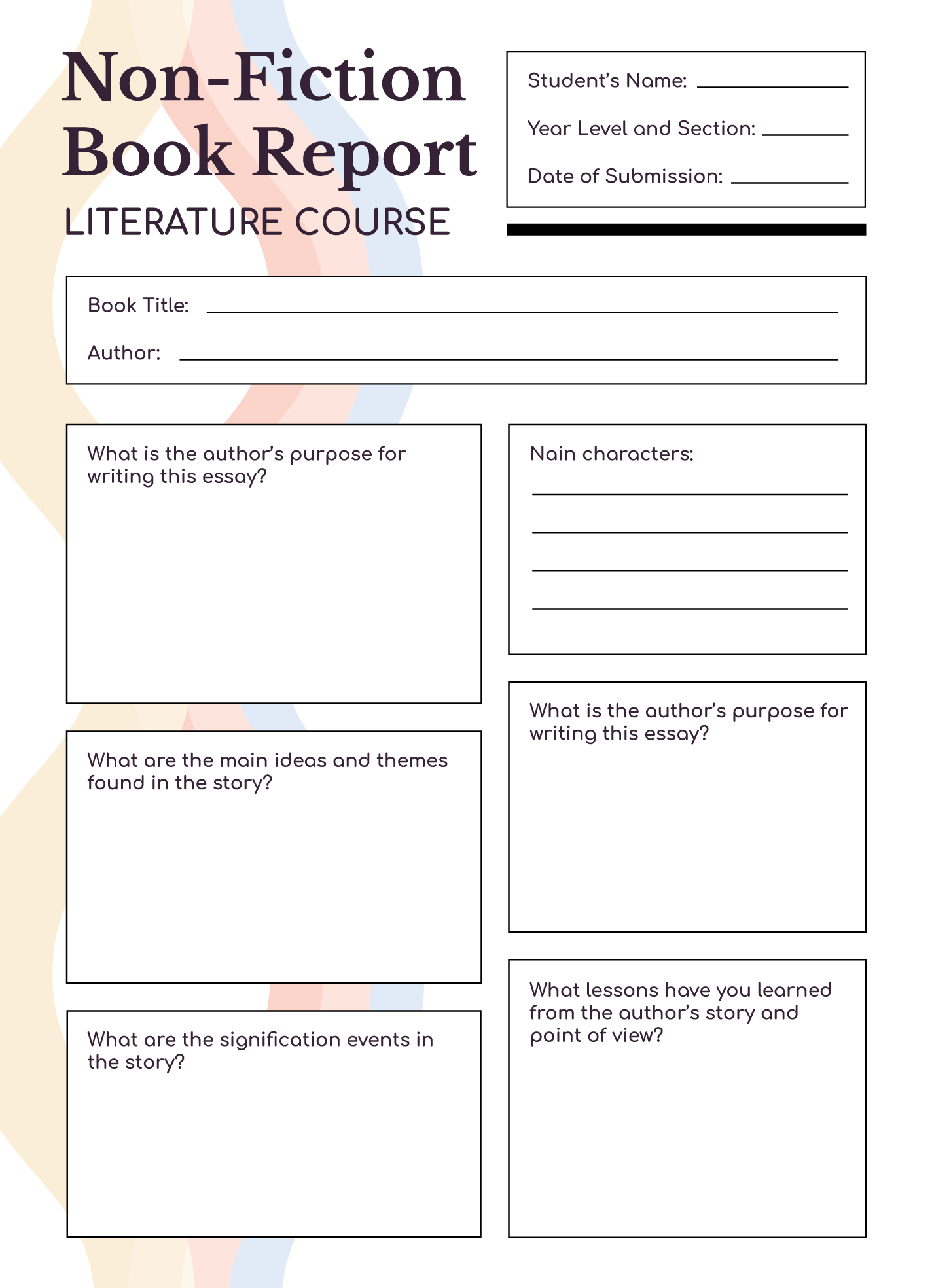
A Non Fiction Book Report Template High School Edition for Academic Analysis is designed for informational texts such as biographies, history books, and scientific publications.

It emphasizes:

  • Main arguments or thesis
  • Supporting evidence
  • Author credibility
  • Purpose and audience
  • Real-world relevance

This format builds critical reading and analytical writing skills.

Get also: Middle School Book Report Template

9th Grade Book Report Template for Academic Transition

A 9th Grade Book Report Template for Structured Learning Progression supports students transitioning from middle school to high school expectations.

It focuses on:

  • Clear organization
  • Guided analysis prompts
  • Balanced summary and interpretation
  • Foundational academic tone

This template helps students adapt to more rigorous academic standards.

Benefits of Using a Structured Book Report Template

Standardized templates provide advantages for both students and educators.

Improved Writing Organization

Students follow a logical structure that enhances clarity.

Stronger Critical Thinking

Templates encourage deeper analysis rather than surface-level summaries.

Consistent Assessment

Teachers can evaluate reports more fairly using uniform criteria.

Reduced Student Anxiety

Clear expectations make assignments more manageable.

A dependable High School Book Report Template supports academic success.

Who Uses High School Book Reports?

Book report templates are widely used across educational settings.

Common users include:

  • High school students
  • English and literature teachers
  • Homeschool educators
  • Tutors and academic coaches
  • Curriculum planners

Clear templates help align expectations across different learning environments.

Adapting Book Report Templates to Different Subjects

High school book reports are not limited to literature classes. Templates can be adapted for multiple subjects.

English and Literature

Focus on themes, symbolism, and character development.

History and Social Studies

Analyze historical accuracy, perspective, and context.

Science and Technology

Evaluate clarity of explanations, evidence, and real-world applications.

Philosophy and Ethics

Examine arguments, viewpoints, and logical consistency.

A flexible High School Book Report Template supports interdisciplinary learning.

Best Practices for Writing High-Quality Book Reports

To produce strong academic reports, students should:

  • Read actively and take notes
  • Identify key ideas and evidence
  • Organize thoughts before writing
  • Use formal academic language
  • Proofread for clarity and accuracy

Templates reinforce these best practices naturally.

Common Mistakes Students Make in Book Reports

Even with templates, some pitfalls remain common.

Frequent errors include:

  • Overly long summaries
  • Lack of analysis or opinion
  • Weak conclusions
  • Poor grammar or structure
  • Unsupported claims

A well-designed High School Book Report Template minimizes these issues by guiding content placement.

Digital vs. Printable Book Report Templates

Both formats offer unique advantages depending on learning environments.

Digital Templates

  • Easy editing and submission
  • Cloud-based access
  • Teacher feedback integration

Printable Templates

  • Useful for classroom work
  • Accessible without technology
  • Ideal for standardized forms

Many schools use both formats interchangeably.

Using Book Reports to Build Academic Skills

Book reports contribute to long-term academic development.

They help students:

  • Improve reading comprehension
  • Strengthen writing discipline
  • Develop analytical thinking
  • Prepare for essays and research papers

A consistent High School Book Report Template supports skill-building over time.

Assessment Criteria for High School Book Reports

Teachers often evaluate book reports based on:

  • Accuracy of summary
  • Depth of analysis
  • Organization and clarity
  • Use of textual evidence
  • Grammar and presentation

Templates align student work with these criteria.

Customizing Book Report Templates for Different Reading Levels

Not all high school students have the same reading proficiency.

Templates can be adjusted by:

  • Adding guiding questions
  • Limiting or expanding analysis sections
  • Adjusting word count expectations
  • Providing examples or prompts

Customization ensures inclusivity and fairness.

The Role of Book Reports in Academic Accountability

Book reports provide measurable evidence of student engagement and understanding. They serve as documentation of learning progress and reading completion.

Clear structure strengthens academic accountability for both students and educators.

Choosing the Right High School Book Report Template

The best template depends on:

  • Grade level
  • Subject area
  • Book genre
  • Assignment objectives

An effective High School Book Report Template balances guidance with intellectual freedom.

Conclusion

A High School Book Report Template is an essential academic tool for helping students analyze, interpret, and communicate their understanding of books with clarity and confidence. Whether using a Free Printable Book Report Form for Easy Academic Submission, a Non Fiction Book Report Template High School Edition for Analytical Writing, or a 9th Grade Book Report Template for Structured Learning, standardized formats support stronger writing and deeper learning.

By using well-structured book report templates, educators promote consistency, critical thinking, and academic growth—while students gain the skills needed for long-term educational success.

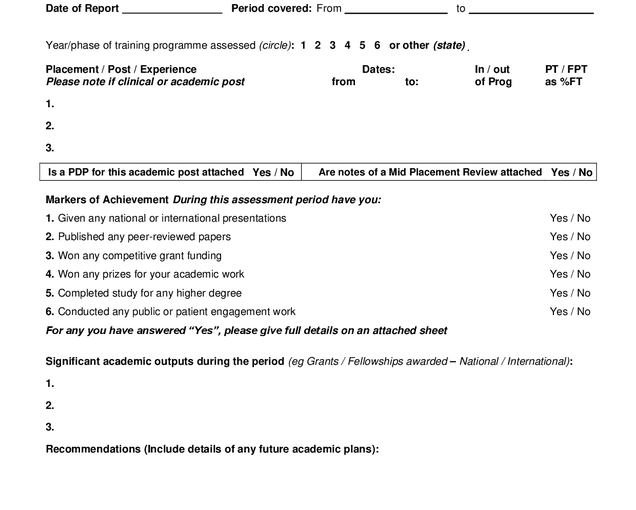
Academic Progress Report Template (9+ Structured Formats to Track Student Growth)

Academic Progress Report Template usage is a foundational part of effective education reporting. It provides a clear, structured way to document student performance, learning development, and academic milestones over a defined period. Whether used in formal schools or alternative learning environments, progress reporting supports transparency, accountability, and informed instructional decisions.

Educators rely on consistent reporting formats to communicate student growth clearly to parents, administrators, and learners themselves. A standardized academic progress report removes ambiguity and ensures learning outcomes are documented accurately and objectively.

What Is an Academic Progress Report?

An Academic Progress Report is a structured document used to record and communicate a student’s academic performance, learning progress, and areas for improvement. It provides a consistent framework for evaluating progress against curriculum goals or learning objectives.

This type of report is commonly used in:

  • Elementary and secondary schools
  • Homeschool programs
  • Tutoring and enrichment programs
  • Special education settings
  • Academic intervention programs

By standardizing reporting, educators ensure progress is measured and communicated fairly across students and grade levels.

Why Academic Progress Reporting Matters

Academic progress reporting goes beyond grades. It captures how students are developing skills, understanding concepts, and engaging with learning materials.

A well-designed Academic Progress Report helps educators:

  • Track learning growth over time
  • Identify strengths and learning gaps
  • Support instructional planning
  • Communicate progress clearly to parents
  • Encourage student accountability and motivation

Consistent reporting strengthens the connection between instruction, assessment, and student outcomes.

Core Components of an Effective Academic Progress Report

Although formats vary by grade level and learning environment, effective academic progress reports share several essential components.

Student Information

Includes the student’s name, grade level, reporting period, and subject areas covered.

Academic Performance Summary

An overview of progress in key subjects or learning domains.

Skill Development and Learning Objectives

Assessment of how well the student meets curriculum standards or learning goals.

Teacher Observations

Objective comments on learning behaviors, participation, and academic engagement.

Areas for Improvement

Specific skills or topics requiring additional support or practice.

Recommendations and Next Steps

Suggested strategies to support continued academic growth.

A structured Academic Progress Report ensures these elements are presented clearly and consistently.

Common Types of Academic Progress Report Templates

Academic progress reporting adapts to different educational contexts. Below are the most widely used formats.

Student Progress Report Template for Individual Learning Evaluation

A Student Progress Report Template for Comprehensive Academic Tracking focuses on individual student performance across subjects.

It is commonly used to:

  • Evaluate learning progress over a term
  • Document mastery of academic skills
  • Support parent-teacher communication

This format emphasizes clarity, balance, and individualized feedback.

Homeschool Progress Report Template for Flexible Learning Environments

A Homeschool Progress Report Template for Personalized Education Tracking supports non-traditional learning structures.

It typically includes:

  • Customized learning objectives
  • Subject-based progress summaries
  • Skill development narratives

This template allows homeschooling educators to document progress while maintaining flexibility.

Elementary Progress Report Template for Early Learning Assessment

An Elementary Progress Report Template for Foundational Skill Development focuses on early academic and behavioral milestones.

It often emphasizes:

  • Reading and literacy development
  • Numeracy and problem-solving skills
  • Social and classroom behaviors

Clear, age-appropriate language is critical in this format.

Get also: Elementary School Book Report Template

Academic Benefits of Using Standardized Progress Report Templates

Standardized academic reporting offers meaningful benefits to educators, students, and families.

Consistency Across Classrooms

Templates ensure students are evaluated using consistent criteria.

Clear Communication

Structured reports make academic performance easier to understand.

Early Identification of Learning Gaps

Regular reporting highlights areas needing support.

Improved Instructional Planning

Teachers can adjust instruction based on documented progress.

A reliable Academic Progress Report Template strengthens the overall learning process.

Who Uses the Academic Progress Report?

Academic progress reports are used by a range of educational stakeholders.

Common users include:

  • Teachers and instructors
  • School administrators
  • Homeschool educators
  • Tutors and academic coaches
  • Parents and guardians

Each group relies on accurate reporting to support student success.

Adapting Academic Progress Reports to Different Education Levels

Academic progress reporting should reflect the learner’s stage of development.

Early Childhood and Elementary Education

Focus on foundational skills, growth indicators, and learning habits.

Middle and Secondary Education

Emphasize subject mastery, academic rigor, and performance trends.

Alternative and Homeschool Settings

Highlight individualized learning paths and flexible assessment criteria.

A flexible Academic Progress Report Template allows adaptation without losing consistency.

Common Mistakes in Academic Progress Reporting

Even well-designed templates can be undermined by poor reporting practices.

Common mistakes include:

  • Using vague or generic comments
  • Focusing only on grades without context
  • Overlooking skill development
  • Inconsistent evaluation criteria
  • Delayed reporting

Effective templates encourage objective, timely, and meaningful feedback.

Best Practices for Writing Clear Academic Progress Reports

To improve report quality:

  • Use clear, objective language
  • Align comments with learning objectives
  • Highlight both strengths and challenges
  • Provide actionable recommendations
  • Maintain consistency across reporting periods

These practices enhance the value of every Academic Progress Report Template used.

Academic Progress Reporting and Parent Communication

Progress reports serve as a key communication tool between educators and families. Clear reporting helps parents understand:

  • How their child is performing academically
  • Where support may be needed
  • How can they reinforce learning at home

Consistent reporting builds trust and collaboration.

Using Academic Progress Reports to Support Student Growth

Academic progress reports should inform action, not just record outcomes.

When reviewed regularly, reports help:

  • Guide instructional adjustments
  • Support intervention planning
  • Encourage student goal setting
  • Track improvement over time

Historical reports provide valuable insight into learning development.

Integrating Academic Progress Reporting into School Systems

Academic progress reporting works best when embedded into routine educational processes.

This includes:

  • Scheduled reporting cycles
  • Clear evaluation criteria
  • Review and feedback protocols
  • Administrative oversight

A standardized Academic Progress Report ensures alignment across classrooms and programs.

Digital vs. Paper-Based Academic Progress Report Templates

Both formats remain relevant depending on institutional needs.

Digital Templates

  • Easier data management
  • Faster sharing with families
  • Improved record storage

Paper-Based Templates

  • Simple and accessible
  • Useful in low-tech environments
  • Familiar with early-grade settings

Many institutions use a hybrid approach.

Choosing the Right Academic Progress Report Template

The best template depends on:

  • Student age and grade level
  • Curriculum requirements
  • Learning environment
  • Reporting audience

An effective Academic Progress Report Template balances clarity, detail, and usability.

Conclusion

An Academic Progress Report Template is an essential academic tool for documenting student learning with clarity, consistency, and purpose. Whether using a Student Progress Report Template for Individual Learning Evaluation, a Homeschool Progress Report Template for Flexible Education Tracking, or an Elementary Progress Report Template for Early Learning Assessment, structured reporting strengthens instructional quality and communication.

By supporting informed teaching, engaged families, and motivated learners, academic progress reports play a vital role in student success.

Middle School Book Report Template (10+ Free Printable Formats)

The Middle School Book Report Template becomes increasingly important as students transition from basic reading comprehension to deeper analysis and structured writing.

At the middle school level, book reports are no longer simple summaries. They require students to explain ideas, analyze characters or information, and support opinions with evidence. Without a clear framework, many students struggle to organize their thoughts, connect their ideas, or present their arguments clearly. A structured template provides guidance while still allowing independent thinking and personal interpretation.

What Is a Middle School Book Report?

A Middle School Book Report is a structured guide designed to help students analyze and explain a book in a clear, organized, and age-appropriate manner. It bridges the gap between elementary-level reporting and more advanced analytical writing required in later grades.

These templates are designed to:

  • Improve reading comprehension
  • Develop organized paragraph writing
  • Encourage analytical thinking
  • Teach evidence-based opinions
  • Build academic writing confidence

By using a consistent structure, students focus more on understanding the book and less on how to format their response.

Why Book Reports Matter in Middle School

Middle school is a critical stage for literacy development. Students are expected to:

  • Read more complex texts
  • Understand themes and messages
  • Analyze characters or ideas
  • Explain opinions using examples

A well-designed Middle School Book Report Template supports these expectations by guiding students through higher-level thinking while maintaining clarity and structure.

Book reports also help teachers assess comprehension, reasoning, and writing progress in a consistent way.

Key Skills Developed Through Middle School Book Reports

Structured book reporting supports multiple academic skills at once.

Analytical Reading

Students move beyond recalling events to interpreting meaning and intent.

Organized Writing

Templates teach paragraph structure, transitions, and logical flow.

Critical Thinking

Students evaluate actions, ideas, and themes rather than simply describing them.

Evidence-Based Reasoning

Opinions must be supported with details from the text.

Academic Language Development

Students practice formal tone and subject-specific vocabulary.

A strong Middle School Book Report reinforces all of these skills.

Core Components of an Effective Middle School Book Report

While formats may vary, effective middle school reports share common elements.

Book Information

Includes title, author, genre, and publication details.

Summary

A concise overview of the main plot or ideas, written in the student’s own words.

Main Characters or Key Topics

Focuses on character development in fiction or central concepts in nonfiction.

Setting or Context

Explains where and when the story or information takes place.

Themes or Central Ideas

Identifies important messages, lessons, or arguments.

Personal Analysis

Students explain their opinions and support them with examples from the text.

Every Middle School Book Report Template should encourage clarity, depth, and original thinking.

Different Types of Middle School Book Report Templates

Different genres and learning goals require specialized formats. Below are the most commonly used variations.

6th Grade Book Report Template for Guided Academic Writing

A 6th Grade Book Report Template for Structured Skill Development provides clear prompts that guide students toward more formal writing.

This format typically includes:

  • Paragraph-based summaries
  • Guided analysis questions
  • Opinion prompts with evidence

It helps sixth-grade students transition from elementary-style reports to more analytical writing.

Biography Book Report Template Middle School for Life Story Analysis

A Biography Book Report Template Middle School for Historical and Personal Insight focuses on real individuals and their impact.

This format often includes:

  • Background information
  • Major life events
  • Challenges and achievements
  • Contributions or influence
  • Personal reflection

Biography reports help students connect individual stories to historical or social contexts.

Non Fiction Book Report Template Middle School for Informational Clarity

A Non Fiction Book Report Template Middle School for Concept Understanding and Explanation emphasizes facts, ideas, and arguments rather than narrative elements.

This format commonly covers:

  • Main topic or thesis
  • Key facts or arguments
  • Supporting details
  • New information learned
  • Student reflection

Nonfiction templates help students organize complex information clearly and logically.

Get also: High School Book Report Template

Choosing the Right Template for Middle School Students

Selecting the right format depends on:

  • Grade level
  • Reading complexity
  • Learning objectives
  • Assessment criteria

A Book Report Template should challenge students without overwhelming them. Templates that are too simple limit growth, while overly complex ones may discourage effort.

The best formats offer structure while allowing flexibility in expression.

Get also: Elementary School Book Report Template

How Book Report Expectations Change from Elementary to Middle School

As students progress, book reports become more analytical.

Elementary Level

  • Focus on recall
  • Short answers
  • Simple opinions

Middle School Level

  • Paragraph writing
  • Theme analysis
  • Evidence-based opinions

A well-designed Middle School Book Report Template reflects this shift by emphasizing explanation and reasoning.

How Teachers Use Middle School Book Report Templates

Teachers rely on structured templates to:

  • Standardize assignments
  • Clarify grading expectations
  • Encourage deeper analysis
  • Support diverse learning levels

Templates also make it easier to provide targeted feedback on comprehension, organization, and reasoning.

How Parents Can Support Middle School Book Reports

Parents can help students succeed by:

  • Discussing themes and ideas after reading
  • Encouraging students to explain opinions aloud
  • Reviewing templates before writing
  • Focusing on understanding rather than perfection

A clear Middle School Book Report Template helps parents guide without overcorrecting.

Common Challenges Students Face in Middle School Book Reports

Middle school students often struggle with:

  • Writing overly long summaries
  • Giving opinions without evidence
  • Organizing paragraphs logically
  • Explaining abstract ideas clearly

Templates that include guiding questions and examples help reduce these challenges.

Best Practices for Writing Strong Middle School Book Reports

To improve book report quality:

  • Take notes while reading
  • Identify themes early
  • Use quotes or examples sparingly
  • Follow the template structure
  • Revise for clarity and coherence

These habits prepare students for more advanced academic writing.

Encouraging Independent Thinking Through Book Reports

Book reports are most effective when they encourage original thought.

Good templates:

  • Ask “why” and “how” questions
  • Allow personal interpretation
  • Encourage connections to real life
  • Reward thoughtful analysis

A strong Middle School Book Report Template balances guidance with independence.

Adapting Book Report Templates for Different Learning Styles

Middle school classrooms include diverse learners.

  • Visual learners benefit from charts or graphic organizers
  • Verbal learners benefit from discussion prompts
  • Reluctant writers benefit from sentence starters

Flexible templates support differentiated instruction and inclusion.

Long-Term Benefits of Middle School Book Reporting

Consistent use of book report templates helps students develop:

  • Academic writing skills
  • Analytical thinking
  • Confidence in expressing ideas
  • Preparation for high school assignments

These skills extend beyond language arts into history, science, and other subjects.

Conclusion

A Middle School Book Report Template is a vital academic tool that supports deeper reading comprehension, structured writing, and critical thinking. By providing clear guidance, it helps students analyze books thoughtfully and communicate ideas effectively.

Whether using a 6th Grade Book Report Template for Guided Academic Writing, a Biography Book Report Template Middle School for Life Story Analysis, or a Non Fiction Book Report Template Middle School for Informational Clarity, the right format strengthens learning outcomes and builds confidence.

When applied consistently, middle school book report templates transform reading assignments into meaningful academic experiences and prepare students for advanced writing challenges.

Book Report Template: 10+ Powerful Formats to Improve Critical Thinking

Book Report Template usage remains one of the most effective ways to help readers organize ideas, demonstrate comprehension, and express thoughtful opinions about what they read. From elementary classrooms to independent learning environments, a clear reporting structure transforms reading into an active, reflective process rather than a passive activity.

Without a defined format, book reports often become unfocused summaries or incomplete responses. A structured template provides guidance, clarity, and consistency—allowing writers to concentrate on understanding the content and communicating insights effectively.

What Is a Book Report?

A Book Report is a structured guide that helps readers summarize, analyze, and reflect on a book in an organized way. It breaks down the reporting task into logical sections, making the writing process more manageable and purposeful.

This type of template is designed to:

  • Support reading comprehension
  • Improve writing organization
  • Encourage critical thinking
  • Help writers express opinions clearly
  • Create consistency in assessment and feedback

By following a predictable structure, readers can focus on meaning rather than format.

Why Book Reports Are Still Important

Book reports remain relevant because they require readers to engage deeply with a text. Instead of simply finishing a book, readers must think about:

  • What happened
  • Why it happened
  • What it means
  • How it connects to personal ideas or experiences

A well-designed Book Report encourages active reading and thoughtful reflection, strengthening both comprehension and communication skills.

Core Elements of an Effective Book Report

Although templates can vary by age and purpose, effective book reports share common components.

Basic Book Information

Includes the title, author, and publication details.

Summary

A concise overview of the main events or ideas, written in the reader’s own words.

Main Characters or Key Topics

Identifies central figures in fiction or primary subjects in nonfiction.

Setting or Context

Explains where and when the story or content takes place.

Key Themes or Ideas

Highlights important messages, lessons, or concepts.

Personal Reflection

Encourages the reader to share opinions, reactions, or connections.

Every Book Report should balance structure with flexibility.

How Book Reports Improve Learning Outcomes

Using a consistent reporting structure reinforces essential academic skills.

Improved Reading Comprehension

Readers learn to identify main ideas and supporting details.

Stronger Writing Organization

Templates teach logical sequencing and paragraph structure.

Critical Thinking Development

Reflection prompts encourage evaluation and interpretation.

Confidence in Expression

Clear guidance reduces uncertainty and writing anxiety.

A structured Book Report supports these outcomes across different learning levels.

Different Types of Book Report Templates

Not all books require the same reporting approach. Different formats help address different content types and learning goals.

Book Report Fiction Template for Story Analysis and Narrative Understanding

A Book Report Fiction Template for Story Analysis and Narrative Understanding focuses on plot, characters, setting, and conflict.

This format typically includes:

  • Plot summary
  • Character descriptions
  • Setting analysis
  • Theme identification
  • Personal opinion

It helps readers understand how story elements work together to create meaning.

Get also: Middle School Book Report Template

Book Report Nonfiction Template for Informational Clarity and Concept Mastery

A Book Report Nonfiction Template for Informational Clarity and Concept Mastery emphasizes facts, ideas, and explanations rather than narrative elements.

This format often covers:

  • Main topic or purpose
  • Key facts or arguments
  • Supporting details
  • New information learned
  • Reader reflection

Nonfiction templates help readers organize complex information clearly and logically.

Get also: High School Book Report Template

Kids Book Report Template for Engaging and Age-Appropriate Learning

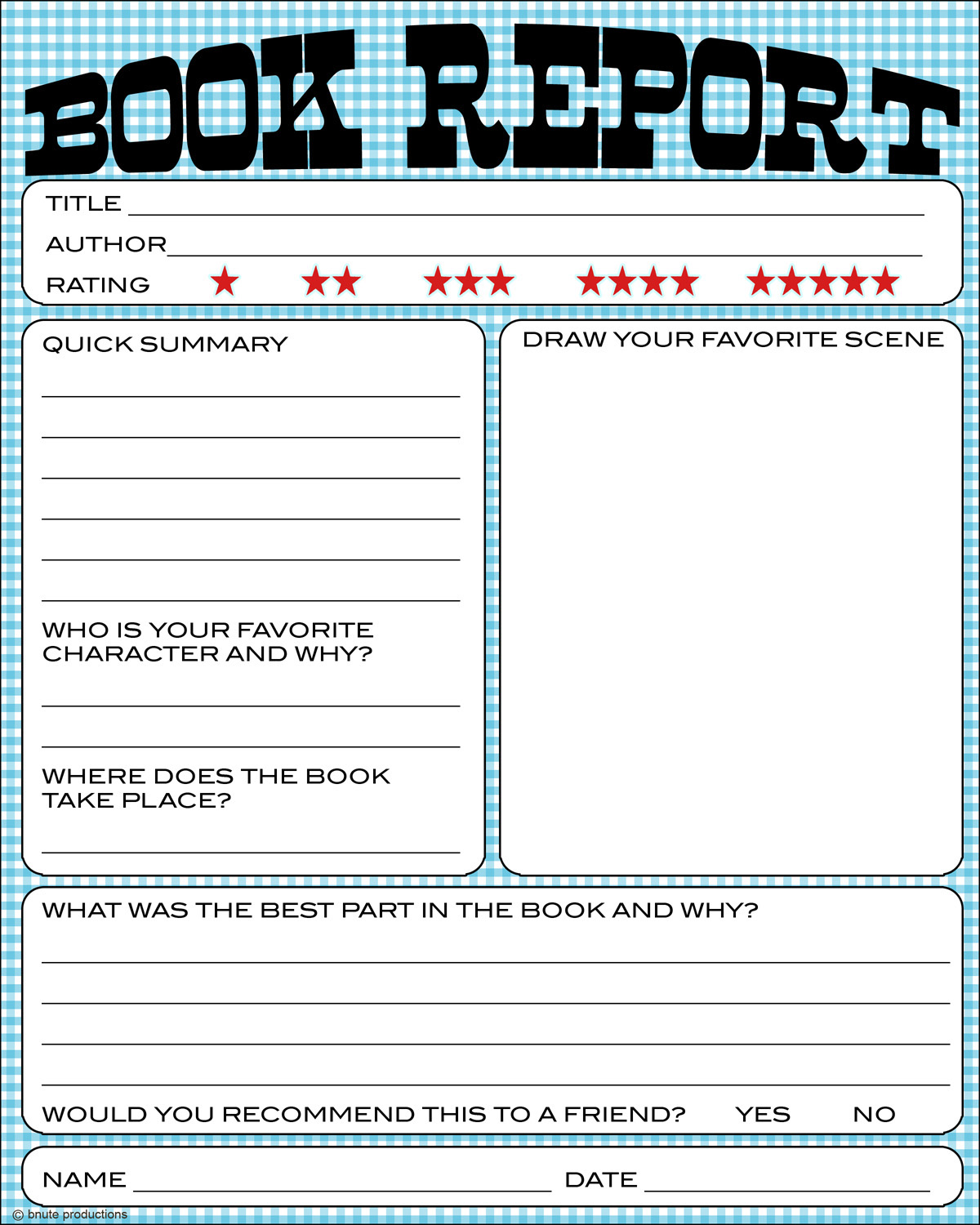
A Kids Book Report Template for Fun and Guided Learning is designed with simplicity and creativity in mind.

Common features include:

  • Short-answer prompts
  • Drawing or illustration sections
  • Favorite part questions
  • Simple opinion statements

These templates make book reporting accessible and enjoyable for younger readers.

Choosing the Right Book Report Template

Selecting the right format depends on:

  • Reader age and skill level
  • Type of book
  • Learning objectives
  • Assessment needs

A Book Report should challenge readers without overwhelming them. Simpler templates work best for beginners, while more detailed formats suit advanced readers.

Adapting Book Reports for Different Grade Levels

Book reporting expectations should evolve as readers develop.

Early Readers

Focus on:

  • Basic recall
  • Simple summaries
  • Visual responses

Intermediate Readers

Focus on:

  • Paragraph writing
  • Character or idea analysis
  • Clear opinions

Advanced Readers

Focus on:

  • Deeper analysis
  • Evidence-based opinions
  • Thematic discussion

A flexible Book Report supports growth across these stages.

How Teachers Use Book Report Templates Effectively

Educators rely on templates to:

  • Standardize assignments
  • Clarify expectations
  • Simplify grading
  • Support diverse learning needs

Templates also help teachers assess comprehension consistently while allowing creativity within structure.

How Parents Can Support Book Reports at Home

Parents can use templates to guide discussions and reinforce learning.

Helpful strategies include:

  • Talking about the book before writing
  • Helping identify key points
  • Encouraging personal opinions
  • Reviewing the completed report together

A clear Book Report makes it easier to support without over-directing.

Common Mistakes in Book Report Writing

Even with templates, readers may encounter challenges.

Common issues include:

  • Copying text directly from the book
  • Writing summaries that are too long or too short
  • Missing key ideas
  • Giving opinions without explanation

Templates that include guiding questions help reduce these mistakes.

Best Practices for Writing High-Quality Book Reports

To create strong book reports:

  • Read actively and take notes
  • Follow the template sections carefully
  • Use original wording
  • Support opinions with examples
  • Review for clarity and completeness

These habits strengthen both reading and writing skills.

Using Book Reports to Encourage a Love of Reading

When designed thoughtfully, book reports can enhance enjoyment rather than reduce it.

They help readers:

  • Engage more deeply with stories
  • Express personal reactions
  • Feel proud of completed work
  • Build long-term reading confidence

A well-structured Book Report turns reading into an interactive and meaningful activity.

Flexibility and Creativity in Book Report Templates

Effective templates allow room for creativity while maintaining structure.

Options include:

  • Alternative formats (posters, journals, slides)
  • Visual elements
  • Choice-based reflection questions

Flexibility keeps readers motivated and invested.

Long-Term Benefits of Using Book Report Templates

Consistent use of book report templates supports:

  • Strong literacy foundations
  • Clear communication skills
  • Analytical thinking
  • Academic independence

Over time, these skills transfer to essays, presentations, and research writing.

Conclusion

A Book Report Template is a powerful educational tool that supports reading comprehension, writing organization, and critical thinking. By providing clear guidance, it helps readers summarize content, analyze ideas, and express opinions with confidence.

Whether using a Book Report Fiction Template for Story Analysis, a Book Report Nonfiction Template for Informational Clarity, or a Kids Book Report Template for Engaging Learning, the right format makes book reporting meaningful and effective.

When applied consistently, book report templates do more than assess reading—they develop lifelong learning skills and a deeper appreciation for books.

Elementary School Book Report Template: 12+ BEST Formats

Elementary School Book Report Template use plays an important role in helping young learners organize their thoughts, understand stories deeply, and communicate ideas clearly. At the elementary level, book reports are not just writing exercises—they are tools for developing comprehension, vocabulary, structure, and confidence in expressing opinions.

Without a clear framework, students often struggle to summarize stories, identify key elements, or explain what they learned from a book. A well-designed template provides guidance while still allowing creativity and personal reflection.

What Is an Elementary School Book Report Template?

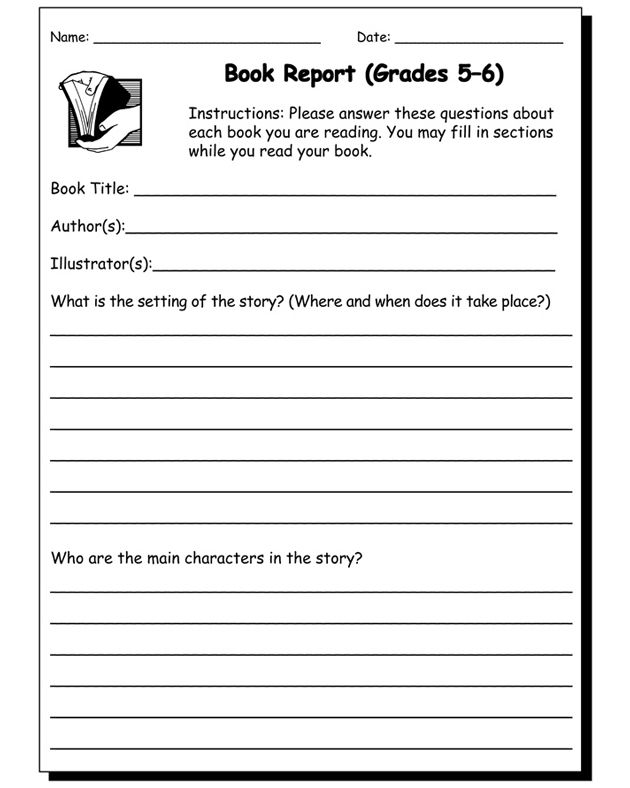
An Elementary School Book Report Template is a structured guide that helps students summarize and analyze a book in an age-appropriate way. It breaks the reporting process into manageable sections, making it easier for children to understand what information to include and how to present it.

These templates are designed to:

  • Support reading comprehension
  • Encourage organized writing
  • Develop critical thinking
  • Build confidence in written expression
  • Make book reporting less overwhelming

By using a consistent format, students can focus more on understanding the story and less on figuring out how to start.

Why Book Reports Matter in Elementary Education

Book reports play a foundational role in literacy development. At the elementary level, students are learning how to:

  • Identify main ideas
  • Recall important details
  • Understand characters and settings
  • Express opinions with reasons

A structured Book Report Template helps teachers assess comprehension while giving students a clear roadmap for success.

Book reports also encourage accountability, as students must engage with the text carefully in order to complete the assignment accurately.

Key Learning Skills Developed Through Book Reports

Using a consistent reporting structure supports multiple learning objectives.

Reading Comprehension

Students learn to recognize plot, themes, and key events.

Writing Organization

Templates teach students how to structure information logically.

Critical Thinking

Students are encouraged to reflect, evaluate, and form opinions.

Vocabulary Development

Writing about books exposes students to new words and concepts.

Communication Skills

Clear reporting improves written clarity and expression.

A strong Elementary School Book Report Template supports all of these skills simultaneously.

Core Elements of an Effective Elementary Book Report

While complexity varies by grade level, effective book report templates share common components.

Book Information

This section includes the title, author, and sometimes the illustrator.

Main Characters

Students identify key characters and briefly describe them.

Setting

The time and place where the story occurs.

Summary

A short retelling of the story using the student’s own words.

Favorite Part

Students explain which part they liked most and why.

Lesson or Message

This section encourages reflection on what the story teaches.

Every Elementary School Book Report Template should keep instructions simple and language age-appropriate.

Different Types of Elementary School Book Report Templates

Not all students learn the same way. Different formats help meet different learning needs.

Elementary Book Report Template for Clear and Guided Writing

An Elementary Book Report Template for Clear and Guided Writing provides step-by-step prompts that help students organize their thoughts.

This format is ideal for:

  • Early elementary grades
  • Struggling readers
  • Independent practice

Guided templates reduce anxiety and help students stay focused.

Get also: Academic Progress Report Template

Kids Book Report Template for Creative and Engaging Responses

A Kids Book Report Template for Creative and Engaging Responses incorporates visuals, drawings, or short-answer prompts.

This format often includes:

  • Character drawings
  • Scene illustrations
  • Emoji-style reactions
  • Short opinion prompts

Creative templates make book reporting fun and accessible for younger learners.

Grade School Book Report Template for Skill Progression

A Grade School Book Report Template for Structured Skill Progression gradually increases expectations as students advance.

This format may add:

  • Longer summaries
  • Character analysis
  • Simple theme discussion
  • Opinion with evidence

It supports a smooth transition from basic recall to deeper analysis.

Get also: Middle School Book Report Template

Choosing the Right Book Report Template by Grade Level

The effectiveness of a book report depends on matching the template to the student’s developmental stage.

Lower Elementary (Grades 1–2)

Focus on:

  • Simple prompts
  • Short answers
  • Visual elements

Upper Elementary (Grades 3–5)

Focus on:

  • Paragraph writing
  • Story structure
  • Personal reflection

A well-matched Elementary School Book Report Template keeps students challenged without causing frustration.

How Teachers Use Book Report Templates Effectively

Teachers rely on structured templates to:

  • Standardize assessment
  • Save instructional time
  • Provide clear expectations
  • Support diverse learners

Templates also make grading more consistent by ensuring students respond to the same prompts.

When used regularly, book report templates help establish strong literacy routines.

How Parents Can Support Book Reports at Home

Parents play an important role in reinforcing reading and writing skills.

Helpful strategies include:

  • Discussing the story before writing
  • Helping children identify key events
  • Encouraging opinions and personal connections
  • Reviewing the template together

A clear Elementary School Book Report Template makes it easier for parents to guide without doing the work for the child.

Common Mistakes Students Make in Book Reports

Even with a template, students may struggle if expectations are unclear.

Common issues include:

  • Retelling too much or too little
  • Copying text directly from the book
  • Forgetting key story elements
  • Writing opinions without explanations

Templates that include guiding questions help prevent these problems.

Best Practices for Creating High-Quality Book Reports

To help students succeed:

  • Encourage reading comprehension before writing
  • Use simple, clear instructions
  • Allow creativity within structure
  • Provide examples or models
  • Offer feedback focused on effort and understanding

A supportive approach builds confidence and motivation.

Using Book Reports to Build a Love of Reading

Book reports should not feel like punishment. When designed well, they can:

  • Encourage deeper engagement with books
  • Help students express personal interests
  • Build pride in completed work
  • Strengthen long-term reading habits

A thoughtful Elementary School Book Report Template turns reading into an interactive learning experience rather than a chore.

Adapting Book Report Templates for Different Learning Styles

Students learn in different ways, and templates can reflect that diversity.

  • Visual learners benefit from drawing sections
  • Verbal learners enjoy written reflection prompts
  • Reluctant writers benefit from sentence starters

Flexible templates support inclusion and differentiated instruction.

Long-Term Benefits of Structured Book Reporting

Consistent use of book report templates helps students develop:

  • Strong literacy foundations
  • Confidence in writing
  • Analytical thinking skills
  • Academic independence

Over time, these skills transfer to other subjects and higher-grade writing tasks.

Conclusion

An Elementary School Book Report Template is a powerful educational tool that supports reading comprehension, writing development, and critical thinking. By providing a clear structure, it helps young learners organize ideas, reflect on stories, and communicate understanding with confidence.

Whether using an Elementary Book Report Template for Clear and Guided Writing, a Kids Book Report Template for Creative and Engaging Responses, or a Grade School Book Report Template for Structured Skill Progression, the right format makes book reporting meaningful and age-appropriate.

When applied consistently, book report templates do more than assess reading—they nurture curiosity, expression, and a lifelong love of learning.

Exit mobile version