
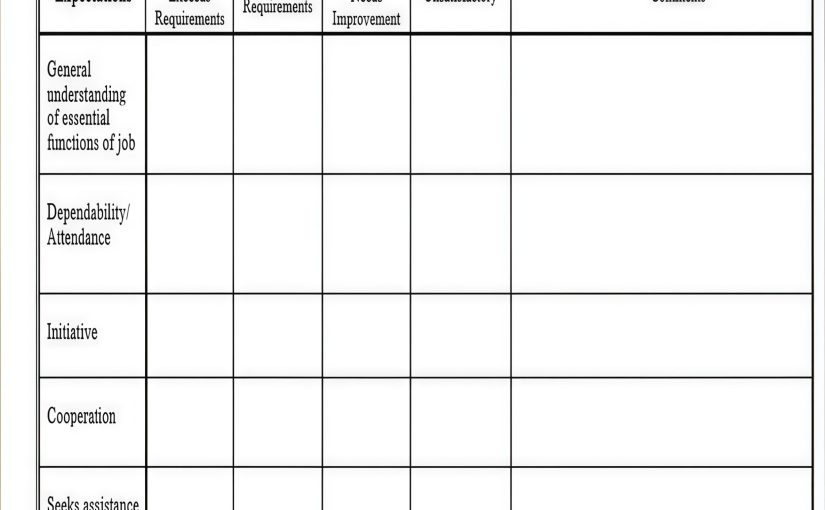
Monthly Progress Report Template frameworks are essential for organizations that need clear, structured visibility into ongoing work and performance outcomes. Monthly reporting sits at a critical intersection—frequent enough to detect issues early, yet comprehensive enough to show meaningful trends. Without a standardized format, monthly updates often become inconsistent, subjective, or difficult to compare.
A well-structured monthly report transforms scattered updates into reliable insights. It helps teams evaluate progress, communicate status clearly, and maintain accountability across projects, departments, and stakeholders.
What Is a Monthly Progress Report Template?
A Monthly Progress Report Template is a structured document used to summarize activities, achievements, challenges, and next steps within a single month. Its primary purpose is to provide a consistent snapshot of progress that supports informed decision-making.
Unlike informal updates, this template ensures that every report covers the same core elements, making comparisons between months clear and reliable. When used consistently, it becomes a powerful management and communication tool.
Organizations rely on monthly reporting to:
- Track execution against planned objectives
- Identify delays or performance gaps
- Communicate progress transparently
- Support accountability and ownership
- Maintain alignment between planning and execution
Why Monthly Progress Reporting Is So Effective
Monthly reporting offers a balanced reporting cadence. It avoids the noise of daily or weekly updates while still providing timely insights before issues escalate.
A Monthly Progress Report allows teams to:
- Review outcomes over a meaningful timeframe
- Identify recurring patterns and trends
- Assess whether corrective actions are working
- Adjust priorities based on real progress
Because the timeframe is consistent, monthly reports provide a reliable foundation for comparison and performance evaluation.
Core Elements of a Strong Monthly Progress Report
An effective monthly report combines clarity, structure, and relevance. While formats may vary, the following elements are commonly included.
Reporting Period Summary
This section defines the month covered and provides a brief context for the report.
Objectives and Planned Activities
Clear objectives establish what the team aims to accomplish during the month.
Completed Work and Achievements
This section highlights milestones reached, tasks completed, and outcomes delivered, focusing on results rather than effort.
Ongoing Activities
Work still in progress is documented here, along with its current status and expected completion.
Challenges, Risks, and Constraints
Identifying issues early allows teams to take corrective action before delays or failures occur.
Next Month’s Action Plan
Every Monthly Progress Report should conclude with clear priorities and planned actions for the upcoming month.
How a Progress Report Template Supports Long-Term Consistency


A Progress Report Template provides the foundation for structured reporting beyond a single month. When the same framework is reused, teams can easily track performance trends over time.
Consistent reporting helps organizations:
- Compare progress month over month
- Maintain standardized documentation
- Reduce ambiguity in performance reviews
- Improve clarity in stakeholder communication
Monthly reports become more valuable with repetition, as historical data strengthens analysis and planning.
High-Impact Variations of Monthly Progress Reports
Different industries and functions require tailored reporting formats. Below are specialized monthly report variations commonly used in practice.
Monthly Performance Report Template for Measurable Results Tracking

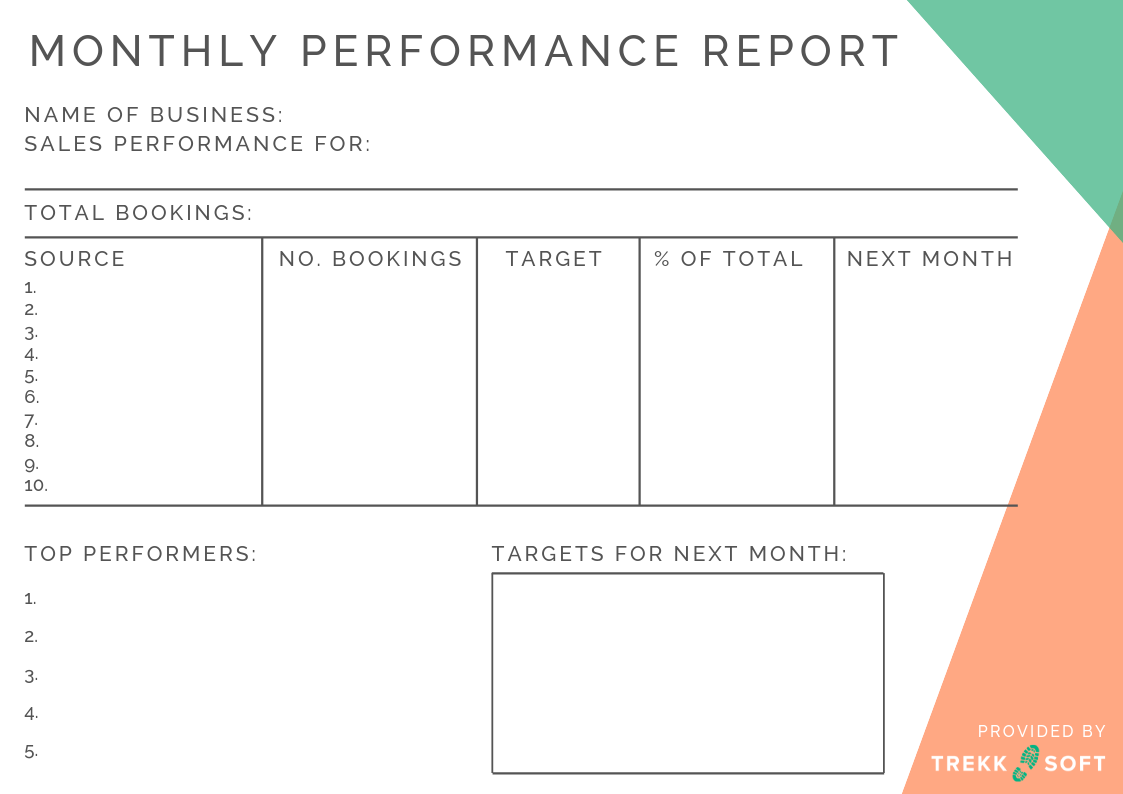
A Monthly Performance Report Template for Measurable Results Tracking emphasizes outcomes, metrics, and performance indicators rather than task-level detail.
This format typically focuses on:
- Key performance indicators
- Target versus actual results
- Variance analysis
- Performance trends
It is especially useful for management reporting, operational oversight, and performance reviews where measurable outcomes matter most.
Monthly Construction Progress Report Template for On-Site Execution Control

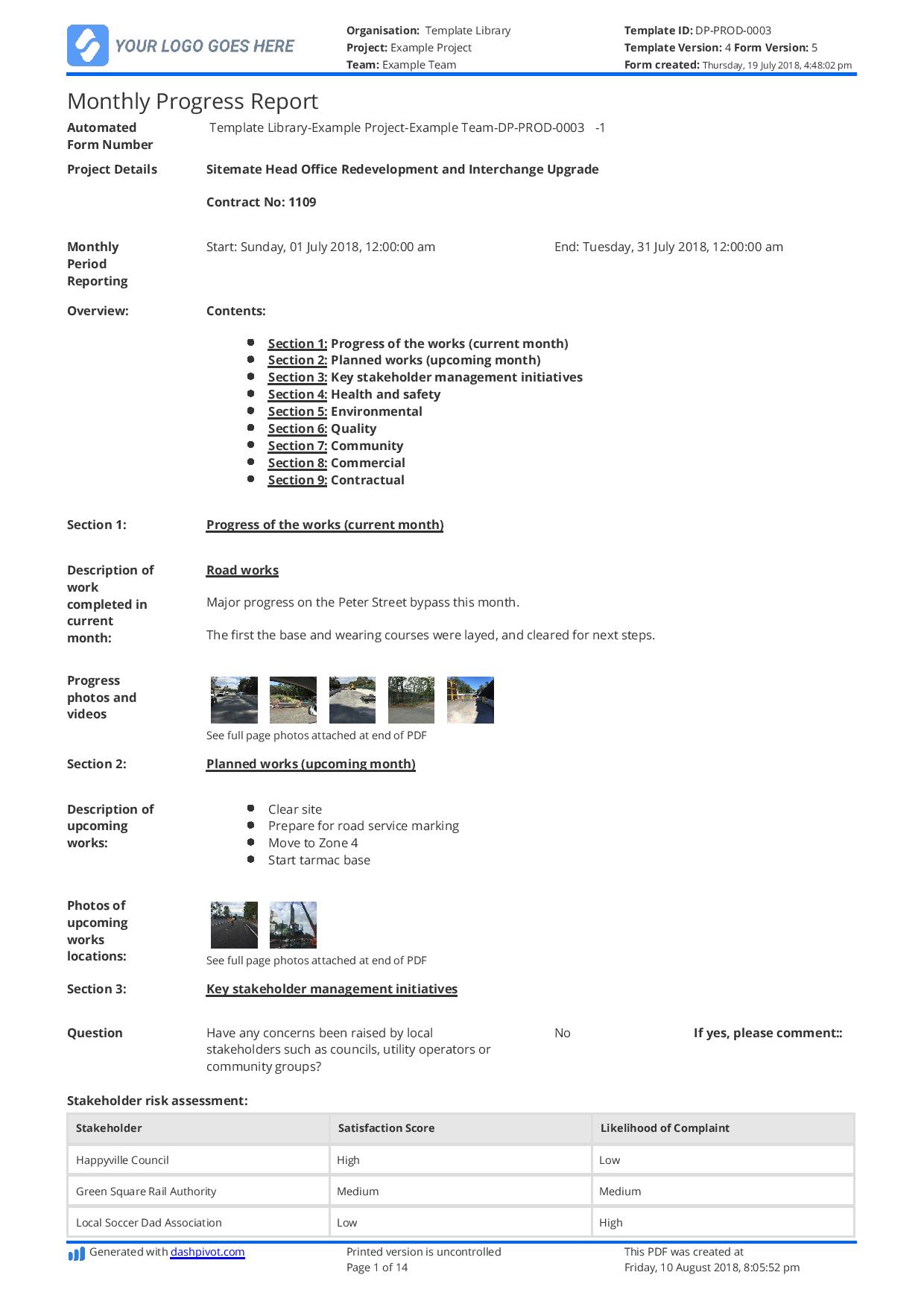
A Monthly Construction Progress Report Template for On-Site Execution Control is designed for environments where timelines, resources, and physical progress must be monitored closely.
This report format often includes:
- Work completed versus schedule
- Site activities and milestones
- Resource usage and constraints
- Safety or compliance observations
Because construction projects involve multiple dependencies, monthly reporting provides critical visibility into execution status and risk exposure.
Get also: Construction Monthly Report Template
Integrated Monthly Progress Report Template for Cross-Functional Teams


Some organizations combine operational updates with performance tracking into a single document. This integrated approach supports collaboration across departments.
An integrated Monthly Progress Report typically includes:
- Strategic objectives
- Operational progress
- Performance outcomes
- Risks and mitigation actions
This format is ideal for complex projects involving multiple teams or stakeholders.
Choosing the Right Monthly Progress Report Template
Selecting the right template depends on:
- The nature of the work
- The level of detail required
- The intended audience
- Reporting objectives
For leadership audiences, summary-focused formats are often more effective. For operational teams, detailed task and risk tracking may be necessary.
A well-chosen Monthly Progress Report Template aligns reporting detail with decision-making needs.
Adapting Monthly Reports for Different Audiences
Although the structure remains consistent, the presentation should vary based on who will read the report.
Executive and Leadership Reports
Executives benefit from concise summaries, key outcomes, and high-level risks.
Team and Department Reports
Operational teams require detailed updates, blockers, and clearly defined next steps.
Client or External Reports
External stakeholders typically value transparency, clarity, and progress tied directly to agreed deliverables.
Tailoring reports improves clarity without sacrificing consistency.
Common Mistakes in Monthly Progress Reporting
Even well-designed templates can lose effectiveness if common mistakes occur, such as:
- Reporting activities instead of outcomes
- Being overly vague or excessively detailed
- Hiding or minimizing challenges
- Changing the report structure frequently
A strong Monthly Progress Report prioritizes honesty, clarity, and relevance.
Best Practices for Writing Effective Monthly Progress Reports
To maximize the impact of monthly reporting:
- Use clear and professional language
- Focus on results and implications
- Highlight risks early
- Maintain consistent formatting
- Align updates with stated objectives
Good reporting builds trust and improves collaboration across teams.
Using Monthly Progress Reports to Drive Better Decisions
The true value of a Monthly Progress Report Template lies in how it supports action. Reports should inform decisions, not simply document activity.
When reviewed consistently, monthly reports help organizations:
- Identify performance gaps
- Adjust timelines and priorities
- Allocate resources more effectively
- Improve forecasting and planning
Over time, monthly reporting creates a reliable performance history that supports continuous improvement.
Long-Term Benefits of Standardized Monthly Reporting
Organizations that adopt structured monthly reporting gain:
- Stronger accountability
- Better communication
- Reduced project risk
- Improved visibility into execution
- Clearer alignment between goals and outcomes
A Monthly Progress Report becomes a strategic asset when used consistently.
Conclusion
A Monthly Progress Report Template is a vital tool for tracking progress, evaluating performance, and maintaining accountability across projects and teams. By standardizing how updates are documented, organizations gain clarity, consistency, and actionable insight.
Whether using a Progress Report Template as a foundational framework, a Monthly Performance Report Template for Measurable Results Tracking, or a Monthly Construction Progress Report Template for On-Site Execution Control, the right reporting format ensures that progress is visible and decisions are informed.
When applied consistently, monthly progress reporting turns ongoing work into measurable, manageable results.