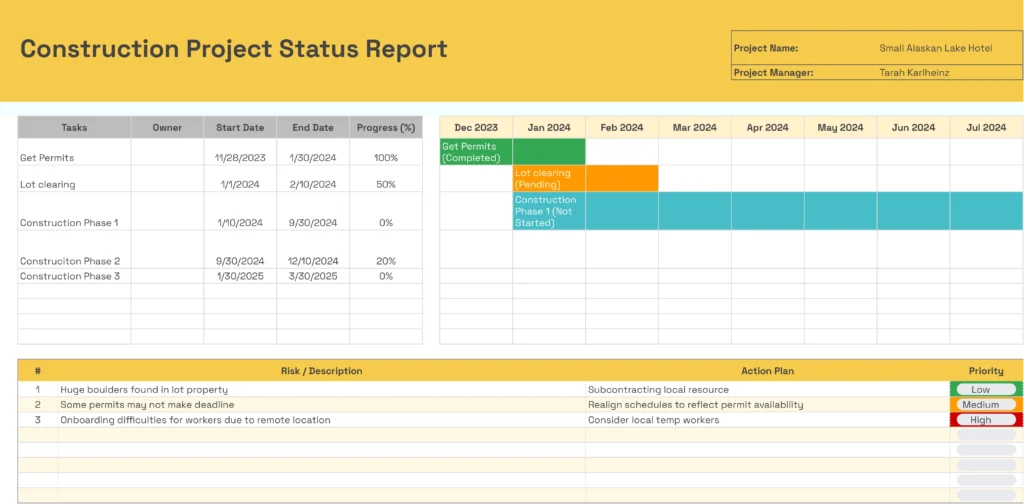
Construction Monthly Report Template – Extraordinary Insights for Better Project Control | A Construction Monthly Report Template plays a pivotal role in how teams, contractors, and stakeholders stay aligned in an industry where even a small delay can ripple into massive setbacks. The right template helps transform scattered updates into a coherent narrative of progress, challenges, cost movements, resource usage, and upcoming priorities. When structured correctly, it becomes more than documentation—it becomes a project health dashboard that prevents misunderstandings, protects budgets, and supports timely decision-making.
Construction work is dynamic, full of moving parts, and occasionally full of surprises—like discovering the “simple renovation” you priced turns out to have plumbing installed by someone who apparently studied engineering from a cereal box. A polished Construction Monthly Report Template helps teams navigate all that chaos in a steady, predictable way. With clarity, consistency, and strong documentation, everyone from project managers to site supervisors benefits from a monthly report designed for accuracy and clarity.
Construction Monthly Report Template – Unique Project Clarity
A great Construction Monthly Report Template brings order to the natural unpredictability of building environments. Instead of chasing updates from team to team, a well-crafted structure compiles all key information—resource allocation, milestone achievements, safety notes, financial figures, timeline accuracy, and major decisions—into a single unified document.


The Construction Monthly Report Template typically includes sections for daily progress logs, material inventory, delays, subcontractor updates, financial tracking, labor utilization, and risk assessments. With the right formatting, it becomes the backbone of routine communication. It ensures that project leaders always understand what’s on schedule, what’s drifting, and what needs immediate attention.
Equally important is the ability to detect trends early. When project reports follow a consistent structure, teams can spot recurring obstacles—like bottlenecks caused by late deliveries, tasks that consistently take longer than estimated, or cost spikes linked to specific stages of work. Identifying these patterns earlier means avoiding expensive surprises later.
A strong Construction Monthly Report Template also aids cross-functional communication. Teams working on design, procurement, operations, and field execution can get the same version of the truth. Instead of relying on spoken interpretation or text messages from the foreman, everything sits in a standardized document ready for review.
From a practical standpoint, this Construction Monthly Report Template keeps everyone aligned with the project’s broader goals. It supports transparency, avoids misunderstandings, and ensures accountability in areas where precision matters—such as inspections, material usage, and regulatory compliance. Even subtle changes in the timeline become easier to track and discuss.
Supporting Structure for Better Reporting Flow
Beyond layout and formatting, a well-designed monthly report template helps reinforce workflow discipline. It encourages team members to document updates thoroughly, track progress accurately, and think critically about delays or risks. This consistency builds a reliable historical record for future planning, budgeting, and forecasting.
Many construction firms rely heavily on monthly reports for validating invoices, updating clients, preparing for audits, and reviewing subcontractor performance. A structured template strengthens all those processes. The more polished the format, the easier it becomes to compare progress month-to-month—especially when a build spans long timelines.
The monthly structure is particularly useful for large-scale projects involving multiple contractors and large budgets. Consistent documentation ensures that nothing slips through the cracks. It also helps maintain accountability among different teams or subcontractors, since progress is evaluated in clear, measurable terms.
Keeping the Construction Monthly Report Template intuitive matters just as much as keeping it thorough. Overly complex formats often cause confusion, while overly simple ones fail to capture the data needed for meaningful analysis. The goal is a balanced design—comprehensive yet manageable, detailed yet readable.
Below are deeper dives into the three major specialized report types that relate to the monthly reporting cycle. Each serves a unique purpose in capturing project health from different angles.
Monthly Project Status Report Template – Premium Clarity
A Monthly Project Status Report Template provides a consistent snapshot of where the project stands at a given point in time. This version is ideal for teams that need a high-level but structured view of achievements, milestones, issues, and next steps. It simplifies conversations with stakeholders who want a clear understanding of the project’s direction without getting lost in overly technical details.


This version of the report typically includes an executive overview, current progress versus planned progress, updated timelines, procurement status, upcoming milestones, safety notes, and identified risks. It’s especially useful for project managers who must routinely evaluate whether the build is on pace or at risk.
One overlooked benefit of this template is how it supports early risk detection. By documenting progress in a standardized format, the team can easily identify early warning signs—such as delays in site preparation, slower-than-expected labor output, or dependencies that may impact subsequent stages. The structured layout enables faster decision-making, allowing leaders to pivot strategies before issues escalate.
In real-world construction environments, this report acts as the backbone of monthly management meetings. It brings together updates from architects, engineers, foremen, suppliers, and supervisors into one readable summary. With clarity baked into every section, discussions stay focused, productive, and anchored to factual updates rather than assumptions.
Construction Monthly Progress Report Template – Incredible Detail
A Construction Monthly Progress Report Template presents a deeper and more granular view of site activity. While the monthly status report highlights direction, the monthly progress report shines a spotlight on execution—what teams did, what materials were used, what equipment was active, and what challenges emerged along the way.


This template often includes detailed progress logs, photographic evidence, percentage completion charts, inspections completed, material usage data, subcontractor reports, and assessments of site conditions. These granular elements help transform the abstract notion of “work completed” into a tangible record backed by measurable data.
Teams use this report for operational planning, resource coordination, equipment scheduling, and validating the amount of progress required for staged payments. Because it captures day-to-day effort in aggregated form, it becomes a critical reference for both project performance reviews and contractual evaluations.
Realistically, this template also helps teams guard against scope creep. When progress is documented clearly each month, it becomes harder for unplanned tasks or unauthorized modifications to slip past unnoticed. The detailed structure highlights any deviations from the original scope and supports structured discussions on adjustments or change orders.
In complex builds involving heavy machinery, structural work, or multiple simultaneous crews, the monthly progress report becomes indispensable. It provides an evidence-based narrative that supports safety assessments, operational planning, and timeline reviews—making it a strategic asset, not just an administrative task.
Construction Project Monthly Status Report Template – Exclusive Insights
A Construction Project Monthly Status Report Template serves as a bridge between high-level leadership expectations and on-field execution. It builds on the concepts of both status and progress reports, combining summary-level insights with enough detail to make decisions confidently.


This version usually includes timeline updates, current work phases, completed deliverables, major risks, contractor performance, equipment allocation, and upcoming tasks. Because it blends strategic and operational insights, it becomes the go-to document for clients and senior management who need periodic updates without being overloaded.
One of the key advantages of this Monthly Status Report Template is how it enhances communication. With structured sections for accomplishments, challenges, and upcoming focus points, conversations between client representatives and project managers become more efficient. Rather than trying to interpret anecdotes or verbal updates, stakeholders can refer to written evidence aligned with the project plan.
The Construction Monthly Report Template also supports data-backed accountability. When teams track progress consistently across months, patterns emerge—such as recurring delays linked to specific workflows or opportunities where efficiency improvements could drastically reduce future time or cost. These insights become valuable fuel for strategic planning, risk mitigation, and forecasting.
In client-facing environments, this monthly report helps maintain trust. Clear, transparent, and structured updates demonstrate professionalism and strong project management discipline—qualities that matter deeply in the construction sector.
Final Thoughts: The Value of Structured Reporting
A strong Construction Monthly Report Template is more than paperwork—it’s a decision-making instrument. Whether used to track site activity, communicate with stakeholders, compare planned versus actual progress, or anticipate potential bottlenecks, it provides structure in an industry that thrives on precision and coordination.
Monthly reporting supports better planning, clearer communication, and stronger project control. With well-organized templates such as the Monthly Project Status Report Template, the Construction Monthly Progress Report Template, and the Construction Project Monthly Status Report Template, teams gain clarity, confidence, and continuity throughout the lifecycle of any project.