8+ POWERFULL Financial Report Templates Free Download

7 High-Impact Ways a Financial Report Template Transforms Your Workflow | A Financial Report Template brings structure, clarity, and consistency to financial documentation across monthly, quarterly, and annual cycles. More than a formatted document, a Financial Report serves as a reliable system that organizes essential numbers into understandable insight. Teams gain a repeatable approach that keeps reporting accurate, uniform, and easy to interpret—whether presenting to stakeholders, internal teams, or decision-makers who want clean data without unnecessary complications.

A strong Financial Report also prevents the scattered, improvised spreadsheets that creep into many organizations. Instead of juggling mismatched layouts, the template creates a predictable home for revenue, expenses, forecasts, and performance comparisons. It guides the reporting process while reducing errors and redundant work. Over time, the template becomes a stabilizing force—like that one colleague who keeps everything color-coded and somehow never loses a file.

How a Financial Report Template Supports Clearer Reporting

A Financial Report Template provides format consistency, which is crucial for understanding financial patterns over time. By having identical structures every reporting cycle, teams can compare trends without re-learning new formats each month. A uniform layout also improves accuracy, because categories and formulas remain in place rather than being recreated from scratch.

The template makes complex data easier to digest for different audiences. Operational teams can track variances, leadership can evaluate performance, and financial staff can maintain a clean audit trail. The visual coherence alone often reduces miscommunication—because nobody enjoys deciphering spreadsheets that look like they survived a coding bootcamp gone wrong.

Financial Summary Report Template

A Financial summary report template pairs naturally with the main Financial Report Template, offering a high-level snapshot of key metrics. This compact report highlights revenue totals, expense groupings, and net outcomes for the period. It helps readers grasp the storyline before diving into the full breakdown.

A polished Financial summary report keeps meetings efficient. Executives, time-pressed managers, and anyone allergic to long tables appreciate having the essence presented clearly. Once the overview lands, the detailed Financial Report Template fills in the context.

End of Year Financial Report Template

An end of year financial report template closes the annual cycle by consolidating total earnings, accumulated expenses, and year-end positions. It provides the clearest picture of how the organization performed over the past twelve months.

This version of the Financial Reporting Template ensures the entire financial narrative stays cohesive. It reduces last-minute data hunting, mismatched tables, and formatting mismatches that tend to appear during year-end rushes. The result is a final annual document that feels polished and complete rather than patched together.

Why Teams Rely on a Financial Report Template for Stability and Insight

A dependable Financial Report simplifies collaboration among multiple departments. Instead of creating their own report formats, teams insert data into the shared structure. Numbers become easy to merge, compare, or audit. The uniformity supports long-term tracking and prevents reporting drift—a common issue when departments improvise.

A structured report also enhances decision-making. Because the information lands in a familiar layout, leaders can identify emerging trends, cost behavior, or inefficiencies more quickly. This improves conversations around budgeting, projections, and performance improvement.

Financial Statement Report Template

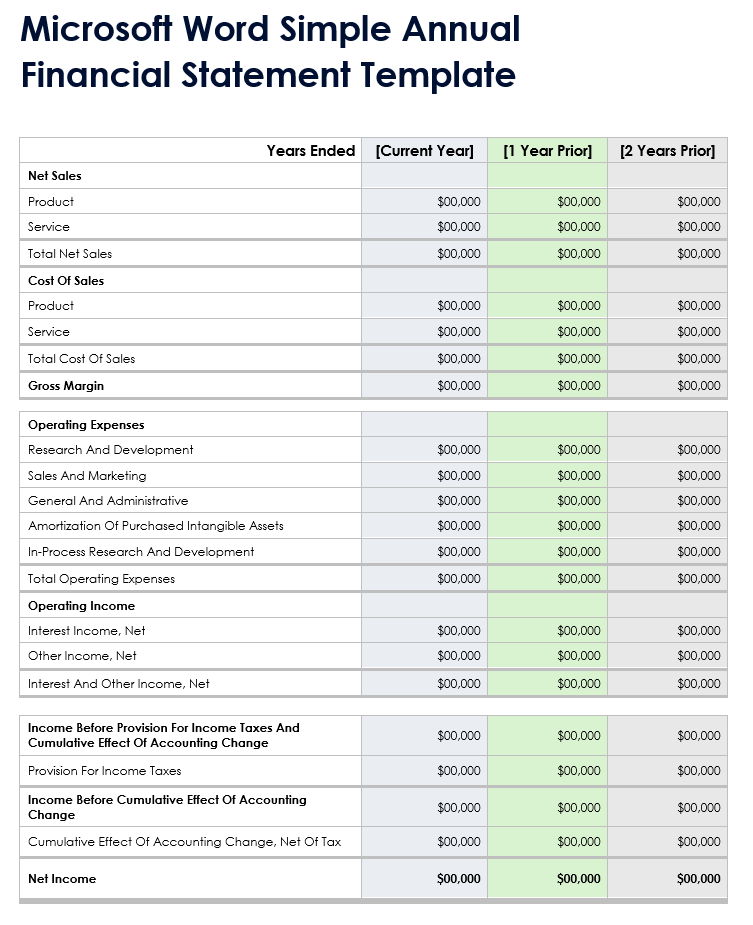
A financial statement report focuses on the core trio: income statements, balance sheets, and cash flow statements. While the main financial reporting template organizes broader reporting needs, this specialized version keeps the foundational statements structured and consistent.

Using a Financial statement report template ensures accuracy in the most critical reporting areas. Teams avoid layout changes that could cause misinterpretation or formula errors. Paired with the main template, it creates a powerful reporting ecosystem that reinforces trust and clarity.

Financial Summary Report Template

Reintroducing the Financial summary report template within broader financial cycles supports smooth transitions between quick-glance metrics and deeper analysis. Its concise layout makes it ideal for presentations, department reviews, or strategic meetings where time is limited.

When used alongside the primary Report Template, the summary provides essential context before diving into category-level detail. This dual-template approach improves understanding and reduces confusion.

Extended Insights, Use Cases, and Practical Application

Teams across different industries rely on a Report Template for varied reporting needs. A nonprofit may use it to evaluate donor fund allocation, while a manufacturing company might track production costs and margins. Service-based businesses might focus more on labor expenses and recurring revenue streams. Regardless of the organization, the template adapts without losing structural integrity.

One significant advantage of using a Financial Report Template is historical comparison. With consistent formatting, it becomes easy to study quarterly or annual patterns. Revenue spikes, cost anomalies, or seasonal changes stand out naturally when the structure remains identical each cycle. This makes forecasting more grounded and less reliant on guesswork.

The template also supports smoother audits. Clear sections, standardized labels, and organized financial categories reduce the time spent clarifying where numbers belong. Auditors appreciate clean documentation—and when auditors are happy, everyone sleeps better.

Startups benefit as well. A growing team with unpredictable income and expenses can remain financially grounded through a consistent financial report. Founders stay aligned, decisions become data-driven, and external stakeholders view the documentation as credible and professional.

When organizations expand, the Financial Reporting scales easily. Additional categories—like departmental budgets, branch comparisons, or project-based expenses—can be integrated without disrupting the established structure. The core formatting stays intact while accommodating new data.

The template’s flexibility also shines during external communication. Whether presenting to investors, applying for financing, or preparing regulatory documents, organizations need clarity. A uniform format reinforces consistency and makes the information digestible for people unfamiliar with internal financial processes.

Daily operations benefit too. Teams conducting budget reviews, spending audits, or performance evaluations rely on the structure to keep meetings focused. Instead of arguing over spreadsheet layout choices, they engage in meaningful conversation about what the numbers represent.

Over time, the Business Report Template becomes a predictable guide. It minimizes errors, reduces duplicated effort, and creates accountability across reporting cycles. Many teams even find the process surprisingly less stressful—once the formatting battles disappear, the focus returns to insight rather than layout.

Conclusion

A Financial Report Template delivers clarity, consistency, and reliability across all reporting cycles. It organizes financial information in a way that supports planning, analysis, and communication. With the right structure in place, financial discussions become clearer, decisions become more confident, and organizations move forward with a reporting system that’s both dependable and easy to use.

7+ Annual Financial Report Template for Stronger Year-End Insights

Annual Financial Report Template for Clearer, Stronger Year-End Insights | Crafting a dependable annual financial report template isn’t just about crunching numbers; it’s about shaping a narrative that helps leaders see the past year with clarity and plan the next one with confidence. A well-built structure turns financial data into a strategic asset, especially when teams need an accessible, repeatable system that works every year. With the right framework in place, organizations can track performance, understand shifts in revenue or expenses, and present a complete story that keeps everyone aligned.

This kind of Annual Marketing Report Template also helps eliminate yearly chaos—the frantic spreadsheet hunting, the mystery figures no one remembers entering, and the last-minute detective work to explain why office supply expenses suddenly doubled (spoiler: it’s always the printer toner). Instead, it gives teams a clear reference point where everything fits logically and tells a cohesive financial narrative.

Annual Financial Report Template Essentials for Reliable Year-End Clarity

A strong annual financial report template should give leaders an organized view of revenue, expenses, assets, liabilities, and final outcomes that impact decisions. It also needs to be structured so that both financial and non-financial readers can understand the story behind the numbers. That’s why clarity, consistency, and relevance are at the core of a dependable template.

Structuring Your Annual Financial Statement Report for Accuracy

One of the key components to embed in your annual financial statement report is a standardized approach to presenting financial activities for the year. This typically includes sections for your income overview, operational expenses, net results, and a breakdown of cash movements. Readers should immediately understand how financial activity unfolded month by month and how those movements collectively shaped the year’s performance.

This isn’t about adding fancy jargon; it’s about giving clear explanations. For example, if operational costs rose, the report can briefly note the cause—whether from hiring, maintenance, or expansion. It allows stakeholders to tie numerical changes to real-world events. That context adds value and builds trust in the numbers presented. Even simple clarifications go a long way: instead of “expenses increased by 8%,” readers appreciate specifics like “expenses increased due to upgrading outdated equipment—finally solving the office AC crisis that turned every meeting into a sauna.”

Aligning the Annual Report Audited Financial Statement With Your Template

A template becomes even more effective when it connects seamlessly with your annual report audited financial statement. Even if audits happen at a later stage, your template should already anticipate what auditors look for: consistency between statements, proper categorization of transactions, traceable adjustments, and transparent documentation.

By preparing with these requirements in mind, teams reduce audit friction and ensure that financial documentation doesn’t feel like a scavenger hunt. The template should allocate space for adjustments, footnotes, and summaries that auditors often request.

In practice, this means being clear about depreciation schedules, explaining deferred revenue, or documenting multi-year contracts. When these details live naturally within the template, the audit process becomes more of a routine confirmation than a stress-filled obstacle course.

Get also: Annual Expense Report Template

Annual Financial Report Template Components That Strengthen Decision-Making

A complete financial report template also supports big-picture insights. Instead of simply reporting totals, it should guide readers through the financial story of the year. This is where structure, clarity, and thoughtful organization transform a financial document into a decision-ready resource.

Integrating Performance Data Into an Annual Financial Statement Report

Another way to enhance your annual financial statement report is by combining traditional financial statements with performance indicators. These indicators add context to the numbers by showing what happened operationally during the year. For example, revenue may have risen 14%, but highlighting that customer retention also improved provides a fuller understanding of why growth occurred.

The template can include designated areas for KPIs, metric comparisons to previous years, and commentary on what influenced changes. Having these sections built in helps teams connect financial outcomes to internal strategies and market conditions. It keeps the report from feeling like a static archive and turns it into a more dynamic tool for annual planning. And fortunately, it avoids the classic year-end guessing game of “Was this growth intentional or did we just get lucky?”

Capturing Revenue Trends With an Annual Sales Report Template

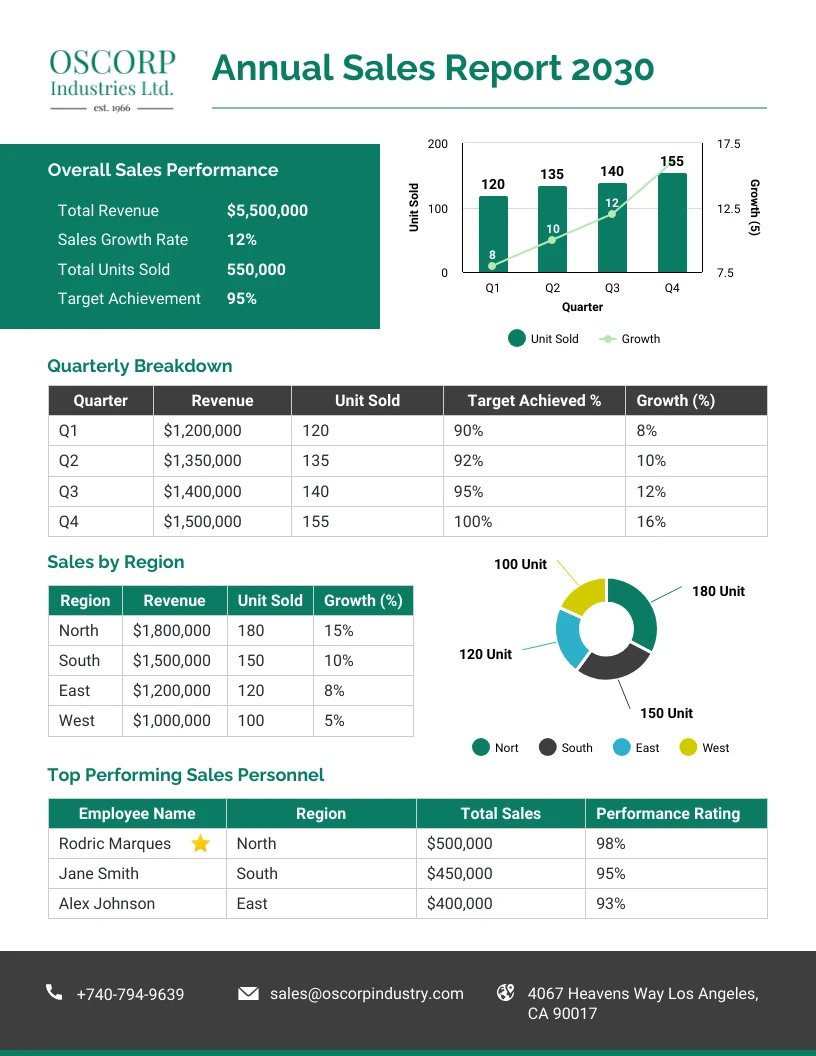
No financial overview feels complete without revenue details, which is why your annual sales report template should integrate naturally with the larger reporting structure. Sales patterns often set the tone for the entire year’s performance, so having a clear breakdown of product or service categories, seasonal fluctuations, and top-performing segments is crucial.

Embedding the sales analysis directly into your template ensures teams don’t treat it as a separate document. Instead, it becomes part of the continuum that explains financial outcomes. For instance, if sales spiked in Q3, the template can highlight contributing events such as marketing campaigns, product launches, or improved distribution. These insights allow leaders to see what’s replicable and where adjustments may be needed for the next period.

Building a Narrative That Connects All Financial Elements

A well-designed template doesn’t just present data—it tells a cohesive story. Revenue insights from the annual sales report template, financial activities summarized in the annual financial statement report, and verification through the annual report audited financial statement should all weave together naturally.

When these pieces align, readers gain a richer understanding of the company’s direction. Leaders can see not only the numbers, but also the momentum behind them. For instance, rising revenue paired with rising costs tells a different story than rising revenue with stable costs. Similarly, decreased operational expenses may signal efficiency gains—or reduced investment in growth. The template should help readers distinguish between these scenarios through clear sections dedicated to explanation and context.

Making the Annual Review Process Repeatable

One of the hidden strengths of a consistent annual financial report template is how it supports long-term organization. Over time, teams become familiar with its structure, which reduces confusion and training needs. Departments know exactly what information to prepare and where it will be placed. This makes the annual reporting process more predictable and less stressful for everyone involved.

It also helps with year-to-year comparability. When the structure stays consistent, spotting trends becomes easier. Leaders can quickly determine whether margins are improving, which costs fluctuate most, or how year-end balances have shifted. A stable structure removes unnecessary noise so that performance trends stand out clearly.

Tailoring the Template to Different Types of Organizations

Although the core structure of a reporting template remains similar across industries, small adaptations make it more relevant depending on the type of organization. A nonprofit may emphasize funding sources and program expenses, while a retailer may highlight product category performance and inventory turnover. Service-based businesses benefit from focusing on utilization rates, client retention, and contract revenue.

The beauty of a flexible annual financial report template is that it accommodates these differences without losing clarity. Teams can add sections, rename categories, or incorporate additional data visualizations as needed. What matters most is that the template remains understandable, logical, and easy to maintain year after year.

Providing Clear Takeaways for Stakeholders

At the end of the financial report, readers should walk away with clear insights. A short concluding summary can consolidate everything: the year’s financial position, what influenced the results, and which areas deserve attention in the coming cycle. This summary doesn’t need dramatic flair—just honest, concise takeaways that help everyone align on next steps.

Instead of burying readers in spreadsheets and tables, the summary brings the narrative back into focus. It frames the financial story in a way that resonates with both numbers-driven and non-technical audiences. Even complex years can be summarized in a way that feels structured and actionable.

A thoughtfully designed annual financial report template becomes more than a document—it becomes an annual ritual that strengthens understanding, transparency, and decision-making. With the right structure in place, it evolves into a reliable tool that helps organizations interpret their financial journey and plan their future with clarity.

Exit mobile version