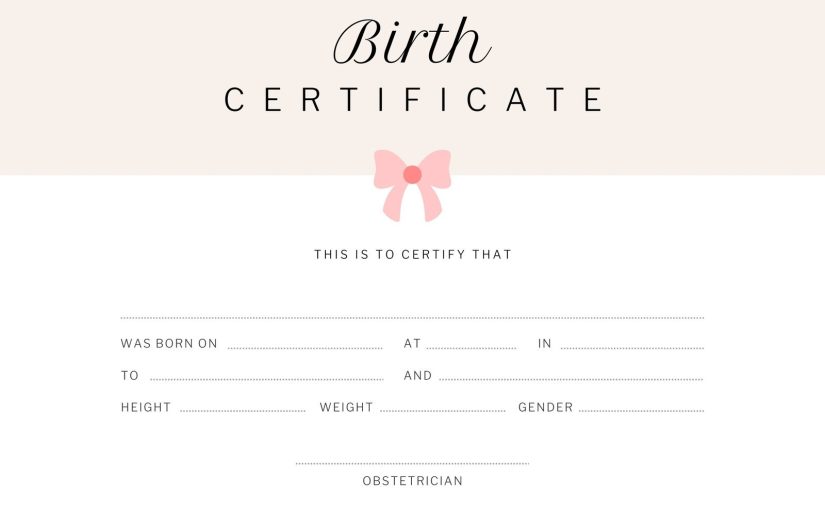
Birth Certificate Translation Template – Complete Guide for Accurate and Professional Document Translation | A Birth Certificate Translation Template is a structured document format used to translate birth records from one language to another while preserving accuracy, clarity, and consistency. This type of template is commonly required for administrative, educational, legal, and immigration-related documentation where an official birth record must be presented in a different language.
Using a standardized translation format helps ensure that all critical details from the original document are translated correctly without omissions or formatting inconsistencies.
What Is a Birth Certificate Translation Template?


A birth certificate translation template is a pre-formatted layout designed to replicate the structure of the original birth record while presenting the content in a target language. It does not alter the original data but converts it linguistically while maintaining document integrity.
These Birth Certificate Translation Templates are widely used by:
- Professional translators
- Legal documentation services
- Educational institutions
- Individuals submitting translated records
Why Birth Certificate Translation Matters
Birth certificates contain highly sensitive personal data. Errors or inconsistencies in translation can cause:
- Application delays
- Rejection of documents
- Administrative confusion
A Birth Certificate Translation Template minimizes these risks by ensuring every data field is properly mapped and translated in a consistent order.
Common Situations Requiring Translated Birth Certificates
Translated birth records are frequently required for:
Immigration and Residency Applications
Many countries require birth records to be submitted in the official language of the destination country.
Education and Academic Enrollment
Schools and universities often request translated birth documents for international students.
Legal and Civil Procedures
Court filings, marriage registrations, and citizenship processes often require translated records.
Employment and Background Verification
Certain employers request translated birth records as part of identity verification.
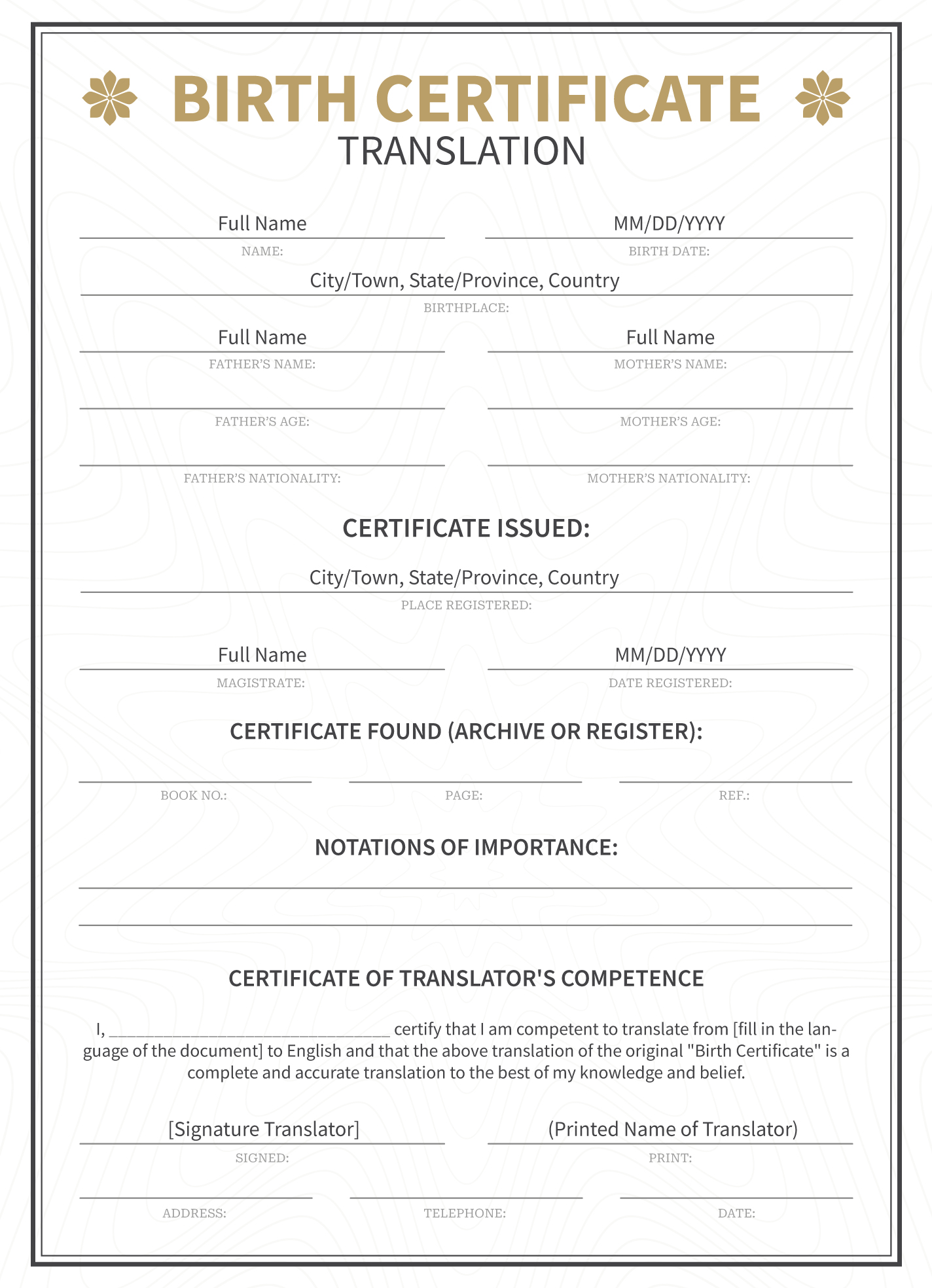
Key Components of a Birth Certificate Translation Template
A professional translation birth certificate template usually includes the following elements:
1. Document Title
Clearly states that the document is a translated version of a birth certificate.
2. Original Language Reference
Indicates the original language of the source document.
3. Translated Content Sections
Each section mirrors the original document, including:
- Full name
- Date of birth
- Place of birth
- Parent information
- Registration details
4. Translator’s Statement
Confirms the accuracy and completeness of the translation.
5. Certification and Signature
Includes translator name, signature, date, and contact information if required.
Birth Certificate Translation from Russian to English Template


A Birth Certificate Translation from Russian to English Template is specifically designed to handle Cyrillic text, Russian naming conventions, and date formats.
Important Considerations:
- Accurate transliteration of names
- Correct interpretation of patronymics
- Conversion of date formats
- Consistent translation of administrative terms
Using a structured template ensures that Russian birth records are translated clearly and accepted by English-speaking institutions.
Birth Certificate Translation to Spanish Template


A Birth Certificate Translation to Spanish Template is commonly required for documentation submitted to Spanish-speaking countries or institutions.
Key Features:
- Formal Spanish terminology
- Accurate rendering of civil registry terms
- Proper formatting aligned with Spanish-language documents
Templates help maintain linguistic accuracy while respecting cultural and administrative norms.
Translation of Mexican Birth Certificate to English Template


A Translation of Mexican Birth Certificate to English Template addresses the specific structure and terminology used in Mexican civil registry documents.
Common Challenges:
- Long-form registry entries
- Official stamps and marginal notes
- Regional administrative language
A specialized birth certificate template ensures that all relevant information is translated clearly without misinterpretation.
Certified vs Non-Certified Translations
Not all translated birth records require certification, but many institutions do.
| Feature | Certified Translation | Non-Certified Translation |
|---|---|---|
| Translator declaration | Yes | Optional |
| Signature | Required | Optional |
| Institutional acceptance | High | Limited |
| Use case | Legal, immigration | Personal, internal |
Templates are often adapted to include certification statements when required.
Formatting Standards for Translated Birth Records
Professional formatting improves document acceptance.
Best practices include:
- Preserving original layout order
- Using consistent terminology
- Avoiding abbreviations
- Clearly labeling translated sections
Templates help enforce these standards automatically.
Digital vs Printable Translation Templates
Digital Templates
- Editable and reusable
- Ideal for professional translators
- Easy to archive and update
Printable Templates
- Suitable for notarization
- Used for physical submission
- Preferred for court or embassy filings
Many users maintain both formats for flexibility.
Accuracy and Consistency in Translation
Consistency is crucial when translating multiple documents.
A template ensures:
- Uniform terminology
- Identical structure across documents
- Reduced risk of missing information
This is especially important for families or individuals submitting multiple translated records.
Handling Names, Dates, and Locations
Translating birth records requires special attention to:
Names
- Preserve original spelling when required
- Apply standard transliteration rules
Dates
- Convert formats correctly
- Avoid ambiguity
Locations
- Translate administrative divisions accurately
- Retain original place names where necessary
Templates guide translators through these details systematically.
Get also: Free Baby Birth Certificate Printable
Privacy and Ethical Considerations
Translated birth records contain sensitive personal data.
Responsible use includes:
- Secure file storage
- Controlled sharing
- Clear labeling of translated copies
Templates support ethical handling by maintaining clarity and purpose.
Common Mistakes Avoided by Using Templates
Templates help prevent:
- Missing data fields
- Inconsistent terminology
- Formatting errors
- Incorrect certifications
They act as a quality control tool for translators.
Institutional Acceptance Factors
Institutions often evaluate translated documents based on:
- Completeness
- Accuracy
- Professional presentation
Using a structured translation format increases the likelihood of acceptance.
Long-Term Value of Translation Templates
Over time, translation templates provide:
- Reusability for multiple documents
- Standardized workflows
- Improved translation efficiency
They are especially valuable for agencies and professionals handling frequent translation requests.
Best Practices for Using Translation Templates
To maximize effectiveness:
- Always compare with the original document
- Double-check spelling and dates
- Include certification when required
- Maintain version control
Attention to detail is essential.
When Translation Templates Are Not Enough
Some cases may require:
- Notarization
- Apostille services
- Official government translations
Templates support the process but do not replace these requirements.
Final Thoughts
A Birth Certificate Translation Template is an essential tool for ensuring accurate, professional, and consistent translation of birth records across languages. Whether handling specialized cases such as Birth Certificate Translation from Russian to English Template, Birth Certificate Translation to Spanish Template, or Translation of Mexican Birth Certificate to English Template, a structured format significantly improves clarity and acceptance.
Used correctly, these templates help bridge language barriers while preserving the integrity of vital personal records.