

Certificate of Origin Form Template – Complete Guide for International Trade Documentation | A Certificate of Origin Form Template is a standardized document format used to declare the country where goods are manufactured, produced, or processed. This document is a critical part of international trade, helping customs authorities determine tariff rates, trade eligibility, and regulatory compliance.
Using a clear and well-structured form template ensures that original information is presented accurately, consistently, and professionally across different trade transactions.
What Is a Certificate of Origin Form?
A certificate of origin form is a trade document that certifies the national origin of exported goods. It is commonly required by customs authorities, importers, banks, and trade regulators to verify where products come from.


Unlike invoices or packing lists, this form focuses specifically on origin data, which directly affects:
- Import duties and tariffs
- Trade agreement benefits
- Customs clearance speed
- Regulatory approval
A structured Certificate of Origin Form Template simplifies this process.
Why a Certificate of Origin Form Template Is Important
Errors or inconsistencies in origin documentation can cause shipment delays or financial penalties. A standardized form layout helps exporters and manufacturers avoid common issues.
Key benefits include:
- Consistent data presentation
- Reduced risk of rejection
- Faster customs processing
- Improved compliance with trade requirements
For businesses involved in regular exports, templates improve efficiency and accuracy.
Common Uses of Certificate of Origin Forms
Certificate of origin forms are widely used in international trade scenarios, such as:
Export and Import Transactions
Most cross-border shipments require origin documentation to accompany commercial invoices and packing lists.
Trade Agreement Applications
Forms are often needed to claim preferential tariff treatment under trade agreements.
Banking and Letter of Credit Processes
Banks may require certified origin forms before releasing payment.
Regulatory and Compliance Reviews
Authorities use these forms to verify compliance with trade regulations.
Key Elements of a Certificate of Origin Form Template
A complete and professional certificate of origin template usually contains the following sections:
Exporter Information
- Company name
- Address
- Country
Consignee Information
- Importer name
- Address
- Destination country
Goods Description
- Product name
- Quantity and packaging
- HS code (if applicable)
Origin Declaration
- Country of manufacture
- Certification statement
Authorization Section
- Date of issuance
- Authorized signature
- Official stamp (if required)
Certificate of Origin Form B Explained


A Certificate of Origin Form B is a commonly used non-preferential origin document. It certifies the country of origin but does not provide tariff reductions under specific trade agreements.
Typical Use Cases:
- General exports without preferential tariffs
- Shipments to countries requiring origin verification
- Transactions not covered by free trade agreements
Form B is widely accepted and often issued by chambers of commerce.
Certificate of Origin Form E Template

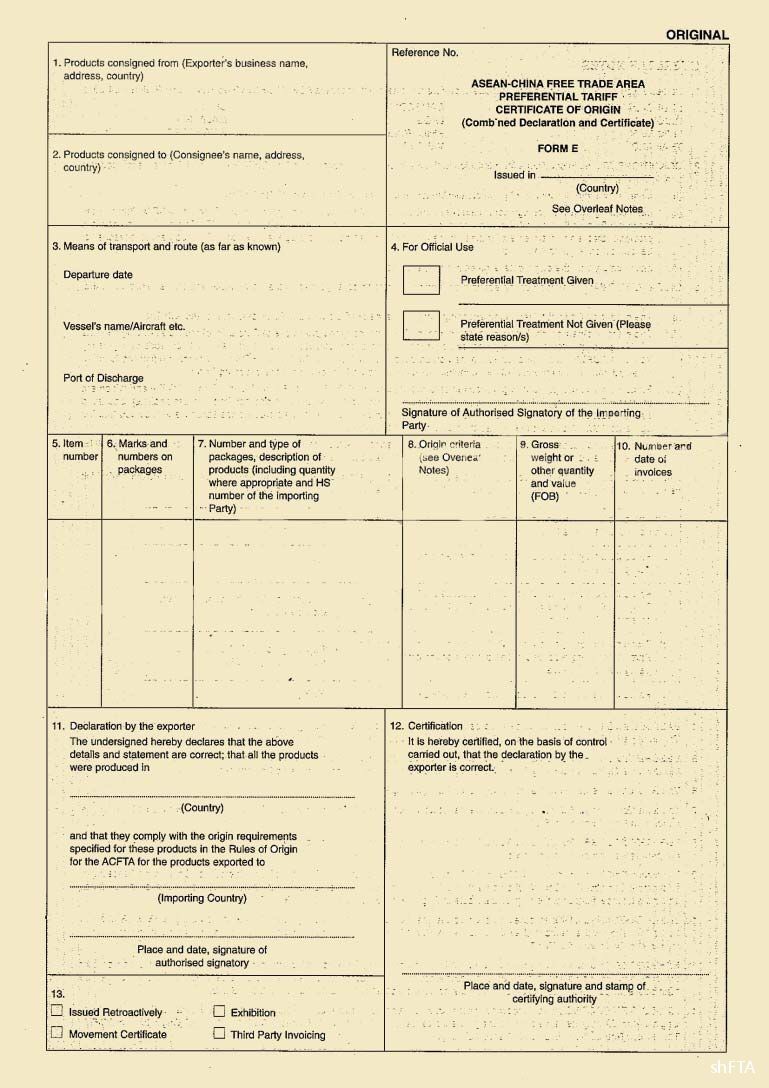
A Certificate of Origin Form E Template is used under specific trade agreements, particularly between certain Asian and ASEAN-related trading partners.
Key Characteristics:
- Designed for preferential tariff treatment
- Requires detailed origin criteria
- Must comply with agreement-specific rules
Using a dedicated Certificate of Origin Form Template ensures that all required fields and declarations are correctly included.
USMCA Certificate of Origin Fillable Form Template

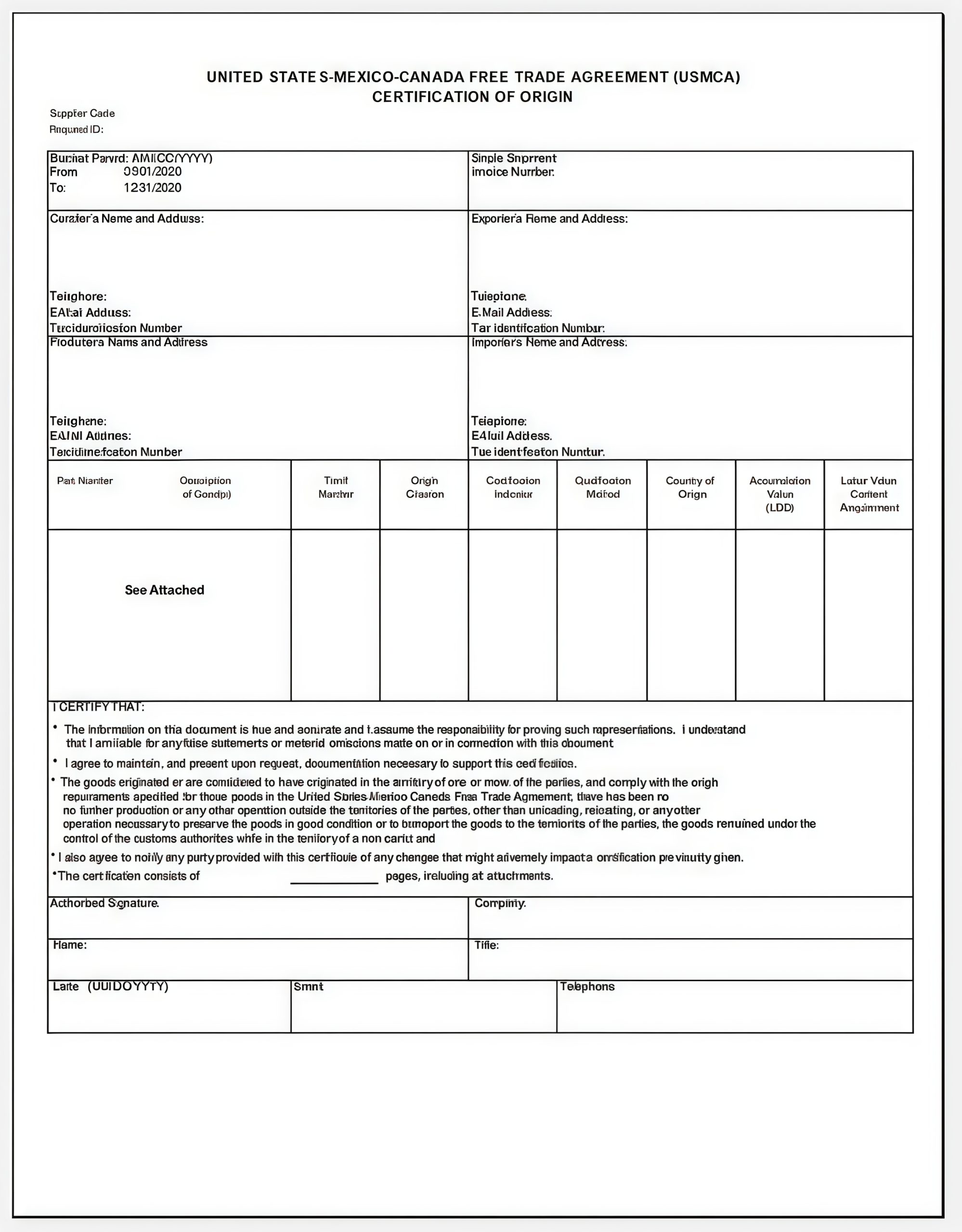
A USMCA Certificate of Origin Fillable Form Template is used to support trade under the United States–Mexico–Canada Agreement.
Unique Features:
- Flexible format without a mandatory official form
- Requires specific data elements
- Can be submitted electronically or in print
A fillable template helps businesses ensure all USMCA-required information is included accurately.
Preferential vs Non-Preferential Certificates of Origin
Understanding the difference is essential.
| Aspect | Preferential CO | Non-Preferential CO |
|---|---|---|
| Tariff benefits | Yes | No |
| Agreement-based | Yes | No |
| Documentation complexity | Higher | Lower |
| Common example | Form E | Form B |
Choosing the correct form depends on trade agreements and destination requirements.
Printable and Fillable Form Options
Printable Forms
- Used for physical submission
- Required when stamps or signatures are mandatory
- Suitable for chamber certification
Fillable Digital Forms
- Faster data entry
- Reduced errors
- Easy storage and sharing
Many exporters maintain both formats to meet varying requirements.
Role of Chambers of Commerce
Chambers of commerce often:
- Review the origin information
- Certify completed forms
- Apply official stamps
Using a standardized template makes chamber certification smoother and faster.
Importance of Accurate Product Description
Product descriptions must be:
- Clear and specific
- Consistent with invoices
- Aligned with HS codes
Ambiguous descriptions can result in customs delays or rejection.
Handling Mixed-Origin Goods
For products involving multiple countries, exporters must:
- Identify substantial transformation
- Declare the correct origin based on trade rules
- Use appropriate origin criteria
Templates help guide this information clearly.
Common Mistakes to Avoid
Using a proper template helps prevent:
- Missing signatures
- Incorrect country declarations
- Inconsistent product descriptions
- Invalid form selection
Avoiding these mistakes saves time and costs.
Storage and Record Retention
Exporters should retain origin documentation for:
- Compliance audits
- Dispute resolution
- Regulatory inspections
Consistent templates support long-term record clarity.
Customizing a Certificate of Origin Form Template
Businesses may customize templates by:
- Adding company branding
- Including internal reference numbers
- Adjusting language fields
Customization should never alter required data elements.
Digital Trade and Electronic Submission
Many customs authorities now accept electronic origin documentation. Fillable templates support:
- Faster submission
- Reduced paperwork
- Improved traceability
Digital readiness is increasingly important in global trade.
Training and Internal Use
Companies use origin form templates for:
- Staff training
- Export compliance education
- Documentation standardization
Templates improve internal consistency and reduce reliance on individual knowledge.
Limitations of Certificate of Origin Forms
While essential, these forms:
- Do not replace invoices or packing lists
- Do not guarantee tariff approval if incorrect
- Must be supported by accurate trade data
Understanding limitations prevents misuse.
Best Practices for Exporters
To ensure effective use:
- Verify destination requirements
- Choose the correct form type
- Double-check origin declarations
- Keep copies securely stored
Good documentation practices improve trade reliability.
Long-Term Value of Standardized Origin Forms
Over time, standardized forms:
- Improve operational efficiency
- Reduce compliance risk
- Support scalable export operations
They become a core part of trade documentation workflows.
Final Thoughts
A Certificate of Origin Form Template is a vital tool for exporters and trade professionals involved in international commerce. Whether using a general Certificate of Origin Form B, a preferential Certificate of Origin Form E Template, or a flexible USMCA Certificate of Origin Fillable Form Template, having a clear and structured format ensures accuracy, compliance, and smoother cross-border transactions.
Used correctly, these templates support efficient trade operations while minimizing documentation errors and delays.