7+ Free Teacher Lesson Plan Template Designs to Organize Your Classroom Like a Pro

A well-structured Teacher Lesson Plan Template is the backbone of effective instruction. Behind every engaging classroom session lies thoughtful preparation — clear objectives, organized activities, assessment strategies, and structured timing. Whether you’re a new educator or a seasoned professional, having a reliable planning framework saves time and improves learning outcomes.

In today’s fast-paced education environment, teachers juggle curriculum standards, differentiated instruction, classroom management, and assessment requirements. Without a structured system, lesson planning can quickly become overwhelming. That’s where a carefully designed template becomes invaluable.

This comprehensive guide will walk you through everything you need to know about choosing, customizing, and maximizing a lesson planning framework that truly works.

Why Every Educator Needs a Structured Teacher Lesson Planner

Teaching isn’t just about delivering information — it’s about designing learning experiences. A strong Teacher Lesson Plan helps you:

  • Clarify learning objectives
  • Align instruction with curriculum standards
  • Organize materials and resources
  • Manage time effectively
  • Track assessment strategies
  • Reflect and improve future lessons

Planning ahead reduces stress and increases classroom confidence.

Core Components of an Effective Lesson Plan

A high-quality template should include structured sections that guide your thinking.

1. Lesson Objectives

Clear objectives define what students should know or be able to do by the end of the lesson. Objectives should be:

  • Specific
  • Measurable
  • Achievable
  • Relevant
  • Time-bound

Every Teacher Lesson Plan Template should prioritize this section at the top.

2. Materials and Resources

Listing materials in advance prevents classroom disruptions. This may include:

  • Worksheets
  • Presentation slides
  • Textbooks
  • Videos
  • Manipulatives
  • Digital tools

Being prepared improves lesson flow.

3. Instructional Procedures

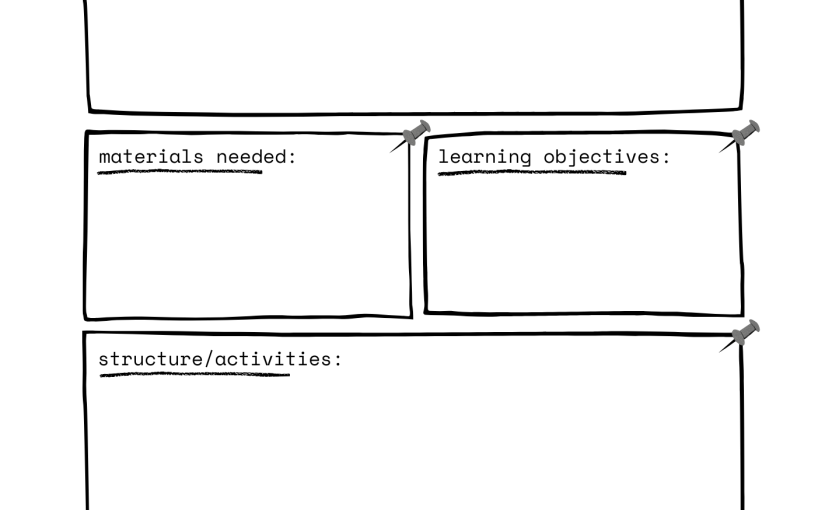
This section outlines step-by-step teaching strategies, including:

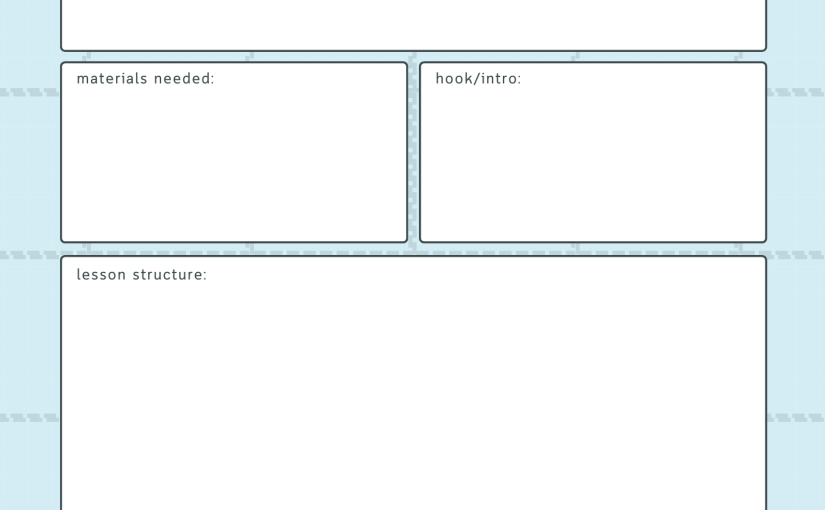
  • Introduction or hook
  • Direct instruction
  • Guided practice
  • Independent practice
  • Closure

A structured Teacher Lesson Plan Template ensures you never skip essential instructional stages.

4. Assessment and Evaluation

Assessment measures whether objectives were achieved. It may include:

  • Quizzes
  • Observations
  • Class discussions
  • Exit tickets
  • Homework

Including assessment planning strengthens instructional clarity.

Free Printable Teacher Lesson Plan for Quick Classroom Use

Sometimes teachers need ready-to-use formats that can be printed instantly. A Free Printable Teacher Lesson Plan is ideal for:

  • Substitute teachers
  • Emergency planning
  • Student teaching rotations
  • Paper-based classroom systems

Printable versions are especially helpful when digital access is limited. They allow educators to quickly jot down ideas and adjust during the lesson.

A simple printable layout typically includes:

  • Date
  • Subject
  • Grade level
  • Objectives
  • Activities
  • Assessment
  • Reflection

Even a basic printable version can dramatically improve classroom organization.

Get also: PE Lesson Plan Template

Teacher Lesson Planner Template for Weekly Organization

While daily plans are essential, weekly planning offers a broader perspective. A Teacher Lesson Planner Template designed for weekly use helps educators:

  • Map out curriculum pacing
  • Coordinate projects
  • Balance subject integration
  • Prepare materials in advance

Weekly planning reduces last-minute stress and improves instructional consistency.

A strong weekly planner often includes:

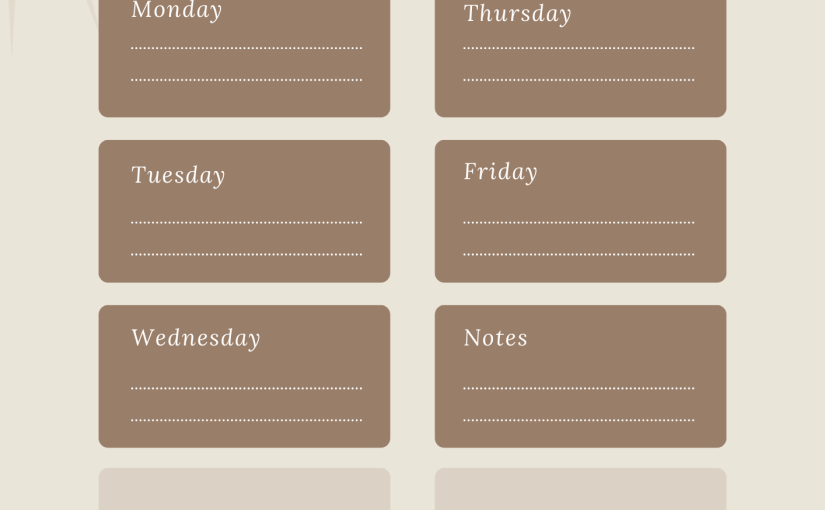
  • Days of the week columns
  • Subject breakdown
  • Key standards
  • Major assignments
  • Notes section

Combining daily and weekly planning systems provides the best results.

Get also: Free Customizable Weekly Lesson Plan Template

Teaching Lesson Plan Template for Different Grade Levels
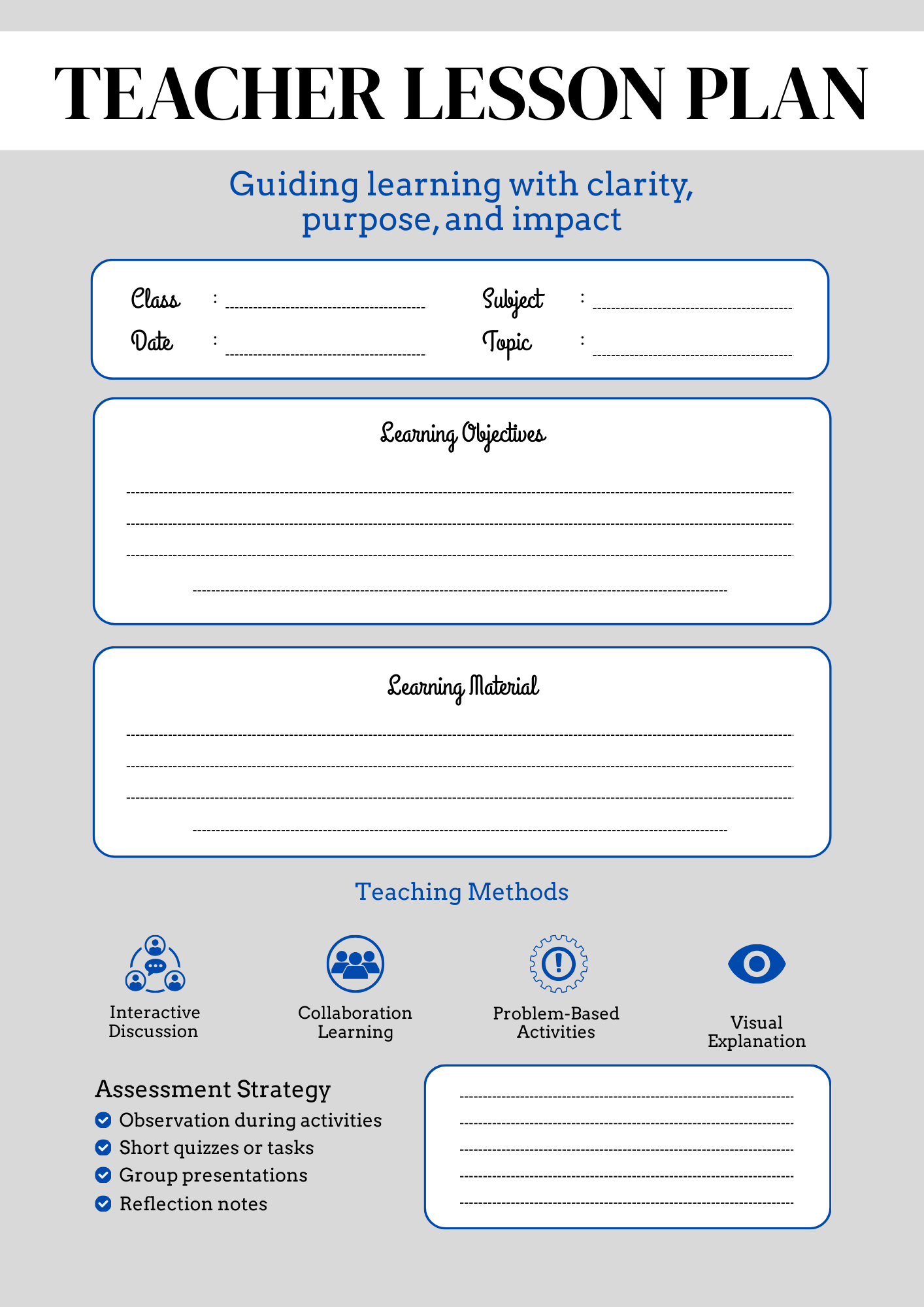
Not all classrooms function the same way. A flexible Teaching Lesson Plan Template can be customized for:

Elementary Classrooms

  • Detailed activity breakdown
  • Hands-on learning steps
  • Transition planning
  • Behavior management notes

Middle School

  • Time allocation for segments
  • Group work coordination
  • Skill-based objectives

High School

  • Advanced learning targets
  • Assessment rubrics
  • Critical thinking tasks

A versatile Teacher Lesson Plan Template allows teachers to adapt the structure based on grade-level needs.

Get also: Kindergarten Lesson Plan Template

Digital vs Printable Lesson Planning Systems

Modern educators often choose between digital and paper systems.

Digital Templates

Advantages include:

  • Easy editing
  • Cloud storage
  • Shareable collaboration
  • Reusable layouts

Digital versions of a teacher’s lesson plan are perfect for tech-savvy classrooms.

Printable Templates

Benefits include:

  • Simplicity
  • Quick reference during instruction
  • No reliance on devices
  • Easy annotation

Many educators combine both methods for maximum flexibility.

Customizing Your Template for Efficiency

The best planning system is one you will actually use. When customizing your Lesson Plan Template, consider:

  • Adding a reflection section
  • Including differentiation notes
  • Leaving space for accommodations
  • Creating a timing guide
  • Incorporating classroom management reminders

Small adjustments can dramatically improve usability.

How Structured Planning Improves Student Outcomes

Organized lesson planning directly impacts student success.

When teachers use a consistent Teacher Lesson Plan Template, they:

  • Maintain instructional clarity
  • Avoid rushed explanations
  • Allocate time efficiently
  • Integrate assessment naturally
  • Reflect and refine instruction

Students benefit from structured pacing and clear expectations.

Get also: Training Plan Template Free Printable

Common Mistakes Teachers Make in Lesson Planning

Even experienced educators can fall into planning pitfalls.

Overloading the Lesson

Trying to cover too much in one session leads to rushed instruction.

Skipping Assessment

Without assessment planning, teachers can’t measure progress accurately.

Ignoring Reflection

Reflection improves future instruction. A strong template includes space to evaluate what worked and what didn’t.

Using a structured Teaching Lesson Planner helps minimize these errors.

Lesson Planning for New Teachers

For new educators, the organization builds confidence. A detailed Teacher Lesson Planner Template provides structure during the learning curve.

New teachers should:

  • Plan extra time for transitions
  • Over-prepare materials
  • Script key explanations
  • Include backup activities

With repetition, planning becomes faster and more intuitive.

Integrating Standards into Your Lesson Plan

Curriculum standards must align with daily instruction. A well-designed Teacher Lesson Plan Template includes a section for:

  • State standards
  • National benchmarks
  • Learning competencies

This alignment ensures lessons remain academically focused.

Differentiation and Inclusive Planning

Classrooms include diverse learners. Effective planning requires:

  • Modifications for special education
  • English language learner strategies
  • Enrichment activities for advanced students

A thoughtful Teacher Lesson Plan Template includes differentiation notes to support all learners.

Time Management Through Structured Planning

Time is one of the biggest classroom challenges. A good template includes estimated timing for:

  • Introduction
  • Instruction
  • Practice
  • Assessment
  • Closure

This prevents lessons from running too long or ending abruptly.

Reflection: The Most Overlooked Section

Reflection improves teaching quality over time. Include prompts such as:

  • What worked well?
  • What needs improvement?
  • Did students meet objectives?
  • How can I adjust next time?

Adding reflection to your Free Printable Lesson Plan Template strengthens professional growth.

Creating a Reusable Master Template

Instead of rewriting plans daily, create a master format you can duplicate and adjust. A reusable Teacher Lesson Plan Template saves hours every month.

Consider:

  • Color-coding subjects
  • Standardizing fonts and layout
  • Keeping sections consistent
  • Saving editable versions

Efficiency grows with consistency.

Final Thoughts

An organized classroom begins with intentional preparation. A reliable Teacher Lesson Plan Template provides structure, clarity, and confidence for educators at every level. Whether you prefer a Free Printable Teacher Lesson Plan for quick access, a detailed Teacher Lesson Planner Template for weekly mapping, or a customizable Teaching Lesson Plan Template for flexible instruction, structured planning transforms teaching effectiveness.

By investing time in building or selecting the right template, teachers reduce stress, improve time management, and enhance student engagement. In the end, thoughtful planning isn’t just about paperwork — it’s about creating meaningful learning experiences that help students succeed.

8+ PRACTICAL Daily Lesson Plan Templates That Make Teaching Easier Every Single Day

Every successful school day starts long before students enter the classroom. Behind smooth lessons, clear instructions, and meaningful activities is thoughtful preparation. That’s why a well-structured Daily Lesson Plan Template is one of the most powerful tools a teacher can use.

Instead of rushing to figure out what comes next during class, a daily planning format keeps everything organized — objectives, materials, timing, and assessments — all in one place. Whether you teach preschool, elementary, or higher grades, using a consistent daily format helps you stay focused and confident.

In this guide, we’ll explore what makes a strong daily planning structure, how different layouts serve different teaching styles, and how tools like a Daily Lesson Planner Template or a Free Printable Daily Lesson Plan Format can simplify your routine.

Why Daily Planning Still Matters in Weekly Schedules

Even teachers who plan weekly still rely on daily breakdowns. A Daily Lesson Plan Template zooms in on the details that weekly overviews can’t capture.

Daily planning helps you:

  • Break big goals into manageable steps
  • Manage time within a class period
  • Prepare specific materials and activities
  • Anticipate transitions and pacing
  • Reflect on what worked and what didn’t

While weekly plans show direction, daily plans guide execution.

Essential Sections in an Effective Daily Plan

A strong Daily Lesson Plan follows a clear structure that supports both teaching and learning.

Lesson Information

This section provides basic but essential details:

  • Subject
  • Grade level
  • Date
  • Duration

Having this at the top of your Lesson Planner Template makes organization easier, especially when saving plans for future use.

Learning Objectives

Clear objectives define the purpose of the lesson. A good Daily Lesson Plan Template gives space to write measurable outcomes, such as:

  • Students will identify key story elements
  • Students will solve word problems using multiplication

These objectives guide both instruction and assessment.

Materials and Resources

Preparing materials ahead of time prevents delays. Your Daily Lesson Planner might include space for:

  • Worksheets
  • Visual aids
  • Digital tools
  • Classroom supplies

Listing everything ensures smooth lesson flow.

Lesson Procedure

This section outlines how the lesson unfolds. A typical Daily Lesson Plan divides the procedure into stages:

  1. Introduction or warm-up
  2. Direct instruction
  3. Guided practice
  4. Independent work
  5. Closure or summary

Breaking lessons into stages helps maintain pacing and student engagement.

Assessment and Checks for Understanding

Assessment doesn’t always mean a test. A well-designed Lesson Planner Template includes space for:

  • Class discussions
  • Exit tickets
  • Observation notes
  • Short quizzes

These checks help you adjust instruction as needed.

Reflection

After teaching, reflection helps improve future lessons. A strong Daily Plan Template includes a small area to note:

  • What worked well
  • What needs adjustment
  • Students who need extra support

This habit turns everyday teaching into continuous improvement.

Free Printable Daily Lesson Plan Format for Quick Use

Sometimes teachers need something simple and ready to print. A Free Printable Daily Lesson Plan Format offers convenience without sacrificing structure.

These templates are especially helpful when:

  • Substitutes need clear guidance
  • Teachers prefer writing by hand
  • Quick planning is needed during busy weeks

A printable format keeps everything visible at a glance and easy to reference during class.

Daily Lesson Planner Template Styles for Different Teaching Needs

Not all classrooms run the same way, so planning styles vary.

Time-Based Format

A Lesson Planner organized by time blocks helps teachers manage pacing. Each segment of the class period has a set duration.

Best for:

  • Secondary teachers with strict bell schedules
  • Lessons that require precise timing

Subject-Focused Format

Some layouts emphasize content sections instead of time. A Daily Lesson Plan Template in this style highlights activities and learning goals rather than minutes.

Best for:

  • Elementary classrooms
  • Project-based learning

Activity-Based Format

This format focuses on learning experiences instead of rigid stages. A Free Printable Lesson Plan with flexible sections works well for creative or hands-on subjects.

Beautiful Daily Preschool Lesson Plan Template for Early Learning

Preschool classrooms have unique needs. A Daily Preschool Lesson Plan Template often includes:

  • Circle time activities
  • Play-based learning
  • Storytime
  • Movement breaks
  • Art or sensory activities

Visual design matters more in early childhood settings. A colorful, friendly Planner Template helps preschool educators organize varied activities while keeping the day balanced and engaging.

These templates often use icons or soft color blocks to make planning more intuitive.

Get also: Weekly Lesson Plan Template

Digital vs Printable Daily Planning Tools

Modern teachers often choose between paper and digital planning systems.

Printable Formats

A Free Printable Lesson Plan works well if you:

  • Prefer handwriting
  • Keep lesson plans in a binder
  • Need quick classroom access

Paper copies can be easily annotated during the day.

Digital Templates

Digital tools make editing and reusing plans easier. A digital Planner Template allows you to:

  • Copy previous lessons
  • Share plans with colleagues
  • Store everything in the cloud

Many teachers create plans digitally, then print their Lesson Planner Template for classroom use.

Get also: Free Danielson Lesson Plan Template

Matching Your Daily Plan to Your Teaching Style

Choosing the right format depends on how you teach.

Structured Teachers

If you like detailed guidance, a Daily Lesson Plan Template with labeled sections for each stage works best.

Flexible Teachers

If your lessons adapt to student responses, a Daily Lesson Planner with open-ended sections gives you room to adjust.

New Teachers

Beginners benefit from more detailed prompts in a Free Printable Planner Format because it ensures no important step is overlooked.

Saving Time with Reusable Daily Plans

Daily planning doesn’t mean starting from scratch every day. A consistent Daily Lesson Plan Template lets you:

  • Reuse successful lessons next semester
  • Adjust activities instead of rewriting everything
  • Build a personal library of teaching resources

Digital storage makes organizing these plans even easier.

Common Mistakes in Daily Lesson Planning

Even with a good format, planning mistakes can happen.

Overpacking the Lesson

Trying to fit too many activities into one class period leads to rushed learning. Leave room for questions and discussion.

Skipping Assessment

Without checking for understanding, it’s hard to know if students met the objectives.

Ignoring Reflection

Reflection may seem optional, but it’s one of the most valuable parts of a Daily Lesson Planner.

Who Benefits Most from a Daily Lesson Planner Template

Daily planning tools are useful for:

  • Classroom teachers
  • Substitute teachers
  • Tutors
  • Homeschool parents

A clear Free Printable Daily Lesson Plan Format makes lessons easy to follow and keeps everyone on the same page.

Making Daily Planning a Simple Routine

Consistency makes planning easier. Try setting aside time each afternoon or evening to prepare the next day using your Daily Lesson Plan Template. Over time, this becomes a quick habit rather than a stressful chore.

Final Thoughts

A well-designed Daily Lesson Plan Template turns busy school days into organized, purposeful learning experiences. Whether you prefer a structured Daily Lesson Planner Template, a colorful Daily Preschool Lesson Plan Template, or a straightforward Free Printable Daily Lesson Plan Format, the right tool helps you stay prepared and confident.

When planning becomes part of your routine, teaching feels smoother, transitions improve, and students benefit from clearer, more focused instruction.

8+ SMART Weekly Lesson Plan Template Designs That Save Teachers Hours Every Month

Planning one day at a time can feel manageable — until the week gets chaotic. School events, meetings, assessments, and unexpected changes can quickly throw daily plans off track. That’s why many educators rely on a Weekly Lesson Plan Template to stay organized, focused, and ahead of schedule.

Instead of scrambling every afternoon, a weekly structure helps you see the big picture. You can balance subjects, pace lessons properly, and ensure learning goals are covered without last-minute stress. Whether you teach elementary, middle school, or high school, using a consistent weekly format makes teaching smoother and more efficient.

In this guide, you’ll learn what makes an effective weekly planning layout, how to choose the right format, and how a Weekly Lesson Planner Template can completely transform your teaching workflow.

Why Weekly Planning Works Better Than Daily Planning

Daily planning focuses on short-term execution, but weekly planning supports long-term organization. A well-designed Weekly Lesson Plan Template gives you a clear overview of the entire week before it even starts.

Benefits include:

  • Better pacing across multiple days
  • Easier alignment with curriculum goals
  • Balanced workload for students
  • Fewer rushed lessons
  • More flexibility when plans change

With a Weekly Plan Template, you’re not just planning tomorrow — you’re designing a full learning journey.

What to Include in a Weekly Lesson Plan

An effective weekly layout covers more than just subject titles. A good Weekly Planner Template typically includes the following sections.

Weekly Overview

This top section summarizes the entire week:

  • Grade level
  • Subjects covered
  • Weekly theme or unit
  • Key standards or objectives

This overview ensures your Weekly Lesson Plan Template stays aligned with larger curriculum goals.

Daily Breakdown

Most weekly formats divide the page into five sections for Monday through Friday. Each day should have space for:

  • Lesson topic
  • Activities
  • Materials
  • Homework or follow-up

A structured Lesson Plan Template makes it easy to see how lessons connect from one day to the next.

Learning Objectives for the Week

Instead of writing separate goals every day, weekly planning allows you to define broader outcomes. Your Weekly Planner Template might include a box for:

  • Skills students should master
  • Concepts they should understand
  • Assessments scheduled for the week

This helps maintain focus and consistency.

Materials and Resources

Listing materials once for the entire week prevents daily repetition. A Weekly Lesson Plan Template often includes a shared materials section for:

  • Textbooks or reading materials
  • Digital tools
  • Worksheets or handouts
  • Lab or art supplies

This saves time and avoids forgetting important resources.

Assessment Planning

Weekly planning is ideal for scheduling assessments. A Teacher Lesson Planner can help you map out:

  • Quiz days
  • Project deadlines
  • Review sessions
  • Exit tickets

Spacing out assessments prevents overwhelming students and keeps evaluations balanced.

Weekly Lesson Planner Template Styles Teachers Love

Not every classroom runs the same way, so different layout styles work for different teaching needs.

Grid-Based Weekly Layout

This is one of the most popular formats. A Weekly Lesson Planner Template with a grid shows each day in columns, making it easy to compare lessons side by side.

Best for:

  • Elementary classrooms
  • Self-contained teachers
  • Visual planners

Subject-by-Subject Format

Some teachers prefer organizing by subject instead of by day. A Weekly Lesson Plan Template in this format has separate sections for math, science, language arts, and other subjects.

Best for:

  • Middle and high school teachers
  • Rotating class schedules
  • Departmentalized teaching

Time-Block Weekly Planner

This style divides each day into time slots. A Weekly Lesson Plan Template with time blocks helps teachers manage transitions and stay on schedule.

Best for:

  • Strict bell schedules
  • Teachers with multiple periods
  • Structured learning environments

Get also: Daily Lesson Plan Template

Benefits of Using a Weekly Teacher Lesson Plan Template

A Weekly Teacher Lesson Plan Template does more than organize lessons — it improves classroom management and teaching quality.

Better Lesson Flow

Seeing the week as a whole helps you avoid cramming too much into one day. You can distribute difficult topics and lighter activities more evenly.

Stronger Curriculum Alignment

Weekly planning makes it easier to track progress toward standards and long-term goals. Your Weekly Lesson Plan Template becomes a roadmap rather than a checklist.

Reduced Planning Time

Instead of planning five separate times, you plan once with a Planner Template and make small daily adjustments.

Improved Flexibility

If a lesson runs long or an assembly interrupts the schedule, you can quickly shift activities within the same weekly structure.

How to Use a Weekly Lesson Plan Effectively

Having a template is helpful — using it consistently is what makes the real difference.

Plan Before the Week Starts

Set aside time on Friday afternoon or Sunday evening to fill out your Weekly Lesson Plan Template. This prevents last-minute stress.

Leave Space for Adjustments

No week goes exactly as planned. A flexible Plan Template allows you to shift lessons when needed.

Review at the End of the Week

Take a few minutes to reflect:

  • Which lessons worked best?
  • Where did students struggle?
  • What needs reteaching?

These notes improve next week’s planning.

Get also: 7+ Free Teacher Lesson Plan Template Designs to Organize Your Classroom Like a Pro!

Weekly Lesson Planner Template for Different Grade Levels

Elementary School

Elementary teachers often use a Weekly Lesson Plan Template to manage multiple subjects in one classroom. Color-coding subjects inside the template can make planning easier.

Middle School

Middle school teachers benefit from a Lesson Plan Template that organizes lessons by period or subject block.

High School

High school educators often use a Weekly Planner to map out lectures, discussions, and assessments leading up to major exams.

Digital vs Printable Weekly Templates

Both digital and printable versions follow the same structure but serve different preferences.

Printable Weekly Lesson Planner Template

A paper format is great if you:

  • Prefer handwriting
  • Use a planner binder
  • Want quick access during class

Digital Weekly Lesson Plan Template

Digital formats are ideal if you:

  • Reuse plans each semester
  • Share with co-teachers
  • Store files online

Many teachers plan digitally and print a copy of their Weekly Lesson Plan Template for classroom use.

Common Mistakes to Avoid in Weekly Planning

Even with a good template, mistakes can happen.

Overloading the Week

Trying to cover too many objectives can lead to rushed lessons. Leave room for review and reinforcement.

Ignoring Transitions

Transitions take time. Make sure your Weekly Lesson Plan Template includes realistic pacing.

Skipping Reflection

Weekly reflection helps you improve future planning and teaching effectiveness.

Making Weekly Planning a Habit

Consistency turns planning into a time-saving routine. Keep your Planner Template in the same place, use it at the same time each week, and update it regularly.

Over time, this habit reduces stress and makes your teaching schedule feel more manageable.

Final Thoughts

A well-organized Weekly Lesson Plan Template helps teachers move from reactive planning to proactive teaching. Instead of worrying about tomorrow’s lesson, you gain a clear vision for the entire week. Whether you prefer a printable format or a digital Weekly Teacher Lesson Plan Template, the right structure saves time, improves pacing, and supports better learning outcomes.

With a reliable Weekly Lesson Planner Template, planning becomes faster, smoother, and far less overwhelming — giving you more energy to focus on your students.

7+ POWERFUL Lesson Plan Template Designs Teachers Swear By (Free Customizable)

Every great class starts with a solid plan. But planning from scratch every single day? That’s exhausting. This is where a well-structured Lesson Plan Template by twopackage becomes a total game-changer. Instead of reinventing your format daily, you get a repeatable system that keeps lessons focused, organized, and aligned with learning goals.

Whether you teach elementary, middle school, high school, or even homeschool, using a consistent planning structure reduces stress and improves classroom flow. In this guide, we’ll break down what makes an effective planning format, explore different layout styles, and show how teachers use a Free Printable Planner Template or digital alternative to work smarter — not longer.

Why Teachers Rely on a Structured Planning Format

Teaching involves juggling objectives, materials, timing, and assessments all at once. Without a consistent structure, it’s easy to forget key components or run out of time mid-lesson.

A reliable Lesson Plan Template helps you:

  • Clarify what students should learn
  • Sequence activities logically
  • Prepare materials in advance
  • Stay on schedule
  • Reflect and improve future lessons

Instead of scattered notes or mental checklists, everything lives in one organized space.

Core Sections Every Strong Plan Should Include

No matter the subject or grade level, effective lesson planning follows a predictable structure. A good lesson plan usually contains the following building blocks.

Lesson Overview

This section provides quick reference details:

  • Subject
  • Grade level
  • Topic or unit
  • Time required

Having this at the top of your Plan Blank Template makes it easy for you — or a substitute — to understand the lesson at a glance.

Learning Objectives

Objectives define what success looks like. Strong goals are specific and measurable. A thoughtful Plan Template leaves enough room to write clear outcomes like:

  • Students will solve two-step equations
  • Students will identify the main ideas in a passage

This keeps instruction focused instead of activity-driven.

Materials and Resources

Listing materials ahead of time prevents last-minute scrambling. Your Lesson Plan Template might include space for:

  • Worksheets
  • Slides or videos
  • Lab tools or manipulatives
  • Books or reading passages

Prepared materials mean smoother transitions and fewer interruptions.

Instructional Procedure

This is the heart of the lesson. Most formats break it into stages:

  1. Introduction or warm-up
  2. Direct teaching
  3. Guided practice
  4. Independent work
  5. Closure

A structured Lesson Plan Template helps you pace these stages realistically, so learning builds step by step.

Assessment

Assessment isn’t just about tests. A good plan includes space to track:

  • Questions during discussion
  • Exit tickets
  • Short quizzes
  • Observational notes

When your Plan Template includes assessment planning, you can quickly see whether students met the objectives.

Reflection Notes

Reflection helps you grow. After class, teachers often jot down:

  • What worked well
  • Where students struggled
  • Adjustments for next time

Many educators say this small section in their Lesson Planner leads to big improvements over time.

Free Printable Lesson Planner Template Options for Busy Teachers

Not everyone wants the same layout. That’s why many educators download a Free Printable Lesson Planner Template that matches their teaching style.

Daily Planning Pages

A daily layout focuses on one lesson at a time. These are great when you need detailed timing and step-by-step instructions. Teachers in subjects like math, science, or language arts often prefer this style.

Get also: Daily Lesson Plan Template

Weekly Overview Planners

Weekly formats help you see the bigger picture. Instead of planning in isolation, you balance assessments, projects, and review days across the week. A Free Printable Planner Template with weekly columns makes long-term pacing easier.

Get also: Weekly Lesson Plan Template

Subject-Specific Formats

Some templates include sections tailored to certain subjects:

  • Science: hypothesis, experiment, conclusion
  • Language arts: reading, discussion, writing
  • Math: problem-solving strategies

These specialized layouts still follow the core structure of a Lesson Planning Template, just with subject-focused prompts.

Get also: Free Math Lesson Plan Template

Using a Lesson Plan Blank Template for Maximum Flexibility

Some teachers prefer fewer boxes and more open space. A Lesson Plan Blank Template gives you the freedom to design the flow depending on the day’s needs.

This approach works well for:

  • Project-based learning
  • Thematic units
  • Creative subjects like art or drama

Instead of forcing your lesson into rigid categories, a blank structure adapts to your teaching style while still keeping planning organized.

Printable vs Digital Planning Tools

Modern educators often choose between paper and digital formats. Both can follow the same structure as a Lesson Plan Template, but the experience differs.

Paper-Based Planning

A Free Printable Planner Template is ideal if you:

  • Like writing by hand
  • Keep a binder or a clipboard
  • Prefer flipping through physical pages

Many teachers say paper planners feel more flexible during class.

Digital Planning

Digital tools allow you to:

  • Copy and edit plans quickly
  • Store files in the cloud
  • Share with co-teachers

A digital Lesson Planning Template also makes it easier to reuse lessons next semester with small updates.

Some educators plan digitally, then print a Lesson Plan Template to bring into the classroom.

Matching Your Template to Your Teaching Style

Choosing the right format depends on how you teach.

Highly Structured Teachers

If you like clear routines and tight timing, choose a detailed layout with labeled sections for each instructional phase.

Flexible or Discussion-Based Teachers

If your lessons evolve based on student responses, a Lesson Plan Blank Template gives you room to adjust on the fly.

New Teachers

Beginners often benefit from more detailed prompts in a Lesson Planner because it ensures no major component is forgotten.

Lesson Planning Template Ideas for Different Grade Levels

The same core structure works across age groups, but the focus changes.

Elementary School

Plans often include:

  • Hands-on activities
  • Movement breaks
  • Visual aids

A colorful Free Printable Lesson Planner Template can make planning more engaging and easier to scan.

Middle School

Middle school planning may emphasize:

  • Clear transitions
  • Group work
  • Behavior expectations

Using a consistent Lesson Plan Template helps manage energy and keep lessons on track.

High School

At this level, planning focuses more on:

  • Academic depth
  • Critical thinking
  • Assessments tied to standards

A detailed Lesson Planning Template helps ensure lessons build toward exams and long-term goals.

Saving Time with Reusable Plans

One of the biggest advantages of using a structured format is reusability. Instead of starting from scratch each year, you can:

  • Update dates
  • Swap readings or examples
  • Adjust timing

A digital Lesson Plan Template is especially helpful for storing and editing past lessons quickly.

Common Mistakes to Avoid When Planning

Even with a good structure, planning can go wrong. Watch out for these pitfalls:

Overloading the Lesson

Trying to fit too many activities into one period leads to rushed learning. Leave buffer time.

Vague Objectives

If your goals aren’t measurable, assessment becomes difficult. Always tie activities back to clear outcomes.

Skipping Reflection

The reflection box in your Lesson Planning Template might seem optional, but it’s one of the most powerful tools for growth.

Making Planning Less Stressful

Lesson planning doesn’t have to take hours every night. A reliable Lesson Plan Template helps you build a routine:

  • Plan at the same time each week
  • Keep materials lists updated
  • Reuse successful activities

When planning becomes a system instead of a daily scramble, teaching feels more manageable.

Who Benefits Most from Organized Planning Tools

Structured planning isn’t just for classroom teachers. It also helps:

  • Substitute teachers following your outline
  • Homeschool parents organizing daily learning
  • Tutors mapping session goals
  • Instructional coaches reviewing lesson flow

A clear Plan Template makes expectations and activities easy for anyone to follow.

Final Thoughts

Effective teaching starts long before students walk into the room. A thoughtful Lesson Plan Template turns ideas into structured, goal-driven instruction. Whether you prefer a detailed daily layout, a flexible blank format, or a Free Printable Lesson Planner Template you can grab and use instantly, the right planning tool saves time and improves lesson quality.

By choosing a format that fits your style and grade level, you reduce stress, stay organized, and focus more energy on what really matters — helping students learn and grow.

Exit mobile version