Monthly Status Report Template: Extraordinary Insights for Clearer Monthly Progress | A Monthly Status Report Template is more than just a reporting tool—it’s the backbone of a team’s clarity, alignment, and month-to-month progress visibility.
When crafted properly, it helps leaders track project movement, understand departmental workloads, and evaluate resource needs without chasing separate updates from every direction. Teams rely on it to communicate accomplishments, upcoming tasks, risks, and dependencies in a way that feels structured and easy to digest. For organizations that operate across multiple functions, having a dependable template turns reporting into a streamlined rhythm rather than a fire drill at the end of every month.
Many businesses use a Monthly Status Report Template to maintain accountability and transparency. It gives project managers, department heads, and construction supervisors a consistent structure for documenting work completed, pending tasks, and any obstacles requiring escalation. Whether the context involves a small team or a large cross-functional environment, consistency in reporting builds trust and makes evaluations far more reliable. Even better, it helps eliminate the classic “I thought someone else handled it” moment—which, as many managers know, is both timeless and universal.
Monthly Status Report Template: Remarkable Clarity for Any Workflow
A reliable Monthly Status Report Template brings order to otherwise chaotic monthly recap meetings. Teams can align faster, managers can make decisions with fewer blind spots, and stakeholders can assess progress without digging through scattered notes.

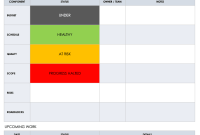
The best Monthly Report Templates follow a simple structure: accomplishments, challenges, upcoming milestones, resource needs, dependencies, and commentary. When teams follow the same pattern each month, trends become obvious—such as repeated bottlenecks or recurring productivity spikes.
Within most organizations, reporting needs differ between projects, departments, and field operations. Yet the value of a consistent template remains the same: fewer misunderstandings, more transparency, and better coordination. When a team uses a standardized structure, supervisors spend less time interpreting scattered updates and more time enabling progress. A well-built template becomes a quiet backbone of operational excellence, helping reduce delays and highlight opportunities long before they become urgent.
The strength of a Monthly Status Report Template also lies in its ability to highlight resource allocation. It’s easier to justify additional headcount, extended timelines, or new tooling when the monthly summary presents evidence clearly. Instead of relying on anecdotal complaints, leaders can present trends and patterns captured over several months. A structured template also encourages better documentation habits—which means important context doesn’t get lost between hectic work cycles.
Expanded Use-Cases for Modern Teams
Beyond simple project updates, monthly reports also support performance evaluations, interdepartmental collaboration, budgeting, and compliance. Finance teams use them to forecast expenditures, while operations teams use them to verify task completion and risk mitigation. HR departments may integrate highlights into broader organizational reviews, crafting a narrative around team performance. Meanwhile, construction firms depend on structured monthly reporting to track site progress, completion percentages, weather delays, and subcontractor activities.
Monthly Status Report Templates reduce ambiguity. They help teams avoid last-minute scrambling. And they create a predictable communication format that everyone can follow, even when individual writing styles differ drastically.
Supporting Templates for Different Reporting Needs
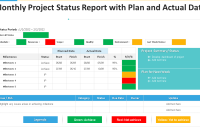
Monthly Project Status Report Template Extraordinary Breakdown
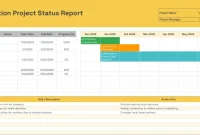
A Monthly Project Status Report Template Extraordinary Breakdown is ideal for teams coordinating timelines, deliverables, and dependencies. It ensures that every project update fits into a repeatable structure that decision-makers can scan quickly. For teams juggling multiple initiatives, this version of the template prevents information gaps by requiring clear updates on milestones achieved, items postponed, and risks identified during the reporting period.

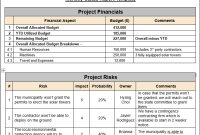
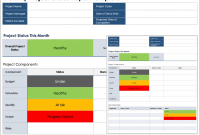
Project-focused templates often include progress bars or percentage completion indicators. These visual cues help stakeholders grasp the bigger picture at a glance, especially when projects span several months. Teams can also include a quick assessment of resource usage, such as budget utilization, contractor hours, or software tool licensing. While it’s not uncommon for teams to underestimate the number of small tasks they completed, this structure encourages them to break accomplishments into measurable, traceable outputs.
This version is also exceptionally helpful for organizations with distributed teams. Instead of relying on ad-hoc reports, managers receive uniform updates across all projects—making variance analysis much more straightforward. It also ensures smoother handoffs when team responsibilities shift, since historical records are structured and easy to review.
Get also: Monthly Financial Report Template Free Download
Department Monthly Status Report Template: Astonishing Utility
A Department Monthly Status Report Template gives leadership the clarity needed to understand how each department contributes to broader company objectives. Unlike project-based reporting, department reports capture both recurring activities and special initiatives. This includes staffing updates, training progress, operational improvements, backlog data, workload distribution, and upcoming priorities.

Departments benefit from emphasizing key challenges and the level of impact they have on company operations. A structured template guides them to highlight measurable accomplishments—for instance, completed audits, resolved tickets, new system implementations, or training sessions delivered. This makes performance trends easier to spot over time.
Another value point is alignment across departments. For example, operations may report increased workload due to seasonal demand, while procurement highlights equipment shortages in the same period. When both reports follow a standardized template, it becomes easier to connect the dots and adjust plans accordingly. This format also strengthens accountability, ensuring every department presents updates based on evidence rather than improvisation.
Construction Project Monthly Status Report Template: Hidden Advantages
A Construction Project Monthly Status Report Template focuses on field progress, contractor productivity, site logistics, and safety reporting. Construction environments generate high variability, so the Monthly Project Status Report Template helps maintain consistency across project supervisors, subcontractors, and site managers. The clear structure ensures updates include completed work sections, weather impacts, delays, change orders, material shortages, and upcoming site requirements.
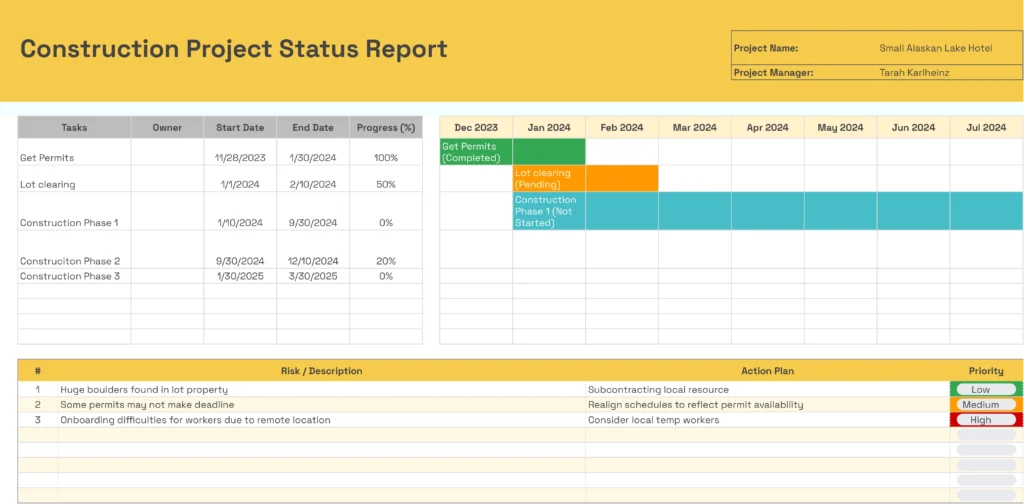
One unique strength of construction reporting is visual documentation. Many teams incorporate photos, diagrams, or annotated site maps into their monthly summaries. These help stakeholders verify real-world progress without physically visiting multiple sites. The template also supports compliance requirements, including safety observations, inspection results, and incident tracking.
This version is especially effective for large developments involving multiple contractors. The structure ensures every contributor reports using the same categories, reducing confusion and making end-of-month coordination smoother. By following a unified reporting format, construction teams reduce the risk of miscommunication—an essential factor in managing both budgets and timelines.
How a Monthly Status Report Template Shapes Stronger Workflows
Whether used by project teams, cross-functional departments, or construction sites, a well-designed Monthly Status Report Template enhances alignment. Teams understand what information is required, managers know where to focus attention, and leadership gains transparency into operational health across the organization. It also strengthens strategic planning, since reliable monthly data highlights emerging trends long before they impact long-term outcomes.
A strong template encourages clarity. Instead of lengthy narrative reports, teams distill their updates into structured sections that emphasize impact and progress. This reduces meeting time, smoothens escalations, and ensures that everyone shares the same understanding of priorities. Most importantly, it keeps the reporting rhythm predictable—making it easier for teams to maintain consistent documentation.
Another advantage is that templates reduce transition friction. When new managers join, or team members rotate, the historical sequence of monthly summaries provides a clear timeline of decisions, challenges, and accomplishments. This enhances continuity across projects and departments, keeping institutional knowledge accessible.
Final Thoughts
A Monthly Status Report Template remains an essential tool for guiding effective communication, minimizing misunderstandings, and ensuring teams maintain alignment with organizational goals. Regardless of industry, a dependable Monthly Status Report Template transforms complex monthly updates into structured insights. Through project summaries, department recaps, or construction overviews, these templates reinforce accountability while supporting smarter decisions.
Gallery of Monthly Status Report Template – 9+ Extraordinary Insights
Related posts:

High School Book Report Template – 2026 Best Academic Reading

Police Crime Report Template: 8+ Accurate Crime Documentation

Police Report Template – 2026 Free Daily Observations with Precision


Safety Incident Report Template: 2026 Free Workplace Hazards and Accidents

Academic Progress Report Template (9+ Structured Formats to Track Student Growth)